


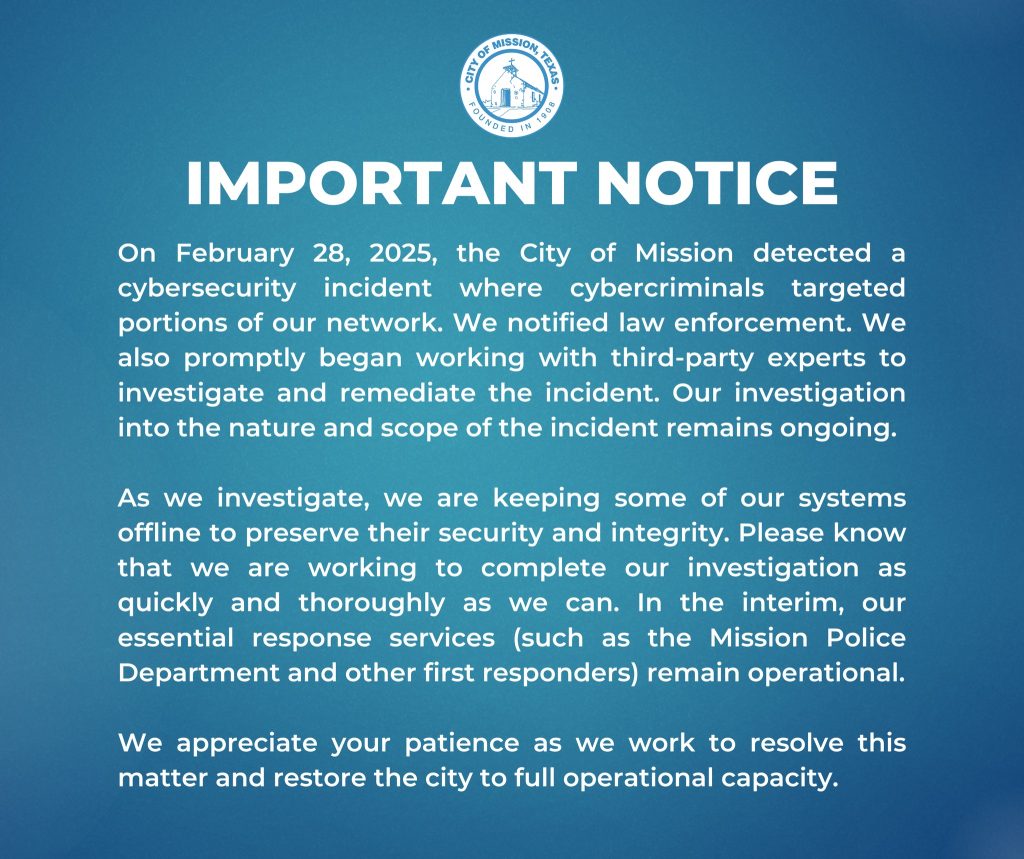
Mission, Texas, is operating in crisis mode after hackers broke into the city’s computer network late last month, forcing officials to shut down large portions of their digital infrastructure and putting sensitive health records and law enforcement data at risk.
Mayor Norie Gonzalez Garza has asked Governor Greg Abbott for help, warning in a March 4 letter that the city’s entire server system is compromised. The breach, which officials discovered on February 28, could expose protected personal and health information, as well as civil and criminal records.
Police and fire departments are still responding to emergencies, but the attack has kneecapped basic functions. Officers can’t run license plates or check driver’s licenses against state databases. Their patrol car laptops sit useless. The disruption affects how the city of roughly 88,000 people, located along the Rio Grande, handles everything from routine traffic stops to background checks.
City Manager Mike Perez said Mission is working with the Texas Department of Emergency Management to contain the damage. Officials are considering whether to seek a formal state emergency declaration, which would give them temporary authority to suspend certain regulations, including parts of the Texas Public Information Act that govern open records requests.
That move could shield the city from having to immediately release details about the attack while the investigation continues, though it also raises questions about transparency during a public crisis.
Mission joins a growing list of Texas cities hit by cyberattacks in recent months. McKinney, Coppell, and Richardson have all dealt with similar breaches over the past six months, disrupting services for hundreds of thousands of residents across the state.
The frequency of these attacks on municipal governments in Texas suggests cities remain vulnerable targets, often lacking the security resources and expertise that larger state agencies or private companies can afford.