
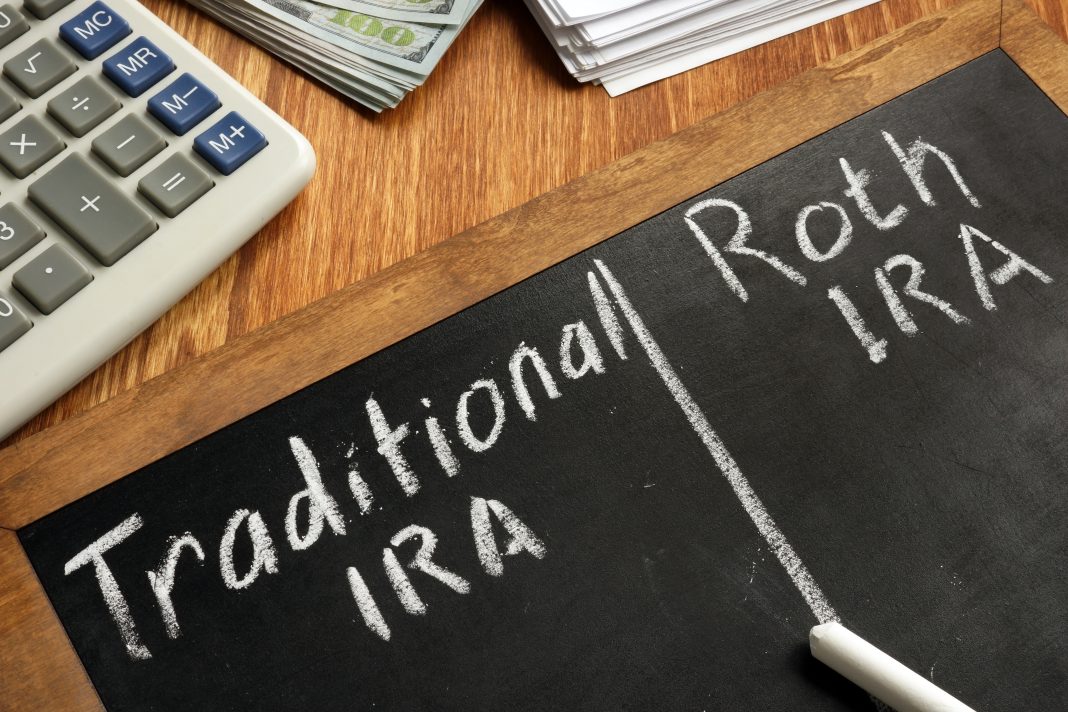


Roth IRAs work differently from most retirement accounts. You don’t get a tax break right away, but you could take out money tax-free later. In a recent Albuquerque Journal column, financial planner Donna Skeels Cygan explains that Roth accounts can be especially valuable for some people because of their long tax-free growth and flexibility for retirement and estate planning.
It’s important to think about what happens when required minimum distributions (RMDs) begin for traditional accounts. Cygan points out that a large pre-tax balance can lead to bigger RMDs later, which may push retirees into higher tax brackets and increase Medicare premiums through IRMAA (income-related monthly adjustment amounts). (Cygan’s discussion of RMDs and IRMAA)
The column uses the “Rule of 72” to show a simple example. If a 50-year-old has $1 million in a traditional 401(k), stops adding money, and earns an average return of 7.2% per year, the balance would double about every 10 years. (Rule of 72, n.d.) By age 75, when RMDs start, the account could grow to about $6 million. Under current tax laws, the first RMD would be about $240,000 (roughly 4%), and these withdrawals could keep taxable income high for years.
The downside is that converting to a Roth means you have to pay taxes immediately. Cygan calls this “basically pre-paying the taxes” you would otherwise pay later when withdrawing from a traditional IRA.
The article offers practical advice about timing. “Roth conversions are not ‘all or nothing.’” Rather than converting a large amount in one year, it’s better to spread conversions over several years. Doing this in a year when your income is lower can be a smart choice. The column also notes that paying taxes from other funds rather than the IRA lets you keep more money growing in the Roth.
Estate planning is another important topic. The column explains that the SECURE Act of 2019 usually requires most non-spouse heirs to withdraw inherited IRAs within 10 years. Withdrawals from traditional inherited IRAs are taxed, but inherited Roth IRA withdrawals are usually tax-free, even though the 10-year rule still applies. The article also notes that, for a grandchild, the 10-year period might not begin until they turn 18, giving more time for tax-free growth.
Key facts to remember
- Roth contributions usually don’t give you a tax deduction, but qualified withdrawals can be tax-free.
- Traditional accounts eventually require RMDs, which can increase your taxable income and raise your Medicare IRMAA premiums.
- Roth conversions mean you’ll pay taxes in the year you convert, but you can spread conversions out over several years.
- Most non-spouse inherited IRAs have to be paid out within 10 years, but inherited Roth withdrawals are usually tax-free.
Even with these benefits, your decision often depends on timing and your tax bracket. If you convert too much in one year, your income could move into a higher tax bracket, which reduces the benefit of tax-free withdrawals later. The column suggests that Roth planning works best when you manage your income: convert gradually during years when you earn less, keep an eye on future RMDs, and consider extra costs like IRMAA, instead of converting everything at once.