

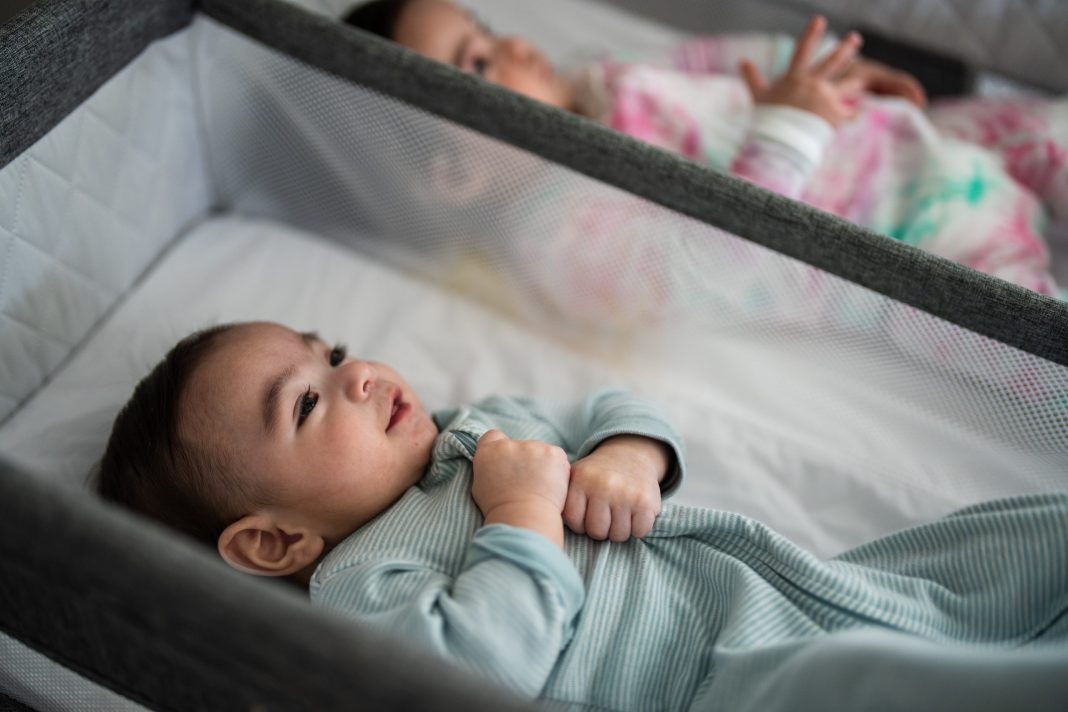
If you are a parent or guardian who cannot afford a crib for your baby, this program may help you. The New Mexico Department of Health announced that it will provide free portable cribs for families in need. The initiative is part of the state’s efforts to recognize Safe Sleep Awareness Month.
In 2022, Governor Michelle Lujan Grisham officially declared October as the first Safe Sleep Awareness Month. She highlighted that the NMDOH is working with partners to raise awareness and encourage safe sleep practices for infants.
Lujan Grisham said New Mexico loses an average of 22 infants each year to sudden unexpected infant death (SUID). She added that unsafe sleep factors contribute to more than 8 in 10 of these deaths, which experts consider preventable.
“Parents, grandparents, other relatives, childcare providers, and anyone caring for an infant are encouraged to learn more about safe sleep practices in order to reduce sleep-related infant deaths,” the proclamation read.
As part of its Safe Sleep campaign, NMDOH began distributing free portable cribs on August 6, 2025. The department has continued the program for more than a year to help more families provide their babies with a safe space to sleep.
While many residents welcome the initiative, others have raised concerns about how it works. Some claim cribs are not really free. Others suspect the state is offering them now because of the upcoming midterm elections. Some have criticized the application process as “ridiculous.” They said you need a referral from an agency to ensure you receive a crib.
Our team looked into the free portable crib program and the Safe Sleep campaign to address these claims and separate facts from misinformation. We’ve gathered reliable information to help you understand the program. You can also learn how to get a crib if your family needs one.
Why is New Mexico providing free cribs for families?
This Safe Sleep Awareness Month, NMDOH reminds you to create a secure sleeping space for your baby. The agency is also providing free portable cribs to families who cannot afford one.
NMDOH said safe sleep practices can help protect babies from SUID and other sleep-related fatalities. The Centers for Disease Control and Prevention (CDC) reports that more than 3,500 infants die from SUID each year in the United States.
In New Mexico, SUID is the third leading cause of infant deaths after congenital malformations and perinatal conditions. From 2020 to 2024, the state recorded an average of 110 infant deaths per year.
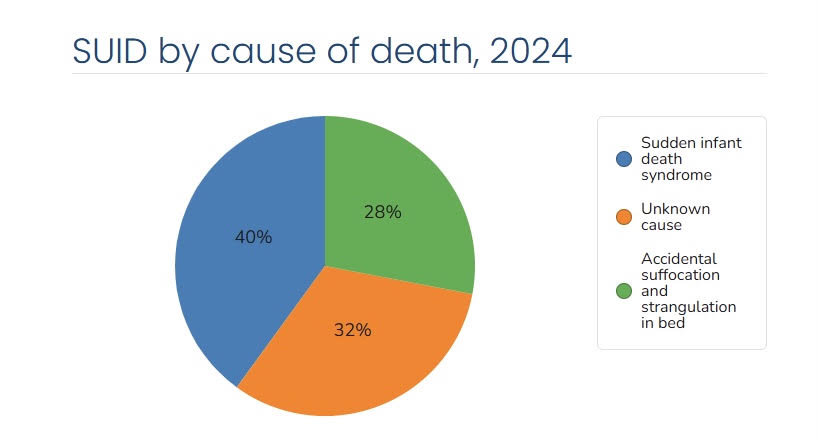
According to the CDC, SUID includes sudden infant death syndrome (SIDS), unknown cause, and accidental suffocation and strangulation in bed (ASSB). In 2024, SIDS accounted for 40% of SUID, while unknown causes accounted for 32%, and ASSB made up the remaining 28%.
“Every infant in the state deserves a safe start in life, and there are simple steps everyone can take to ensure that happens,” NMDOH Chief Medical Officer Miranda Durham said in a statement.
Who qualifies for the free portable cribs?
NMDOH provides free portable cribs to parents with children under age 2 who complete a free training on safe sleep habits. The Safe Sleep Ambassador program is part of a campaign that aims to prevent sudden infant death and other sleep-related fatalities.
The training teaches you to place babies on their backs on a firm, flat surface, keeping pillows, toys, or loose bedding out. NMDOH also recommends supervised tummy time while infants are awake.
“A Pack ‘n Play and 30 minutes of training can save a life,” Durham said.
Here’s how to get a free portable crib:
• Go to safesleepnm.org.
• Finish the free safe sleep training session.
• Save your completion certificate.
• Fill out the online request form and upload your certificate.
According to NMDOH, around 2,400 residents have completed the Safe Sleep training and received a free portable crib.
Why was the Safe Sleep New Mexico campaign launched?
Introduced in August 2023, the Safe Sleep campaign teaches parents, caregivers, and communities how to build a safe space for babies to sleep. These practices can help reduce sleep-related infant deaths, such as SUID and accidental suffocation.
“Informing parents about protective practices for babies drives down rates of mortality, plain and simple,” then Secretary for Children, Youth and Family Services Department Teresa Casados said.
Several state agencies worked with community partners to develop the campaign. These include NMDOH, Early Childhood Education & Care Department, Children, Youth & Families Department, University of New Mexico, and the Office of the Governor.
What do experts recommend for your baby’s sleep space?
According to the American Academy of Pediatrics (AAP), an infant with an underlying vulnerability to SIDS may face a higher risk of sleep-related death when placed in an unsafe sleep environment. Annual deaths have remained stable since 2000. In the 1990s, however, deaths declined significantly after a nationwide campaign encouraged parents to put babies on their backs to sleep.
Although overall deaths have dropped, research shows that racial and ethnic disparities persist indicating broader inequities in society. From 2010 to 2013, Black infants experienced more than twice the rate of sudden unexpected SUIDs as white infants, while American Indian/Alaska Native infants experienced nearly three times the rate. White infants had a SUID rate of 85 deaths per 100,000 live births.
To help prevent sleep-related infant deaths, the AAP recommends the following practices:
- Place your baby on a firm, flat sleep surface that does not slope or incline. Make sure the product meets federal safety standards for cribs, bassinets, play yards, and bedside sleepers under the Consumer Product Safety Commission’s June 2021 rule. Use only products specifically designed and marketed for infant sleep.
- Avoid letting your baby sleep routinely in sitting devices, such as car seats, strollers, swings, infant carriers, or slings, whether at home or in the hospital. This is especially important for babies younger than 4 months.
- Breastfeeding can lower a baby’s risk of sleep-related death, and any amount of breast milk offers more protection than none. Research shows that feeding your infant breast milk, even partially, for at least two months can significantly reduce this risk. The AAP recommends feeding your baby on breast milk for the first 6 months. You can continue breastfeeding for a year or longer as long as you and your baby wish to continue.
- The AAP recommends that you share a room with your baby, but not a bed. If possible, keep the infant in your room for at least the first six months.
- Keep your baby away from nicotine, alcohol, marijuana, opioids, and illicit drugs.
- Make sure your baby receives all recommended vaccinations.
- Avoid products that claim to prevent SIDS or other sleep-related deaths, as research has not shown that they work. These products may give a false sense of security. Home cardiorespiratory monitors have not been shown to reduce the risk of SIDS.
- Give your baby short periods of supervised tummy time while awake, starting soon after you bring them home from the hospital. Tummy time helps the infant develop and reduces the risk of flat spots on their head.
What do the figures say?
New Mexico’s Pregnancy Risk Assessment Monitoring System data from 2022 data shows how mothers care for their babies, including their sleep routines.
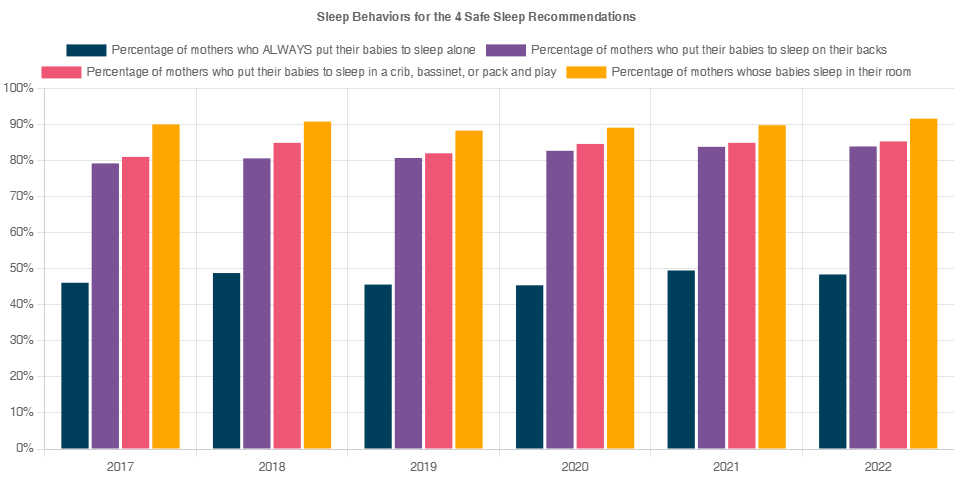
In 2022, more than 80% of mothers said they placed their babies on their backs to sleep and used approved sleep surfaces, such as cribs, bassinets, pack and play. More than 90% said they shared a room with their babies. Meanwhile, fewer than half of mothers said their babies slept alone.
The practices mentioned above align with the AAP recommendations for reducing the risk of SUID.
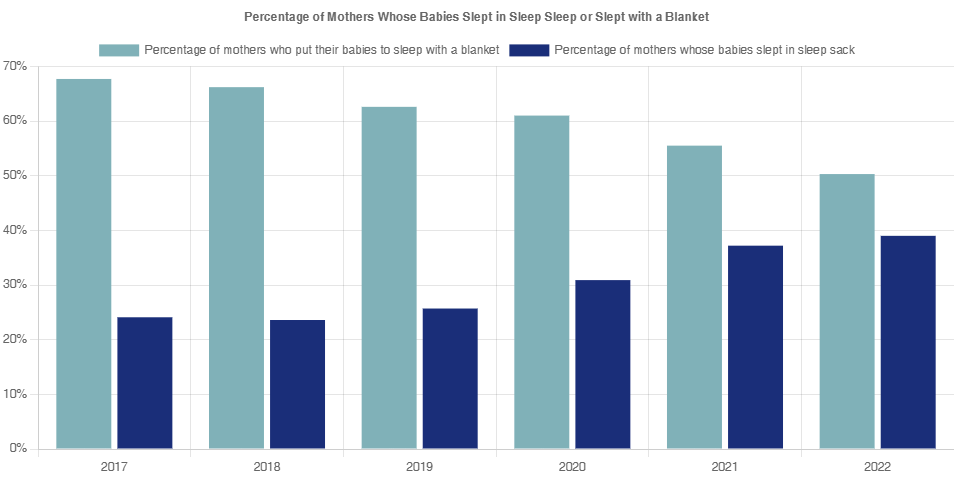
Since 2017, fewer mothers have used blankets in their baby’s sleep spaces, with the share dropping from 67.7% to 50.3%. Meanwhile, more moms have turned to sleep sack or wearable blankets, with usage rising from 24.1% to 39.0%.
Experts warn that blankets and quilts can cover your baby’s airway and cause accidental suffocation during sleep. They can also lead to overheating, which increases the risk of SUID. Using a sleep sack or wearable blanket may help lower your child’s risk of SUID by reducing the chance of airway obstruction.

