
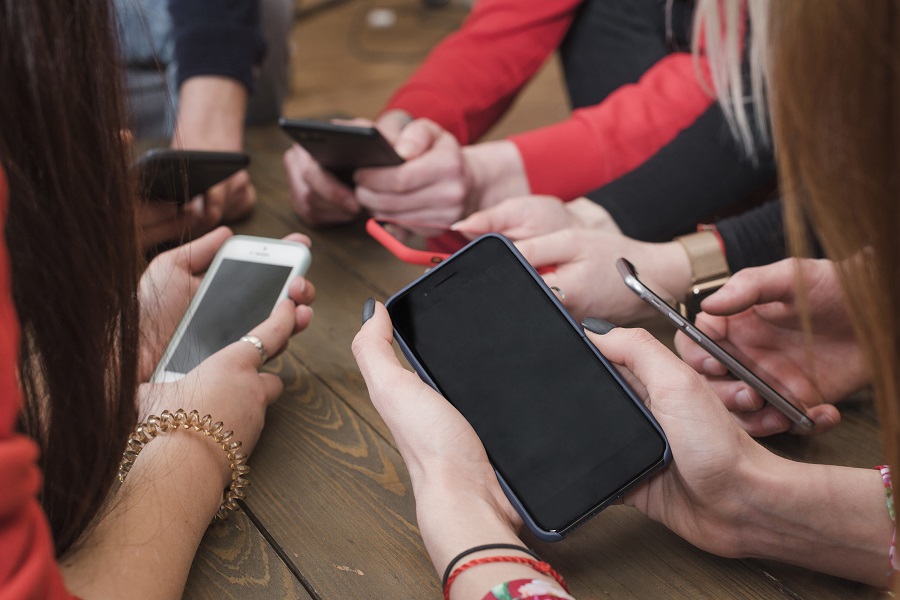


“Ban” usually sounds harsh, but banning smartphones—and social media use—at Catholic schools has been met with surprising approval.
“It’s been very popular—students love it because they’re actually talking to each other again,” said Jesuit Father John Belmonte, superintendent of Catholic education for all 15 diocesan schools. The smartphone ban in Florida’s Diocese of Venice started at the beginning of the 2025-2026 school year.
“They rediscovered what being social actually means, instead of social media,” he added. Students have even started a lunchtime UNO club, a development unimaginable when phones dominated their attention.
More than 6,500 students are affected. All non-school-issued devices are stored in lockable Yondr bags that students keep with them until dismissal. Even younger students, inspired by older ones, have requested to participate.
The results go beyond socializing. Classroom attentiveness has improved.
“When students are distracted by phones, they can’t focus on lessons,” Father Belmonte said. Nationwide, 26 states have banned smartphones in public K-12 schools, while others restrict usage, citing mental health concerns.
Indeed, research has raised alarms: a 2023 U.S. Surgeon General advisory warned children spending over three hours daily on social media face double the risk of mental health issues. A 2025 Journal of the American Academy of Pediatrics study found kids receiving phones at age 12 had a 60% higher risk of poor sleep and 40% higher risk of obesity compared with those who got phones at 13.
Calvert Hall College High School near Baltimore limited phones on campus, citing one-on-one interaction over multitasking long before the Diocese of Venice’s move.
“Students listen better and engage more when they aren’t glued to devices,” said communications director Danielle Hladky.
Faustina Academy in Texas has gone further, banning social media entirely since 2018. “Kids are digitally dependent and disengaged. Phones and social media distract from what’s truly good and beautiful,” said principal Christina Mehaffey.
These schools are not anti-technology despite the rules.
“There’s a time and a place for smart devices and AI tools,” Hladky said. Mehaffey emphasizes that social media-free policies protect students from harmful content while reinforcing the Catholic mission: guiding children toward faith and heaven.
The surprising consensus: students are more present, engaged, and connected—not online, but with each other.