
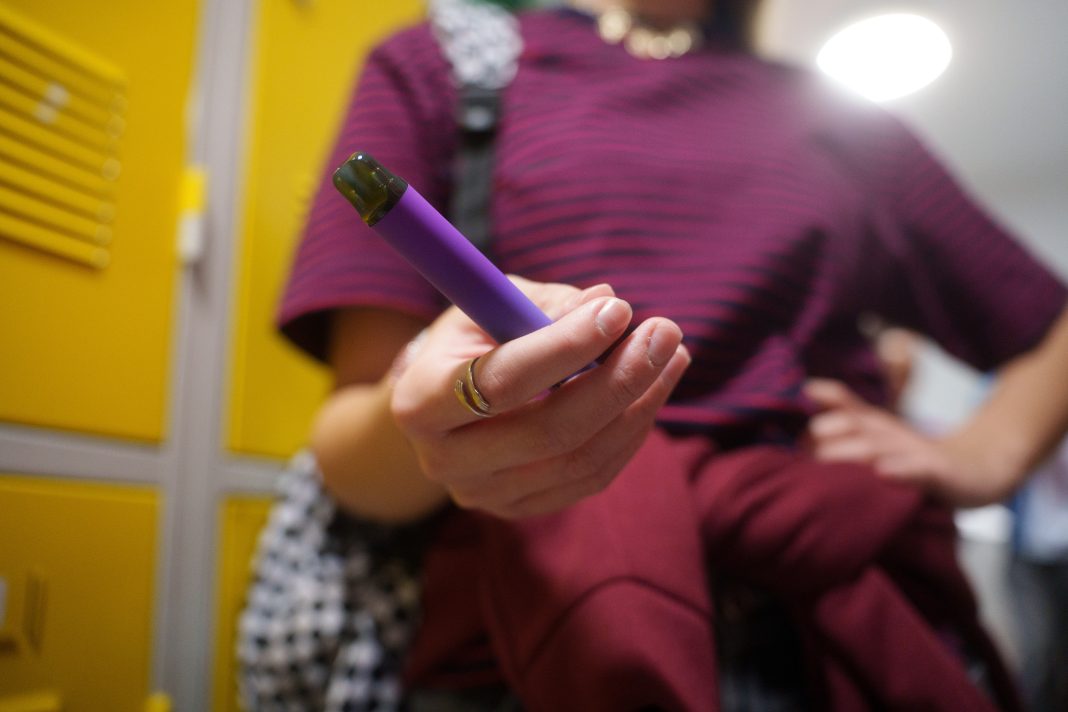
Albuquerque Public Schools installed 93 new vape detectors across 13 high schools, excluding charter schools, as the new school year began, KOB 4 reports. The district allocated $500,000 in opioid settlement funds to buy and install them.
Deputy Superintendent of Operations Antonio Gonzales said student feedback helped guide the district’s response and identify where vaping posed a concern on each campus, whether a bathroom or a spot outside and down the street. He told KOB 4 that input was “invaluable.” The detectors alert a central point at each school when they pick up vapor, and administrators then respond.
Gonzales said APS has a zero-tolerance policy for banned substances on campus, but punishment will be only one part of its response. The district also allocated millions of dollars in opioid settlement funds to expand mental health counseling and drug prevention programming this school year.
That funding also expanded the Crossroads program, which provides master’s-level counseling to students and their families to prevent drug and alcohol use. APS said the program has served more than 1,600 high school and 830 middle school students.
Student vaping remains a longstanding concern nationally. E-cigarettes were the most commonly used tobacco product among U.S. middle and high school students in 2024, according to the Centers for Disease Control and Prevention. About 1.63 million students, or 5.9%, used them, including 7.8% of high schoolers. Most of those students, 87.6%, used flavored products, and more than a quarter vaped every day.
About This Story
Daily Reports is Brant.One’s news roundup. Each day we gather the New Mexico stories worth knowing from newsrooms across the state, sum them up and point you to the source. This one comes from KOB 4’s reporting, and their original story has the interviews and full details.
Editor’s note: Updated Oct. 31, 2026. This story is now part of Daily Reports, our New Mexico news roundup, and was revised to credit KOB 4’s original reporting. Learn how Daily Reports works in our editorial standards.