

Donald Trump has renewed his push for America to produce more uranium. In New Mexico, however, a resistance to reviving uranium mining is spreading among communities near proposed exploration sites, county officials, state leaders, and members of New Mexico’s congressional delegation.
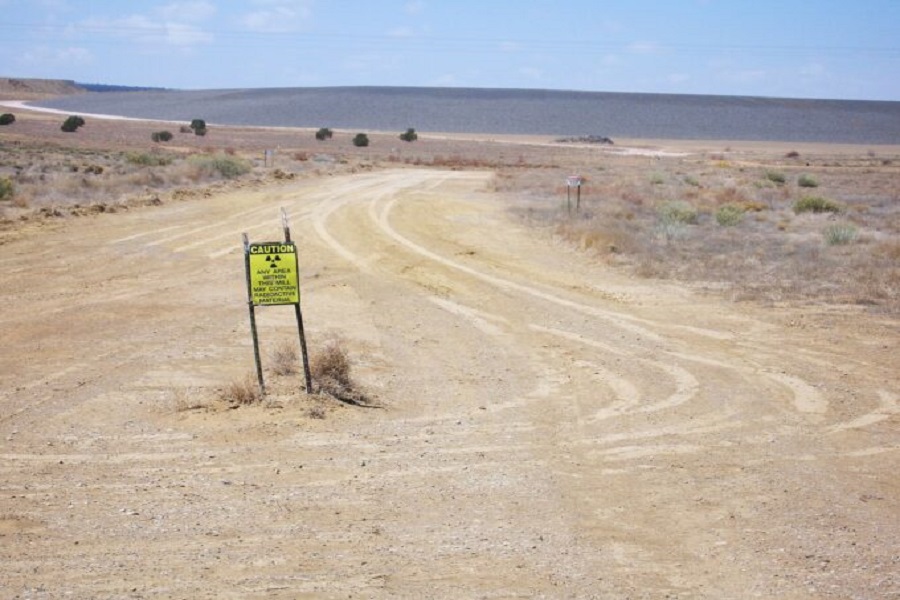
The opposition traced its roots to New Mexico’s history, which still carries the legacy of a uranium industry that left hundreds of abandoned mines and contaminated sites across the state, particularly on and around tribal lands.
As Washington pushes for expanded domestic uranium production, opponents are apprehensive that the state could once again become a major center of an industry whose environmental and public-health consequences are still being dealt with decades later.
The latest move to resist Trump’s push came as New Mexico Commissioner of Public Lands Stephanie Garcia Richard signed an executive order banning new uranium mining projects on the more than 13 million acres of state trust lands. “New Mexicans have been overlooked by the uranium industry and the federal government for far too long,” Garcia Richard said.
She accused the Trump administration of “completely ignoring these communities” while pushing aggressive uranium development nationwide, even though thousands of legacy sites still require remediation.
The order is significant, although its immediate effect is limited because there are currently no uranium-mining proposals on state trust lands.
In the long term, the order establishes a barrier against future uranium projects on those lands. And Garcia Richard’s likely successor says the policy should remain.
Juan Sanchez III, the Democratic candidate seeking to succeed her as commissioner, has vowed to continue the ban.
A fight over the Chama watershed
The resistance is also playing out in northern New Mexico, where a Canadian-based company, Gamma Resources Ltd., has proposed uranium exploration near Canjilon.
In April, U.S. Sens. Martin Heinrich and Ben Ray Luján and U.S. Rep. Teresa Leger Fernández urged Carson National Forest Supervisor James Duran to conduct a full environmental review before allowing exploratory drilling to proceed.
They also called on the Forest Service to suspend its review while Congress considered legislation to protect the Chama watershed, arguing that the Chama River is not simply scenery. It supplies water to communities and supports agriculture across northern New Mexico. “This watershed is not simply an environmental amenity,” the lawmakers wrote. “It is critical water infrastructure.”
The congressional delegation also pointed to the area’s deep cultural history, including longstanding Tribal connections to the landscape.
Local opposition has followed. Rio Arriba County Commissioner Moises Morales, who lives near Canjilon, has opposed the proposed exploration. Tirzio Lopez, a member of the Upper Chama Soil and Water Conservation District board and the New Mexico Game Commission, has also raised objections.
The issue has now moved from local controversy into federal legislation.
Heinrich, Luján, Leger Fernández, and other New Mexico Democrats are sponsoring the Chama Basin Watershed Protection Act, which would prohibit uranium mining across much of Rio Arriba County, including portions of the Santa Fe and Carson national forests.
Advertisement
The legislation faces long odds because Republicans control both chambers of Congress. But that could change after the 2026 elections.
If Democrats regain control of the House — and eventually the Senate — the measure could have a substantially different future.
New Mexico remembers what uranium left behind
The opposition is not simply about a new drilling proposal. For many New Mexicans, uranium immediately evokes the unfinished business of the previous mining era.
The congressional delegation cited hundreds of abandoned uranium mines on and near tribal lands, particularly within the Navajo Nation, and pointed to contamination of water sources and health concerns in affected communities.
The broader legacy includes roughly 1,100 abandoned uranium mines and mill sites in New Mexico, with about 500 on or near the Navajo Reservation, according to figures cited in the debate over cleanup.
Some contaminated material has been removed, buried or otherwise remediated. But cleanup has been slow and expensive.
The federal government has spent decades addressing radioactive waste left behind after the uranium boom declined in the 1980s. Compensation programs have also been established for some people affected by uranium mining and nuclear weapons testing.
For communities living alongside the abandoned sites, however, the legacy has never become merely historical.
It remains part of the landscape.
That is why Garcia Richard has argued that the potential revenue from new mining does not outweigh the risks.
“The long-lasting environmental and public health impacts of uranium contamination outweigh any potential revenues to state coffers uranium mining could provide,” she said.
The political pressure is spreading
The issue is also exposing tensions within New Mexico’s Democratic Party.
Gov. Michelle Lujan Grisham has criticized Trump’s push to expand uranium mining while highlighting her administration’s investments in childcare, higher education, health care, and housing.
But the governor has also faced questions about the slow progress in efforts to accelerate the cleanup of abandoned uranium mines.
In 2024, Lujan Grisham and Arizona Gov. Katie Hobbs proposed changes intended to streamline decision-making over the cleanup of abandoned uranium mines.
The administration has emphasized the need for faster action while maintaining safe cleanup and disposal of radioactive legacy waste.
Meanwhile, Democratic gubernatorial front-runner Deb Haaland has been quieter on the issue in recent campaign messaging.
That silence is notable because Haaland, a former congresswoman and Interior secretary, is an enrolled member of the Laguna Pueblo.
The massive Jackpile uranium mine, once among the world’s largest open-pit uranium mines, lies adjacent to Laguna Pueblo.
Haaland had previously spoken forcefully about the mine’s legacy while serving in Congress. Her federal experience also puts her at the center of a question of how to balance Washington’s growing interest in domestic uranium production with the demands of communities that have already lived through its consequences.
Trump wants more uranium. New Mexico wants answers first.
The Trump administration’s argument is largely framed around energy and national security.
Supporters of uranium production say the United States needs a stronger domestic nuclear-fuel supply chain and less dependence on foreign sources.
But in New Mexico, that argument is running into a community memory that stretches back generations.
The state’s opponents are not necessarily arguing that nuclear energy has no role in America’s future. They are asking who will bear the environmental costs if uranium production expands — and whether the government has finished dealing with the damage from the last time the industry flourished.
That question is becoming harder for politicians to ignore.