

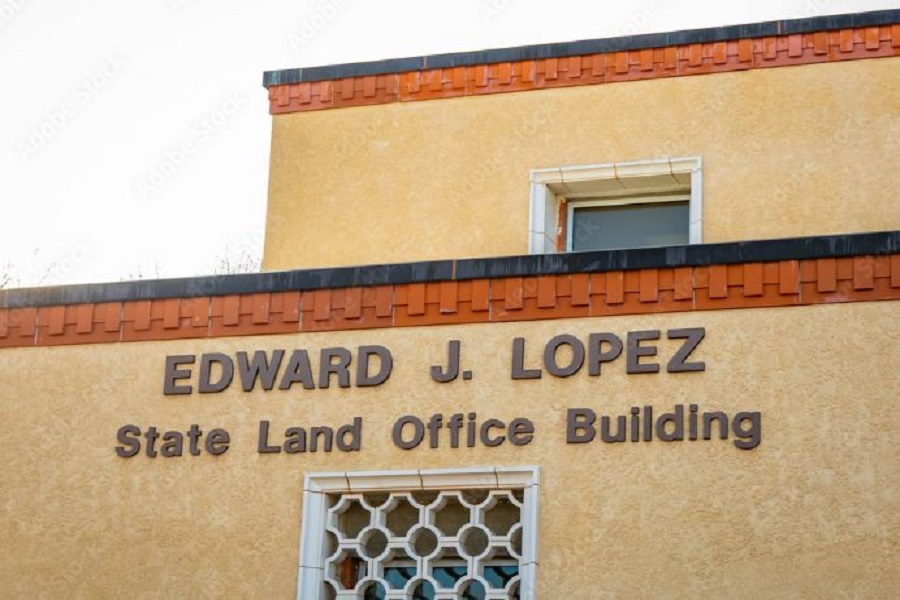
The New Mexico State Land Office generated a record $3.2 billion in revenue during fiscal year 2026, providing billions of dollars for public schools and other state institutions while highlighting the financial benefits of diversifying income from state-owned lands.
The New Mexico State Land Office generated a record $3.2 billion in revenue for fiscal year 2026, including over $719 million in non-royalty payments and $24 million from commercial leasing. Public schools received the largest share at $2.9 billion, with additional funds supporting universities, hospitals, and specialized institutions. The agency estimates this saves each taxpayer about $3,500 annually.
Under Commissioner Stephanie Garcia Richard, revenue has grown steadily since 2019, surpassing $16 billion total and diversifying beyond oil and gas into renewable energy, housing, and recreation. The agency has also prioritized environmental accountability, plugging over 900 abandoned wells, while officials emphasize balancing revenue growth with long-term stewardship of state trust lands.
Stephanie Garcia Richard, the State Land Commissioner, announced the record profits, which included more than $719 million in non-royalty payments and over $24 million from operations involving leasing businesses through the agency’s Commercial Resources Division. Records have now been set in both cases.
The money helps to finance public education, health care and other government institutions in New Mexico. The agency states that the income saves each state taxpayer around $3,500 a year, which would otherwise have to be used to help pay for these public services.
Public schools received the largest share, accounting for about $2.9 billion of the revenue for the fiscal year, while other recipients included public universities, hospitals, specialized schools, and state facilities.
“I made it clear when I got elected that the State Land Office would be open for business, and the results speak for themselves,” Garcia Richard said.
The commissioner credited the agency’s financial performance to the measures it had taken to diversify its sources of revenue. At the same time, the agency made sure that companies were held accountable for their use of state lands and for protecting the resources for the benefit of future generations.
Public schools receive the biggest share
The $2.9 billion going to public schools was the biggest part of the State Land Office’s FY26 revenue, highlighting the significance of the state’s trust lands in funding New Mexico’s education system.
Other major beneficiaries were the public buildings, which got $53.1 million, and the state penitentiary, which received $34.5 million.
The University of New Mexico and New Mexico State University were each given $22.3 million; the New Mexico Military Institute received $19.9 million and the state hospital $16.8 million.
Other specialized institutions for health and education also gained support. The Miners’ Colfax Medical Center was given $9.1 million, the New Mexico School for the Blind and Visually Impaired received $8.8 million, and the New Mexico School for the Deaf was awarded $8.6 million.
The New Mexico Institute of Mining and Technology was given $1.8 million.
The funding allows educational programs and services for students with disabilities to be maintained, since otherwise they would have to rely on more support from other public funding sources.
Dr. Heather Miller, superintendent of the New Mexico School for the Blind and Visually Impaired, said that the revenues generated by the work of those at the NMSLO bring about lasting benefits for communities and are particularly significant to organisations such as the NMSBVI.
The school will be able to offer programs for children who have visual impairments and are blind, from birth until they graduate, because of the funding.
Revenue has grown under Garcia Richard
The most recent record is part of a phase featuring continuous revenue growth at the agency.
The State Land Office reached a annual revenue of over $1 billion for the first time in 2019, which was the first year that Garcia Richard was in office, and it has have produced at least $1 billion each year since then, hitting over $2 billion for the first time in the fiscal year 2022.
The agency has now produced more than $16 billion since Garcia Richard was appointed in 2019 with the release of the FY26 results.
The agency stated that the revenue it had earned over the previous eight years was greater than the total amount it had generated in the 30 years before that, even when allowances were made for inflation.
In the past, oil and gas royalties have made up the majority of the State Land Office’s income. The agency has been aiming at expanding its sources of revenue by means of development in the field of renewable energy, the provision of affordable housing, economic development, outdoor recreation and other commercial activities on state lands.
The most recent figures indicate that income from sources other than royalty is increasingly becoming an important element in the agency’s financial performance, even though oil and gas is still a major source of revenue.
What the record means for New Mexicans
The fact that the amount is $3.2 billion is important not only for the agency’s balance sheet since it shows how revenue from the state trust lands can be used to pay for public services.
The funding serves as a major source of support for schools across the state, and universities as well as specialized educational institutions also receive shares which aid them in maintaining their facilities and in providing their programs.
The agency says that its revenues result in each resident of New Mexico saving about $3,500 a year. This is an estimated benefit from public funding and not a direct cash payment or a tax refund to individual residents.
Expanding revenue streams beyond oil and gas could enable the state to obtain income from a wider variety of land uses and business activities.
The problem relating to environmental stewardship is to keep those earnings without damaging the long-term state of the lands which produce them.
According to Garcia Richard, the agency has aimed at balancing the need to generate revenue with its duty to act in an environmentally responsible manner. She set up an Accountability and Enforcement programme as a result of which more than 900 abandoned oil and gas wells on state land have been plugged. The office also founded an Environmental Compliance Office to assess the damage and to assist in making sure the sites are cleaned up.
It is important to make these efforts since if abandoned wells and other environmental liabilities are not dealt with they can result in long-term costs for public resources.
Long-term stewardship remains a responsibility
The state trust lands are managed with the aim of producing revenue for the designated beneficiaries, which makes the State Land Office responsible for both the financial performance and for the long-term management of the assets.
Col. David West, who chairs the Advisory Board of the State Land Trusts, commended the agency’s results for fiscal year 2026 and stressed the need for responsible management.
“The State Land Office’s reported FY26 revenue is a significant result for New Mexico’s trust beneficiaries,” West said. He also commended agency employees for their work and stressed the need to keep long-term stewardship in view.