
If you’re enrolled in Medicaid, you may already know about recent changes to the government-sponsored health insurance program. These changes stem from H.R. 1, or the “One Big Beautiful Bill Act,” signed into law on July 4, 2025.
Federal legislation known as H.R. 1, signed in July 2025, has eliminated Medicaid eligibility for certain lawfully present immigrants, including refugees and trafficking survivors, with changes taking effect October 1, 2026. New Mexico has already seen over 2,000 immigrants lose coverage, while additional requirements—including work or activity mandates starting January 2027—could affect roughly 89,000 more residents through new income verification and renewal processes.
New Mexico’s Health Care Authority is notifying affected residents and urging them to update contact information, respond to official requests, and check exemption eligibility. The state has launched BeWell, an alternative insurance marketplace, and plans informational sessions to help residents navigate the changes, which are part of broader federal cuts projected to reduce nationwide insurance coverage by millions over the next decade.
Under H.R. 1, some non-U.S. citizens who legally live in the country are no longer eligible for federally funded Medicaid. This includes refugees, asylees, parolees, and survivors of domestic violence or trafficking.
H.R. 1’s changes could affect more than noncitizens. In September, New Mexico Medicaid began sending letters to adults who may have to meet new work or activity requirements. State officials said about 200,000 New Mexicans received turquoise envelopes explaining the changes.
Not every Medicaid member will be affected, but officials urge everyone to keep their contact details and personal information up to date. Keep an eye out for notices and send in any documents officials ask for as soon as you can.
As the new rules roll out, people have been sharing mixed reactions. We looked at how social media users responded to the Medicaid policy updates.
A netizen said American taxpayers shouldn’t have to cover healthcare costs for citizens from other nations. Others said they were “tired of paying for everyone else.” Another netizen claimed that middle class people are struggling. “Some get more money per month than someone who worked their whole lives and lived in the US,” another netizen added.
One netizen said the new rules could help Americans who need Medicaid coverage get access to it. Another called the changes “an amazing start.”
Meanwhile, others worry about how the changes could affect senior citizens. One resident said officials should ensure that assistance reaches eligible beneficiaries rather than those “capable of going to work and contributing to their own welfare.”
As discussions about the rules continue, so do questions about what they mean for Medicaid members. We fact-checked the policy changes to help you understand what’s changing and how the rules could affect you.
What is Medicaid?
According to the New Mexico Health Care Authority (NMHCA), the federal government established Medicaid in 1965. The program partners with state governments to provide health insurance to low-income Americans. Nearly 66 million Americans are enrolled in Medicaid as of June 2026. Each state manages its own program based on local needs in accordance with federal and state laws.
To qualify for Medicaid in New Mexico, you must live in the state, meet the program’s citizenship or immigration rules, and meet its income limits. The income requirements depend on your situation.
Applicants may also qualify if they are 65 or older, blind, or have a disability. Pregnant women and those responsible for a child under 18 may also be eligible. In New Mexico, Medicaid pays for more than half the births.
The federal and state governments jointly funded Medicaid. The federal government covers about 70% of the cost and New Mexico the remaining 30%. Some programs, such as long-term care, follow different reimbursement ratios.
How many New Mexicans are currently enrolled in Medicaid?
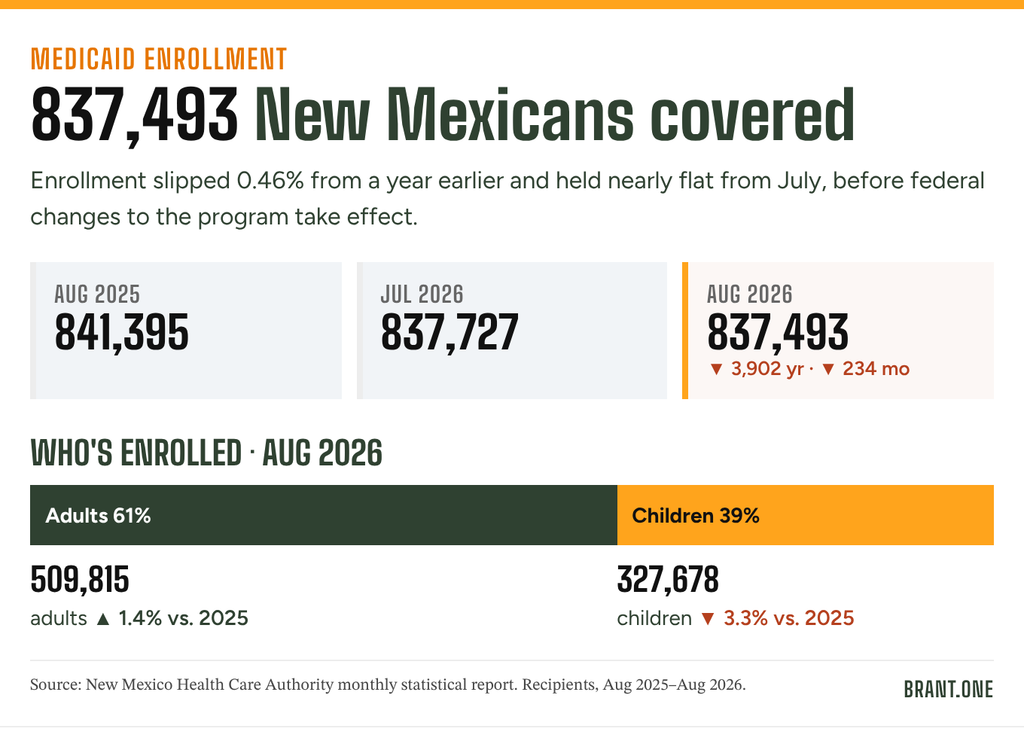
According to the latest NMHCA data, Medicaid covered 837,493 residents in August 2026, a 0.46% drop from August 2025. Enrollment also dipped by 233 citizens, or 0.03% from July 2026.
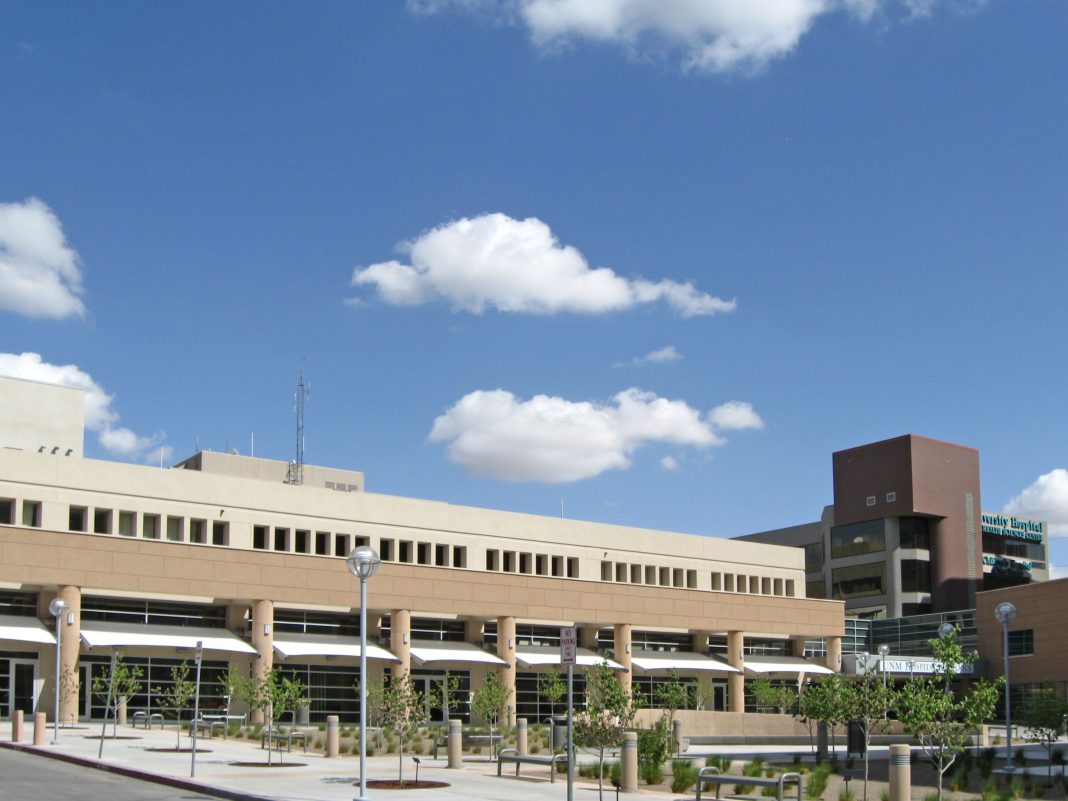
Source said nearly half of New Mexicans rely on Medicaid to help cover their health care costs. Now, the state is preparing hundreds of thousands of residents for the impact of major federal cuts to the program.
“This group, what we need you to do is take action if you haven’t already. It’s important,” said Jeffery Horn of the NMHCA Medical Assistance Division.
What Medicaid changes are already in effect?
In May 2025, House Republicans approved a package advancing President Donald Trump’s agenda. The bill combined tax cuts, spending reductions, border security funding, and other priorities.
House committees spent months working on the bill. It runs more than 1,000 pages and carries the title “One Big Beautiful Bill Act.” The package centers on nearly $700 billion in Medicaid spending cuts, according to the Congressional Budget Office.
Starting October 1, 2026, some lawfully present immigrants who received Medicaid lost their eligibility for the program.
Only certain immigrant groups will still qualify for Medicaid, including lawful permanent residents, Cuban-Haitian entrants, and citizens of the Compact of Free-Associated states (COFA). Children under 21 and pregnant individuals who lawfully live in the U.S. will also remain eligible, although some lawful permanent residents may have to wait before qualifying for coverage.
What Medicaid changes take effect in 2027?
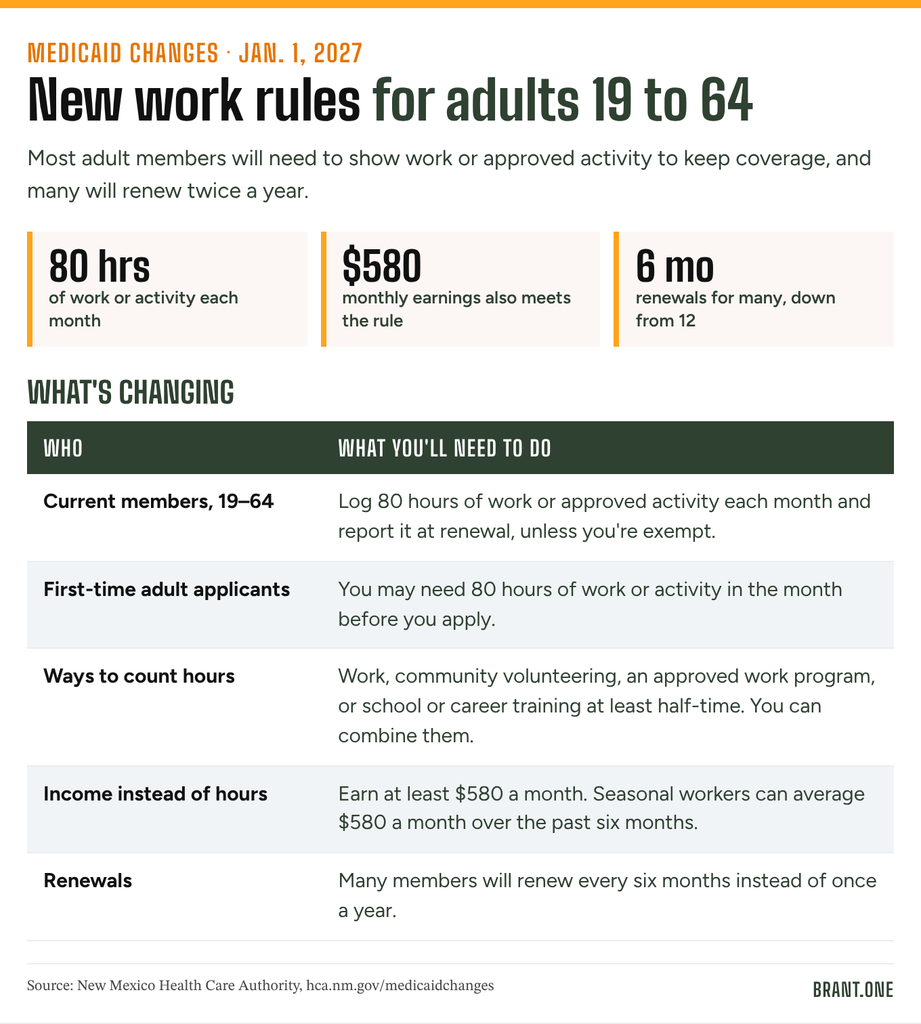
NMHCA said if you’re 19 to 64 and enrolled in Medicaid, you should prepare for new work and activity requirements taking effect January 1, 2027.
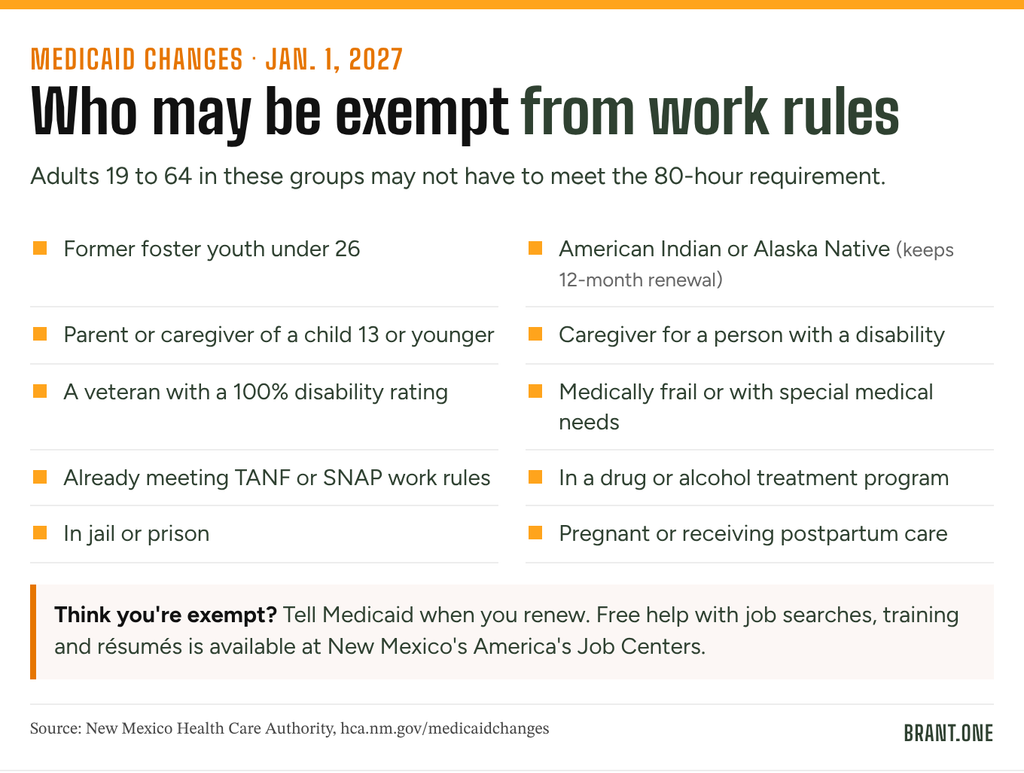
If you think you qualify for an exemption, let Medicaid officials know when you renew your coverage.
You may also meet the work requirement by earning at least $580 a month. If you work seasonally, your average monthly income over the past six months must be at least $580.
You may also meet the work requirement by earning at least $580 a month. If you work seasonally, your average monthly income over the past six months must be at least $580.
New Mexico has 24 America’s Job Centers where you can find job openings, training programs, and volunteer opportunities. You can also use their computers for free and get help preparing your résumé and filling out job applications.
How many New Mexicans could lose Medicaid coverage?
As of October 7, the NMHCA reported that 2,350 immigrants who were legally living in New Mexico had lost Medicaid coverage this month.
Federal Medicaid changes will also affect people beyond immigrant communities. Starting in January, the health care authority estimates that about 89,000 more residents will lose coverage.
The state estimates that about 80,000 people could lose Medicaid coverage because of the new work requirements. Another 100,000 could lose their benefits under the updated renewal processes. To help you keep your coverage, the state plans to send reminders to those at risk of losing benefits.
The CBO’s preliminary estimate found that the proposals would leave 8.6 million fewer people with health insurance over the decade.
If you need help, visit the New Mexico Center on Law and Poverty’s website for a full list of available resources.
What is New Mexico doing to address the changes in Medicaid?
New Mexico has introduced BeWell, a health insurance marketplace that offers another option for residents who lose federal health coverage. Advocates urge residents to sign up by November 1 to avoid delays in getting coverage.
As the state works to make health care more accessible, nonprofits like the NMCLP continue to help residents who need assistance.
The health care authority urges you to act early and contact them as soon as possible if you think you qualify for an exemption.
Starting in November, the NMHCA will hold information sessions across New Mexico to help Medicaid members understand what’s changing and how the new rules may affect them.