

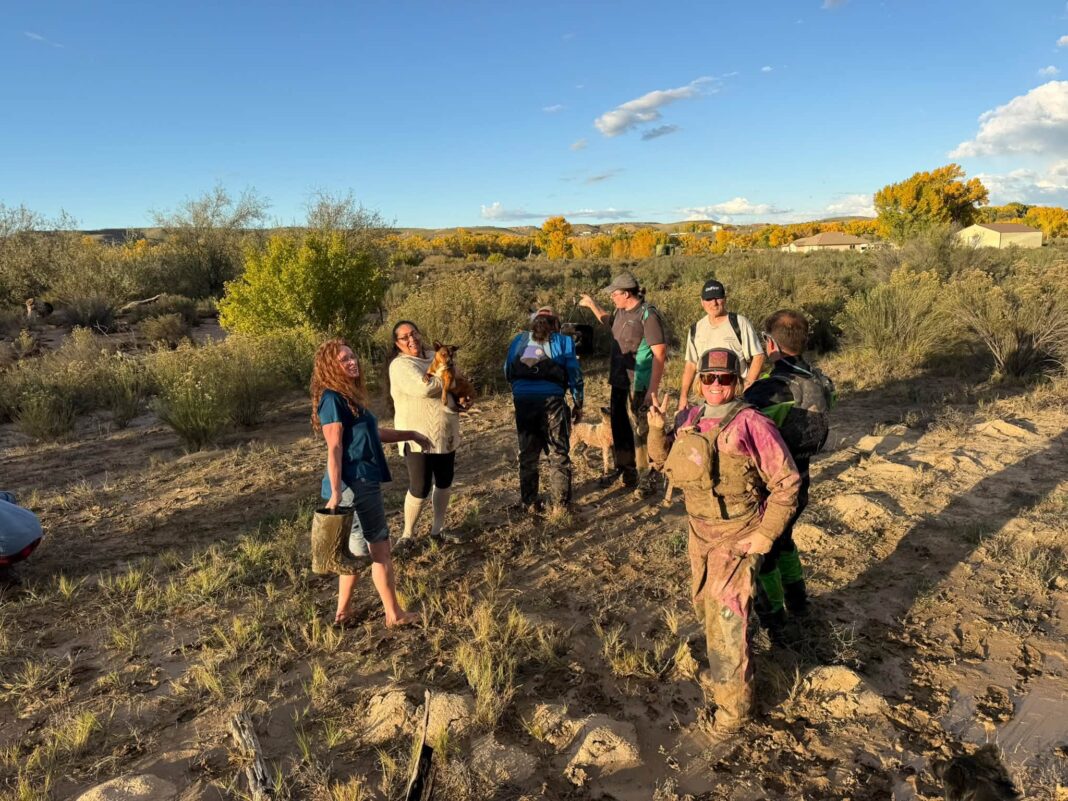
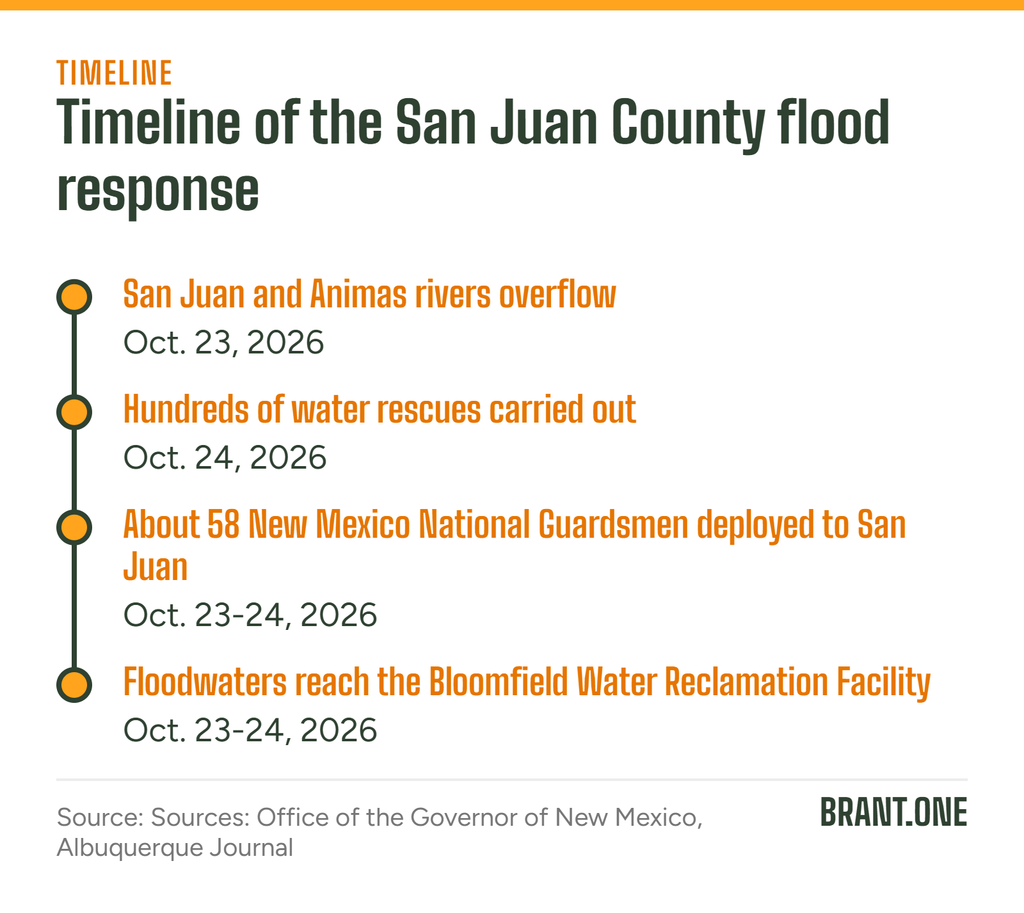
Do you remember the flooding that hit San Juan County in October? According to the Albuquerque Journal, heavy rain caused the San Juan and Animas rivers to overflow their banks beginning October 23. Floodwaters inundated streets, homes, and businesses in Farmington, Bloomfield, and Shiprock.
Severe flooding from the San Juan and Animas rivers hit Farmington, Bloomfield, and Shiprock beginning October 23, prompting evacuations of roughly 1,500 homes and over 60 water rescues. While human evacuees sheltered at McGee Park and local churches, Farmington officials set up a temporary animal shelter, first off Allen Street, then at the Business Incubator building, partnering with Desert River Guides, which housed 125-150 animals over three weeks before flooding forced closure on November 2.
The ASPCA assisted roughly 800 animals through sheltering, supplies, and transport between October 30 and November 20. By November 19, most animals were reunited with owners or transferred to the Farmington Regional Animal Shelter. Officials say the county’s existing emergency plan already addresses animal welfare, though a formal review may follow once recovery concludes, especially as forecasters predict a stormier winter ahead.
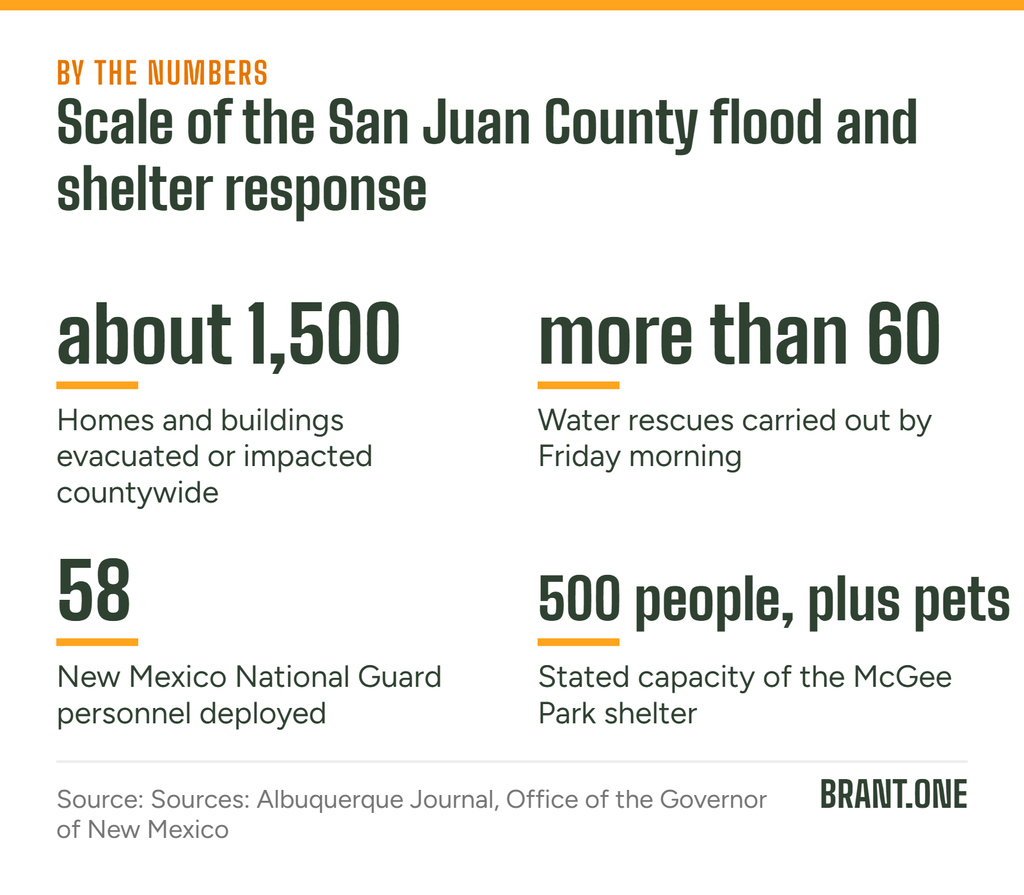
The news outlet reported that San Juan County estimated authorities evacuated residents from about 1,500 homes across the county. The National Weather Service also used that figure to estimate the number of residents and buildings affected. Per the Albuquerque Journal, emergency crews carried out more than 60 water rescues in a single day, mainly between Bloomfield and Farmington. They used boats and helicopters to reach stranded residents.
San Juan County declared a state of emergency, allowing it to mobilize local resources and seek state or federal disaster assistance. Governor Michelle Lujan Grisham also began preparing a request for a federal disaster declaration, according to the Office of the Governor.
Where Did the Displaced Animals Go?
In a press release, the Office of the Governor said San Juan County opened an evacuation shelter at McGee Park in partnership with the American Red Cross. The site accommodated displaced residents, pets, and recreational vehicles (RVs). The governor’s office added that Shiprock residents also found temporary refuge at Power House Church and First Baptist Church.
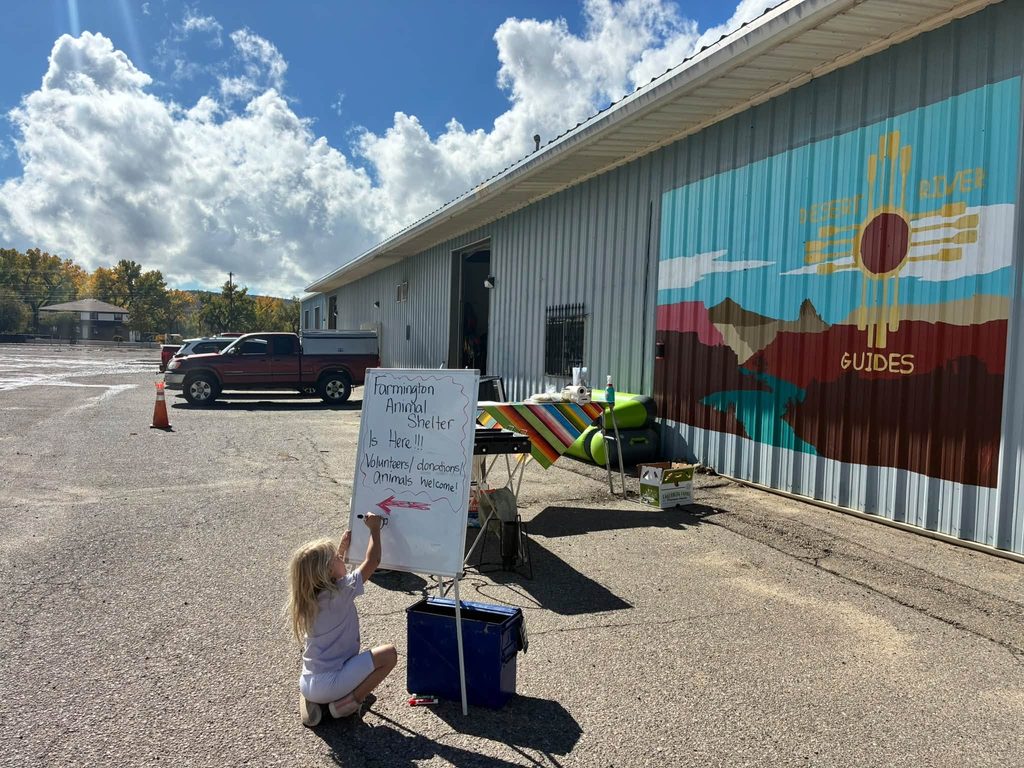
Animal sheltering took a separate path as the response unfolded. Farmington City Manager Shaña Reeves said the city established a temporary emergency animal shelter within days of the first flood. Officials initially placed it at a city-owned property off Allen Street, then moved it on October 25 to a larger city-owned building at Miller and Piñon streets, known as the Business Incubator. Reeves said the building previously housed two businesses: Bear Automotive, which had moved out, and Desert River Guides, a river-rafting outfitter that still occupied part of the space.
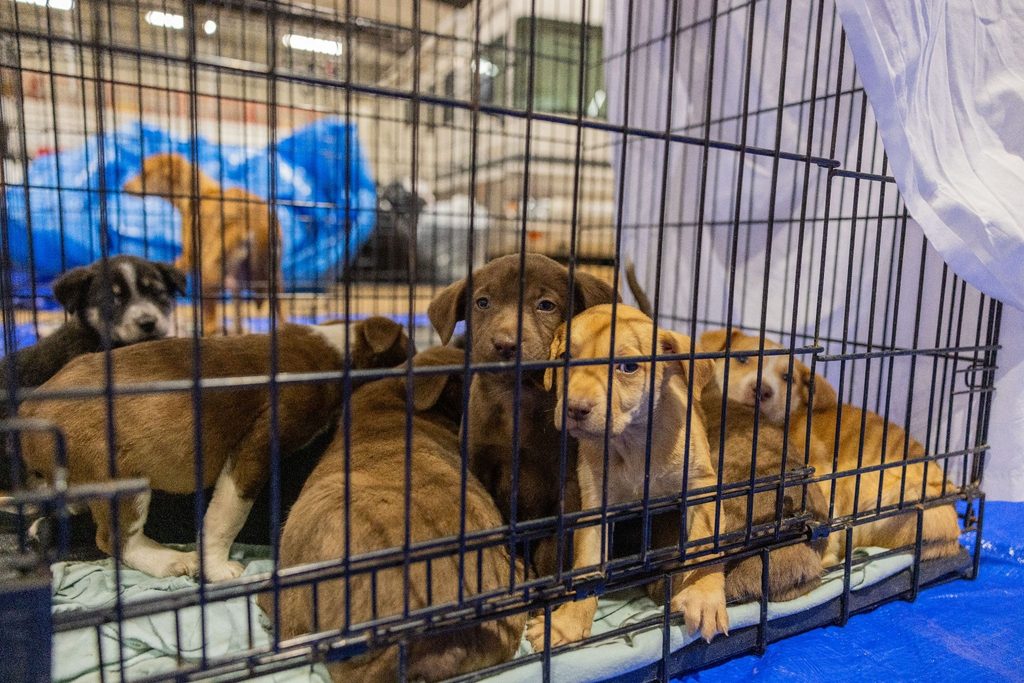
Ryan Dudgeon, co-owner of Desert River Guides, said the business turned its warehouse at 109 E. Piñon St. into an emergency animal shelter for about three weeks. He estimated that the shelter housed 55 to 65 animals on any given day and cared for 125 to 150 animals in total before closing.
Reeves said the city established, staffed, and funded the operation, with Desert River Guides serving as what she called “a valued and generous community partner.” She said the business allowed Farmington Regional Animal Shelter (FRAS) staff to sleep in part of the building, store food for response teams, and help carry out raft-based rescues of people and animals. Flooding forced the shelter to close on November 2, and officials moved the animals and supplies to McGee Park.
Advertisement
How Did Animal Welfare Groups Respond?
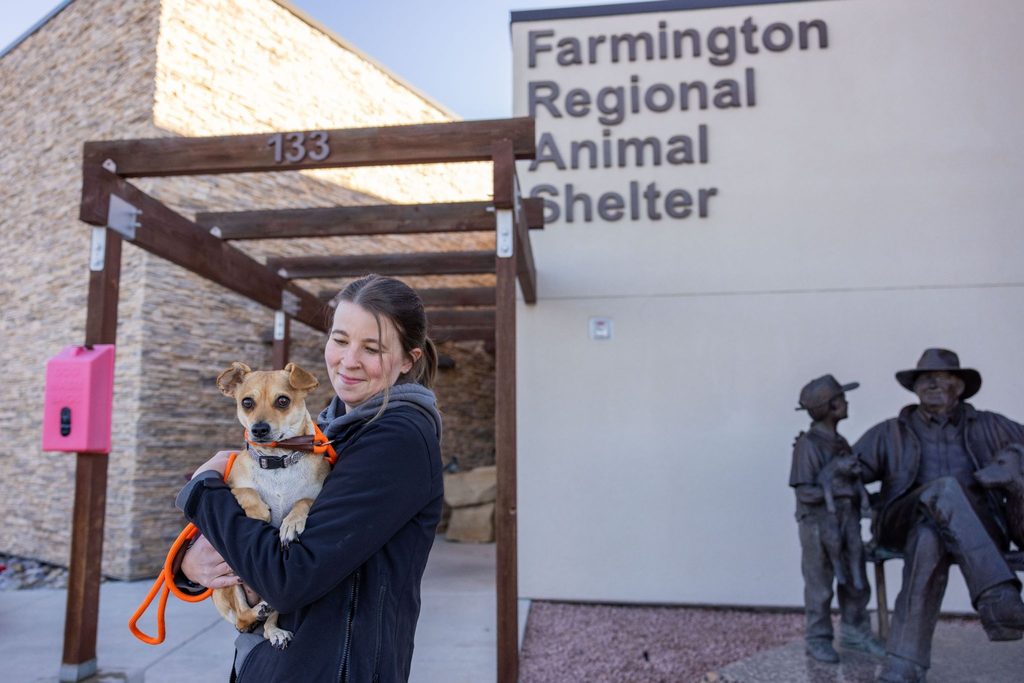
Reeves said the city funds and operates FRAS, with additional support from the Farmington Animal Foundation. The shelter normally serves Farmington and San Juan County, and county funding also covers stray animal sheltering services for the Navajo Nation.
She said the shelter could not accommodate a large-scale emergency response. For that reason, the city opened a separate temporary facility to house animals displaced by the flooding.
Reeves added that the Farmington Animal Foundation donated four extra large crates, $2,000 for laundry expenses, and additional funding for smaller kennels.
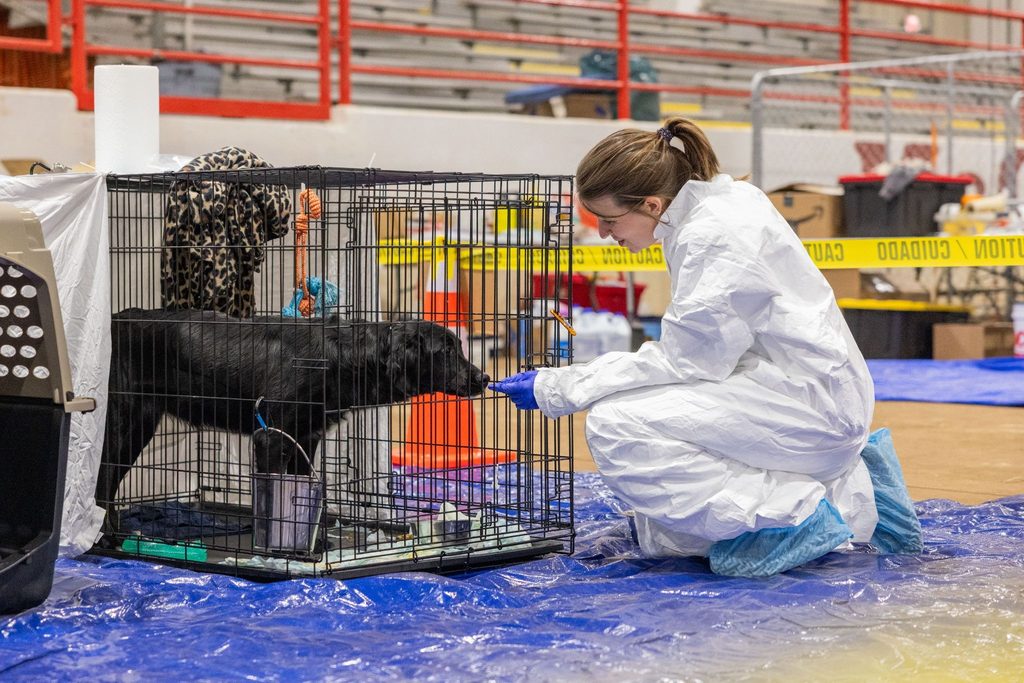
The American Society for the Prevention of Cruelty to Animals (ASPCA) arrived in San Juan County on October 30 at the request of FRAS. Since then, the organization has helped roughly 800 animals through emergency sheltering, pet food and supply distribution, field services, and transportation of unowned animals out of the disaster zone, Tim Rickey, vice president of ASPCA National Field and Disaster Response, said in a statement provided by the group.
Reeves said the ASPCA’s veterinary team arrived on November 6 and moved out of the area on November 20.
How Were Animals Reunited With Their Owners?
Dudgeon said owners reclaimed most animals brought to the Desert River Guides warehouse within 10 days. He added that staff later found new homes for a smaller number of animals, including some dogs, chickens, and at least one rabbit, whose origins were unknown.
“By November 19, all animals had either been reunited with their owners or transitioned to the Farmington Regional Animal Shelter. By November 20, all remaining emergency sheltering supplies and equipment had been removed from McGee Park,” Reeves told Brant.One.
When asked for figures, San Juan County spokesperson Devin Neeley said the county does not have a current count of how many animals were sheltered or reunited.
What Did the Floods Reveal About Pet Evacuation Planning?
Neeley said the county’s Emergency Operations Plan already includes animals and calls for collaboration with local animal shelters. He added that McGee Park never reached its 500-person capacity, leaving ample space for pets and RVs.
“There are no changes to the plan in the works; this incident is still in the recovery phase. I would anticipate that an After Action Review, somewhere down the road, would inform the necessity of any changes,” Neeley said in a statement sent to Brant.One.
Dudgeon said he saw little advance planning for displaced pets. However, he said the city and county moved quickly to set up space for animals once the flooding hit, making the response effective despite that gap
Advertisement
“The result of those efforts, despite a lack of prior planning, helped many individuals and hundreds of animals in our community. I do not think that, even with prior planning, the situation could have been handled any better. Hopefully, this was a once in a lifetime experience for everyone involved,” Dudgeon said.
Reeves said the city will evaluate its response, as it does after major emergencies, to identify ways to improve future preparedness. She added that the city will tailor its resources to each emergency based on its size and location.
“The facilities and resources utilized during any future emergency will necessarily depend upon the nature, location, magnitude, and evolving conditions of that particular event,” Reeves told Brant.One.
Volunteers and improvised spaces also supported animal evacuations elsewhere. According to The Gazette, the same storm system flooded Pagosa Springs and Archuleta County in southwestern Colorado. There, the Colorado National Guard rescued a couple and their pets from a submerged RV, highlighting how flooding put both people and animals in danger.
What Lies Ahead for Animal Rescue and Disaster Preparedness?
The Major Disaster Declaration request tied to the San Juan County flooding remains pending, and the county does not yet know what costs, if any, will be covered, Neeley said.
According to the Office of the Governor, the still-pending federal Major Disaster Declaration covers 14 New Mexico counties and three tribal nations affected by flooding between September 20 and October 2. The state estimates that the earlier incident caused $27.1 million in damage to public infrastructure.
To recall, the governor’s office said the federal government had partially approved a separate request from Lujan Grisham for an emergency declaration following historic flooding in northern New Mexico. President Donald Trump approved the declaration on October 26, covering San Juan, Rio Arriba, Cibola and Sandoval counties and Acoma Pueblo, the Jicarilla Apache Nation, San Ildefonso Pueblo, Zia Pueblo, and Laguna Pueblo
Rickey said New Mexico could see a wetter, stormier winter as the current Super El Niño pattern continues into 2027. He said that animal welfare organizations nationwide are already facing capacity and resource challenges, making it harder to respond to disasters. Rickey said the ASPCA will continue working with Farmington on training and preparedness beyond its direct disaster response.
Dudgeon said Desert River Guides does not plan to assume a formal role in animal rescue. However, he said the company would step in again if another disaster struck the community.
“We truly hope we will never see something like this in our community again. If it does happen, we are prepared to step up and step out to give back to the community that supports us and has helped us grow,” Dudgeon said.