


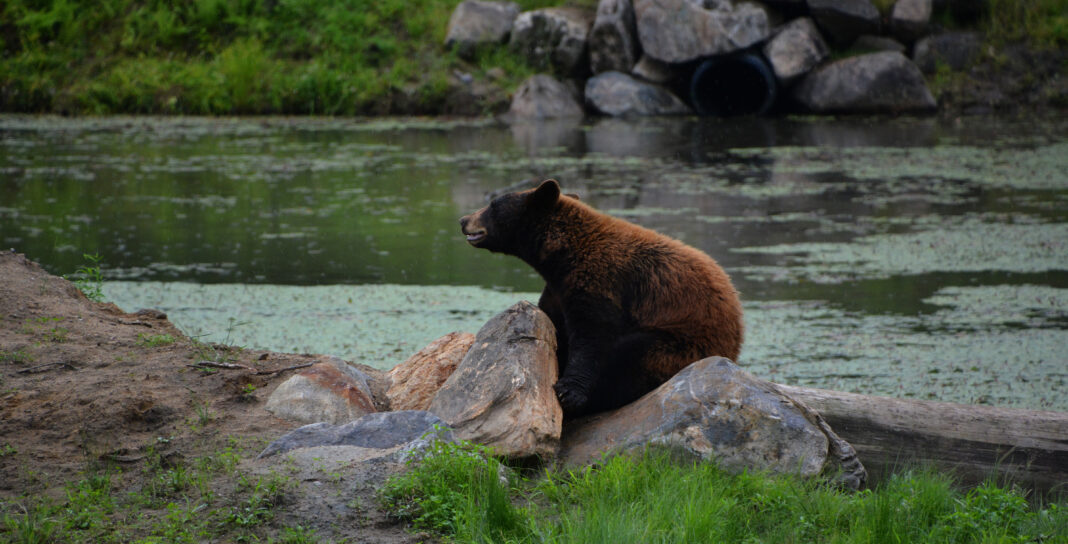
Black bears are coming down from the mountains into New Mexico neighborhoods in record numbers this year. As drought continues to push them into neighborhoods in search of food and water, authorities urge the public to help prevent bears from becoming habituated amid rising bear sightings across the state, including in residential areas.
Since April, game officers and residents have killed 307 black bears that posed threats to public safety, more than in any full year on record, according to New Mexico Department of Wildlife (NMDOW) data cited by Source NM. That is more than five times the 60 conflict-related killings recorded in all of the previous license year, the Santa Fe New Mexican reported.
“It has been a particularly rough year for bears,” NMDOW Director Michael Sloan told state lawmakers on Sept. 30, explaining that severe drought had degraded their habitat and food sources, Source NM reported.
Even though fall rains have improved conditions since late July, 52% of New Mexico still remained in drought, according to the U.S. Drought Monitor as of the Oct. 27 reading. NMDOW in an Oct. 26 advisory said that “low moisture and high temperatures have impacted various mast crops such as nuts, seeds, berries and fruits,” forcing bears to stray from their habitat to find food. That search leads them into populated areas, where food and water are easier to come by, the department said. And for bears, that search into town can turn deadly.
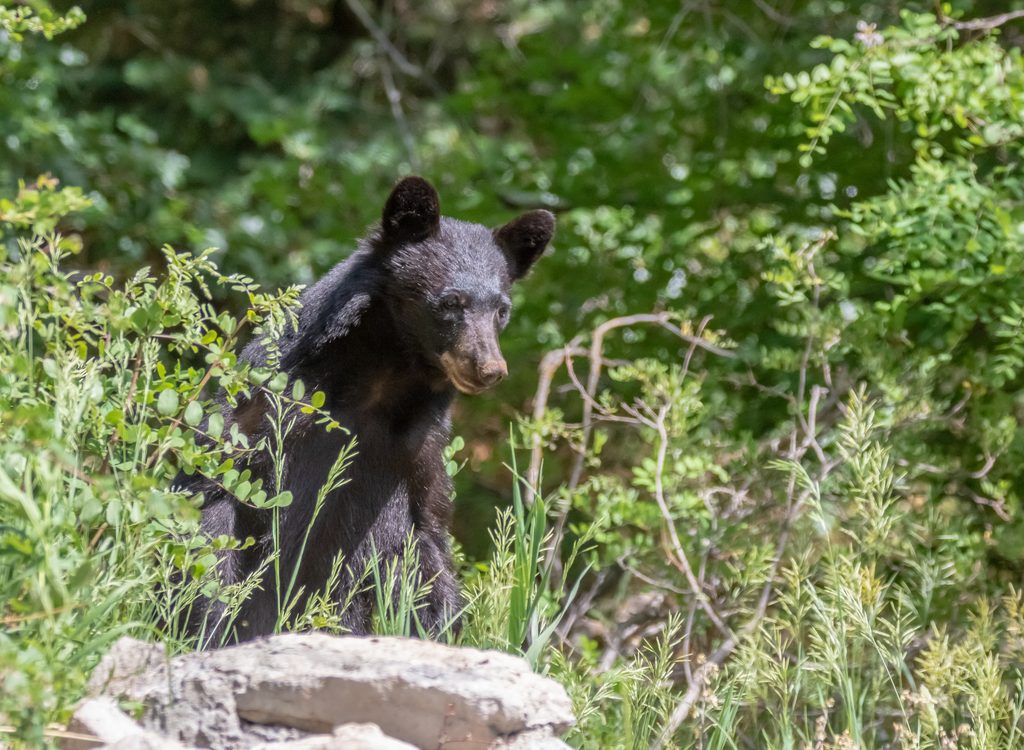
One of those encounters played out last month at Tanoan Golf Course, where a mother bear and her two cubs climbed a tree. It took NMDOW and ABQ Fire Rescue two days to bring all three down.
Lt. Jason Fejer, a public information officer for ABQ Fire Rescue, recalled the events of the multi-day rescue operation for the mother bear and her two cubs. In a summary sent to Brant.One, he said AFR was called to the golf course just after 12:30 p.m. on Oct. 19 to help NMDOW with the rescue. NMDOW officers sedated and trapped the mother bear first, and “the crew from Station 16 assisted getting the bear into a cage,” Fejer said.
Darren Vaughan, NMDOW’s communications director, confirmed that conservation officers had set up protective equipment on the ground to cushion the mother bear’s fall after she was sedated. The crew then discussed several ways to bring the cubs down, Fejer said, but reaching them was harder. “Getting an aerial apparatus into position to access the cubs would have been challenging,” he said.
“It was determined that the safest course of action would be for NM Game and Fish to set traps for the cubs,” he added. Firefighters then cleared the scene while wildlife officers prepared traps for the two cubs still stuck in the tree.
NMDOW staff returned to the golf course the next day, Tuesday, Oct. 20, and caught both cubs in the traps, Vaughan said.
The rescue, however, came at a cost. “Despite these efforts, the bear did not survive,” Vaughan told Brant.One when asked about the mother bear’s status.
Advertisement
According to the Albuquerque Journal, the mother bear died because of injuries sustained while being sedated and trapped. “Wildlife rescue situations can be unpredictable, and even with established safety protocols, inherent risks remain,” Vaughan said, explaining what happened to the mother bear.
The mother bear’s death shows how risky it is for bears who wander too close to people. Even an operation meant to return them safely could carry risks, as Vaughan noted. And a bear that turns up in a neighborhood leaves authorities with hard choices.
“Each bear is handled on a case-by-case basis,” Vaughan said.
At Tanoan, the cubs “were deemed to be old and large enough to survive in the wild on their own,” he said, so they were relocated together. Officers weigh the same kind of judgment on every bear call, considering factors such as the risk to public safety and the bear’s behavior to decide how to respond.
However, not all bears get a second chance. That’s because “when bears find food around homes, they can learn to associate neighborhoods and people with a quick way to find a meal,” Vaughan said. The problem with this is habituation, especially when bears become accustomed to humans providing an easy food source.
“When they become habituated in this way, humans and pets are put in danger, and bears are put in a situation where they must either be relocated or euthanized,” Vaughan noted.
This risk continues to grow with every bear that wanders into a backyard, and more are doing just that this year.
Bear Sightings Keep on Climbing
NMDOW has seen an increase in bear sightings, including in residential areas, Vaughan said. Wildlife officers have been responding to multiple sightings every day across the state, he told the Albuquerque Journal.
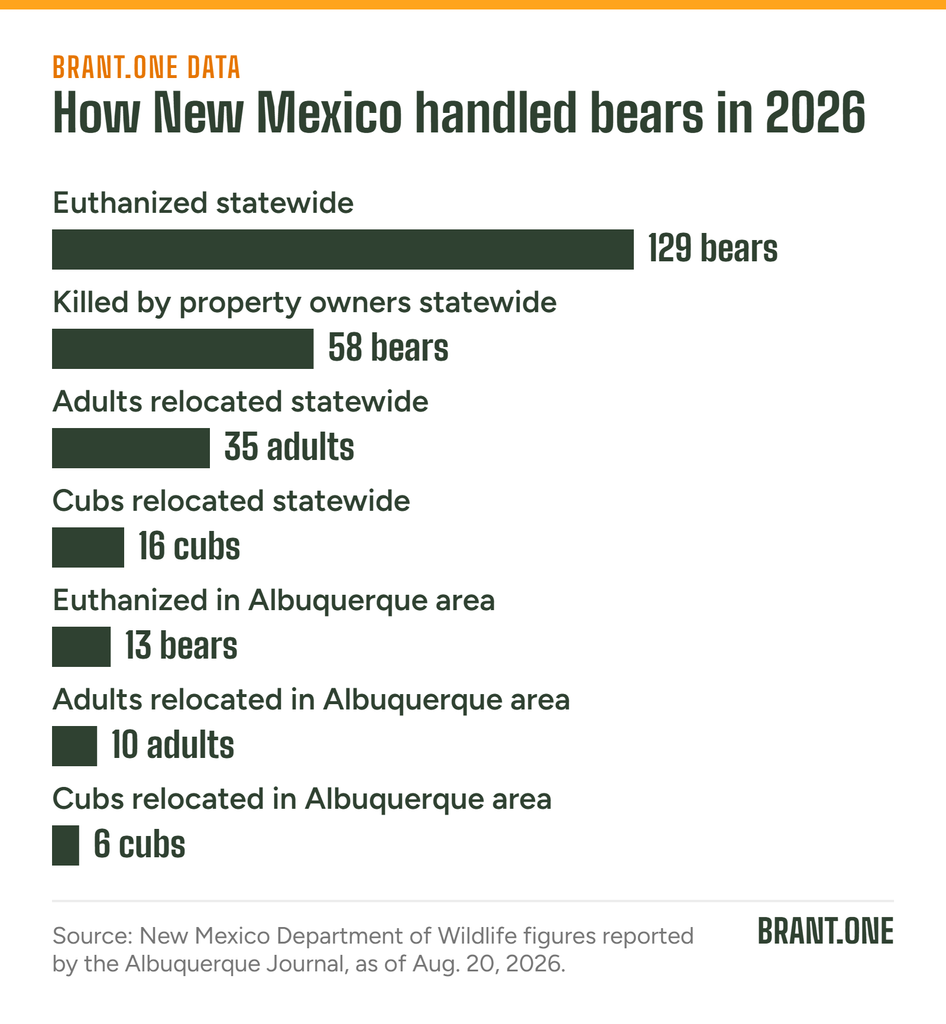
By early August, the department had received nearly 230 bear reports statewide, up from 159 in 2025 and 129 in 2024, Vaughan told KRQE. The encounters have taken a toll on the state’s bears. By Aug. 20, NMDOW reported euthanizing 129 black bears statewide following conflict complaints, and property owners had killed another 58, the Albuquerque Journal reported.
The department had also relocated 35 adult bears and 16 cubs across the state.
The danger runs both ways too, with New Mexico recording at least three bear attacks in August alone, the first since 2023, as per the Albuquerque Journal and NMDOW. On Aug. 20, the state reported its first fatal bear attack in 25 years, with a bear killing a man in Crystal on the Navajo Nation, the Santa Fe New Mexican reported.
The rise in bear sightings has reached wildlife rehabilitators, too. Nirankar Horak, executive director of the Land of Enchantment Wildlife Foundation, which operates the Cottonwood Rehab Facility, said the number of bears in its care hasn’t been unusual, but calls from worried residents have climbed.
“Although we have seen a rise in bears in care compared to the last couple of years, we have not seen abnormal numbers in care if we look over a longer period of time,” Horak said. “Where we are seeing increased activity is in the calls we are receiving from sightings and folks concerned.”
Advertisement
Most of those calls involve yearlings or older bears healthy enough to stay in the wild, she said. And they often turn into conversations about how residents can encourage bears to keep moving instead of settling near homes.
That is where wildlife officials say the public comes in, playing a part in protecting the state’s bears during one of their hardest years on record.
The department’s priority is “to keep bears alive and prevent them from becoming habituated to people,” Vaughan said. The best way to do that is to eliminate food and water sources around homes, where garbage, leftover pet food, birdseed and fallen fruit offer an easy meal.
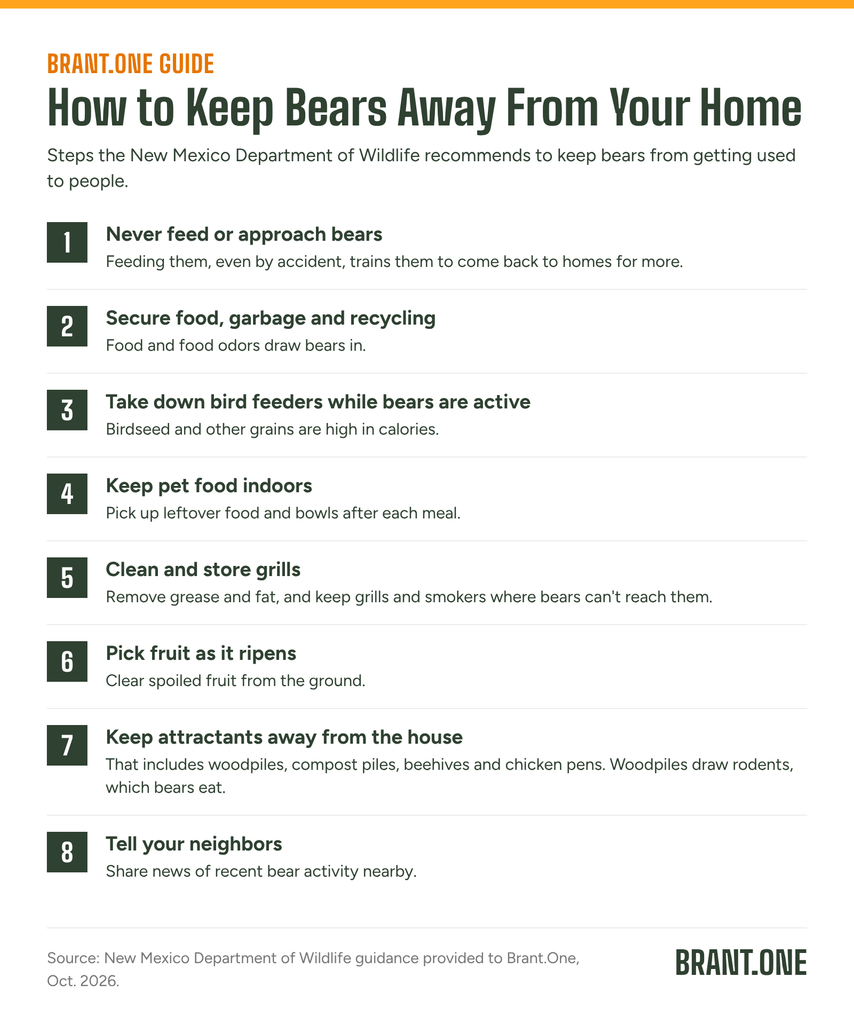
Property owners can also protect livestock, beehives and bird feeders with fencing, Vaughan said. Electric fencing has been proven to be an effective deterrent that doesn’t cause long-term harm to bears.
Anyone who comes across a bear while walking should stay calm and not run, stand upright and slowly wave their arms, then slowly back away, the department said. People should never come between a mother and her cubs, and anyone attacked by a bear should fight back aggressively.
For New Mexico bears, these small steps make a big difference in conserving and protecting bears wandering into neighborhoods in search of food and water. Habituation is a risky path for a bear, and once a bear learns that homes mean an easy meal, it is more likely to keep coming back. And each return brings it closer to being relocated or euthanized.
This year’s drought pushed bears toward towns in record numbers, and even a careful rescue could turn out deadly. What happens to the next bear that wanders into neighborhoods depends largely on what it finds there.
“Bears have adapted to living near people,” Vaughan said. “Are you willing to adapt to living near bears?”