

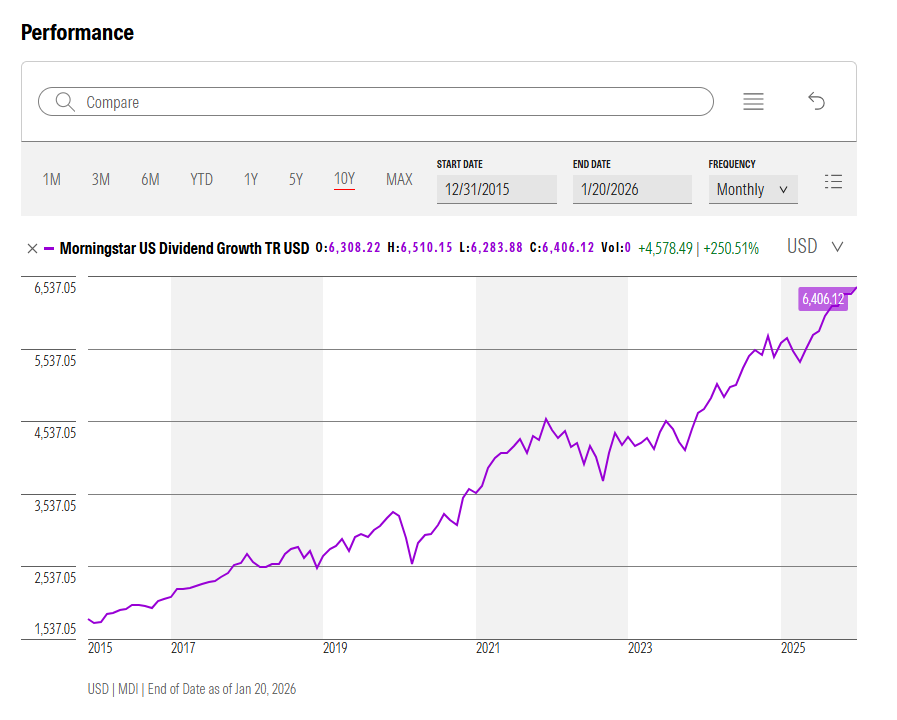
Dividend growth stocks, companies that regularly increase their payouts to shareholders, are now attracting attention from more than just income-focused investors. These stocks are valued not only for their cash flow but also for their ability to add stability and long-term growth to a portfolio.
The Morningstar US Dividend Growth Index is central to this approach. It follows companies that have raised their dividends for at least five years. This index is known for stability and steady income, and it tends to focus more on value stocks than on traditional growth stocks.
Dividend growth strategies usually feature companies with steady cash flows and careful management of their money. These qualities can make the stocks less volatile during market downturns, which is attractive to investors who prefer lower risk or plan to invest for the long term.
Still, dividend growth stocks have not always outperformed the wider U.S. stock market. They often have less exposure to large technology companies and fast-growing companies, many of which do not pay dividends or have only recently started paying them. This mix means dividend growers may lag when growth stocks lead, but they can do better when the market favors defensive investments.
Key facts about dividend growth stocks
- More than just income: Dividend growth stocks give investors access to companies that raise their payouts, but returns also come from share price gains along with higher dividends.
- Defensive qualities: These stocks are often less volatile than the overall market, helping protect portfolios during market downturns or periods of uncertainty.
- Value focus: Dividend growth indexes tend to lean toward value stocks and invest less in popular tech companies.
Investors need to distinguish between high-yield dividend strategies, which focus on current income, and dividend growth strategies, which aim for regular increases in payouts. Dividend growth strategies often attract those who want both income and quality, like strong finances and steady earnings, not just a high yield right now.
There are risks with dividend growth investing. As tech and growth stocks have become a larger part of the market, dividend-growth indexes can lag during tech-driven rallies. Today, some dividend growers come from sectors like financials and healthcare, and a few tech companies have also begun increasing their payouts.
For financial and investment readers, dividend growth strategies offer more than just regular cash payments. They help balance risk and return in a diverse portfolio. Knowing how these stocks perform relative to the broader market can help investors pick the right mix for their goals, whether they want income, stability, or long-term growth.

