

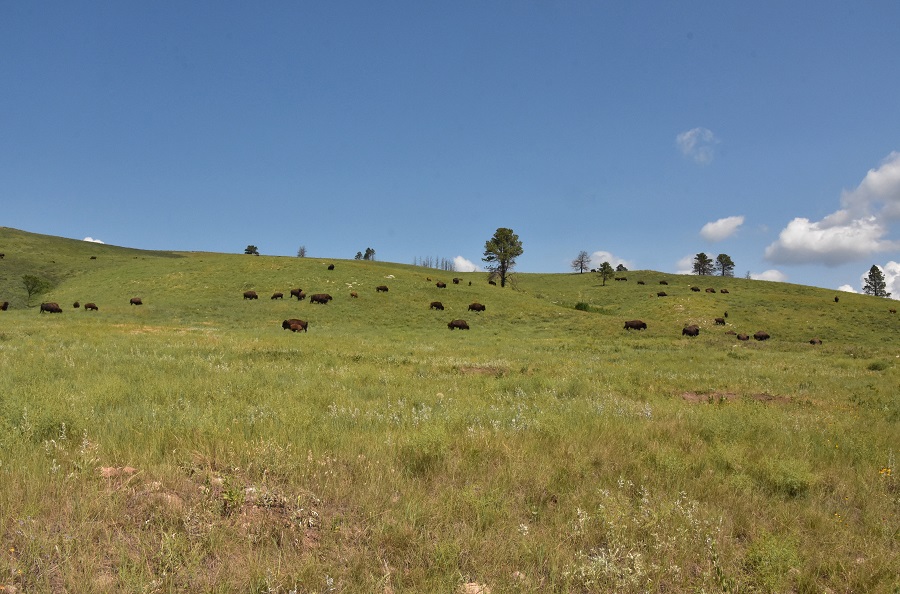
Ancient stories, poems, and songs are more than cultural artifacts, a new research suggests. It may contain crucial evidence challenging the long-held assumption that India’s savannas and grasslands are not degraded forests but ancient ecosystems that have existed for centuries.
Savannas and grasslands cover nearly one in every 10 of India and more than a third of the Earth’s land surface. For decades, however, policymakers and conservation planners labeled them “wastelands”, where large-scale tree planting to fight climate change is often conducted.
That assumption is now being challenged by a study published in the British Ecological Society journal People and Nature.
In the study, researchers analyzed plant references in historical literature from western India. Some of these references date back to the 13th century. The researchers suggest that tropical grasslands are not the result of deforestation or human degradation. They are, but long-standing unique ecosystems.
“The take-home for me is how little things have changed,” said Ashish Nerlekar of Michigan State University, a co-author of the study.
This body of literary work, written hundreds of years ago, closely describes what exists today, the study’s co-author said.
Rethinking climate and conservation policy
These findings matter because planting trees in natural grasslands can do more harm than good. Reforestation is often thought of as a climate solution. However, converting savannas to forests can destroy native biodiversity, disrupt livelihoods dependent on grazing, and even reduce overall carbon storage.
Forty-four 44 wild plant species are mentioned in ancient texts written in Marathi, nearly two-thirds of which are typical of savanna ecosystems. The researchers noted that this historical literature contains repeated references to the thorny acacia (Vachellia leucophloea). Multiple ancient text described it, suggesting its long-standing presence in the landscape.
Other accounts—from epic poetry to folk songs—describe open, grassy, and thorny terrain that matches today’s savannas rather than areas deforested in recent history.
Stories as scientific evidence
The idea emerged from collaboration across disciplines.
Digvijay Patil, a PhD student in archaeology at IISER Pune, while studying Sanskrit and Marathi texts linked to sacred sites, has observed repeated mentions of specific plants. Nerlekar, a plant scientist, identified those plants as species that still grow in present-day grasslands.
Many of the sources studied are not digitized or stored in modern databases. They constitute a large, largely untapped archive of ecological knowledge—especially in regions where historical maps and scientific records are scarce.
A landscape older than colonial deforestation
What does this historical evidence suggest?
It simply points to one often ignored fact: India’s savannas have existed for at least 750 years. These savannas even predate the massive deforestation under British colonial rule. Fossil pollen and remains of grass-grazing animals further support an even deeper history of a savanna-dominated landscape thousands of years ago.
What’s at stake
India’s grasslands are home to over 200 plant species found nowhere else on Earth. Mostly, these species, increasing threatened by farming and development, have been identified only recently. Many of them are also culturally sacred, making these ecosystems socially and spiritually valuable in addition to their ecological importance.
Globally, about a fifth of the world’s population depends on savannas and grasslands for livelihoods. They are areas for grazing and small-scale agriculture.
The study, supported by grants from Michigan State University and IISER Pune, warns that climate action risks repeating old mistakes when it ignores ecological history.
“These centuries-old stories give us a rare glimpse into the past,” Nerlekar said. “And that past was a savanna past—not a forested past.”

