

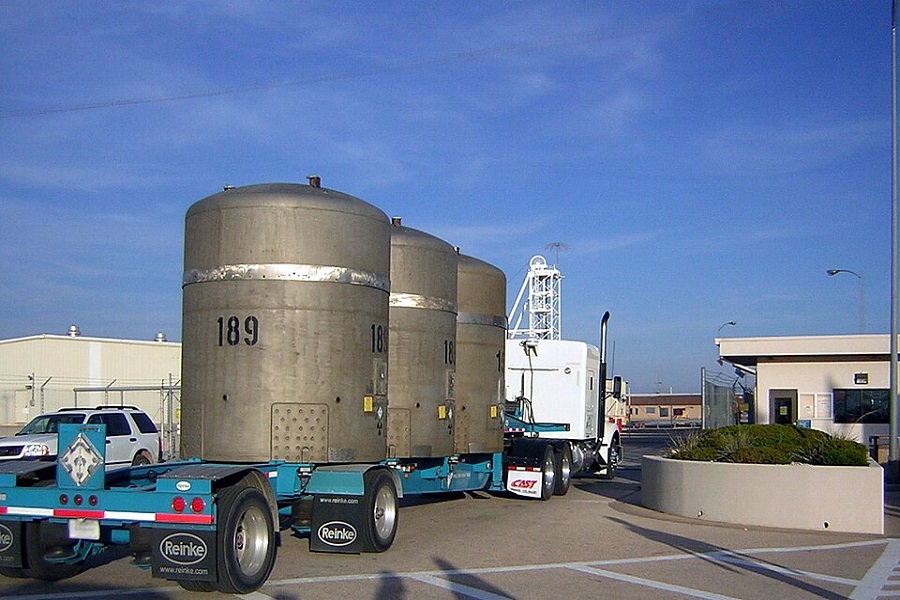
Federal officials over the years vowed to clean up the radioactive legacy of the Cold War in northern New Mexico. But state officials are now saying they failed to deliver their promises, leaving hazardous nuclear waste in precarious situations and prompting an escalating standoff with the U.S. Department of Energy.
The center of the dispute is a backlog of so-called legacy waste at Los Alamos National Laboratory. These wastes were produced during the earliest days of the nation’s nuclear weapons program. Some of that waste, state officials said, remains stored in aging containers or buried in unlined pits above groundwater, factors that increase the risk of long-term contamination threats.
Department of Energy’s disposal facility
The federal government’s plan largely depended on shipping such waste to the Waste Isolation Pilot Plant, or WIPP, an expansive underground storage site carved into a salt formation near Carlsbad. Opened in 1999, the site isolates legacy nuclear wastes and still stands as the United States’ only permanent disposal facility of transuranic nuclear waste.
But state regulators pointed out, after a review of enforcement actions, the widening gap between federal commitments and on-the-ground progress. New Mexico’s Environment Department says cleanup schedules have slipped repeatedly, even as shipments from other states have moved ahead.
“The U.S. Department of Energy has failed to meet the Environment Department’s requirements to clean up legacy waste at Los Alamos National Laboratory and prioritize the disposal of such waste in the Waste Isolation Pilot Plant,” said Environment Secretary James Kenney.
Records show that state regulators have issued compliance orders and levied nearly P16 million in fines against the Department of Energy in recent months. State officials accused the federal government of failing to meet cleanup milestones. New Mexico considers revising WIPP’s permit so its own waste gets priority for disposal.
The Department of Energy denied the accusation. It claimed that safety rules, technical hurdles, and cross‑state transport challenges have hampered efforts to clean up. Federal officials also blamed competing demands from other states, including Idaho, which has sent significant volumes of waste to WIPP under federal agreements.
Those explanations, however, have done little to ease frustration in New Mexico. Communities near Los Alamos have borne the risks of radioactive waste while the weapons program spread its benefits nationwide.
Residents around Los Alamos
The conflict also highlights the boundaries of federal authority when states regulate. Washington controls the nation’s nuclear weapons complex, but New Mexico holds substantial power over environmental permits and compliance—an instrument it is increasingly willing to use.
At stake is not only the progress of cleanup at Los Alamos but also the fate of WIPP. The facility has limited capacity, and as cleanup efforts expand nationwide, competition for space has intensified. Officials decide which waste to ship—and when—making those choices into both logistical considerations and political judgments.
The issue comes down to accountability. The federal government cannot continue delaying the removal of nuclear waste while relying on the state to host both the storage sites and the disposal facility. With enforcement actions mounting, the standoff shows little sign of easing. Its outcome could ripple far beyond New Mexico, and will determine how the United States deals with the environmental legacy of its nuclear past.

