Home Blog Page 34

Albuquerque Public Schools See Graduation Gains, But Gaps Persist for Native American and Low-Income Students

​Albuquerque Public Schools (APS) reported a notable rise in graduation rates for the Class of 2024, achieving a 75.9% graduation rate—up 4.3 percentage points from the previous year. This improvement surpasses the state’s overall increase, as New Mexico’s public high schools saw a 1.3 percentage point rise, reaching a 78% graduation rate.

Among APS high schools, La Cueva High School led with a 91.3% graduation rate, marking an 11.5 percentage point increase. Volcano Vista High School followed closely at 89.2% (up 6.9 points).

Schools of choice also showed strong performance: Early College Academy achieved a 99.75% graduation rate (a 7.2-point rise), while College and Career High School reached 96.3% (up 9.3 points).

However, disparities persist among different student groups. White, non-Hispanic students experienced the highest increase at 4.9 percentage points, followed by Hispanic students at 4.5 points and Black students at 1.2 points.

Conversely, Native American students saw a 2.8-point decline. English learners had the most significant improvement, with a 6.8-point increase, while graduation rates for economically disadvantaged students decreased by 0.4 points.

Superintendent Gabriella Blakey acknowledged the progress, stating, “This increase shows APS is going in the right direction, but I know we can do better.” She emphasized the district’s commitment to enhancing the high school experience and addressing the needs of underrepresented student groups.

The APS Board of Education has set goals to improve outcomes for Native American and Black students, as well as for English learners, economically disadvantaged students, and those in special education programs. Efforts include reimagining graduation requirements and implementing initiatives focused on career and college readiness.

While APS’s graduation rate remains below the national average of 87%, these gains indicate positive momentum. Continued focus on equity and targeted support aims to sustain and build upon this progress.

Federal Government to Resume Collections on Defaulted Student Loans Starting May 5

The U.S. Department of Education will resume collections on defaulted federal student loans starting May 5, 2025, ending a pause that began in March 2020 during the COVID-19 pandemic. This move affects over 5 million borrowers currently in default and another 4 million who are severely delinquent, meaning nearly a quarter of the federal student loan portfolio could soon be in default.

The Department plans to restart the Treasury Offset Program, allowing the government to withhold federal benefits such as tax refunds, Social Security payments, and federal salaries to collect overdue debts . Additionally, administrative wage garnishments are set to begin later this summer, potentially deducting up to 15% of a borrower’s disposable income.

Education Secretary Linda McMahon stated that resuming collections is necessary to protect taxpayers and ensure borrowers fulfill their obligations. She criticized the previous administration’s approach to student debt relief, asserting that “American taxpayers will no longer be forced to serve as collateral for irresponsible student loan policies.”

To assist borrowers, the Department will launch a communication campaign over the next two weeks, urging those in default to contact the Default Resolution Group. Options include enrolling in income-driven repayment plans or initiating loan rehabilitation, which involves making nine voluntary payments over ten months.

Advocacy groups have expressed concern over the resumption of collections. The Student Borrower Protection Center labeled the move as “cruel” and warned it could exacerbate financial instability for millions of Americans already facing economic challenges.

Borrowers are encouraged to act promptly to explore repayment options and avoid potential penalties such as wage garnishment and loss of federal benefits. The Department’s outreach aims to facilitate a smoother transition back into repayment and mitigate the risk of further defaults.​

Trump Administration Eyes Nationwide AI Education Push in K–12 Schools

0

The Trump administration is weighing a sweeping executive order that would embed artificial intelligence (AI) education into every corner of the U.S. K–12 system, The Washington Post reported Tuesday. The draft proposal, titled “Advancing Artificial Intelligence Education for American Youth,” signals a bold shift toward integrating emerging technology into classrooms nationwide—with potentially far-reaching implications for students, educators, and states like New Mexico.

A Nationwide Plan for AI Literacy

According to the draft order, the administration seeks to launch a comprehensive strategy that includes teacher training, student skill-building, and public-private partnerships to make AI a foundational component of public education. A White House Task Force on AI Education would be created to lead the effort, chaired by Michael Kratsios, Director of the Office of Science and Technology Policy. The panel would include the Secretaries of Education, Agriculture, Labor, and Energy, alongside David Sacks, serving as Special Adviser for AI and Cryptocurrency.

The initiative would direct federal agencies to work with schools to train students in using AI tools and integrate the technology into day-to-day classroom practices. Partnering with industry leaders is a key component, as agencies would be encouraged to collaborate with private companies, nonprofits, and universities to deliver AI-focused curricula and resources.

Teacher Training and Workforce Development

Under the draft order, Education Secretary Linda McMahon would prioritize federal grants to fund teacher training programs in AI. The order calls for all educators to receive professional development focused on integrating AI into teaching—not only in computer science, but across all subject areas.

This move has particular relevance for New Mexico, where persistent teacher shortages and wide rural-urban disparities could pose barriers to large-scale implementation. With many educators already stretched thin, questions remain about whether districts—especially those in tribal and rural communities—have the capacity or infrastructure to adopt such a mandate.

Beyond the classroom, the plan highlights workforce development. Labor Secretary Lori Chavez-DeRemer would be tasked with developing AI-focused apprenticeship programs to prepare students for careers in the tech-driven economy.

Engagement and Incentives

To incentivize participation, the administration would launch a new “Presidential AI Challenge,” encouraging students and educators to showcase their AI skills. While the draft does not specify competition details, it signals an effort to engage young learners and teachers alike in a national conversation around emerging technologies.

Additionally, the draft order emphasizes support for “lifelong learners,” acknowledging that the pace of technological change demands continual reskilling—even beyond the traditional K–12 and college pipelines.

A Predecisional Document

Though the draft outlines a clear federal agenda, it remains a predecisional document. It could be modified, delayed, or even abandoned altogether. Nonetheless, its release reflects a growing federal interest in shaping the future of AI education—and raises questions about the balance between federal direction and local control of schools.

Potential Implications for New Mexico

In New Mexico, where education challenges range from broadband access gaps to high teacher turnover, implementing such a directive may prove complex. The state has made strides in STEM and bilingual education initiatives, but integrating AI across all classrooms could require major investment in infrastructure, professional development, and curriculum redesign.

If finalized, the executive order could bring federal funding opportunities—but also increased expectations and responsibilities for state and local education leaders.

What’s Next?

As the executive order awaits formal approval, stakeholders across the education spectrum—teachers, administrators, parents, and policymakers—will be watching closely. Whether this marks a transformational moment in education or another federal initiative with uneven outcomes may hinge on how states like New Mexico adapt and respond.


ERIC Faces Major Cutbacks as Federal Funding Stalls

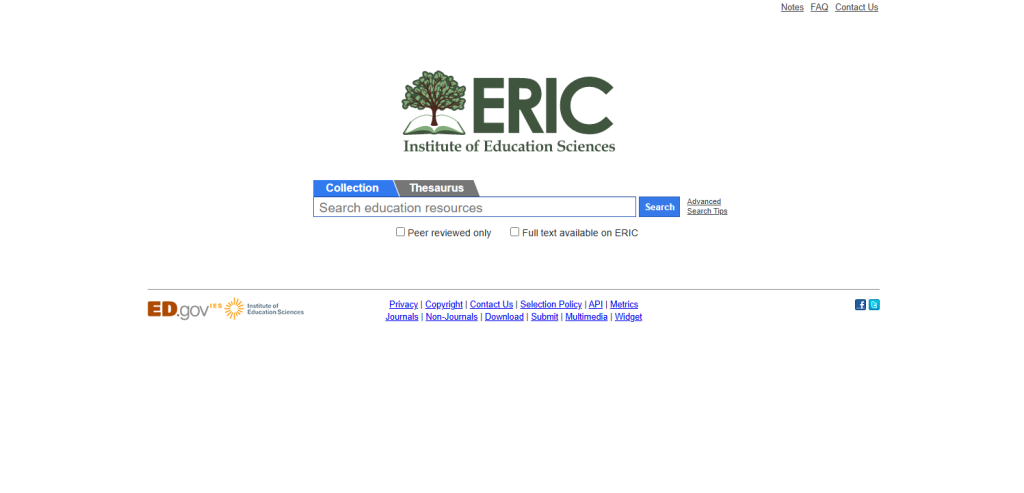
The Education Resources Information Center (ERIC), a key repository of education research managed by the U.S. Department of Education, is facing significant operational changes due to funding constraints. Effective April 24, 2025, the number of actively cataloged sources in ERIC will be reduced by approximately 45%, decreasing from 1,200 to 700 titles.

This reduction stems from efforts by the Department of Education and the Department of Government Efficiency to “reduce overall Federal spending” and “reallocate spending to promote efficiency” as outlined in Executive Order 14222.

While all existing records in ERIC will remain accessible, the addition of new documents will be significantly curtailed. The selection process for source reduction did not consider subject matter, leading to a broad impact across various educational topics. The delay in notifying publishers affected by this content reduction has been attributed to a government reduction in force.

The potential defunding of ERIC has raised concerns among educators and researchers. Gladys Cruz, a superintendent of Questar III BOCES and past president of the AASA, The School Superintendents Association, stated that “Defunding ERIC would limit public access to critical education research, hindering evidence-based practices and informed policy decisions vital for the advancement of American education.”

In response to the funding challenges, Erin Pollard Young, the former manager of ERIC, proposed reducing the annual budget from $5.5 million to $2.25 million. This proposal included cutting nearly half of the journals added each year and eliminating the public help desk.

However, the proposal was not approved, and Pollard Young, along with over 1,300 other Department of Education employees, was laid off in March.

The reduction in ERIC’s operations is expected to impact educators, researchers, and policymakers who rely on the database for access to educational research. The long-term effects of these changes on the accessibility of education research and informed policy-making remain to be seen.​

Gmail Users Targeted in New Phishing Scam Using Fake Google Legal Notices

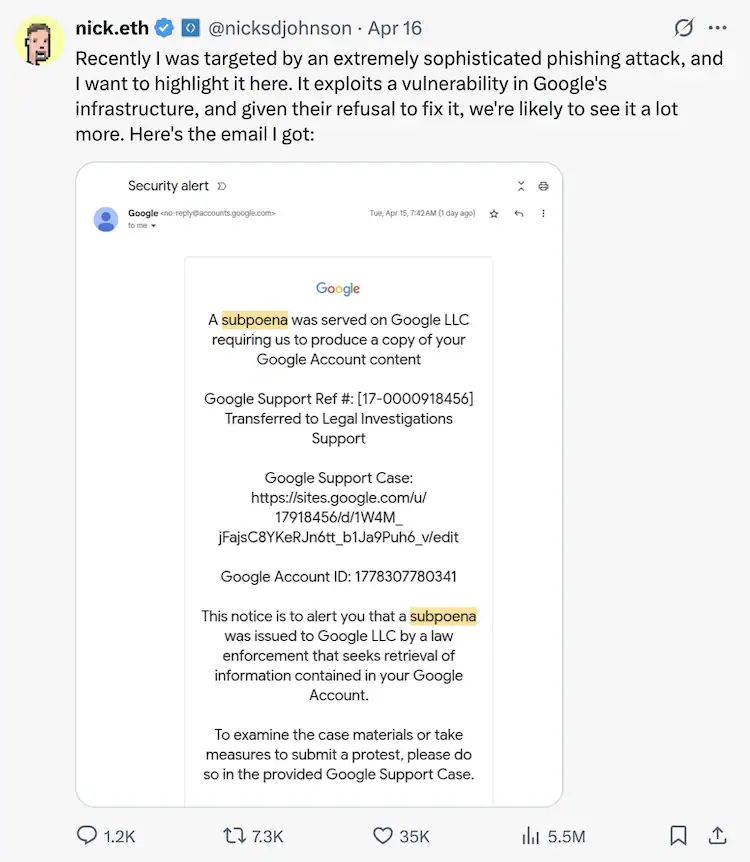
A sophisticated phishing campaign is targeting Gmail users by sending emails that appear to originate from Google’s official address, “no-reply@google.com.” These emails claim that the recipient’s account is under legal scrutiny, urging them to click on a link to review purported subpoena details.​

The scam exploits Google’s own infrastructure by using the Google Sites platform to host counterfeit support pages. These pages closely mimic legitimate Google interfaces, making it challenging for users to discern the fraud. The attackers have managed to bypass standard email authentication protocols, such as DomainKeys Identified Mail (DKIM), allowing these phishing emails to pass through spam filters and appear in the same conversation threads as genuine Google alerts.

Nick Johnson, a developer with the Ethereum Name Service, was among those targeted. He reported the incident to Google, highlighting the misuse of Google’s OAuth applications. Initially, Google dismissed the concern, stating it was “working as intended.” However, the company has since acknowledged the vulnerability and is working on a fix.

In response to this threat, Google advises users to enable two-factor authentication (2FA) and consider adopting passkeys for enhanced security. Passkeys are cryptographic credentials that provide a more secure alternative to traditional passwords and are resistant to phishing attacks.

Users are urged to exercise caution with unsolicited emails, especially those requesting personal information or prompting immediate action. It’s recommended to verify the authenticity of such messages by accessing account settings directly through Google’s official website, rather than clicking on links within the email.​

To report suspicious emails, Gmail users can use the “Report phishing” option found in the three-dot menu of the message. This helps Google identify and mitigate similar threats in the future.​

Google Classroom Introduces AI-Powered Quiz Generation with Gemini Integration

Google announced a significant enhancement to its Google Classroom platform by introducing an AI-powered quiz generation feature. This new tool leverages Google’s Gemini AI to assist educators in creating customized quiz questions efficiently.

The AI-driven feature allows teachers to input text manually or upload documents from Google Drive. Gemini then analyzes the content to generate a set of quiz questions tailored to the material.

Educators can specify parameters such as grade level, question type (multiple-choice or open-ended), and the number of questions. Additionally, teachers can focus on specific skills they wish to assess, like figurative language usage or argument evaluation. Once generated, these questions can be exported directly into Google Docs or Google Forms for easy distribution to students.

This innovative feature is available exclusively to Google Workspace for Education users who have subscribed to either the Gemini Education add-on ($24 per user) or Gemini Education Premium ($36 per user). The integration of Gemini into Google Classroom began in 2024, with capabilities expanding over time to include tools like vocabulary list creation, lesson plan generation, and summarization of educational materials.

By incorporating AI into the quiz creation process, Google aims to reduce the time educators spend on administrative tasks, allowing them to focus more on interactive and personalized teaching methods. This development is part of Google’s broader initiative to integrate AI tools into educational settings, enhancing both teaching and learning experiences.

Educators interested in utilizing this feature can access it through the “Gemini Education” tab in Google Classroom, provided they have the appropriate subscription. Google also offers resources and training to help teachers effectively implement AI tools in their classrooms.

AI Giants OpenAI and Anthropic Compete for Presence in Higher Education

In a strategic move to embed artificial intelligence (AI) tools within the academic sphere, leading AI laboratories OpenAI and Anthropic have unveiled initiatives aimed at integrating their technologies into higher education institutions. This development underscores the escalating competition to become the preferred AI resource among college students.​

Anthropic’s Academic Initiative

Anthropic has introduced “Claude for Education,” a specialized version of its chatbot tailored for university settings. The company has established partnerships with institutions including Northeastern University, the London School of Economics (LSE), and Champlain College. Collaborations with organizations like Internet2 and Instructure are also in place to enhance access to AI tools in educational environments.

A notable feature of this initiative is the “Learning mode,” designed to promote critical thinking by engaging students through Socratic questioning. Instead of directly providing answers, Claude prompts users with questions such as “How would you approach this?” or “What evidence supports your conclusion?” to guide them through problem-solving processes. Larry Kramer, President and Vice-Chancellor of LSE, emphasized the institution’s role in shaping the positive transformation of education and society through AI.​

OpenAI’s Ongoing Educational Engagement

OpenAI has been active in the educational sector since May 2024 with the launch of ChatGPT Edu, a university-focused version of its chatbot. The company recently formed the NextGenAI Consortium, committing $50 million to accelerate AI research across 15 colleges. Additionally, a partnership with California State University aims to integrate ChatGPT Edu across all CSU campuses.

In a recent announcement, OpenAI revealed that ChatGPT Plus, typically a $20 monthly subscription, will be available for free to all U.S. and Canadian college students through May. This offering includes features such as large file uploads and advanced voice capabilities, aiming to support students during their final examinations. Leah Belsky, OpenAI’s Vice President of Education, highlighted the importance of supporting students’ AI literacy in an increasingly AI-shaped workforce.​

Implications for New Mexico’s Educational Landscape

These initiatives have significant implications for New Mexico’s educational institutions. The availability of advanced AI tools can enhance learning experiences, promote critical thinking, and prepare students for a workforce increasingly influenced by AI technologies. However, institutions must also consider challenges such as ensuring equitable access, maintaining academic integrity, and providing adequate training for both students and faculty to effectively utilize these tools.

As AI continues to permeate various sectors, the competition between companies like OpenAI and Anthropic to establish a foothold in higher education reflects the strategic importance of integrating AI into academic environments. For New Mexico’s colleges and universities, staying abreast of these developments is crucial to leverage the benefits and address the challenges presented by AI in education.​

New Mexico Becomes Fifth State to Offer Free High School Equivalency Exams

New Mexicans seeking to earn their high school equivalency credential will soon be able to do so at no cost, thanks to a new legislative initiative approved by the state Senate and House on March 22.

The legislation makes New Mexico the fifth state in the U.S. to offer free access to high school equivalency (HSE) exams. The move aims to eliminate a financial barrier that has prevented many adults from completing their secondary education.

“This initiative directly supports our workforce and economic development goals by helping more New Mexicans qualify for higher education and job opportunities,” said Higher Education Secretary Stephanie M. Rodriguez in a statement.

Currently, New Mexicans pursuing an HSE credential—typically through the GED or HiSET exam—can face testing fees totaling over $80. This cost can be prohibitive for low-income individuals, particularly those balancing work and family responsibilities.

The New Mexico Higher Education Department (NMHED), which oversees adult education programs statewide, reports that more than 200,000 adults in the state do not have a high school diploma. By removing testing costs, officials hope to increase participation in adult education and credentialing programs, many of which also offer free instruction and tutoring.

The legislation also aligns with broader workforce development strategies, particularly in rural and underserved communities, where adult education access and credential attainment lag behind urban areas.

The NMHED will begin implementing the free testing program in partnership with adult education providers, testing centers, and community colleges across the state. A timeline for full rollout is expected in the coming weeks.

In addition to providing the test for free, the department is exploring outreach efforts to connect residents with prep resources and support services.

  • Equity and Access: This program reduces a key barrier for marginalized populations, including Indigenous communities and non-native English speakers.
  • Workforce Readiness: Employers statewide will benefit from a broader pool of qualified applicants.
  • Pathways to College: The credential opens doors for adults to pursue higher education, particularly under the state’s Opportunity Scholarship program.

For more information on how to qualify and register for free equivalency testing, residents are encouraged to visit hed.nm.gov.

Malvertising Campaign Exploits GitHub to Distribute Info-Stealing Malware

Nearly one million computers worldwide fell victim to a sprawling cyberattack last month that exploited an unlikely combination: people looking for free movies and the trusted software platform GitHub.

Microsoft’s threat intelligence team disclosed the campaign in December 2024, describing an operation that turned websites hosting pirated content into traps for unsuspecting users. The attack represented a troubling evolution in how cybercriminals distribute malware by hiding in plain sight on legitimate platforms.

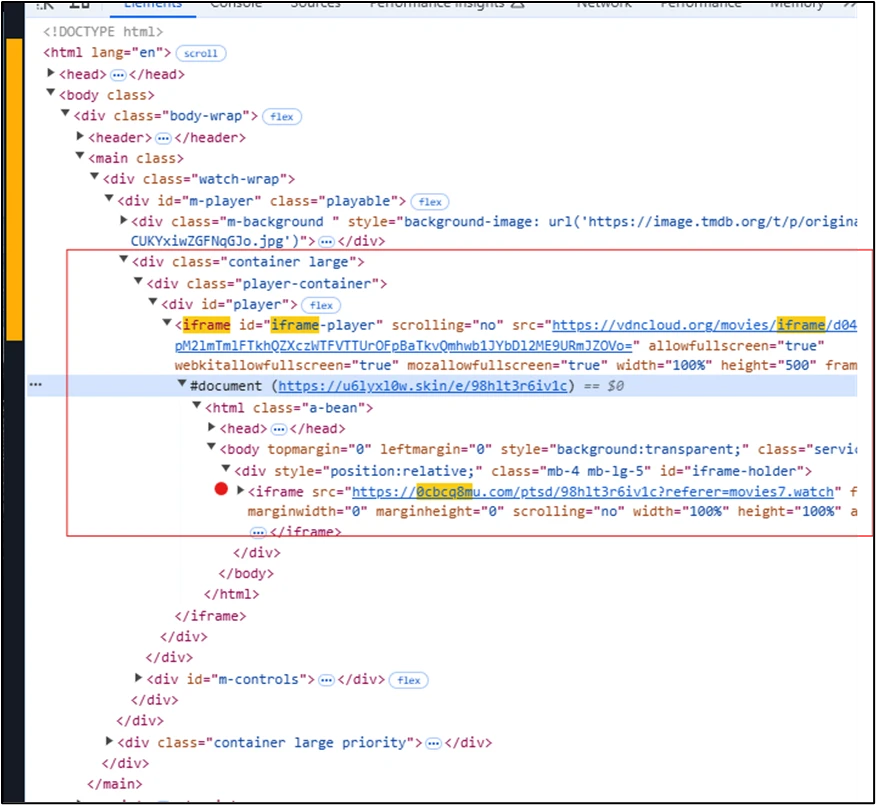
The scheme worked like this: Someone searching for a free stream of the latest blockbuster would land on an illegal streaming site. But embedded in those sites were malicious advertisements that quietly redirected visitors through a chain of websites before depositing them on GitHub, where attackers had uploaded software that appeared benign but contained dangerous payloads.

Source: Microsoft.com

Users who downloaded and ran these files handed over access to their computers. The malware quickly got to work cataloging system information and installing additional programs, including Lumma, a tool designed to steal passwords and financial data. The attackers also deployed an updated variant of Doenerium and used NetSupport, a legitimate remote access program typically used by IT departments, to maintain control of infected machines.

The broad targeting meant the campaign hit both home computers and corporate networks across multiple industries. Security researchers say using GitHub complicates detection efforts because the platform hosts millions of legitimate software projects, making it harder for security tools to distinguish between safe and malicious files.

Microsoft did not identify the attackers or specify which countries saw the highest infection rates. The company’s disclosure comes as cybersecurity experts have grown increasingly concerned about malvertising, a technique that has proven effective because it requires no special action from victims beyond visiting a compromised website.

For users, the incident offers a reminder that piracy sites carry risks beyond legal trouble. Security experts recommend sticking to legitimate streaming services and keeping antivirus software up to date. Organizations should block access to known piracy domains on corporate networks and train employees to recognize suspicious download requests.

The attackers’ decision to weaponize GitHub highlights how cybercriminals adapt their methods to exploit trust in widely used platforms, making traditional security approaches less effective.

Recommendations and Mitigation

To mitigate the risks associated with such attacks, organizations and individuals are advised to:

  • Exercise Caution: Avoid visiting illegal streaming sites or downloading content from untrusted sources.
  • Implement Security Measures: Use reputable security software and ensure it is regularly updated to detect and prevent malware.
  • Educate Users: Conduct regular training sessions to raise awareness about the dangers of malvertising and the importance of safe browsing habits.

By staying vigilant and adopting proactive security practices, users can protect themselves against such sophisticated cyber threats.

Americans Worry About Online Banking Security as Major Outages Expose Vulnerabilities

More than eight in ten Americans say they’re worried about cybersecurity when banking online, according to a recent survey, a finding that reflects mounting anxiety over whether financial institutions can protect customer data in an increasingly digital economy.

The concern isn’t entirely misplaced. Earlier this year, Barclays customers in the UK couldn’t access their money for three days after an IT failure knocked out the bank’s systems from January 31 through February 2. More than half of all payments failed during the outage, and the bank has set aside £7.5 million to compensate affected customers. In the United States, Bank of America customers reported logging in to find their balances had vanished, a technical glitch that sent many scrambling to customer service lines.

What makes these incidents particularly troubling is that they weren’t even cyberattacks. There were internal system failures at some of the world’s largest banks, institutions that spend billions on technology infrastructure. When hackers do get involved, the damage can be far worse.

The International Monetary Fund reported last year that extreme losses from cyber incidents have more than quadrupled since 2017, with some attacks causing $2.5 billion in damages. The fund warned that losses of this scale could threaten the solvency of major companies, raising questions about whether the financial sector is keeping pace with increasingly sophisticated threats.

Interestingly, the survey found that 52 percent of respondents believe online-only banks actually have better cybersecurity than traditional institutions. That perception may reflect a belief that digital-native companies, built from the ground up with modern technology, are better positioned to defend against contemporary threats than older banks running on legacy systems.

Security experts say customers can take steps to protect themselves regardless of where they bank. Strong passwords remain essential, and financial institutions have been pushing customers to enable multi-factor authentication, which requires a second form of verification beyond just a password. Keeping software updated, watching for phishing emails, and regularly checking account statements for unauthorized charges can catch problems early.

But the survey results suggest many Americans aren’t confident that personal precautions are enough. As banking moves almost entirely online, customers are betting their financial security on institutions they hope are doing more behind the scenes to stay ahead of threats.

Protective Measures Against Cybersecurity Risks

To safeguard against potential cybersecurity threats in online banking, individuals and businesses can implement several best practices:

  • Use Strong, Unique Passwords: Create complex passwords combining letters, numbers, and symbols. Avoid reusing passwords across multiple accounts.​
  • Enable Multi-Factor Authentication (MFA): MFA adds an extra layer of security by requiring additional verification steps beyond just a password.​
  • Regular Software Updates: Keep operating systems and applications up to date to patch vulnerabilities that cybercriminals might exploit.​
  • Be Cautious with Emails and Links: Avoid clicking on suspicious links or downloading attachments from unknown senders, as these could be phishing attempts.​
  • Monitor Financial Statements: Regularly review bank statements and credit reports to promptly detect unauthorized activity.​

By adopting these measures, users can significantly reduce the risk of falling victim to cyber threats in the online banking landscape.