Friday, February 6, 2026
52.1 F
Albuquerque
Home Blog

UNM Anderson Receives Donation from Thorntons for Healthcare Leadership Scholarship

0

The University of New Mexico (UNM) Anderson School of Management recently received a donation to support graduate students. The gift is expected to support the continued growth in the healthcare field.

Maribeth and Chris Thornton made a significant contribution to establish the Thornton Family Scholarship for Healthcare Leadership. The scholarship will help Anderson graduate students in good standing pursue leadership roles in the healthcare industry.

UNM News reported that the Thorntons created the scholarship to invest in people and expand access to educational opportunities.

“We find it fulfilling to watch our colleagues grow and master their craft,” the Thorntons said. “We have been blessed with strong mentors throughout our careers, and we feel an obligation to do the same.”

The scholarship also highlights Maribeth’s 40-year nursing career, during which she held various leadership roles. She is currently the chief nursing officer at UNM Hospital.

“While healthcare makes up a sizable fraction of the economy, other sectors can offer greater monetary rewards,” the Thorntons said. “A person leaving graduate school with less debt is more likely to consider a career in healthcare. To be efficient and effective, the healthcare system needs leaders versed in both the financials and the delivery of services.”

How the Thorntons’ Journey Inspires Their Education Advocacy

Both Chris and Maribeth advocate for the power of education. 

Chris earned a Bachelor of Science in aerospace engineering from Georgia Tech and a Master of Science from Stanford University. Maribeth earned her MBA from the Anderson School of Management and her Ph.D. from the UNM College of Nursing.

Maribeth shared that during each of her degree programs, she had to work full-time to support herself or her family. “Having a scholarship would have allowed me to focus more time on my studies without worrying about financial constraints.”

She added employer support during her MBA and Ph.D. relieved financial stress and allowed her to finish without student loans. This helped inspire the creation of the Thornton Family Scholarship for Healthcare Leadership to ease that burden for future students.

Maribeth was recently selected as the alumni speaker at the fall 2025 Anderson Convocation. During her speech, she explained stepping into leadership roles as a nurse motivated her to pursue an MBA. 

Through those roles, she recognized the importance of business and management skills for effective leadership. Her MBA helped her develop skills like critical data analysis, financial and strategic decision making, and organizational and professional development. These skills continue to play a vital role in her career.

The Thorntons’ estate gift will expand the healthcare leadership scholarship and continue supporting their existing UNM College of Nursing scholarship. It will also support other needs at the UNM Children’s Hospital.

“The lack of student debt allows students to spend more money in the community and invest in their own families,” the Thorntons said. “The skills they bring to the community benefit us all in the long run.”

New Mexico $47M Transport Funding for Safety, Climate, and Communities: Why it Matters

0

The decision by New Mexico Department of Transportation (NMDOT) to award nearly $47 million to 27 transport projects may sound like a routine government announcement. But it is not.

The projects reveal how transportation policy could shape public safety, climate action, and everyday life. It matters especially in rural and underserved communities.

These projects can mean the difference between a safe commute and a dangerous one. This is especially true in a state where many communities lack basic pedestrian infrastructure.

Strengthens public transport in a car-dependent state

A large bulk of the funding goes to transit operations and upgrades such as the $9.7 million for the New Mexico Rail Runner Express, micro-transit pilots, and vanpool programs.

Public transit is not a convenience for individuals living in rural areas, essential workers, people who has no access to private vehicles. It’s a lifeline to jobs, schools, and healthcare. To keep these systems running helps prevent isolation and supports local economies.

Climate and air-quality goals

The projects are funded through programs such as the Carbon Reduction Program (CRP) and the Congestion Mitigation and Air Quality (CMAQ). This signals a push to reduce emissions by shifting trips away from cars.

Trails, transit, and non-motorized transport investments help cut pollution while improving public health. These investments are important initiatives as communities face hotter temperatures and worsening air quality due to climate change.

Leveling the playing field for rural and Tribal communities

NMDOT officials stressed that these federal programs allow Tribal and local agencies to move projects forward that might have been stalled due to limited budgets. Smaller and rural communities struggle to compete for funding and at the same time face some of the biggest infrastructure gaps.

The grants covering from planning to construction help ensure that improvements are not limited to large cities alone.

Transportation is about quality of life

The funded projects include multiuse trails, rail-trail restorations, and ADA improvements. These are spaces that support recreation, tourism, and community connection.

The transport funding affect how people move, meet, and live in their communities. Therefore, transportation funding becomes a statement about whose safety, mobility, and well-being matter.

NMDOT’s $47-million funding package is not just about infrastructure. It’s also about safer streets, cleaner air, accessible mobility, and more equitable development.

The $47 million transport funding comes from federal grant programs. It is not part of the Senate Bill 2 signed by Governor Lujan Grisham this week.

SB 2 is a statewide transportation bonding measure amounting to $1.5 billion authorizing the State Transportation Commission to issue bonds for big ticket road, bridge, and infrastructure projects across the state.

School-Based Health Centers (SBHCs) Help More New Mexico Students, NMDOH Reports

0

The New Mexico Department of Health announced that its school-based health centers (SBHCs) served more students over the past year. 

NMDOH reported this development as it observes the National School-Based Health Center Awareness Month this February. The observance aims to increase awareness about how SBHCs transform children’s access to and delivery of comprehensive health services.

The agency said NMDOH-funded centers served nearly 20,000 school-age children in the 2024-2025 school year. The figure exceeds the 16,400 students served the previous year. 

In a news release, NMDOH said this only indicates that access to health care for children and adolescents is improving.

SBHCs serve students from kindergarten through 12th grade statewide regardless of their ability to pay. Services include primary health care, preventive health care, mental health care, and referrals for further treatment.

In 2025, NMDOH’s Office of School and Adolescent Health increased funding for three additional brick-and-mortar school-based centers. The total number of centers rose from 59 to 62. 

NMDOH also increased telehealth and mobile health services from 41 to 52 schools. The agency now has 114 initiatives helping kids stay healthy and in school.

“School-based health centers remove barriers and increase equitable access to health care and resources for children and youth,” said Kristin Oreskovich, clinical operations manager of NMDOH’s School-Based Health Center Program. “They are often the only place students receive health care, especially in communities without many healthcare options.”

SBHCs have supported New Mexico students for more than 25 years.

Goals of SBHCs

SBHCs aim to improve access to affordable quality primary care and mental health services for school-aged children and families. 

The program also seeks to provide patient-centered care for all students, regardless of insurance status. Additionally, it is dedicated to improving educational outcomes by keeping students healthy and in class.

SBHCs operate while students are in school. As a result, students return to class faster than if they had sought health care in a non-SBHC setting. Further, SBHCs allow parents to avoid taking time off work to bring their child to the doctor.

Childcare Advocates Press New Mexico Senate to Protect Wage Hikes Amid Budget Standoff

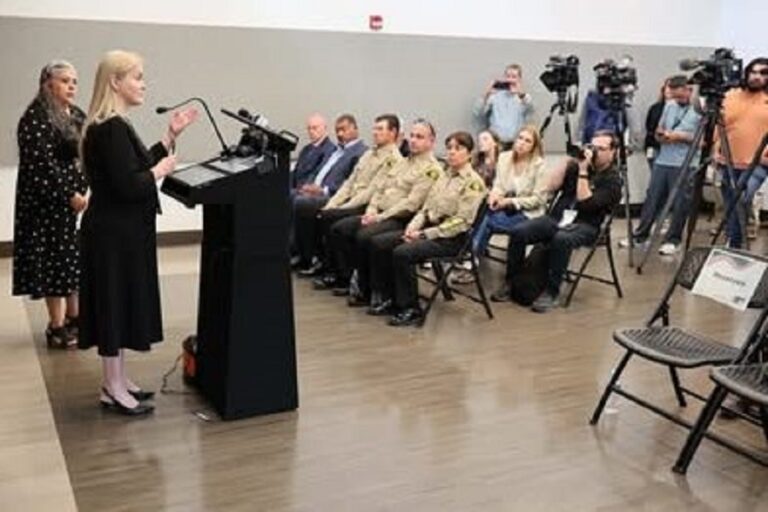
ALBUQUERQUE, NEW MEXICO — Childcare workers and advocates asked New Mexico senators on Thursday to keep proposed wage hikes for early childhood educators in the final state budget. They warned that failure to do so could deepen workforce shortages and undermine the state’s push for universal childcare.

At a news conference, advocates said low wages and job insecurity are driving an exodus of educators from the profession, threatening stability for families who depend on childcare services.

Childcare advocates to Senate: Support $60-million funding

“The turnover is costly, not just in the resources needed to recruit and train new staff, but in the disruption it causes for families who need our support,” said Alei Maxson, director of the home-visiting startup La Luz Family.

Education advocates sent a letter to the Senate Finance Committee on Thursday. They urged lawmakers to support a proposed $60 million allocation in House Bill 2 for the New Mexico Early Childhood Education and Care Department. The proposed funding would finance a wage-increase program for educators with higher qualifications.

Magnolia Chavez lamented that childcare workers have been for a long time are “poorly paid and poorly valued.” She operates a home-licensed childcare center in Albuquerque, serving about 15 children of varying ages

“Universal childcare will only work if educators are willing and able to remain in this field,” Chavez said in Spanish. Educators and their families don’t have stability, she added.

Key priority

Childcare is a key priority in the final legislative session of Governor Michelle Lujan Grisham. The $11-billion state budget approved by the House this week, however, does not fully fund the governor’s proposal for free universal childcare.

Lawmakers included instead co-payments for higher-income families in the state’s childcare program. The governor opposes this provision.

Lujan Grisham said universal childcare is “not really universally applied” when there is a co-pay. The governor said negotiations with lawmakers remain ongoing as the budget moves through the Senate.

On the Heel on Infant’s Death Due to Listeria Infection, FDA Will Test Infant Formula After Botulism Outbreak Sickens Dozens of Babies

0

After the New Mexico Department of Health (NMDOH) officials confirmed an infant’s death due to Listeria infection, the US Food and Drug Administration (FDA) plans to begin testing infant formula amid growing concern that contamination could be putting babies at risk of botulism.

The move came after a ByHeart infant formula outbreak involving the hospitalization of at least 51 infants. No deaths were reported. But babies who consumed the formula suffered alarming symptoms, which included difficulty feeding, extreme lethargy, and loss of head control.

Kyle Diamantas, FDA deputy commissioner for human foods, told Bloomberg that the regulatory body will test products such as milk powder, whey protein concentrate, and finished infant formula. The tests will establish whether botulism-related contamination is “a foreseeable hazard that companies could test for.”

Botulism is a rare but potentially fatal illness.

Central to the test, Diamantas said, is whether the health risk could have been detected earlier.

Health officials say the planned testing will try to close gaps in infant formula safety and prevent similar outbreaks.

Warnings over unpasteurized dairy resurface

The agency’s action followed state health officials’ renewed warnings about the risks of unpasteurized dairy products, particularly for pregnant individuals and newborns.

“Individuals who are pregnant should only consume pasteurized milk products to help prevent illnesses and deaths in newborns,” Dr. Chad Smelser, deputy state epidemiologist at the New Mexico Department of Health, said in a statement.

Raw milk, if not heat-treated to kill harmful bacteria, could carry pathogens such as Listeria, Brucella, Salmonella, Campylobacter, E. coli, tuberculosis-causing bacteria, Cryptosporidium, and even avian influenza viruses.

New Mexico Agriculture Secretary Jeff M. Witte said pasteurization is “a vital part” of dairy safety. He urged the public to avoid unpasteurized products.

Food safety experts and the Centers for Disease Control and Prevention (CDC) repeatedly warned against consuming unpasteurized milk. But Health and Human Services Secretary Robert F. Kennedy Jr. continues to promote its purported health benefits, heightening concerns among public health officials as infant food safety comes under renewed scrutiny.

Clear Horizons Act: How New Mexico’s net-zero bill might affect you and your household budget

New Mexico lawmakers are preparing to introduce the “Clear Horizons Act.” This bill would make the state’s greenhouse gas targets official and give state agencies greater authority to plan, track, and enforce emissions reductions over time. The New Mexico Sentinel has raised concerns that the bill could lead to higher utility and fuel costs for families and create uncertainty for investments in the state’s oil and gas industry.

Supporters, including Senate Democrats, say the bill would lock in current state goals, give regulators better tools for long-term planning, and focus new rules on the largest industrial polluters. The bill would also require more monitoring, reporting, and public transparency.

How this policy could impact your budget: key questions

Most households will probably notice changes first in utility rates, fuel prices, and any rebates or fees on their bills, rather than in the target year itself. The Sentinel’s main concern is that moving away from natural gas quickly and adding stricter emissions rules could feel like a “regulatory tax.” They also point to examples from other states as warnings.

If you want to set aside the politics and focus on your budget, the main question is whether policymakers can clearly show:

  1. The total cost of the system (including generation, transmission, and reliability upgrades),
  2. Who pays and when, whether it’s ratepayers, taxpayers, or industries that must comply, and
  3. How many bills might change, either from swings in gas prices or from the costs of building out the grid?

Home efficiency: how to prioritize upgrades if prices get unpredictable

If you want to prepare for uncertainty, start by reducing your energy use before you think about replacing equipment:

  • Air sealing and insulation usually offer the best return because they lower heating and cooling needs right away.
  • For HVAC systems, replace them when they break or when incentives are especially good. Otherwise, focus on regular tuning and maintenance.
  • For solar, calculate the payback period using your post-incentive price, your utility’s rate structure, and realistic expectations for how much energy you’ll produce.

Budgeting for change: a straightforward approach

  • Test your monthly budget by raising the amount you set aside for utilities and fuel for a few months, even if you expect costs to drop.
  • Treat rebates and financing offers like any loan. Compare the APR, fees, required contractors, and whether the savings are guaranteed or just estimated.
  • If you rent, focus on savings you can take with you, like weatherstripping, smart thermostats (if allowed), and changing your usage habits, since you can’t benefit from building upgrades.

The real impact on consumers will depend on the rules that follow the bill’s passage. This includes how emissions limits become requirements, what counts for certified projects or credits, and how grid reliability and affordability are handled in rate cases. These details, more than the net-zero goal itself, will determine if “affordable energy” is a real outcome or just a slogan.

A Fun Way to Learn: NMSU Unveils ‘Market Set Go!’

0

Discovering useful information can be simple and entertaining. A team from New Mexico State University (NMSU) brings this idea to life by introducing a new educational game. 

The NMSU Cooperative Extension Service recently launched “Market Set Go!” to share food safety best practices with farmers’ market vendors. The game provides training materials in an engaging format.

The media production team from NMSU’s Innovation Media Research and Extension and Learning Games Lab in the College of Agricultural, Consumer and Environmental Sciences designed a tycoon-style game set in a farmers’ market. Players manage the market and face various food safety challenges. 

The game was created in collaboration with the University of Arkansas System Division of Agriculture and the University of Houston.

Matheus Cezarotto, Educational Technology Extension specialist with Innovative Media Research and Extension, said game development efforts began in early 2024.

“In early 2024, the Learning Games Lab team began working on the design of a game to support essential food safety learning for farmers’ market vendors. Our goal was to find the knowledge gaps, utilize science-based standards to develop the game, and evaluate the success of the game in providing food safety training,” said Cezarotto.

Objective of Market Set Go!

The goal of the game is for players to:

  • Understand the risks associated with their produce and products, and learn how to reduce them through food safety practices. 
  • Understand the importance of food safety by seeing the connection between not making people sick and the quality of their products.
  • Feel confident about food safety.

Cezarotto said that vendors at farmers’ markets, regardless of whether they operate on a small, medium, or large scale, share a common enthusiasm for their products.

“In many cases, they are selling family recipes or locally produced goods. Despite their excitement, all vendors offering various products, from fresh items to ready-to-eat products, need training on food safety practices. Research has revealed that vendors claim to understand food safety, but their behavior does not always reflect that understanding, indicating a need for transformative training.”

How to Play Market Set Go!

To win, players manage a farmers’ market to ensure safety and profitability. They can create appealing stands to attract customers and offer a variety of products for sale. They also address food safety issues as they arise and use their profits to expand.

Further, players can add 10 different food stands, ranging from fresh produce to ready-to-eat products. Each stand presents specific food safety challenges, mapped out with the help of context experts. These include personal hygiene, cross-contamination, temperature abuse, and labeling and packaging. 

Social media-style posts communicate to players when a stand has a food safety issue that needs to be addressed. Players fix the issues by completing mini-games.
Visit http://marketsetgogame.org to know more or play the game when it launches.

Kevin Matthes Retires From WNMU After Years of Dedicated Service

0

Western New Mexico University (WNMU) Assistant Vice President of Facilities and Operations Kevin Matthes has officially retired. 

In a news release, WNMU announced this new milestone for Matthes, an alumnus and longtime champion of the university. 

As he begins another chapter, Matthes leaves behind a transformed WNMU campus, reflecting his commitment to infrastructure, aesthetics, and an employee-centric leadership philosophy.

How Matthes’ Journey at WNMU Started

Matthes shares a deeply personal connection to WNMU and Silver City. After his father retired and relocated the family from Hawaii to Silver City, Matthes found a home in the high desert. 

He earned his Bachelor of Business Administration and MBA at WNMU. He began his professional journey at the university in 1992 as an applied technology recruiter. Before spending the bulk of his early career—34 years—working in the local mining industry.

In May 2018, Matthes returned to his alma mater to lead the Facilities and Operations department. He brought decades of industrial experience and a passion for WNMU and the Mustang community.

Matthes’ Leadership at WNMU

Under Matthes’ watch, the WNMU campus underwent a visible renaissance. He handled a team of 40 to 50 members across custodial, grounds, maintenance, and special projects. Matthes led both grand renovations and essential behind-the-scenes modernizations at WNMU.

During Matthes’ tenure, WNMU saw notable successes. This includes the renovation of College Avenue and the creation of the Mustang Fountain in Regents Square. Additionally, Matthes played a key role in developing the WNMU John Arthur and Janette Smith Educational Center. This is to expand healthcare programs in Deming, providing vital resources for first-generation students in nursing and healthcare.

On the athletics side, Matthes helped bring night games to WNMU. He installed field lights and upgraded the softball complex to a standard, drawing praise from visiting teams across the conference. Currently, his team is navigating the complex legislative and engineering phases of the Graham Gym renovation. Their next focus is the Fine Arts Center Theatre auditorium.

Despite the scale of these projects, Matthes led with empathy for the “invisible” work that sustains a university. “No one is going to thank you because their toilet flushes, but they will call you if there’s a problem,” Matthes said. “My team understands this and is diligent in servicing the campus.”

Matthes took charge during emergencies, notably during a “fire-watch” several years ago when alarms and safety systems failed. He worked 16-hour shifts alongside his crew to ensure campus safety. He eventually used the challenge as a catalyst to digitize the university’s monitoring systems with built-in redundancies.

Matthes’ Advice to His Successor

Matthes leaves a simple piece of advice for the next AVP, underscoring the trust within his team. “Get out on campus; meet people and generally get to know your team really well. Most importantly, trust your people to do the job you hired them to do.”

His successor will take over a more efficient campus, thanks to the push for standardization. This included streamlining six keying systems, implementing modern maintenance management software, and using underground “wand” technology to map century-old infrastructure.

After retiring, Matthes plans to tackle his long “to-do” list at home, including a Caribbean cruise and a Florida visit.

New Mexico Students Tackle Climate Disasters in Governor’s STEM Challenge

LAS VEGAS, New Mexico — More than 300 high school students from across New Mexico will gather on February 7 for the seventh annual New Mexico Governor’s STEM Challenge. The event is a statewide competition of young innovators to develop science- and technology-driven solutions to the growing threat of climate-related disasters.

The annual event brings together students from 33 schools to address real-world problems affecting their own localities. It will be held at the Sub Ballroom of New Mexico Highlands University (NMHU).

The competition, organized by the STEM Innovation Network in partnership with the LANL Foundation, challenges students to apply science, technology, engineering, and mathematics (STEM) to issues facing the state.

“This is a great opportunity for New Mexico Highlands to highlight its commitment to STEM education, training, and research,” said NMHU Provost Dr. Dann Brown.

Climate and disaster response at the core

This year’s challenge focuses on climate resilience and disaster preparedness.

Student teams are going to respond to the question: “As natural disasters continue to affect New Mexico — such as wildfires, floods, drought, heat waves, and dust or windstorms — how can innovations in STEM help your community predict disasters, mitigate harm, respond effectively, and recover in the long term?”

Projects may range from disaster prediction tools and mitigation strategies to emergency response systems and recovery-focused technologies.

Beyond competition

Governor’s STEM Challenge goes beyond winning prizes, event organizers said. The program places strong emphasis on equity and access, particularly for students from underrepresented communities. It will also help students build pathways into high-demand STEM careers.

Fifty-seven teacher mentors and 23 industry partners support this year’s participants. Eighty judges from industry will evaluate the projects.

Industry-backed innovation

Event industry partners include major corporations, research institutions, and universities, such as Los Alamos National Laboratory, Sandia National Laboratories, Intel, Boeing, Meta, Virgin Galactic, and the University of New Mexico, among others.

The Governor’s STEM Challenge continues to serve as a major platform for experiential learning, workforce development, and community-centered problem solving.

Clear Horizons Act Advances in New Mexico Amid Jobs Versus Climate Clash

0

SANTA FE, New Mexico — A controversial climate bill that seeks to embed greenhouse gas reduction targets into state law narrowly cleared its first legislative hurdle this week. Lawmakers debated with competing visions of economic stability and environmental protection.

Senate Bill 18, also known as the Clear Horizons Act, moved forward on a 5-4 vote in the Senate Conservation Committee. It took at least four hours for the legislators to debate on Tuesday.

Once approved, the bill would codify pollution reduction goals set by Gov. Michelle Lujan Grisham’s 2019 executive order into statute. The goals include cutting emissions by 45 percent below 2005 levels by 2030, by 75 percent by 2040, and achieving net-zero emissions by 2050.

Lawmakers push climate urgency

Proponents said the bill is an important step toward protecting public health and sustaining the state’s long-term prosperity.

“These goals aren’t just aspirational — they’re an investment in our future,” said Senate Pro Tempore Mimi Stewart (D-Albuquerque), the bill’s sponsor.

He argued that the legislation provides New Mexico with tools for planned, responsible emissions reduction without sacrificing jobs.

Supporters of the measure also stressed the rising costs associated with climate-driven disasters and pollution. They argued that early action can prevent far greater economic losses in the future. Statistics on the impact of climate change over the next 20 years, they said, could cost New Mexico nearly $294 billion in infrastructure losses, health impacts, and disaster response costs.

Critics warn of economic harm

But critics — including the three Senate Republicans on the committee — slammed the proposal. They argued that the bill threatens the state’s economy, particularly in the oil, gas, agriculture, and construction sectors.

“Passing this legislation will kill New Mexico’s economic future,” said Sen. Larry Scott (R-Hobbs).

He said that strict statewide mandates could reduce fossil fuel production, diminish government revenue, and put jobs at risk.

Opponents also chided the bill for what they described as unrealistic targets. These targets, they said, fail to account for “real-world consequences” for consumers and industry, echoing broader concerns among business groups about regulatory burdens.

The bill threatens to devastate New Mexico’s economy if approved, according to the New Mexico Oil and Gas Association. The group warned that the bill could reduce state revenue from oil and gas by more than $740 million. And it will put families at risk and eliminate nearly one-third of the education budget.

Lands, health, and economics at the center stage

The hearing drew significant public interest. Resource persons came from a broad range of voices — from former oil workers-turned-health advocates urging cleaner air to industry representatives. They warned of higher utility rates and economic disruption.

Sen. Angel Charley (D-Acoma) invoked environmental and cultural urgency. The Democrat lawmaker said New Mexicans must now “take care of the land” that has long sustained their

The bill is now heading to further consideration in the Senate. Supporters of the measure have expressed confidence that the bill could eventually reach Gov. Lujan Grisham’s desk for signature.

The climate bill is part of New Mexico’s broader effort to establish its own emissions and clean energy standards.

New Mexico was the fourth state to enact the Clean Transportation Fuel Standards and the Advanced Clean Car and Truck Ruleswhich sought to reduce pollution while driving new investment and creating job opportunities.