
Home Blog Page 8

New Mexico Offers $1M Grants to Boost Clean Energy Innovation

New Mexico has offered state grants of up to $1 million to small businesses developing clean energy technologies under a program aimed at accelerating innovation and commercialization in the advanced energy sector.

In a press release, the New Mexico Economic Development Department (EDD) announced the opening of the third round of its Advanced Energy Award. It offers funding to companies conducting R&D or early-stage pilot projects.

The department launched the program in 2024, funding 12 New Mexico companies with a total of $6.7 million.

Small businesses have until 5 pm Mountain Standard Time on March 17, 2026, to apply for the grants.

Two funding tracks

The New Mexico Advanced Energy Award (NMAEA) is a competitive, state-funded grant program providing non-dilutive funding to small businesses engaged in research and development.

According to the Technology and Innovation Office (TIO), the program supports innovation aimed at commercialization, backing technologies that make energy use cleaner, safer, more secure, and more reliable.

NMAEA has two categories: Research and Development and Pilot Projects.

Under the Research and Development category, the program supports companies conducting foundational research, proof-of-concept efforts, and product development. The aim is to translate scientific and technical advances into market-ready solutions.

To qualify for this category, a company must have its headquarters in New Mexico.

Pilot Projects category, on the other hand, focuses on demonstrating the viability of new technologies through pilot deployments or early-stage implementation. This is for projects ready to collect performance data and validate commercial potential.

Companies outside New Mexico may apply under the Pilot Projects category. But they must be authorized to do business in the state, establish and maintain a local presence, and use the funds to support in-state activities.

Webinar set

EDD will hold a webinar on February 24, 2026, at 1 pm MST to guide prospective applicants through the program requirements, eligibility criteria, and application process.

More details, including webinar registration and application guidelines, are available on the department’s website.

Phil Hoffman Selected as Next General Manager and CEO of New Mexico PBS

0

Starting April 1, Phil Hoffman will serve as New Mexico PBS’ (NMPBS/KNME-TV) new general manager and chief executive officer. The Board of Directors of New Mexico PBS named him following a national search.

The search process began in October 2025 and included a comprehensive national recruitment effort, according to UNM News. The Board led multiple rounds of evaluations and interviews in collaboration with leadership from The University of New Mexico and Albuquerque Public Schools.

Teresa Costantinidis, UNM’s executive vice president of Finance and Administration and NMPBS Board chair, discussed the search process. She said it attracted a highly competitive pool of candidates from throughout the PBS system and public media landscape.

“Dr. Phil Hoffman is a strong and experienced leader who understands the vital role public media plays in advancing New Mexico,” Costantinidis said. 

Costantinidis expressed confidence that Hoffman will provide steady leadership as the station continues to inform, educate, and serve communities statewide.

Who is Phil Hoffman?

Hoffman is currently assistant dean of Media and general manager of Ball State PBS and Indiana Public Radio. He has over 20 years of experience in public media leadership, multimedia strategy, and higher education administration.

“I look forward to working with the team at New Mexico PBS to build on its legacy of civic service while adapting to today’s media environment,” Hoffman said. “The opportunity to serve New Mexico—with its rich culture and strong commitment to education and storytelling—is energizing.”

At Ball State University, Hoffman led Ball State PBS, which serves more than 23 counties in east central Indiana. He also managed Indiana Public Radio, a four-station network reaching 22 counties. Additionally, he serves as Indiana vice president for the National Academy of Television Arts & Sciences. He co-chairs Vision Maker Media, a national public media distributor supporting Indigenous storytelling.

Hoffman holds a doctorate in Higher Education Administration. He has led innovation initiatives at multiple institutions, including the Public Media Accelerator Program at Ball State University. An Emmy Award–winning editor, director, and writer, he has worked as a reporter and documentary producer. His 2009 documentary, Turn Blue: The Short Life of Ghoulardi, received two regional Emmy Awards.

New Mexico PBS Board Thanks Outgoing General Manager and CEO 

Hoffman will start as co-general manager on March 24, with retiring general manager and CEO Franz Joachim. This is to ensure a smooth leadership transition. Joachim will step down on March 31.

The Board expressed deep appreciation to Joachim for his five decades of service in public media and his leadership at NMPBS since 2013. During his tenure, the station expanded statewide reach, strengthened its financial position, and advanced innovation in broadcasting.

New Mexico PBS serves northern and central New Mexico, as well as the Navajo Nation. It is co-licensed by UNM and Albuquerque Public Schools. In addition to broadcast programming, NMPBS streams content statewide via the PBS app.

Southern New Mexico Outlook: Jobs Grew, Wages Rebounded, Trade Weakened in Late 2025

In 2025, southern New Mexico added jobs and saw a modest wage increase. But trade at the Santa Teresa port dropped sharply compared to the year before, according to the Federal Reserve Bank of Dallas. The report shares important numbers for southern New Mexico counties, especially the Las Cruces metro area.

Crucial facts

  • Las Cruces added about 2,000 jobs from December 2024 to December 2025, a 2.5% increase. Most of these jobs were in government, education, health services, and construction or mining, according to the Dallas Fed’s Q4 2025 Southern New Mexico Economic Indicators.
  • Unemployment in Las Cruces rose to 5.1% in December 2025, up from 4.9% in September. By contrast, U.S. unemployment stayed at 4.4% during that time, according to the Dallas Fed.
  • Average hourly pay rose to $25.54 in December 2025, up from $24.67 in September. Still, this amount was below the state and national averages in the report.
  • Trade at Santa Teresa fell compared to the year before. The Dallas Fed said exports dropped by 48.9% and imports by 18.7% from November 2024 to November 2025, after adjusting for inflation.

Labor market signals strengthened, but not evenly across sectors

The Dallas Fed’s fourth-quarter update shows strong job growth in Las Cruces in 2025, while job growth was slow across the country. Most new jobs were in government and services. Some private businesses, such as professional services, hotels, and restaurants, saw small job losses during the year.

Unemployment in Las Cruces rose slightly late in the year, but the report notes the rate is still lower than before the pandemic. For more details, the Bureau of Labor Statistics provides state-level labor market snapshots in its New Mexico “Economy at a Glance” series.

Wage trend turned positive after a multi-year slide

After a stretch of falling pay in Las Cruces, the Dallas Fed reported a small rise in average hourly pay in the last quarter of 2025. Even so, average pay in the area remained below the state and national averages reported in the study.

Trade and commodity exposure remain a swing factor

The report notes a small increase in the value of imports through Santa Teresa at the end of 2025, after inflation adjustment. Still, both imports and exports dropped sharply compared to the year before, especially exports. This shows trade was weaker than in 2024.

Energy and other raw materials are still important in southern New Mexico. The Dallas Fed says New Mexico produced 2.1 million barrels of oil per day in February 2025, up 7.5 percent from the year before, but growth slowed by the end of the year. The number of active oil rigs in the state also fell from 108 in April 2024 to 100 in April 2025 as oil prices dropped. Dallas Fed Q3 2025 commodity markets

WNMU Francis McCray Gallery Spotlights Emerging Artists in 2026 Student Juried Art Exhibition

0

Western New Mexico University’s Expressive Arts Department and Francis McCray Gallery of Contemporary Art hosted the 2026 Student Juried Art Exhibition. A spring cultural highlight, the exhibition showcased Southwest artists’ technical mastery and conceptual depth, developing the region’s next generation.

This year’s collection highlights WNMU’s unique “applied liberal arts” identity. The university encourages students to blend traditional craftsmanship with contemporary social and environmental themes.

“The Student Juried Exhibition is a meaningful part of what we do as a teaching gallery within the Expressive Arts department,” said Director of the Francis McCray Gallery Jill Winburn. 

Winburn said the exhibition lets students present work professionally and receive feedback from an external juror. 

WNMU’s Francis McCray Gallery of Contemporary Art is named after the esteemed artist, educator, and past resident of Silver City, Francis McCray. It hosts five exhibitions per year and is located on the beautiful WNMU campus. Deepening the understanding and appreciation of art is at the heart of this teaching and research gallery.

Honoring Outstanding Student Artists 

Organizers announced the 2026 awards during the late January opening reception, recognizing outstanding achievements in various categories. These honors validate student artists and enhance their professional portfolios, preparing them for careers in the arts and creative industries.

According to a WNMU report, the awards included:

  • Phoebe Lawrence Ceramic Award – Erika Cozine, “Depletion”
  • Light Art Space Award for Photography – Riata Lindley, “Ephemeral and Eternal”
  • Watercolor Society Award – Sally Tilton, “A strand of Pearls”, Watercolor”
  • Honorable Mention – Leticia Marquez, “Building Blocks”, Sculpture
  • 3rd Place – Rylee Myers, “All the little things moving in the night”, Drawing
  • 2nd Place – Caleb Macias, “Freaky Fresh Product Line”, Graphic Design
  • 1st Place – Gabe Farley – “Slightly Familiar Channels”, Sculpture

The displayed works reflect the region’s geographic and cultural influences while incorporating broader and more personal experiences. From experimental ceramic forms to high-fidelity digital compositions, the exhibition demonstrates the diverse perspectives fostered within WNMU’s Expressive Arts Department.

“There’s something transformative about seeing your artwork thoughtfully installed on the walls of a gallery — it often shifts how students see their own work and strengthens their confidence as artists. When that experience is supported by classmates, faculty, family, and the broader community showing up to celebrate them, it becomes even more powerful,” said Winburn. 

New Mexico Senate Passes SB 23 Banning Student Cellphone Use: What Parents Need to Know

The New Mexico Senate has approved a bill that would ban students from using cellphones and other wireless devices during the school day.

In a bipartisan vote Sunday, the Senate approved Senate Bill 23 with a vote of 32–6. Republican Sen. Crystal Brantley and Democratic Sen. Antonio Maestas sponsored the bill, which now heads to the New Mexico House of Representatives.

What parents need to know

If enacted into law, the bill would prohibit students from using wireless communication devices such as cellphones, tablets, laptops, and cameras during school hours. Exceptions would be allowed for educational activities, medical needs, and emergencies.

Implementation would roll out in stages. The first phase is for middle school students in the 2026–27 school year. The second phase would be for high school students in 2027–28. And finally, for the elementary level in 2028–29.

Brantley said the proposal aims to help students focus on learning by limiting digital distractions in the classroom.

$2 million funding

The bill earmarks $2 million to help schools enforce the policy over the next two years. Funds would support education technology infrastructure, including locking phone pouches similar to those piloted at Santa Fe Public Schools.

The House is expected to take up the bill in session.

Ben Ray Luján to Face No GOP Challenger in Rare New Mexico Senate Race

0

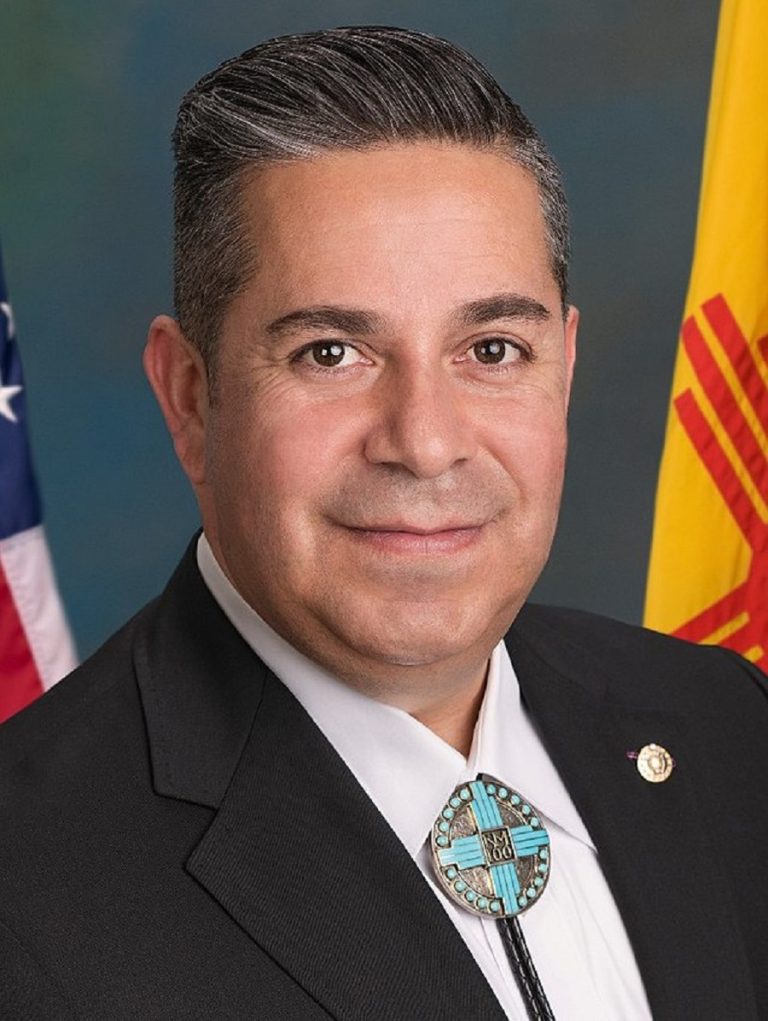
ALBUQUERQUE, New Mexico – U.S. Sen. Ben Ray Luján is heading into his 2026 reelection bid with no Republican challenger on the ballot.

New Mexico Secretary of State’s Office confirmed that Republican aspirant Christopher Vanden Heuvel of Rio Rancho failed to collect the required number of valid signatures to qualify for the ballot. He needed 2,351 signatures.

The Republican contender’s disqualification leaves Luján’s only opponent in the Democratic primary race, fellow Democrat Matt Dodson.

New Mexico has seen Democrats consistently perform strongly across statewide contests in recent election cycles. The New Mexico Political Report, for example, reported that Democratic candidates swept multiple offices across the state in the 2018 general election. The positions won by the Democrats include treasurer, auditor, attorney general, and secretary of state — a demonstration of the party’s dominance even beyond the federal elective positions.

The absence of a Republican challenger in a U.S. Senate general election is the first in modern state history.

A win in the primary against fellow Democrat Matt Dodson would assure Luján of a fresh term in Washington. The senator has been in the office since 2021. Previously, he served in the U.S. House.

This development underscored the Democratic Party’s strong presence in New Mexico politics.

Los Alamos Visiting Nurse Service to Close, Showing Rural Home Health Funding Issues

After 50 years in service, the home health hospice provider, Los Alamos Visiting Nurse Service, is closing. In it’s press release, the organization will seize operations on Friday, February 20, 2026.

Agency officials said that rising health care costs and lower insurance payments led to the decision to close. Meggin Lorino, who leads the New Mexico Association for Home and Hospice Care, says the closure is an “alarm bell” for what can happen when home-based care lacks sufficient funding over time.

Financial Challenges facing the agency

Home health reimbursement depends on the payer. Medicare payments are based on the CMS Home Health Prospective Payment System, which sets rates using a federal payment structure.

In rural areas, it can be harder to make ends meet with these payment systems. Searchlight New Mexico reported that urban clinicians can see more patients each day because homes are closer together, while rural providers spend more time driving and see fewer patients.

The agency’s closure letter states the decision was based on financial viability. Leadership decided they could not keep operating under current conditions.

A bigger picture: Aging population and policy questions

This closure comes at a time when more people in New Mexico are reaching retirement age. According to the state health department, the number of residents aged 65 and older is increasing, which means more people are likely to need home care.

Uncertainty about health policy is making things even more complicated. State officials have noted that potential changes to federal Medicaid rules could place additional strain on rural health care. This concern was highlighted in a recent Medicaid reform summary.

What happens to patients and staff?

For continuity of care, Searchlight New Mexico reported that other agencies said they would take on patients. However, transitions can still be hard, especially for those with complex needs.

The agency’s closure letter also says they are working to find options for patients, including talking with another hospice provider. However, the arrangements were not final when the letter was written.

How this affects rural health care?

State officials admit that health care in rural areas costs more and is less reliable due to challenges such as long travel distances and limited resources. In response, the Governor’s office has begun seeking solutions, including launching the Rural Health Care Delivery Fund to help these communities gain better access to care.

Overall, the closure of Los Alamos Visiting Nurse Service provides a real example of the ongoing debate over whether current reimbursement and support systems truly meet the needs of rural care, as described by Searchlight New Mexico.

Tribal Land Returns and Chaco Protections Put Oil-and-Gas Royalty Income in Focus

In several Western states, tribes are taking back control of their ancestral lands through purchases, state-supported agreements, and federal transfers. These efforts are often called “LandBack.” One recent example is the return of the Blue Creek watershed to the Yurok Tribe, along with other land returns in California, North Dakota, and Alaska.

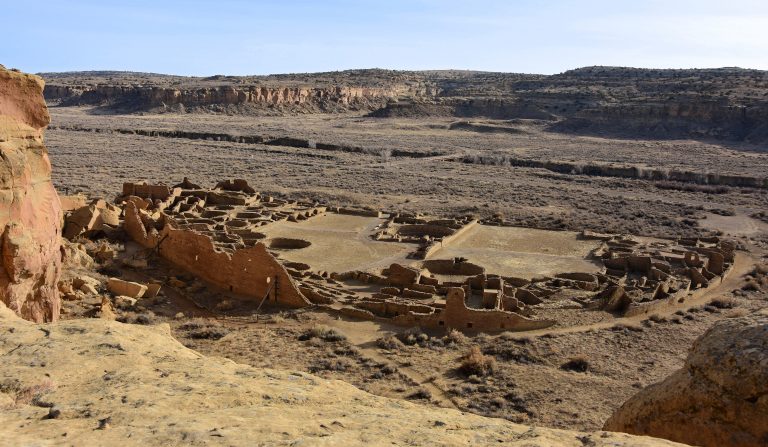
In New Mexico, discussions about returning land are linked to oil and gas activity near Chaco Culture National Historical Park. The Biden administration set up a 10-mile buffer zone to block new leases and development. This aims to reduce industry activity near important cultural sites, but financial impacts are also a key part of the debate.

According to a report from the U.S. Senate Committee on Energy and Natural Resources, New Mexico lawmakers have reintroduced legislation to permanently protect Chaco Canyon and the surrounding sacred landscape.

Why it matters for royalties and local economies

For investors and local governments, the main concern is not the oil and gas already being produced, since many wells and leases in the area are older than the buffer. The bigger issue is the chance to drill and lease in the future. The Bureau of Land Management says new federal rules to cut natural gas waste on public and Tribal lands could slow development, give companies fewer places to drill, and change what people expect from long-term production in areas with both federal and tribal rules.

For many local residents, this issue is personal because some depend on oil and gas payments from their mineral rights in these areas. If new leasing is limited, these families may have fewer opportunities to earn income over time, depending on where their mineral rights are located and how development proceeds. The debate over protecting culture versus making money is now central to the Chaco discussion.

There is also a financial impact on the public. Energy development can support county budgets and create local jobs through service work, contracts, and other spending. When drilling slows down, small communities can feel the effects quickly, even before it appears in state data, especially in places with few other options.

Legal and political fights over the 10-mile buffer around Chaco Culture National Historical Park are causing uncertainty for everyone involved.

The Navajo Nation is suing the federal government, arguing the tribe wasn’t properly consulted and that the buffer harms families who rely on oil and gas royalties. At the same time, New Mexico lawmakers are trying to make the buffer permanent, which would prevent future rollbacks but could tighten restrictions on new drilling. Secretary Haaland has already blocked new leases and mining near Chaco to protect sensitive sites. This leaves energy companies and mineral rights owners in limbo, as lawsuits and shifting policies create an unpredictable future.

For tribal governments and preservation advocates, the main goal is protecting culturally important places from further development.

What’s ahead

The decisions made now will have real effects on families and local economies, particularly those who rely on oil and gas income. The final outcome—whether the buffer stays as is, shrinks, or disappears—depends on court rulings on tribal input and on future government action. For some, even small policy shifts will be felt right away; for others, the impact may not hit until new opportunities to lease land come back, and that could take a long time or never happen at all.

2026 Art Calendar: UNM Bookstores Highlight Artworks Honoring New Mexico

0

Thirteen University of New Mexico (UNM) community members showcase original artwork in the 2026 Art Calendar honoring New Mexico.

UNM Bookstores spearheaded the initiative to celebrate the state’s culture and landscapes. According to UNM News, New Mexico’s role as home to many and strong community spirit inspired the 2026 Art Calendar concept.

The effort began with a call for submission. It invited UNM students, faculty, staff, and alumni to reflect on one prompt: What does New Mexico mean to you?

Organizers accepted all traditional mediums, including painting, drawing, sculpture, and ceramics, requiring only a vertical final format. Over the following weeks, artists submitted dozens of entries, each presenting a personal perspective on the theme. 

After extensive deliberation, 13 pieces made it, with 12 representing each month of the calendar and one for the cover. Together, the artworks formed a collective portrait of the state, varied in style, voice, and format, yet remarkably cohesive.

UNM Artists Share the Story Behind Every Piece

The UNM Bookstores team interviewed the creators to further honor their artworks and the inspirations behind them. Conversations, paired with each piece’s written reflections, revealed the artists’ creative processes and how New Mexico influences their perspectives.

“From seeing the art firsthand at the very start to selecting the pieces and interviewing the artists, the entire process was incredibly meaningful. The interview process brought this project to life in a way I didn’t expect, and hearing each artist’s story made the calendar feel less like a collection of images and more like a shared creative journey,” said Malia Dumlao, marketing assistant, UNM Bookstores.

Astrid Larson-Sherman sees New Mexico as defined by togetherness, a sense of connection she considers hard to find elsewhere. Kaitlyn Norlin describes the state as “a vibrant, enchanting place.” For her, New Mexico represents both origin and inspiration: “It’s where I was born and raised, a place where cultures flourish, the sun shines year-round, and there’s an almost mystical quality to everyday life.”

Meanwhile, other artists portray New Mexico as a place of transformation and refuge. 

Ukrainian student Marta Gross shared how the state reshaped her understanding of home after leaving her country due to war. “That year of my life was very dark,” she said. “Coming to New Mexico, I fell in love with its beauty and its people. Even though I wasn’t born here, it became my second home.”

Alexandra Alvarez, who grew up in Albuquerque, spoke about the deep emotional ties she holds to the land. She recounted feeling love, grief, growth, and healing there. Her piece captures the warmth she feels when watching the skies glow at sunset. Building on that theme, Manuela Cardenas tried to express the fleeting stillness of sunrise and sunset in her work. She called it “that quiet moment when everything feels suspended in time.”

Charlotte Leachman’s piece centers on the Lobo itself, symbolizing protection, leadership, and harmony with nature. She describes it as reflecting “the adventurous, trailblazing spirit woven into the University’s identity”. The calendar’s cover features a hand-adorned steer skull by Susan Keoghan. She says the piece embodies New Mexico as “resilient, proud, and forever connected to the land we call home.” 

2026 Art Calendar Available to the Entire UNM Community

During Hanging of the Greens and the Back-to-School season, the UNM Bookstores distributed more than 500 printed copies of the calendar. Community members visiting the store received the calendars. 

During Hanging of the Greens and the Back-to-School season, the UNM Bookstores distributed over 500 printed copies of the calendar. Community members visiting the store received the calendars directly.

“The art calendar is a stunning representation of the talent within our UNM community,” said UNM Bookstores Director Lisa Walden. “The diversity of mediums and voices featured speaks to the heart of our campus culture, and seeing customers so excited to pick one up during Hanging of the Greens made it even more meaningful.” 

The full collection is now available online. The public can explore the artworks, read artist statements, discover interviews, and download a free, print-ready version.

Banks’ Methane Targets Lag As New Mexico Lawmakers Reject Emissions Caps

A new working paper finds that many large banks and investors are only now beginning to include methane in their plans to move away from fossil fuels. This is important because these banks and investors help fund pollution from the oil, gas, and food industries. Meanwhile, New Mexico lawmakers voted down a bill that would have set statewide limits on greenhouse gas emissions. This decision could change what companies expect for future rules in one of the country’s main oil and gas states.

This gap in addressing methane matters to investors because cutting methane is often seen as a quick and affordable way to lower the risk of near-term warming. However, reporting and goal-setting are still inconsistent. A Climate Policy Initiative working paper looked at plans and climate reports from 10 major banks and investors and found that most have not focused much on methane, especially in the industries they support.

Policy decisions also affect where money goes. In New Mexico, the state Senate voted against Senate Bill 18 (the “Clear Horizons” proposal) on Feb. 11, 2026, according to KANW. The bill would have set legal limits on greenhouse gases for the whole state—45% below 2005 levels by 2030, 75% by 2040, and net-zero by 2050. Because the bill did not pass, these targets are not part of state law, which may make it harder for companies and investors to know what rules to expect when planning big energy projects.

What the methane report says

The CPI paper points out the difference between (1) setting goals that show what banks and investors want to do and (2) taking real steps that show if methane is part of their decisions. It finds that only 3 out of 10 groups set goals for methane, while 7 are taking some action—often by sharing information about methane risks or getting involved in policy. The authors also note an imbalance between industries: there was very little action in food and farming, while oil and gas saw more action, but it was still not complete.

For markets, the main point is not that methane is being ignored, but that it is often not turned into clear, specific promises for each industry that banks and investors support. This makes it harder to compare what different banks and investors are doing, and it may cause confusion about how they judge the risks in industries that produce a lot of methane.

What New Mexico’s vote changes mean for investors

New Mexico’s rejected bill would have set limits on greenhouse gas emissions across the state and given greater responsibility and authority for planning and reporting on emissions. Because the bill did not pass, there is no legal authority to cut emissions across the state at this time. For people in the energy industry, this can change what they expect about how fast and in what way new rules might come, even as other state and federal rules keep changing.

The main effect on the market right now is how clear the rules are: having set limits in law can give a stronger long-term signal for obtaining permits, planning to follow rules, and figuring out costs. Without these limits, there is more uncertainty about what rules will come in the future.