
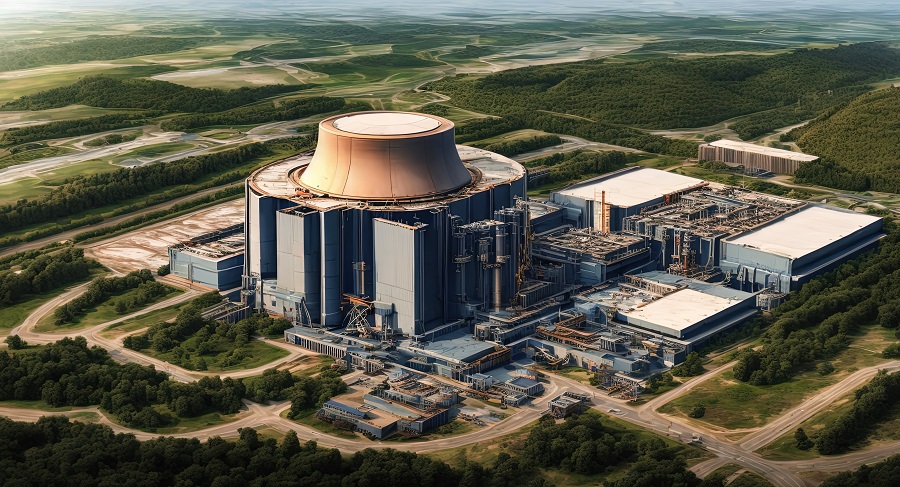


SANTA FE, New Mexico – New Mexico lawmakers are moving to approve a package of tax incentives as the 30-day legislative session adjourns on Thursday.
House Bill 27 and Senate Bill 97 are companion measures that seek to expand and modernize the state’s research and development (R&D) tax credit.
The bills, lawmakers said, aim to anchor emerging industries — including fusion energy and quantum computing — in the state of New Mexico. It will give the state a competitive edge in courting companies in the advanced energy and computing sector.
In a separate measure, the House of Representatives approved House Bill 154 with a 59-5 vote last week. The bill seeks to provide additional tax credit for advanced energy equipment and expand industry coverage — from oil and gas to renewable energy, mining, and advanced manufacturing.
New Mexico’s independent tax incentive structure
Bill’s primary sponsor, Rep. Meredith Dixon (D-Bernalillo) said the legislation would make it easier for advanced energy firms to establish and expand operations in New Mexico.
HB 154 would dissociate New Mexico’s definition of “advanced energy” from the federal 45X Advanced Manufacturing Production Credit, giving the state the power make its own incentive structure.
The push for these legislative measures comes as the private-sector investment in the advanced energy sector has increased. California-based Pacific Fusion selected Albuquerque in September as the site of its billion-dollar research and manufacturing campus. The company edged out Livermore and Alameda in California.
City council thumbs up support for Pacific Fusion
Last Fall, the Albuquerque City Council approved $776.6 million in industrial revenue bonds (IRBs) to support commercial fusion energy project, which many scientists have called the “holy grail of renewable energy.” Pacific Fusion partnered with Sandia National Laboratories to develop the project.
Pacific Fusion co-founder and COO Carrie von Muench said the company is spending hundreds of millions of dollars on components manufactured across the country. She added that state-level incentives could help bring more of that work — and the associated jobs — to New Mexico.
Senate Bill 177, one of the session’s major general fund transfer measures, has also included funding support. The bill allocates about $300 million for advanced energy companies, including Pacific Fusion. Quantum computing initiatives are set to receive more than $600 million.
Quantum technology
New Mexico partnered last Fall with Roadrunner Venture Studios to deploy $25 million, making the state a center for quantum technology.
Rob Black, secretary of the New Mexico Economic Development Department, said the state has reached a juncture where it is seeking to convert decades of research leadership into economic growth.
“New Mexico is at an inflection point,” Black, according to Albuquerque Journal, said. He cited the latest gains in fusion energy and advanced computing, adding: “These are the technologies of the future.”
The state’s federal research institutions, including Los Alamos National Laboratory and Sandia, have been leaders in quantum research and other technologies. Commercialization, however, has often occurred outside New Mexico.
Black said HB 27 allows “stackable” tax credits alongside industrial revenue bonds. The tax incentive package aims to encourage companies to build permanent infrastructure in the state and ensure long-term economic benefits remain local, he added.