
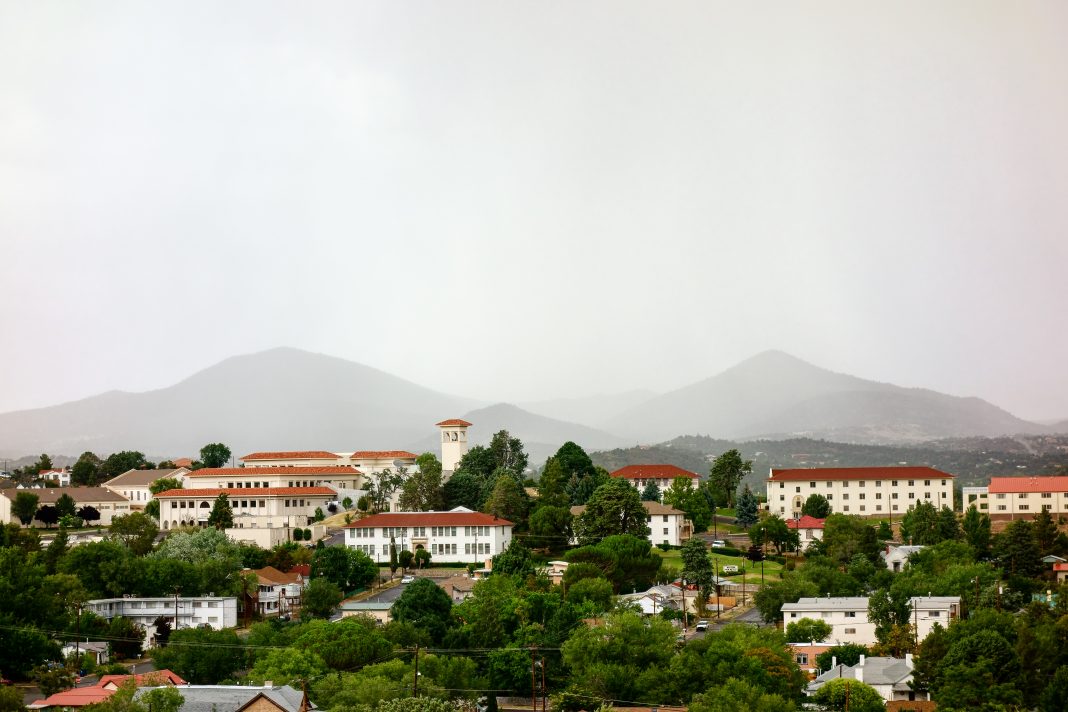


Another step in Western New Mexico University’s (WNMU) presidential search has ended. The WNMU community will meet its next president in a few days.
The four distinguished finalists for WNMU’s 16th presidency concluded their campus visits. On March 4, 2026, a final forum meeting featuring finalist Mario Martinez, Ph.D. gave students , faculty, and staff the opportunity to engage with the candidates about the university’s future. The Silver City community also attended public meet-and-greet events for each candidate.
Over the week, candidates Martinez, Sharon Jones, Ph.D., Carlos Rey Romero, Ph.D., and Jose E. Coll, Ph.D., presented their visions for WNMU. They discussed the challenges and opportunities facing the Silver City community and the broader Southwest region.
According to a WNMU report, the forums focused on critical themes. These include academic quality across online and in-person modalities, staff morale, and the integration of artificial intelligence in higher education.
Presidential Finalists Share Their Vision For WNMU
Martinez currently serves at Fort Lewis College. He emphasized WNMU’s potential for seamless academic progression through degree offerings that range from certificates to graduate programs. He proposed a systematic solution to salary compression and workload issues. Martinez advocated for standing committees and a collaborative leadership style focused on operational improvement. His message focused on creating a frictionless, student-focused experience as a defining institutional goal.
Jones is a Vice Chancellor at the University of Washington Bothell and an environmental engineering expert. She defined her candidacy around place-based education and strong mentorship. Jones highlighted her personal journey as a first-generation college graduate. She said her approach focuses on diversifying the funding model—particularly through philanthropy—to secure the university’s mission during challenging financial times.
Romero, an expert in research and economic development, focused on ensuring public trust in university governance. He pushed for rigorous IT and cybersecurity practices and introduced the idea of “budget summits” to reinforce transparency. Romero’s approach tied the university’s identity to its role in supporting Silver City’s well-being.
Coll is a U.S. Marine Corps veteran and the current Provost at Western Oregon University. He stood out for his collaborative leadership and advocacy for veterans. From day one, he prioritized workforce readiness. Coll also lauded WNMU’s advanced digital presence. He highlighted leveraging staff as the university’s foundation and using digital innovation to drive operational excellence.
While their backgrounds vary, the finalists shared common priorities:
- The Applied Liberal Arts: Recognition of the university’s unique blend of traditional academics and professional and vocational training.
- Sustainability: A commitment to leveraging the university’s proximity to the Gila National Forest to support experiential learning and regional economic development.
- Shared Governance: All candidates pledged to rebuild trust through transparent decisions and collaboration with Faculty and Staff Senates.
Final Phase Up Next
As the WNMU Board of Regents enters the final search phase, the search firm Anthem Executive gathers stakeholder feedback.
“Student, faculty, and staff input is the cornerstone,” Board of Regents Treasurer/Secretary Dean Reed said. Reed was also part of the hiring committee. “We seek a leader who understands and lives our mission.”
On March 5,2026, the Board of Regents met in executive session to review survey data and interview notes.WNMU expects to formally announce its 16th president on Tuesday, March 17, 2026, following contract negotiations.
In September 2025, WNMU launched a comprehensive nationwide search for its next president.
The president serves as the university’s chief executive officer and reports directly to the WNMU Board of Regents. The new president will lead the university through a pivotal period of renewal and growth, ensuring its sustainability and mission in a rapidly evolving higher education landscape.