

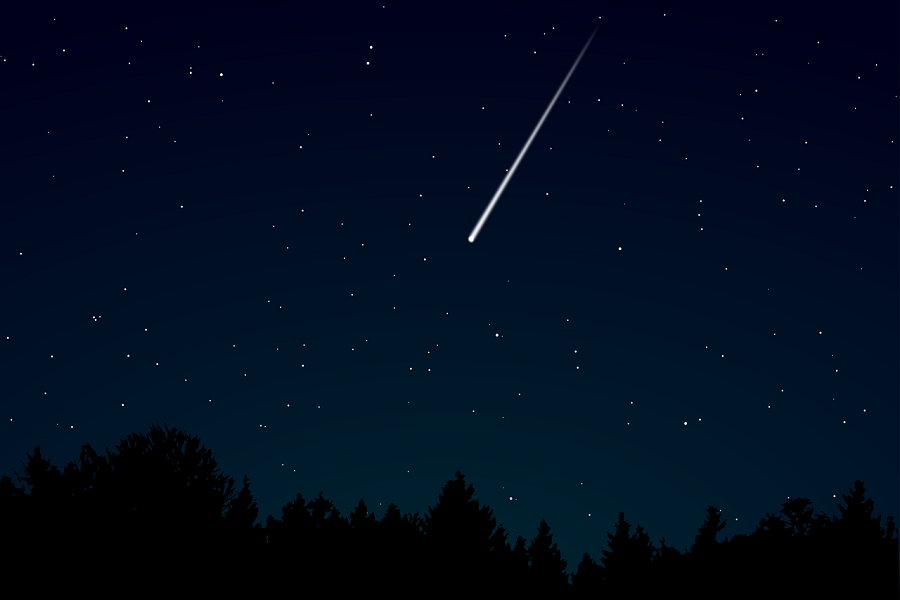
New Mexico skywatchers have a chance to catch the Draconid meteor shower Thursday evening, with peak activity expected around 7 p.m. Mountain Daylight Time.
Unlike many meteor showers that are best viewed after midnight, the Draconids are known for their early-evening display, making them one of the more convenient celestial events to watch.
The shower’s radiant — the point in the sky from which the meteors appear to originate — is in the northern sky near the head of the constellation Draco, the Dragon. The stars Eltanin and Rastaban can help observers locate the area, although meteors may streak across any part of the sky.
The Draconids are produced by debris left behind by comet 21P/Giacobini-Zinner. Their meteors tend to move more slowly than those of many other showers, sometimes leaving visible trails for a second or two.
Under dark skies, observers can typically expect about five to 10 meteors per hour. No major outburst is predicted for 2026, but the Draconids have occasionally produced unexpected bursts of activity.
The shower is active from about Oct. 6-10, with peak activity expected Thursday evening into early Friday. Viewing conditions could be favorable this year because the waning crescent moon is expected to set before darkness, leaving the sky relatively dark.
How to watch the Draconids in New Mexico
For the best chance of seeing meteors, observers should head outside after dark, around 7:30 to 8 p.m., depending on their location, and allow at least an hour or two for viewing.
A location away from streetlights and other sources of light pollution will offer better conditions. A clear view of the northern sky can help observers locate the radiant, but there is no need to stare at one spot because meteors can appear anywhere overhead.
No telescope or binoculars are necessary. The best approach is to use the naked eye, bring a blanket or reclining chair, and allow about 20 minutes for the eyes to adjust to the darkness.
New Mexico is well positioned for viewing because the Draconids are best observed from the Northern Hemisphere.
Cloud cover could affect visibility, so checking local weather forecasts before heading out is recommended.
With its early-evening peak and no special equipment required, the Draconid meteor shower offers New Mexico residents an accessible opportunity to watch one of October’s celestial events.