

Water for Rivers, Power for Data: Inside New Mexico’s Budget Push as Project Jupiter Looms

New Mexico boosts river funding as Project Jupiter raises urgent questions on water use, energy demand, and policy gaps in a drying state.

New Mexico’s 2026 legislative session delivered a win for water on paper. But in practice, the state may be racing against a thirstier reality.

Lawmakers concluded the state’s 30-day session on February 19, securing millions for river restoration and water management. Governor Michelle Lujan Grisham signed the budget weeks later, sealing in long-overdue investments in fragile ecosystems.

The new funding, Lujan Grisham wrote in her social media post, aims to “restore rivers, protect critical habitat, and ensure water keeps flowing for the wildlife and communities that depend on it.”

But even as funding flows toward rivers, a looming question cast a shadow on the celebration: Will it be enough in a state increasingly courted by industries like the controversial Project Jupiter, a water- and energy-intensive project?

Millions for rivers — but from what baseline?

The 2026 budget includes $13 million for the River Stewardship Program and $10 million for the Strategic Water Reserve. Both are historically underfunded programs, but now positioned as pillars of the state’s water strategy.

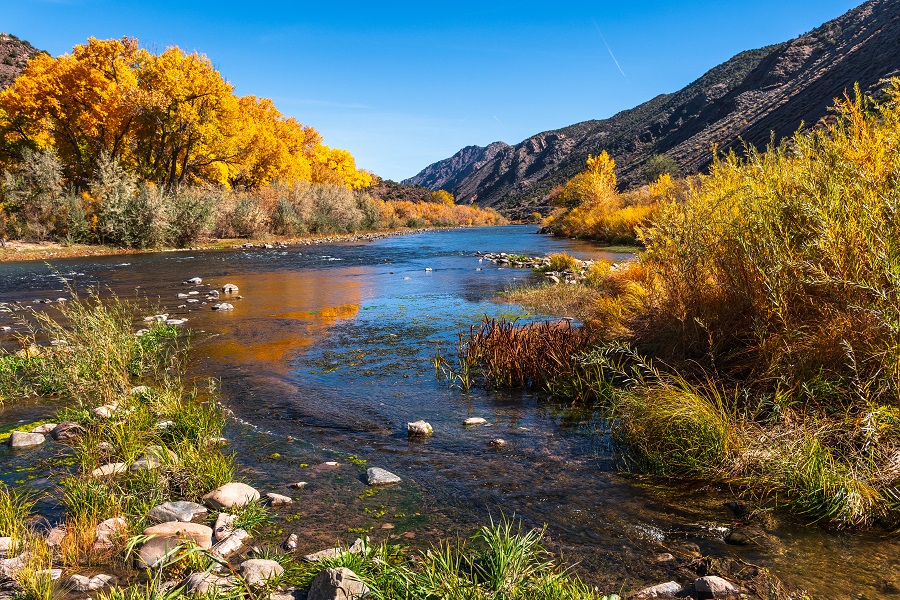
The River Stewardship Program, under the state’s environment department, funds the rebuilding of the ecosystems that line rivers and streams. Demand has long outpaced supply: only about $2 million annually was available from a legacy fund in previous years.

Similarly, the Strategic Water Reserve, managed by the Interstate Stream Commission, received a significant boost. The program allows the state to buy and lease water rights to keep rivers flowing.

Both programs are widely seen as essential in a drying Southwest. But none of them was designed with a hyperscale computing infrastructure looming.

Enter Project Jupiter

During the 30-day session, the lawmakers focused on rivers. But a parallel conversation had unfolded outside the Capitol: New Mexico’s appeal as a data center hub is growing. Projects like Project Jupiter could dramatically alter the state’s water and energy landscape.

Data centers, particularly those supporting artificial intelligence and cloud computing, are notorious for massive electricity demand and significant water use. In arid regions such as New Mexico, the combination could spell environmental disaster.

Data from other states showed that a single large data center campus needs millions of gallons of water annually. This massive demand for water is often drawn from the same stressed aquifers and river systems that state programs are trying to restore.

The bigger question: who gets the water?

Roughly 8 out of 10 of New Mexico’s at-risk bird species are riparian dependent. River restoration, therefore, is not just an ecological issue. It is also a biodiversity imperative.

But the state’s water future is increasingly contested. Climate pressures intensify, and economic development accelerates. But the central question is no longer how to restore rivers— but how to allocate scarcity.

Project Jupiter, still in development, may become a defining test of whether the state can strike a balance between ecological restoration and industrial growth. The state has funded both sides of that equation for now.

It remains to be seen if it can reconcile them while Lujan Grisham declares, “We’re committed to keeping New Mexico beautiful and our ecosystems healthy for generations to come.”

For corrections, news tips, and any other content requests, please send us an email at [email protected].

Hot this week

Students Serve Gratitude and Knowledge in Unique School Events

Student-family relationships took center stage in recent APS school events.

Governor Orders Resumption of Food and Health Inspections Across New Mexico

Governor Michelle Lujan Grisham ordered statewide food and health inspections to resume on April 30, 2026, after a budget‑related pause. The move highlights the importance of sanitation standards and aligns New Mexico with broader efforts to strengthen public health safeguards.

UNM Health to Offer Free Skin Cancer Screenings in Albuquerque Metro

UNM Health is organizing free screenings for skin cancer on April 27, 2026, at its dermatology facility in Albuquerque and Sandoval Regional Medical Center in Rio Rancho. The skin cancer screenings will take place between 9:00 and 11:30 in the morning on a first come, first served basis, facilitated by medical students. This program emphasizes the significance of early detection since skin cancer is the most prevalent form of cancer in the country. Through the provision of free screenings, UNM Health becomes part of nationwide programs such as the “Destination Healthy Skin” campaign organized by the Skin Cancer Foundation and the American Academy of Dermatology's screening drive.

Gallup Faces High-Stakes Decision on Turning Wastewater Into Fuel for Massive Data Center

The Gallup City Council has delayed a vote on a proposal to sell treated wastewater to a data center developer, as residents and officials debate whether the plan could transform a scarce public resource into industrial fuel while deepening concerns over water security in arid New Mexico.

New Mexico Escalates Pressure on U.S. Department of Energy in the Nuclear Waste Fight—What You Need to Know

State officials accuse the U.S. Department of Energy of lagging on cleanup, escalating a dispute over nuclear waste risks and accountability.

Topics

Students Serve Gratitude and Knowledge in Unique School Events

Student-family relationships took center stage in recent APS school events.

Governor Orders Resumption of Food and Health Inspections Across New Mexico

Governor Michelle Lujan Grisham ordered statewide food and health inspections to resume on April 30, 2026, after a budget‑related pause. The move highlights the importance of sanitation standards and aligns New Mexico with broader efforts to strengthen public health safeguards.

UNM Health to Offer Free Skin Cancer Screenings in Albuquerque Metro

UNM Health is organizing free screenings for skin cancer on April 27, 2026, at its dermatology facility in Albuquerque and Sandoval Regional Medical Center in Rio Rancho. The skin cancer screenings will take place between 9:00 and 11:30 in the morning on a first come, first served basis, facilitated by medical students. This program emphasizes the significance of early detection since skin cancer is the most prevalent form of cancer in the country. Through the provision of free screenings, UNM Health becomes part of nationwide programs such as the “Destination Healthy Skin” campaign organized by the Skin Cancer Foundation and the American Academy of Dermatology's screening drive.

Gallup Faces High-Stakes Decision on Turning Wastewater Into Fuel for Massive Data Center

The Gallup City Council has delayed a vote on a proposal to sell treated wastewater to a data center developer, as residents and officials debate whether the plan could transform a scarce public resource into industrial fuel while deepening concerns over water security in arid New Mexico.

New Mexico Escalates Pressure on U.S. Department of Energy in the Nuclear Waste Fight—What You Need to Know

State officials accuse the U.S. Department of Energy of lagging on cleanup, escalating a dispute over nuclear waste risks and accountability.

Governor Lujan Grisham Set for WNMU 2026 Commencement Address

The WNMU Spring 2026 Commencement Ceremony is scheduled for May 8.

Heads Up: UNM Launches Free Cancer Screening

The University of New Mexico offers free skin cancer screening. Here are a few details about it.

Why New Mexico’s Universal Child Care Program Is in Court — and How It Could Help Families Save Thousands

A court challenge is testing New Mexico’s universal child care program, but for many families the bigger question is economic: how much money can it save, and what is at stake if the program faces disruption? Here’s what the legal fight means and how the program could help household budgets.

Related Articles