

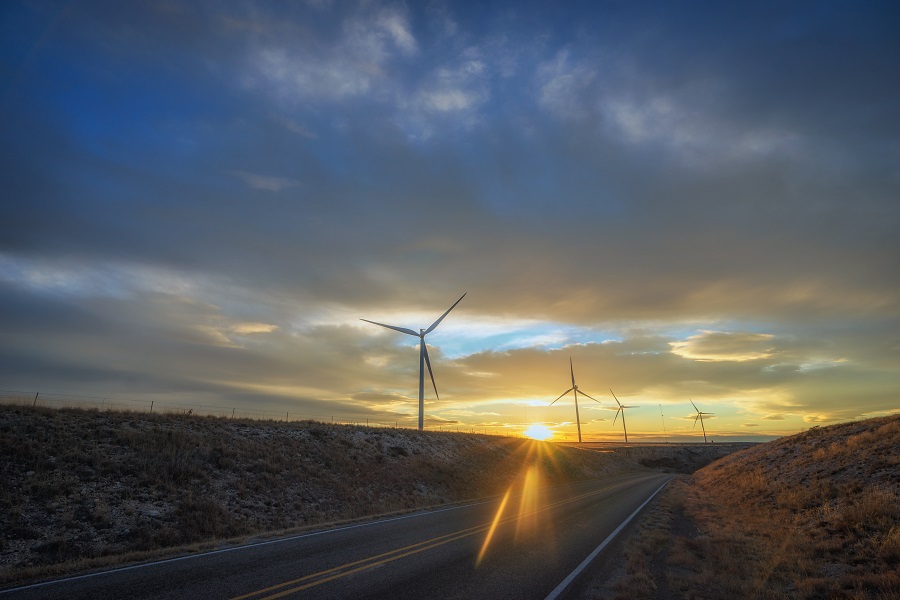
A new wind energy project approved on state trust land in central New Mexico is set to achieve more than electricity generation. State officials describe it as a long-term financial engine for public education and, at the same time, reinforcing the state’s increasing role in America’s transition to renewable energy.
Stephanie Garcia Richard and AFE Cedarville Wind, LLC signed an agreement this week to build a 10,160‑acre wind farm in Torrance County. The wind farm will produce about 212 megawatts of electricity, enough to power more than 60,000 homes.
The renewable energy company has secured lease rights for $340,000 at a State Land Office auction. State officials said the economic value of the project could be far greater. They said the lease will generate $98.9 million in revenue that will fund New Mexico’s public schools and institutions for decades.
“We keep powering ahead with deals that are making New Mexico a leader in renewable energy development,” Garcia Richard said in a statement. “Projects like this one are job creators in our rural communities and create long-lasting revenue streams for our public schools and other institutions.”
The project underscores a transformation in how New Mexico has utilized state lands for renewable energy development over the last several years. According to the State Land Office, state lands had only 400 megawatts of renewable energy leases when Garcia Richard took office in 2019.
With the latest agreement, that number has increased to approximately 3,271 megawatts of wind and solar energy on state lands. Also, there are now 56 renewable energy leases at the State Land Office, from 12 when Garcia Richard took office in 2019, the agency said.
The expansion mirrors a push by Western states to capitalize on rising demand for clean energy. According to the U.S. Department of Energy, other states, such as California, Arizona, Nevada, Colorado, and Utah, are capitalizing on renewable projects to supply electricity for data centers, AI infrastructure, and electric vehicle charging networks.
Increasingly, the public views renewable energy leases not only as climate policy. But it is also a financial strategy for future generations, particularly in a state where persistent gaps in educational resources and performance remain deeply rooted.
The wind farm could also bring construction jobs, long-term maintenance positions, and new economic activity to rural counties like Torrance. Garcia Richard stressed that a combination of clean energy production and public school funding is the reason why the agreement carries more weight beyond its turbines.

