

Police Are Learning to Hear You—And It’s a Game-Changer

A new investigative interviewing course at the New Mexico Law Enforcement Academy is teaching officers to replace coercive interrogations with science-based conversations focused on truth, trust and accurate information gathering.

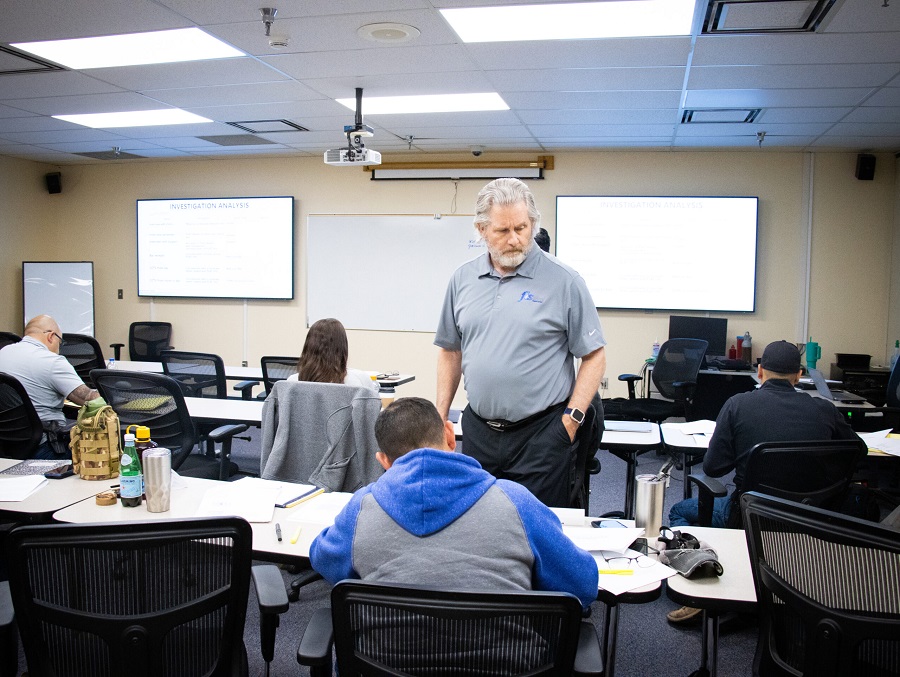
Inside a classroom at the New Mexico Law Enforcement Academy, instructors taught police officers something rare in American policing: how to listen. They are learning not to pressure. Not to intimidate. Not to force a confession. Their mentors teach them how to listen carefully enough to uncover the truth.

Twelve law enforcement professionals participated in a specialized five-day training known as the P.E.A.C.E. The Investigator Interview Course is a science‑based program that rejects coercive interrogation methods. Instead, it emphasizes systematic, non‑coercive communication to gather accurate information.

The Forensic Interview Solutions conducted the training on May 4-8. It reflects a comprehensive shift in modern policing away from confession-driven interrogations and toward evidence-based investigative interviewing.

“Our goal is gathering information to find out what actually occurred,” said Gary Patzer, a former Colorado officer with 33 years of experience. “What’s the truth? We allow people to tell their story first. And then we break it down.”

P.E.A.C.E. framework

Police officials, attorneys, judges, and psychologists designed the P.E.A.C.E. framework in the United Kingdom during the 1980s. The goal was to establish a more reliable and effective way to conduct interviews.

The method diverges from traditional interrogation methods that often emphasized extracting confessions at nearly any cost. Those approaches, critics say, contributed to involuntary confessions and miscarriages of justice that have eroded public confidence in the criminal justice system.

Patzer said the course confronts outdated assumptions that many investigators relied before. “You can’t tell if somebody’s lying by which direction they’re looking, or fidgeting,” he said. “Scientifically, that’s been debunked for years.”

Instead, instructors teach investigators to focus on memory science, rapport‑building, and a methodical interview approach.

Investigators use another component, called conversation management, for uncooperative interviewees, including suspects. Police officers learn techniques that help people remember memories more accurately by reducing stress and encouraging detailed recollection.

But in contrast to coercive interrogation models, the approach does not utilize intimidation and psychological pressure. Trainers teach police officers to present evidence and address discrepancies while encouraging ongoing dialogue. Supporters of the model say that distinction matters.

The research discussed during the course posited that while confession-focused interrogation methods often produce more confessions, some of those statements are later invalidated. P.E.A.C.E.-style interviewing, Patzer said, reduces that risk because coercive tactics often pressure vulnerable people into saying false things.

Tunnel vision

The training also attempts to address one of the common dangers in criminal investigations: tunnel vision.

Trainers warn police officers not to become emotionally committed to either one suspect or theory while disregarding contradictory evidence. Throughout the course, investigators repeated a simple principle: ABC or Assume nothing, believe nothing, check everything.

“We teach the exact opposite of tunnel vision,” Patzer said. And P.E.A.C.E. techniques do not rely on psychological pressure, intimidation, or coercion, he added.

Participants spent much of the training time in practical exercises, rotating roles as interviewer, witness, suspect, and evaluator in role-plays. Patzer stressed that the hands-on method is essential because police officers cannot master interviewing—a human skill—through lectures alone. “People don’t fully understand the method until they put it into practice,” he said.

Environment and communication

The course also emphasizes environment and communication. These are details that can substantially influence how much information people are willing or able to share.

Sometimes that requires moving someone away from a chaotic scene before talking to them. Sometimes, police officers need to explain the interview process clearly before asking difficult questions. In other times, it simply means making the environment feel less threatening.

Patzer remembered a witness interview he conducted in a relaxed setting. He said the witness later described the conversation “felt more like a therapy session than an interview.” That reaction, according to Patzer, captured the philosophy behind the training: people remember more, and speak more honestly, when they feel respected rather than cornered.

Police officers are now using the techniques taught in the course beyond criminal investigations. Forensic Interview Solutions also conducts training for professionals in human resources, auditing, threat assessment, and federal agencies, including the Federal Aviation Administration.

Mindset shift among police officers

Patzer admitted that veteran officers were trained in confession-focused policing cultures. “I had a boss at one time tell me, ‘Go in that room and don’t come out until you get a confession,’” he recalled. Adapting to the P.E.A.C.E. model can require a significant mindset shift, he said.

But more and more younger and mid-career officers, he said, are increasingly receptive to investigative methods based in psychology and science rather than intimidation. Law enforcement agencies nationwide continue grappling with public distrust, wrongful conviction cases, and demands for reform. And the shift toward non-traditional interviewing may represent something bigger than a training trend.

“The only goal in our methodology is the truth,” Patzer said. “A lot of people observe what they see on TV, and that’s what they assume is going to occur in any interview with law enforcement. We don’t want that to be the case.”

For corrections, news tips, and any other content requests, please send us an email at [email protected].

Hot this week

Curiosity and Creativity Collide at GEAR UP STEM Conference 

The annual GEAR UP New Mexico and STEM Santa Fe Pathways Conference inspired students through hands-on STEM learning experiences.

Trump Administration Scraps ‘Public Lands Rule,’ Opening Millions of Acres to New Drilling and Mining

The Trump administration has formally repealed the Biden-era Public Lands Rule, ending a policy that required conservation to be weighed equally with drilling, mining and grazing on federal lands. Environmental groups warn the move could accelerate industrial development across millions of acres in the American West.

Former Albuquerque Teacher Found Guilty in Sexual Violation

Patrick Corr, former teacher at John Adams Middle School has been found guilty for sexually abusing his student.

Anchorum Health Foundation Strengthens Native Nation Building in New Mexico

The Anchorum Health Foundation (the Foundation) provides leadership and support for advancing Indigenous nation building and improving the social determinants of health of Indigenous people living in New Mexico through its work with Indigenous-led organisations by moving from focusing on building partnerships with hospitals toward focusing on creating partnerships within the local communities. The Foundation will partner with Indigenous-led organisations to support funding for housing, assist with navigating Tribal laws, and assist in preserving and sharing indigenous knowledge systems. These efforts by the Foundation will build the ability of Tribes to self-govern, establish greater trust between the community and the provider, and create general equalities in housing and health care as well as overall well-being within the community.

Health Officials Calm Fears After Cruise Ship Hantavirus Outbreak

New Mexico health officials moved quickly to calm fears after reports of a cruise ship hantavirus outbreak abroad. They emphasized that the local Sin Nombre strain does not spread person‑to‑person, unlike the Andes strain linked to the ship. Officials urged residents to follow prevention guidelines — wearing masks and gloves when cleaning rodent areas and disinfecting droppings with bleach — to reduce risk. They confirmed that no New Mexicans were aboard the ship and only one local case has been reported in 2026. By clarifying the difference between strains and reinforcing safe practices, officials reassured the public and prevented unnecessary alarm while keeping awareness high.

Topics

Curiosity and Creativity Collide at GEAR UP STEM Conference 

The annual GEAR UP New Mexico and STEM Santa Fe Pathways Conference inspired students through hands-on STEM learning experiences.

Trump Administration Scraps ‘Public Lands Rule,’ Opening Millions of Acres to New Drilling and Mining

The Trump administration has formally repealed the Biden-era Public Lands Rule, ending a policy that required conservation to be weighed equally with drilling, mining and grazing on federal lands. Environmental groups warn the move could accelerate industrial development across millions of acres in the American West.

Former Albuquerque Teacher Found Guilty in Sexual Violation

Patrick Corr, former teacher at John Adams Middle School has been found guilty for sexually abusing his student.

Anchorum Health Foundation Strengthens Native Nation Building in New Mexico

The Anchorum Health Foundation (the Foundation) provides leadership and support for advancing Indigenous nation building and improving the social determinants of health of Indigenous people living in New Mexico through its work with Indigenous-led organisations by moving from focusing on building partnerships with hospitals toward focusing on creating partnerships within the local communities. The Foundation will partner with Indigenous-led organisations to support funding for housing, assist with navigating Tribal laws, and assist in preserving and sharing indigenous knowledge systems. These efforts by the Foundation will build the ability of Tribes to self-govern, establish greater trust between the community and the provider, and create general equalities in housing and health care as well as overall well-being within the community.

Health Officials Calm Fears After Cruise Ship Hantavirus Outbreak

New Mexico health officials moved quickly to calm fears after reports of a cruise ship hantavirus outbreak abroad. They emphasized that the local Sin Nombre strain does not spread person‑to‑person, unlike the Andes strain linked to the ship. Officials urged residents to follow prevention guidelines — wearing masks and gloves when cleaning rodent areas and disinfecting droppings with bleach — to reduce risk. They confirmed that no New Mexicans were aboard the ship and only one local case has been reported in 2026. By clarifying the difference between strains and reinforcing safe practices, officials reassured the public and prevented unnecessary alarm while keeping awareness high.

Attention Job Seekers: APS to Hold College & Career Fair on May 23

If you’re job hunting, this is your chance to connect with top employers.

New Mexico’s Universal Childcare Program is Costing More Than Expected — and the Bills Are Already Piling Up

New Mexico’s ambitious universal childcare expansion is drawing thousands of new families into the system — but unexpected enrollment growth is straining state budgets and raising concerns about the long-term sustainability of one of the nation’s most closely watched early childhood initiatives.

Santa Fe’s Planned Parenthood Reopens Monday After Being Closed Over a Year

After being closed for over a year, Planned Parenthood reopens its doors on Monday, May 11, with new staff.

Related Articles