
Home Blog Page 135

Rio Rancho and CNM Launch Rio TECH to Prepare Students for Skilled Trades

Rio Rancho Public Schools and Central New Mexico Community College (CNM) have officially opened Rio TECH, a new career and technical education (CTE) high school designed to equip students with both a high school diploma and trade certifications.

The 70,000-square-foot campus, located at 7001 Zenith Court in Rio Rancho, offers programs in welding, carpentry, HVAC, plumbing, and electrical trades.

The $55 million facility features five industry-standard labs and 18 hybrid classrooms, allowing students to split their day between traditional academics and hands-on trade training. Students can earn dual credit through CNM, enabling them to graduate with both a diploma and trade certification.

Dr. Kristopher Johnson, principal of Rio TECH, emphasized the school’s role in workforce development, stating, “Today marks a powerful step forward for our community, students, and the future of education and workforce development here in New Mexico.”

CNM President Tracy Hartzler highlighted the partnership’s significance, noting, “This is a tremendous opportunity to do something different. It took a leap of faith and commitment.”

Students expressed enthusiasm for the program’s practical approach. Jesse Baca, a welding student, said, “It’s very good to start dual credit early because if you want, you can get out of high school and start a job immediately.”

Rio TECH aims to address the growing demand for skilled tradespeople in New Mexico. According to the New Mexico Association for Career and Technical Education, 51% of jobs in the state require skills training beyond high school but less than a four-year degree.

Enrollment is open to students in Sandoval County, with applications accepted through February 28, 2025. Selected students will be interviewed between March and May.


New Mexico Expands Free Summer Reading Program to Boost Literacy Statewide

​New Mexico is expanding its free Summer Reading Program this year, aiming to reach up to 15,000 students from kindergarten through eighth grade. The initiative follows the success of last summer’s pilot, which saw over 9,000 participants improve their reading skills by nearly 5 percentage points on average.

The program offers four weeks of structured literacy instruction, grounded in the science of reading—a method that emphasizes phonemic awareness, phonics, fluency, vocabulary, and comprehension. Students work in small groups with trained instructors, maintaining a 4-to-1 student-teacher ratio. This year’s sessions will run from June 2 to June 27, 2025, across more than 100 sites statewide.

Public Education Secretary Marianna Padilla highlighted the urgency of addressing literacy challenges, noting that only 39% of elementary and middle school students in New Mexico are proficient readers. She emphasized that while change won’t happen overnight, consistent efforts like the Summer Reading Program are steps toward improvement.​

The program is free for all New Mexico families, funded by a $30 million allocation from the state legislature. Instructors, who may be current or retired educators or pre-service teachers, receive $35 per hour and undergo specialized training before the program begins.

Parents can register their children and find more information at literacy.nm.gov. The deadline for student registration is May 20, 2025.

This expansion reflects New Mexico’s commitment to improving literacy rates and ensuring that students have the foundational skills necessary for academic success.

Albuquerque to Use Lottery System for Summer Youth Program Registration Starting April 28

0

​Albuquerque families looking to enroll their children in city-run summer programs will need to participate in a lottery-style registration process, starting April 28. The system is designed to manage high demand and ensure fair access to limited spots across the city’s community centers.

Key Dates and Details

  • Lottery Sign-Up: April 28 – May 9
  • Notification of Selection: May 14 – May 23
  • Program Dates: June through August
  • Hours: Monday to Friday, 7:30 a.m. – 5:30 p.m.
  • Ages: 5–15 years (children must turn 6 by September 1)
  • Fee: $10 one-time, non-refundable registration fee

Parents can enter the lottery online through the City of Albuquerque’s Youth & Family Services portal. A free Community Center Youth Membership is required to participate in the lottery.

Program Overview

The full-day summer programs offer structured activities, including arts and crafts, sports, games, and educational enrichment. They are hosted at more than 20 community centers and two multi-generational centers across Albuquerque.

Due to the popularity of these programs, the city uses a lottery system to allocate spots fairly. Families not selected in the initial draw will be placed on a waitlist and notified if space becomes available.

Additional Summer Opportunities

  • Multi-Generational Center Programs: For ages 5–13; $30 per month plus a one-time $20 annual center membership fee.
  • PLAY+ School Playground Program: For kindergarten through grade 5; registration opens May 22 at 8 a.m.; fees vary based on the number of children enrolled.
  • Inclusive Recreation Programs: For kindergarten through high school; $40 fee; lottery sign-up April 28 – May 9.
  • Early Head Start Program: For ages 0–3; ongoing registration; free.
  • Preschool & NM Pre-K: For ages 3–5; ongoing registration; free or low cost.

Executive Order Sets New Standards for U.S. Higher Education Accreditation

On April 23, 2025, the White House issued an executive order aimed at reforming how colleges and universities in the United States are accredited. The order introduces changes intended to improve accountability, ensure better student outcomes, and shift the focus of accreditation agencies toward measurable educational quality.

Emphasis on Student Outcomes and Transparency

The executive order directs the U.S. Department of Education to work with accrediting agencies to place greater emphasis on student outcomes—such as graduation rates, employment after graduation, and overall financial return on education.

Data cited in the order highlights that many students, particularly those completing certain bachelor’s and master’s programs, graduate with significant debt and limited earning potential. These findings have prompted calls for more transparency about the value of individual programs and institutions.

To address these concerns, the order requires accreditors to:

  • Use program-level data, including graduation and job placement rates, in their evaluations.
  • Provide more transparent information to students and families about the performance and value of educational programs.
  • Support institutions in making improvements when student outcomes fall short.

Review of Accreditation Practices

The order also calls for a review of current accreditation standards to ensure they are aligned with lawful and effective educational practices. It instructs the Secretary of Education to assess whether any accreditor requirements—such as those tied to institutional policies or internal governance—exceed what is necessary for quality assurance.

In particular, the Department of Education is asked to evaluate whether certain standards related to diversity, equity, and inclusion (DEI) initiatives are being applied in a way that may conflict with federal law or court rulings. Accreditors are expected to ensure that any policies they require institutions to adopt comply with current legal guidelines.

Encouraging Innovation and New Accrediting Agencies

Another key part of the order promotes the development of new accrediting agencies and quality assurance models. The Department of Education is directed to:

  • Resume recognition of new accreditors, where appropriate.
  • Launch experimental sites to test alternative forms of quality assurance.
  • Streamline the Accreditation Handbook to remove unnecessary regulatory burdens.

This move is intended to foster innovation and increase competition in the accreditation space, with the goal of expanding educational opportunities and reducing barriers for new institutions.

Support for State and Local Governance

The order also reaffirms the role of state and local authorities in overseeing public colleges and universities. It instructs accreditors to respect these governance structures and avoid imposing unnecessary conditions on institutional management or leadership.

Next Steps

The U.S. Department of Education will now begin implementing the executive order’s directives. As part of this process, accrediting agencies may be required to revise their standards and procedures to align with the new federal priorities.

While responses from education leaders and advocacy groups may vary, the order represents a significant policy shift focused on performance, transparency, and regulatory reform in the higher education system.

ERIC Faces Major Cutbacks as Federal Funding Stalls

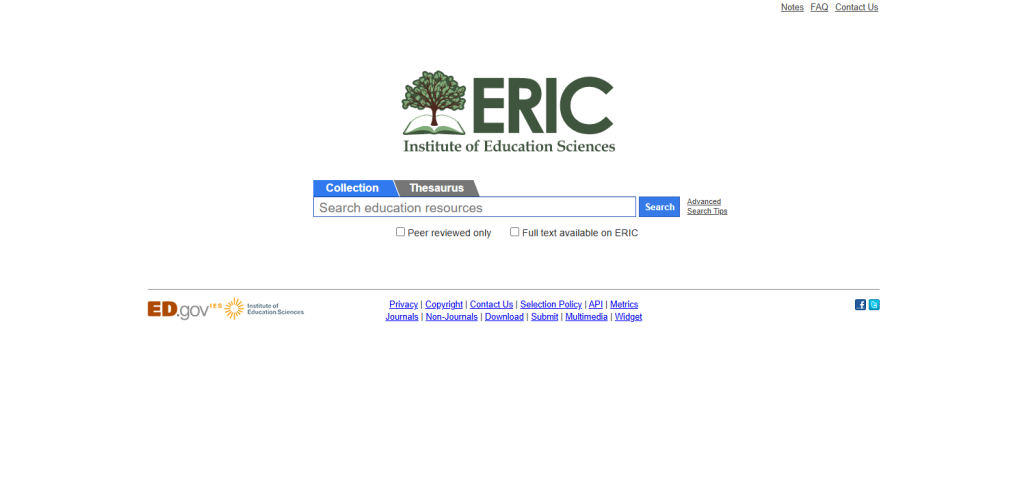
The Education Resources Information Center (ERIC), a key repository of education research managed by the U.S. Department of Education, is facing significant operational changes due to funding constraints. Effective April 24, 2025, the number of actively cataloged sources in ERIC will be reduced by approximately 45%, decreasing from 1,200 to 700 titles.

This reduction stems from efforts by the Department of Education and the Department of Government Efficiency to “reduce overall Federal spending” and “reallocate spending to promote efficiency” as outlined in Executive Order 14222.

While all existing records in ERIC will remain accessible, the addition of new documents will be significantly curtailed. The selection process for source reduction did not consider subject matter, leading to a broad impact across various educational topics. The delay in notifying publishers affected by this content reduction has been attributed to a government reduction in force.

The potential defunding of ERIC has raised concerns among educators and researchers. Gladys Cruz, a superintendent of Questar III BOCES and past president of the AASA, The School Superintendents Association, stated that “Defunding ERIC would limit public access to critical education research, hindering evidence-based practices and informed policy decisions vital for the advancement of American education.”

In response to the funding challenges, Erin Pollard Young, the former manager of ERIC, proposed reducing the annual budget from $5.5 million to $2.25 million. This proposal included cutting nearly half of the journals added each year and eliminating the public help desk.

However, the proposal was not approved, and Pollard Young, along with over 1,300 other Department of Education employees, was laid off in March.

The reduction in ERIC’s operations is expected to impact educators, researchers, and policymakers who rely on the database for access to educational research. The long-term effects of these changes on the accessibility of education research and informed policy-making remain to be seen.​