Home Blog Page 17

NMSU Art Grad To Design LCIFF Poster, Set For March Reveal

0

A New Mexico State University (NMSU) art graduate will play a significant role in creating the official poster for this year’s Las Cruces International Film Festival (LCIFF), the country’s largest university-run film festival.

Local artist Asiah Thomas-Mandlman, who was born and raised in Las Cruces, is the brain behind the poster art for the 11th annual festival, which will appear on all LCIFF apparel, including T-shirts, sweatshirts, hats, and all festival badges.

Thomas-Mandlman’s masterpiece debuts at the LCIFF poster reveal party from 5:30 to 8:00 p.m. Friday, March 6, at the New Mexico Farm and Ranch Heritage Museum, 4100 Dripping Springs Road.

NMSU hints that the artwork is not likely to be a landscape. 

Captivated by  people’s faces and their emotions, Thomas-Mandlman photographs subjects and creates art using colored pencils or charcoal from those images. 

“Asiah is an emerging young artist, so we wanted to bring attention to her and her work,” said Ross Marks, LCIFF executive director and NMSU Creative Media Institute professor. 

“We always select a local artist, and I tell them to do whatever speaks to them. We’ve had a tattoo artist, we’ve had a photographer, we’ve had watercolor and we’ve had oil on canvas,” he said. 

Thomas-Mandlman will sign limited edition prints of the poster at the LCIFF poster party. The event also features an auction of the original artwork. Admission is $30 and includes a signed collectible poster, food, drinks (beer & wine) and music. The festival runs April 8-12, and discounted VIP tickets are available for $150 only at the poster party.

NMSU reports that the Doña Ana Arts Council gallery and in El Paso’s Take the Stage series showcase Thomas-Mandlman’s portrait work. But she excels in other areas as well. She sings with the jazz ensemble Lush Life Quintet and new band Groove Runner, appears in the Music in the Park series, and performed at the Las Cruces Juneteenth Jazz Festival.

What to expect at the LCIFF?

LCIFF is a five-day festival showing 168 films in person at the Allen Theatres Cineport 10. VIP passes cost $200, All-Access Passes $100, Day Passes $35 and admission to the Outstanding Achievement celebrity screening of “Guardians of the Galaxy Vol. 2” with Michael Rooker is $35. Tickets are available now at www.lascrucesfilmfest.com.

The festival also features eight panels and workshops for students and community members.

Founded by Marks in 2016, the LCIFF has grown into the largest student-run film festival in the country. Marks teaches two courses on producing film festivals. During the fall course, he teaches students to prepare for the festival, while the spring course gives them the hands-on experience of producing the festival. 

An estimated 80 to 100 NMSU students in the Creative Media Institute and the Creative Media Technology program at Doña Ana Community College are collaborating to stage the festival, which organizers expect will gather more than 12,000 visitors to the region.

Many regard LCIFF as one of the most prestigious film festivals in the Southwest and often call it as “The Sundance of the Southwest.” 

TD’s Brew & BBQ Secures State Aid to Expand Lovington Operations, Add 16 Jobs

0

LOVINGTON, New Mexico — TD’s Brew & BBQ, a Lovington-based maker of barbecue sauces and spice rubs, has received state economic development assistance, New Mexico officials said. With the new funding, the company will expand its operations and plans to create 16 new local jobs.

Officials said the project is expected to generate more than $14 million in economic impact over the next ten years. The expansion will bring production in-house, requiring the hiring of 16 additional full-time employees. The program is administered by the New Mexico Economic Development Department (EDD).

TD’s Brew & BBQ growing jobs

“As a Lovington native, I love seeing this project bring the taste of southeast New Mexico to the rest of the country while growing good jobs at home,” EDD Cabinet Secretary Rob Black said.

“Small businesses are what keep our rural communities thriving, and TD’s has now put Lovington on the national food map,” he added.

TD’s Brew & BBQ was founded and is owned by Tearl “TD” Dunlap. The company has outgrown its current out-of-state co-packing facility.

The expansion will enable the company to manufacture its products locally at its Lovington site, further strengthening its presence in the regional economy.

To support the project, the New Mexico Local Economic Development Act (LEDA) fund has committed $150,000 to the company. The funding will be released in installments as TD’s Brew & BBQ meets construction and hiring benchmarks.

A source of pride

Since its launch in March 2019, the brand has gained national distribution. Its products are now sold in more than 600 stores across the United States, as well as through the company’s website and Amazon. The company also provides co-packing, warehousing, and e-commerce fulfillment services.

“This facility will serve as a critical manufacturing hub, bringing both our brands and out-of-state production directly into our community,” Dunlap said.

According to Dunlap, building this facility in Lovington and southeast New Mexico is a source of pride. He noted that “a legacy of hardworking excellence and a standard of performance that we intend to uphold every single day” has defined the area.

The City of Lovington has pledged $20,000 in local LEDA funds and will act as the fiscal agent for the project. The city is also supporting the expansion by offering the company a discounted land purchase.

Lovington Mayor Robbie Roberts said Dunlap’s decision to expand locally “demonstrates a strong commitment to the community.”

“Building on the success of the spices and rubs TD is already known for, this expansion into ready-to-grill meats and additional offerings represents meaningful growth and new economic opportunity for our city,” Roberts said.

The Lovington City Commission approved the expansion project in December 2025. Construction is expected to be completed within the next five years.

LEDA is a state program. It invests public funds in private companies to help offset costs related to land acquisition, building construction, and infrastructure development. The goal is to stimulate job creation and long-term economic growth.

New Mexico ECECD To Continue Summer Food Service Program in 2026

0

Children in New Mexico, aged 1-18, will continue to have access to free, nutritious meals during summer break and other school closures. 

The New Mexico Early Childhood Education and Care Department (ECECD) confirmed this commitment with the announcement that it will maintain operating the Summer Food Service Program (SFSP) in 2026.

A news release issued on January 28, 2026 stated that the ECECD will not require registration or proof of enrollment to be able to join the meal program.

Additionally, individuals over 18 with mental or physical disabilities who participate in a qualifying school-year program are also eligible to participate.

SFSP’s main purpose is to serve free meals in low-income areas through eligible sponsoring organizations during summer months and other periods when most schools are closed. 

According to ECECD, the organizations qualified for meal site sponsorship include public or private, nonprofit school food authorities; public or private, nonprofit residential camps; units of local, municipal, county, Tribal, state and federal governments; National Sports Program sites; and private, nonprofit 501(c)(3) organizations. 

SFSP-sponsored organizations may offer site-based, in-person meals and/or to-go meals for rural communities that qualify. The public can find a nearby meal site by visiting summerfoodnm.org or calling 1-800-EAT-COOL (1-800-328-2665).  

SFSP is a federally funded program of the U.S. Department of Agriculture (USDA) administered in New Mexico by ECECD’s Family Nutrition Bureau within the Early Care, Education and Nutrition division. 

UNM: Deadline for 2026 Paul Ré Peace Prize Nominations Set on February 20

0

Nominations are now open for the biennial Paul Ré Peace Prize at the University of Mexico (UNM), with electronic submissions due by 5:00 p.m. on February 20, 2026, ahead of the May 21, 2026 award.

According to UNM News, the Paul Ré Peace Prize honors a university faculty or staff member, student, alumnus, volunteer, or retiree who has demonstrated exceptional commitment to promoting peace, harmony, and global understanding through tangible works. Qualified contributions may take place at the local, regional, national, or international level and emphasize both internal and external peace, as well as dialogue around what truly constitutes peace.

The award recipient may be an artist or an individual from any field who has advanced peace and harmony through creativity and dedication. Possible projects include environmental initiatives, social or individual healing, integrative medicine, sustainable energy, artistic creation or preservation, family planning, and other positive endeavors. The award places a strong emphasis on conflict prevention while also recognizing conflict resolution.

The Paul Ré Peace Prize comprises a check, commemorative artwork by Paul Ré, specially inscribed copies of his acclaimed books The Dance of the Pencil and Art, Peace, and Transcendence, and an award reception. Ré’s latest volume, Art, Peace, and Transcendence: Réograms that Elevate and Unite, received the New Mexico – Arizona Book Award for Philosophy and is available at UNM Press.

“The Peace Prize is meant to further the work of the recipient, but may also be used to create direct executions of or new interpretations of peace and harmony from Paul Ré’s original designs and/or his writings; for example, an extension of his widely shown exhibit of Touchable Art for the Blind and Sighted,” according to paulre.org/peace.

It was stated in the Peace Prize Vision Statement by Paul Ré that he believes that people can greatly improve the world by encouraging and preserving the good in life – wisdom, beauty, insight, humor that enlightens – and using these positive forces to heal discord. “This requires the integration and synergy of many fields – from art and science to engineering and philosophy – plus communication and common sense.”

The 2024 Winner of the Paul Ré Peace Prize was Katie Stone, Executive Director of the New Mexico nonprofit, The Children’s Hour Inc., and a volunteer producer of The Children’s Hour for more than 17 years at KUNM before the show went into national syndication. 

Who is Paul Ré?

Paul Ré is an internationally recognized artist, writer, poet, and peace worker known for promoting world peace and harmony through his masterful creations. Born in 1950 in Albuquerque, New Mexico, where he still resides, Ré earned a Bachelor’s degree in physics with honors from the California Institute of Technology (Caltech) in 1972; this has served him well as an artist expressing the beauty of science.

He is best known for his book The Dance Of The Pencil: Serene Art by Paul Ré, his widely shown traveling exhibit of Touchable Art for the Blind and Sighted, and most recently for the Paul Ré Peace Prize administered by the UNM Foundation. This has been endowed to operate in perpetuity and extends his five decades of work promoting harmony in the world through art. 

“Beyond the joy of creating the art itself, Ré’s greatest reward is when people are moved by his work towards peace and fulfillment,” paulre.org wrote. 

UNM Mathematicians Advocate for NSF and Math Research at MathSciOnTheHill

0

For University of New Mexico Assistant Professor Anna Nelson and her colleagues, MathSciOnTheHill became more than a day of advocacy, providing a firsthand look at how research funding decisions move through Congress.

Nelson joined representatives from New Mexico laboratories, math camps, and former UNM undergraduate and dual-credit students as part of a nationwide delegation of 293 mathematical scientists during the national advocacy event focused on federal support for the mathematical sciences. Participants from 47 states and 176 unique districts attended the event held on Jan. 8 on Capitol Hill in Washington, D.C. 

They met with lawmakers and staff to emphasize the importance of sustained federal investment in mathematics research, education, and workforce development. In one day, the mathematicians held 274 meetings with congressional offices. 

The UNM delegation met with staff from the offices of U.S. Sens. Ben Ray Luján and Martin Heinrich and U.S. Rep. Melanie Stansbury. During the meetings, they expressed appreciation for the continued support of National Science Foundation programs and highlighted the impact of federal funding on research and education at the K-12, undergraduate, and graduate levels.

Afterwards, Rep. Stansbury joined the New Mexico contingent for an extended discussion and invited them to the U.S. House gallery. There, they observed the bipartisan passage of an appropriations bill that includes funding for the National Science Foundation for fiscal year 2026.

Nelson shared the excitement they felt during the gathering.

“We were very excited to go to the Hill as individuals to advocate for the mathematical sciences broadly to both our senators and to Rep. Stansbury.  It was incredibly exciting to be in the House chambers when that was passed!” said Nelson. 

Participants said the experience reinforced the value of direct engagement between researchers and policymakers and underscored how mathematics underpins innovation across science, technology, and education.

The evening before their Capitol Hill visits, MathSciOnTheHill participants attended an orientation organized by the American Mathematical Society (AMS) and its partner organizations, which represent 12 national mathematics and science societies. Many attendees were already in Washington for the 2026 Joint Mathematics Meetings.

“Working together with the partner societies really helps to amplify our messaging to Congress, that the potential applications of math that they can unleash through robust congressional funding,” said Karen Saxe, senior vice president, AMS Government Relations.

Participants wore matching striped scarves to stand out on Capitol Hill, a lighthearted symbol that sparked conversations with congressional staff throughout the day. Many advocates described the experience as both educational and energizing, especially for first-time visitors to Capitol Hill.

“I was truly inspired by the advocates on the Hill,” said Tyler Kloefkorn, associate vice president in the AMS Office of Government Relations. “Students, educators, researchers, and industry professionals all came prepared to share how federal funding supports their work and their communities.”

MathSciOnTheHill inspired the New Mexico delegation to continue advocating for the role of the mathematical sciences in research, education, and economic development.

Kloefkorn said the event happened because many organizations and communities came together, supported one another, and worked to communicate their shared values and needs. “Let’s do this again every year!”

Santa Fe Meeting Set on New Short-Term Rental Tax Software as Compliance Shifts

City officials in Santa Fe are preparing to brief the public on a new software system designed to manage short-term rental lodging tax collection and improve compliance with local tax and permitting rules. The meeting, scheduled for Jan. 28, comes as changes to the Short-Term Rental (STR) application and tax process take effect, affecting property owners, hosts, and others who derive income from short-term rentals in the city’s tourism-driven economy.

The move to a new digital system follows growing concerns about the underreporting of lodging tax revenue from platforms like Airbnb and VRBO. City officials say the software, part of a broader effort to streamline enforcement and tax administration, will help identify unlicensed rentals and improve the collection of STR lodging taxes that fund local services and tourism promotion.

For owners and managers of short-term rentals, the update carries implications for compliance costs, record-keeping, and financial planning. STR operators are required to renew permits annually, register with the city, and pay both state gross receipts taxes and local lodgers’ taxes. The changes emphasize the need for careful documentation and timely filings as the city transitions to the new system.

What Santa Fe Hosts Need to Know

City information highlights several key points that short-term rental owners and operators should understand before the new software and processes are fully operational:

  • Public meeting date and format: Santa Fe will host a presentation on Jan. 28, 2026, at 2:00 p.m. to explain changes to the STR lodging tax payment process, with details on how to prepare and comply.
  • Renewal and enforcement timing: The STR permit renewal period for 2026 runs from Jan. 1 through April 15; late fees apply after March 15. Operators must log into the new application portal to complete renewals.
  • Tax obligations remain: All short-term rentals must collect and remit the city’s lodgers’ tax, even when platforms like Airbnb report payments in aggregated form, making accurate reporting critical under the updated system.
  • Record-keeping and compliance: Owners are advised to maintain accurate records of bookings, revenue, and tax remittances, as the software is designed to flag unregistered rentals and support enforcement.

The broader context for these changes stems from budgetary and regulatory pressures facing Santa Fe and other tourist destinations that derive substantial economic activity from short-term lodging. STRs support local jobs and business income, but uneven compliance has prompted authorities to strengthen oversight and tax collection, including the deployment of software tools that match online listings with city records.

A city ordinance defines a short-term rental as any dwelling rented for fewer than 30 calendar days. All such properties within Santa Fe must obtain the appropriate permit or registration and pay applicable taxes, including the city’s lodgers’ tax, which is part of the city’s general fund revenue and helps support local services and tourism marketing efforts.

Compliance can pose financial risks for hosts who fail to meet reporting requirements. Operators who do not renew permits or accurately report gross receipts may face late fees, fines, or even permit revocation. As Santa Fe implements the new software, officials say the goal is not only to enforce compliance but also to educate property owners on how to use the system and meet their financial obligations efficiently.

Tax professionals and local business groups encourage STR owners to participate in the meeting and review materials provided by the city, including quick-reference guides and online training sessions. Engaging early with the updated process can help operators avoid penalties and ensure their businesses remain viable in a city where tourism remains a major economic driver.

New Mexico Lawmakers Say Health Care Access Can Improve Over Time Amid Ongoing Challenges

State legislators in New Mexico told advocates and stakeholders this week that improving access to health care is a long-term process grounded in policy changes, expanded insurance coverage, and efforts to address provider shortages. The comments come as lawmakers weigh new proposals and revisit longstanding issues affecting residents’ access to medical care in both urban and rural communities.

The discussion in Santa Fe reflects broader concerns about how health care costs, insurance options, and provider availability affect patient access to care and out-of-pocket expenses. Expanding access has been a recurring theme in the Legislature and among advocacy groups as New Mexico continues to navigate rising health care costs and coverage gaps for certain populations.

Lawmakers noted that strides toward better access involve multiple layers of state policy, including expanding Medicaid support, enhancing insurance affordability programs, and investing in medical workforce development. Those efforts build on past legislative action and ongoing discussions about how to make coverage more affordable and accessible across the state.

What lawmakers and advocates are focusing on

State senators and health policy experts have pointed to several key areas where access can improve over time:

  • Medicaid and coverage stability: New Mexico has used funds such as the Health Care Affordability Fund to help residents facing rising premiums and potential lapses in federal subsidies for Affordable Care Act plans—an effort to stabilize coverage for thousands of residents.
  • Provider shortages: Shortages of primary care doctors and specialists, especially in rural regions, remain a significant barrier to access; efforts to expand telehealth, recruit providers, and join interstate licensure compacts are underway.
  • Rural health care infrastructure: Legislative initiatives tied to Medicaid expansion and support for rural hospitals aim to prevent closures and maintain local access, though debates persist over long-term sustainability.
  • Affordability programs: State programs that subsidize insurance premiums and limit out-of-pocket costs for essential services are designed to keep health care within reach for low- and moderate-income New Mexicans.

Those priorities reflect a mix of immediate policy responses and longer-term strategies. State officials and advocates emphasize that improving access will require sustained coordination among legislative leaders, health care providers, insurers, and community organizations.

For many New Mexicans, access challenges are compounded by economic and geographic factors. Rural residents often travel long distances to see providers, and expansive areas of the state are designated as Health Professional Shortage Areas by federal benchmarks — a situation that can delay preventive care and contribute to worse health outcomes over time. Advocates argue that expanding telehealth and increasing incentives for providers to practice in underserved regions can help bridge some gaps.

Broader context and state efforts

Improving access is not a new focus for New Mexico lawmakers. In recent years, the Legislature passed bills designed to enhance affordability and expand services, including initiatives to leverage federal Medicaid matching funds, streamline health care coordination, and support rural hospitals. Funding mechanisms established in prior sessions aim to secure resources for hospitals and clinics that serve large shares of Medicaid beneficiaries, while reforms to insurance rate structures aim to slow premium increases for state residents.

Despite these efforts, some health outcomes in the state have lagged behind improvements seen elsewhere, with indicators such as primary care utilization and mental health access showing mixed progress. Legislative analysts have pointed to the continued importance of expanding coverage options and addressing social determinants of health as part of any long-term improvement strategy.

Lawmakers reiterated that while no single bill will solve all access issues, incremental policy changes and targeted investments can yield results over time. Discussions on medical licensing compacts, provider incentives, expanded Medicaid support, and affordability programs signal ongoing legislative attention as the session progresses.

Federal Food Aid Cuts Hit New Mexico Refugees Hard, Straining Household Budgets

The loss of federal food assistance has emerged as a pressing challenge for refugee families and other vulnerable residents in New Mexico, where support programs have long provided a critical safety net for households struggling with rising living costs.

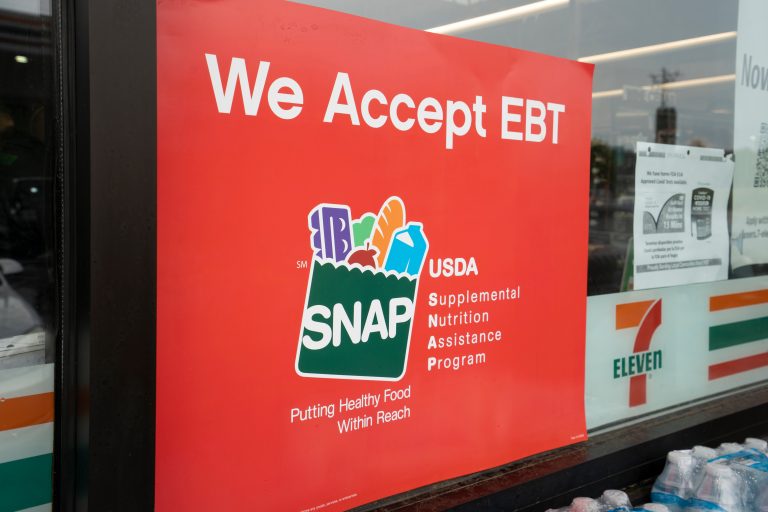
Federal changes to eligibility for the Supplemental Nutrition Assistance Program (SNAP), commonly known as food stamps, are set to reduce or eliminate benefits for many refugees and noncitizen residents, local service providers and advocates say. The result is a widening gap between basic food needs and affected households’ ability to cover grocery expenses, even as food prices remain elevated.

New Mexico has one of the highest rates of food assistance participation in the nation, with a significant share of residents — including refugees, asylees, and low-income families — relying on SNAP in any given month. With changes to federal eligibility rules and the looming end of benefit access for certain groups, refugees in the state face heightened food insecurity and long-term planning challenges.

Federal SNAP benefits are a key component of the social safety net, helping millions of low-income Americans supplement their grocery budgets each month. The program also supports local economies: for every dollar in SNAP benefits spent, additional economic activity is generated in communities nationwide. Cutting eligibility for segments of the population — particularly refugees and humanitarian entrants — has ramifications for both household finances and local food systems.

What’s changing — key facts

  • Federal eligibility shifts: Recent federal policy changes have narrowed SNAP eligibility, excluding many refugees, asylum seekers, and other noncitizens who previously qualified for assistance.
  • SNAP’s role in New Mexico: A large share of the state’s residents rely on SNAP benefits to afford food, and the program’s abrupt contraction has increased demand for local food banks and community support.
  • Economic ripple effects: SNAP benefits not only help households buy groceries but also support local retailers and food partners; cuts reduce both consumer purchasing power and economic activity.
  • Community response: City and nonprofit efforts in Santa Fe and beyond are stepping in to coordinate food distribution and volunteer networks amid reduced federal support.

Refugee families in New Mexico often arrive with limited financial resources and depend on a combination of employment, community support, and federal assistance to meet basic needs. SNAP supplements dwindling budgets, enabling households to purchase food each month without further eroding their limited income. As federal eligibility narrows, many who once counted on this support are now left to piece together alternatives.

Advocates say the policy changes stem from recent federal budget and immigration law shifts that have tightened access to public benefits for noncitizen populations, including refugees who enter the U.S. legally after rigorous screening. National reporting has highlighted that under new federal rules, many refugees and asylum seekers will be denied access to food stamps and other programs that were once part of their initial support structure.

The consequences extend beyond household grocery bills. Food pantries and community organizations in Santa Fe and northern New Mexico are preparing for increased demand as more people seek assistance. These local efforts aim to supplement the gap left by federal cuts but are stretching available resources. According to city officials, food banks and pantries are coordinating with volunteers and partner groups to expand operations and manage heightened community need.

State officials have acknowledged the strain on residents and food providers.

In recent responses to broader SNAP disruptions stemming from federal funding lapses, New Mexico leaders allocated emergency state funds to help maintain some level of assistance for residents losing federal benefits. Such measures underscore the political and economic pressures faced by states when federal safety net programs shift.

Economists note that food assistance programs such as SNAP are vital to household budgeting, especially in regions with high poverty and food insecurity rates. New Mexico frequently ranks among the states with the highest reliance on SNAP benefits, reflecting broader socioeconomic challenges. Cuts to these programs can ripple through local economies, reducing consumer spending and increasing demand on charitable and municipal resources.

For refugee families, the timing of these changes complicates resettlement and self-sufficiency goals. Many refugees are rebuilding their lives, securing employment, and establishing community ties when faced with sudden reductions in benefits. Community organizations serving refugee populations emphasize that consistent access to food assistance is foundational to stability and long-term economic integration.

In Santa Fe and surrounding communities, city officials and nonprofit partners are urging residents to support local food drives and volunteer at food distribution centers. Broader civic efforts are also focused on advocating for clearer federal guidance and state accountability in administering remaining assistance programs as eligibility rules evolve.

As federal food aid changes continue to unfold, the experience of refugees in New Mexico highlights the intersection between national policy decisions and local economic realities. The loss of federally funded food assistance underscores the financial challenges that vulnerable households face and the importance of community and state mechanisms in cushioning the impact of shifting federal support.

New Mexico Expands ACA Premium Assistance for 2026 After Federal Subsidies Lapse

New Mexico is moving to cushion residents from significant health insurance cost increases after Congress allowed enhanced Affordable Care Act premium tax credits to expire Dec. 31, 2025. State officials said New Mexico will use its own Health Care Affordability Fund to backfill federal subsidies and maintain lower premiums for most people enrolled through BeWell, the state’s health insurance marketplace.

The move comes amid federal inaction on extending the expanded ACA tax credits, which were first expanded under pandemic-era legislation and later extended through 2025. Without those enhanced credits, analysts warned that New Mexicans could face substantial premium increases, averaging more than $1,500 per person per year, while many small-business owners and middle-income households reconsider their coverage decisions.

New Mexico’s Health Care Affordability Fund was created in 2021 to reduce the cost of coverage for individuals and families on the health insurance marketplace, including reducing premiums and out-of-pocket expenses. The fund has been tapped repeatedly in recent years to expand access and shield residents from rising health care costs.

Under the state plan for 2026, lawmakers approved roughly $17.3 million from the Health Care Affordability Fund to subsidize premiums and cost-sharing for enrollees who purchase coverage through BeWell through June 30. Additional funding has been proposed in the fiscal 2026–27 budget to extend assistance further if the federal government continues to withhold expanded tax credits.

State officials and health care authorities emphasized that New Mexico’s action protects coverage for residents across a wide range of income levels. Unlike most federal subsidies, which typically phase out at 400% of the federal poverty level (FPL), state premium assistance can extend protections to some enrollees above that threshold.

What New Mexico’s Marketplace Assistance Does

Key features of the state’s approach include:

  • Premium subsidies replacement: Funds from the Health Care Affordability Fund lower monthly health insurance premiums for most BeWell enrollees who would otherwise face increases due to the expiration of enhanced federal tax credits.
  • Income broad protection: Assistance applies to households above the traditional federal subsidy cutoff of 400% FPL, reducing the risk of coverage loss for middle-income residents.
  • Out-of-pocket cost reduction: The Marketplace Affordability Program also includes subsidies that reduce deductibles and other out-of-pocket expenses for certain plan types on BeWell.

Taken together, these measures aim to preserve affordable access to health insurance in New Mexico’s individual market, even without additional federal support.

State health officials noted that absent these actions, thousands of residents could lose coverage or face premium shocks that exceed their budgets. New Mexico estimates that without state assistance, roughly 27,100 residents could have been at risk of dropping marketplace coverage due to unaffordable premiums.

The reliance on state funds comes as federal policymakers remain at odds over whether to extend the enhanced tax credits nationally. Negotiations in Congress have stalled, leaving New Mexico and a few other states with their own subsidized programs. National health policy analysts have said that state programs can mitigate some cost increases but may not fully substitute for broad federal action.

For residents already enrolled in BeWell plans, open enrollment continues through mid-January, with certified enrollment assisters available to help people understand their options and potential savings. Officials said that state premium assistance, when combined with existing federal tax credits, will keep many monthly premiums significantly lower than they would be otherwise.

The fiscal and political stakes are high as New Mexico weighs further appropriations. Governor Lujan Grisham’s budget proposal for fiscal years 2026–27 includes additional Health Care Affordability Fund resources to sustain subsidy backfilling beyond June if federal inaction persists. Advocates for coverage expansion say ongoing state support could become an essential safety net if federal tax credits are not restored.

New Mexico Educators Begin Tax Filing Season as ERB 1099-R Forms Arrive

The New Mexico Educational Retirement Board (ERB) has mailed 1099-R tax forms to retired members receiving benefits, providing essential documentation for filing 2025 income taxes. The forms, which report retirement benefit distributions, were dispatched on January 27 from ERB’s Santa Fe office and are also accessible through the board’s online MyNMERB accounts.

The distribution of 1099-R forms is an annual obligation for ERB, which administers retirement benefits for public school employees and educators across New Mexico. Retirees use the documents to report taxable retirement income to the Internal Revenue Service and state tax authorities. In many cases, prompt receipt of these forms helps retirees begin tax preparation earlier in the year.

Key updates from the ERB newsletter

Alongside the mailing of tax documents, the January 2026 edition of the ERB Connect newsletter offers insights and updates relevant to members’ financial planning and retirement preparedness:

  • Financial overview: The board reaffirmed its commitment to prudent management of retirement assets and highlighted the health of the general fund.
  • New facilities and member resources: ERB’s expansion and technological upgrades aim to enhance member services statewide.
  • Security enhancements: Additional protections have been added to member accounts and online services to safeguard personal data.
  • Educational webinars: Registration is open for both early-career and retirement readiness webinars through mid-2026, designed to help members navigate key financial decisions.

ERB’s pension system operates as a defined benefit plan, providing lifetime retirement income to eligible public educators and staff throughout New Mexico. Members accrue benefits over their careers based on years of service and salary history, with pensions managed to balance long-term sustainability against commitments to beneficiaries.

For retirees, understanding the timing and use of 1099-R forms is an important part of tax planning. The forms typically detail retirement benefit payments made during the previous year and may also indicate federal tax withholding. While ERB cannot provide specific tax advice, members are reminded to consult tax professionals or IRS guidance when preparing returns.

Accessing the 1099-R electronically through the MyNMERB portal can expedite tax preparation. Retirees who have not yet created online accounts are encouraged to register, as MyNMERB provides a direct way to retrieve forms, update personal information, and review benefit statements.

Security improvements highlighted in the newsletter reflect ERB’s broader effort to protect member information. These measures include enhanced authentication and monitoring steps for online access. Members are advised to keep their contact details up to date to receive critical alerts and official communications.

Educational webinars being offered through June 2026 cover a range of topics from retirement readiness to financial strategies for mid-career members. These sessions aim to strengthen financial literacy and help beneficiaries make informed decisions about retirement income, healthcare considerations, and post-retirement employment options.

As tax filing season gets underway, ERB’s timely mailing of 1099-R documents ensures retirees can meet IRS deadlines without delay. The additional context provided in the newsletter gives members a broader view of ERB’s operations, priorities, and resources available to support financial planning in the year ahead.