Home Blog Page 24

University of New Mexico Moves to Tighten Campus Security After Dorm Shooting

The University of New Mexico has pledged a sweeping overhaul of its campus safety policies after the fatal shooting of a 14-year-old boy in a residence hall last month. Speaking to students, staff, and the media during an August 1 briefing, university leaders detailed both immediate and long-term changes aimed at closing security gaps and restoring trust in the institution’s ability to keep its community safe.

The briefing came in the wake of the July 25 shooting at the Casas del Rio dormitories, which left Michael LaMotte dead and another youth wounded. Police say the suspects were not enrolled at UNM.

This fact has fueled questions over how outsiders gained access to student housing and whether the university’s current security measures are sufficient for an urban campus of its size. The shooting has shaken the campus and surrounding neighborhoods, sparking difficult conversations about how an open, public university can protect its students without shutting itself off from the community it serves.

President Garnett S. Stokes opened the session by acknowledging the grief felt across campus and offering condolences to LaMotte’s family. She said the safety of the campus comes before everything else and asked students, faculty, and staff to help strengthen it.

“This is not the work of administrators alone,” Stokes said. “It’s a collective effort to protect one another.” Her call for collaboration set the tone for a briefing that alternated between policy commitments and appeals for community engagement.

Executive Vice President Teresa Constantinidis said the university has begun a top-to-bottom review of its safety policies and day-to-day security practices. The goal, she explained, is a “thoughtful analysis” — not only to address the weaknesses revealed by the shooting but also to create safeguards strong enough to stop future incidents before they happen. Constantindis also confirmed that these safety policies are already in motion, with officials looking at everything from who can get into residence halls to how fast emergency alerts go out.

In its press release, the university provided updates on several projects tied to that review as already underway. These efforts include new fencing installed around student housing, more buildings converted to key-card access, and additional lighting going up in areas where dim conditions have long made people uneasy at night.

She said that work on the review has already begun, with officials looking closely at everything from how people get into campus buildings to how quickly emergency messages reach students and staff. University updates describe several of these projects as already moving forward: new fencing is going up around residence halls, more buildings are being switched to key-card entry, and extra lighting is being added in spots where poor visibility has long made people uneasy.

Other outdated emergency systems, such as Blue Light phones, are being replaced with brighter, more reliable units, and upgrades to the Lobo Alert system to improve the speed and reach of emergency notifications.

These steps build on more than $20 million invested in safety enhancements over the past five years, including lighting, cameras, and access controls. This figure, officials say, underscores the scale of the university’s commitment to security.

President Stokes is also putting more emphasis on training, from how to respond in an active-shooter situation to understanding and preventing sexual harassment. Those sessions are being reviewed and updated so they reflect current risks and reach everyone on campus.

Picking up on that theme, Police Chief Joseph Silva stressed the need for vigilance as he reminded the audience of UNM’s zero-tolerance policy on firearms. He also urged students and staff to speak up about anything that feels unsafe. “If you see something, say something,” he said, noting that the department is working on practical ways to help people recognize and report potential threats sooner.

As part of a push to make the campus perimeter more secure, UNM recently bought the former Motel 6 on Avenida César Chávez. The property, which sits near the South Campus entrance, will be redeveloped into a safer and more welcoming gateway for students and visitors.

UNM officials note that LoboAlerts are not limited to enrolled students, faculty, and staff. Parents, community members, and others without a UNM account can receive alerts by following LoboAlerts on Twitter or Facebook, or by registering through the UNM Community text platform. The system is designed to share critical updates with anyone who signs up, including people outside the immediate campus.

The shooting at Casas del Rio exposed some clear gaps in how the campus is secured, from how easily outsiders were able to get inside a dorm to how long it took for word of the danger to spread. In the days since, university leaders have pointed to those failures as the driving force behind their safety plans. Some changes, like brighter lighting and stepped-up patrols, are already visible on campus, while larger projects will take more time to finish.

For President Stokes, the challenge now is turning plans into lasting change. “We can’t undo what happened,” she said. “But we can honor Michael’s memory by making sure our campus is safer for everyone who calls it home.” Whether that goal becomes reality will depend on more than fences, lights, and alerts — it will rest on how fully students, faculty, and neighbors join the effort to watch out for one another.

University of New Mexico Launches Groundbreaking Bilingual Program for Early Childhood Communication Needs

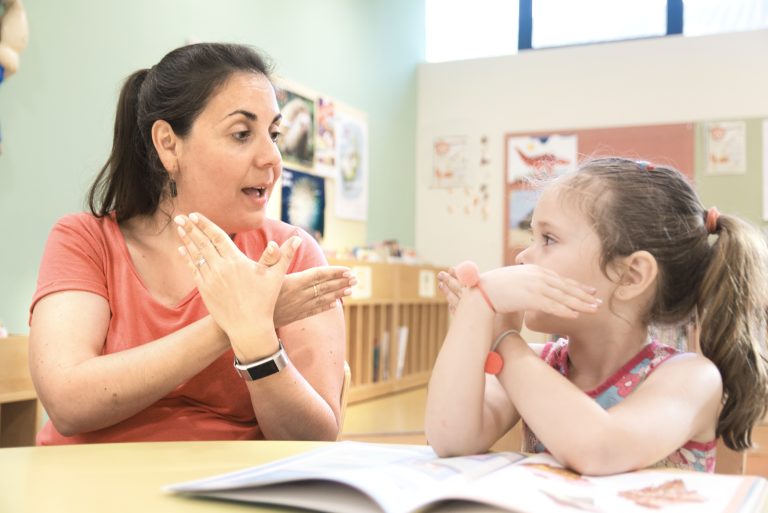
The University of New Mexico’s Department of Speech and Hearing Sciences has launched Project MESA—a first-of-its-kind program in the state aimed at training bilingual, culturally responsive speech-language pathologists to serve young children with special needs.

Funded through a five-year federal grant, Project MESA—short for Multilingual, culturally responsive, Early childhood Social communication Approaches—prepares graduate students to work with children from birth to age six, particularly those with speech delays, autism, or other communication challenges.

The program will emphasize bilingualism, cultural humility, and community engagement, with a focus on serving families who speak Spanish or Indigenous languages such as Diné.

“We’re not just building skills—we’re building trust,” said Associate Professor Cindy Gevarter, Project MESA’s director. “When families see themselves reflected in their providers, real progress happens,” she added.

The need for certified and bilingual SLPs is pressing. According to the American Speech-Language-Hearing Association, fewer than 9 percent of speech-language pathologists nationwide are proficient in Spanish or Indigenous languages. And in New Mexico, where multilingualism is woven into daily life, the shortage leaves many families without adequate support.

Project MESA addresses this gap directly. Its first cohort includes four bilingual Spanish-speaking scholars who are now working in the community. The program also runs a summer clinic where students apply their training under the guidance of veteran clinician Mary Hartley, who has spent more than 35 years working with children in the state.

“We’re serving more families because we’re training more bilingual clinicians,” Hartley said. “The summer clinic is a highlight—it’s where students put everything into practice, and families receive services they might not otherwise access.”

Students accepted into the two-year program receive tuition assistance, mentorship, and community-based learning opportunities. They will tackle curricula such as the Bilingual Concentration track focused on culturally responsive care, bilingual assessment, and specialized intervention strategies.

Furthermore, sixty-five percent of the grant funds go directly toward student support, covering both tuition and living expenses.

“This isn’t just about becoming a therapist,” said Grant Manager Jessica Nico. “It’s about embedding cultural humility and responsiveness into every aspect of training.”

In addition to traditional speech therapy methods, Project MESA integrates Naturalistic Developmental Behavioral Interventions (NDBIs) and Augmentative and Alternative Communication (AAC) tools to better connect with children in comfortable, meaningful ways.

By the end of the grant’s five-year span, the program will have trained 12 specialists equipped to serve in under-resourced communities across the Southwest, potentially transforming access to early communication support in the region.

New Mexico’s Rural Districts Step In to Run Statewide Online School, Promising Broader Access and Accountability

Two rural New Mexico school districts — Chama Valley Independent Schools in Rio Arriba County and Santa Rosa Consolidated Schools in Guadalupe County — will assume operational control of the Destinations Career Academy of New Mexico, a statewide online public school powered by Stride, Inc., beginning in fall 2025.

The academy, which first opened in 2020 under Gallup–McKinley County Schools, reports in an August 4, 2025, release that more than 3,000 students have already enrolled for the 2025–26 school year, a sharp increase from its early days.

Until now, NMDCA has been managed within a single district’s structure while serving students across the state.

The new arrangement expands its reach and changes how it will be governed. Instead of answering to one local school board or operating as an independent virtual charter, the academy will be jointly overseen by two districts, each with its own elected board.

That governance shift is more than a bureaucratic detail; it determines who reviews the budget, hires teachers, sets policies, and evaluates student performance.

Understanding why this change matters requires looking at New Mexico’s track record with virtual education. In most states, full-time online schools operate under a charter model, where authorizers — either state agencies or districts — are expected to hold them accountable for academic results and fiscal transparency.

In New Mexico, however, those rules are far weaker. A review by the National Alliance for Public Charter Schools’ “Model Law” database gives the state 0 out of 12 points for full-time virtual charter provisions and just 2 out of 8 points for transparency when contracting with outside providers.

That means oversight has often depended more on the authorizing district’s own practices than on any clear statewide standard.

By placing NMDCA under two districts, the program’s supporters believe they are strengthening that oversight. District boards will have direct authority over spending and staffing, and local administrators will be in a position to track attendance, course completion, and test performance in real time.

For families, the change means that accountability will rest with officials they can meet in person, rather than with a remote authorizer or a largely autonomous online school.

This local control is significant in rural New Mexico, where educational options can be limited. In the 2019–20 school year, 60 of the state’s 89 districts enrolled fewer than 1,800 students. That small scale often makes it impossible to offer a wide range of classes, especially advanced placement courses, specialized career-technical training, or dual-credit programs with colleges.

The academy’s statewide model allows students in communities separated by hundreds of miles to enroll in the same classes, regardless of whether their home district can provide them. Planned career pathways include Business Management & Administration, Health Science, and Information Technology (IT), along with college-credit courses through New Mexico higher education institutions.

The model also addresses a chronic staffing challenge. As of September 9, 2024, New Mexico had 737 vacant teaching positions and 1,259 educator vacancies overall, according to a report from New Mexico State University’s Southwest Outreach Academic Research Center.

In smaller districts, those shortages can mean entire subjects go untaught. With NMDCA, licensed New Mexico teachers can serve students anywhere in the state, making it easier to fill gaps in specialized areas such as advanced science, foreign languages, or technical training.

But technology infrastructure will determine how accessible the program truly is. Roughly 16 percent of the state’s 873,797 serviceable locations remain without adequate broadband, according to the New Mexico Governor’s Office. While the state has secured $675 million in federal Broadband Equity, Access, and Deployment funds, most construction will not begin until after 2025 approvals.

In a March 27, 2025, release, the state broadband office reported that 18 entities filed 66 applications for this funding. Until those projects are built, students in unserved areas may struggle to connect reliably to daily classes.

Even with expanded course offerings and the promise of better oversight, the program’s success will hinge on measurable outcomes. A 2017 evaluation by the Legislative Education Study Committee found that virtual charter schools in New Mexico — including those run by K12 Inc., Stride’s predecessor — often trailed traditional schools in graduation rates and invested a smaller share of their budgets in instructional staff.

Nationally, online schools have produced mixed academic results, prompting education advocates to call for transparent reporting on attendance, engagement, and learning gains. Under state rules, NMDCA students are required to participate in district and state assessments; testing logistics are arranged by the school, which typically includes designated in-person sites.

When the academy launches under its new governance in fall 2025, it will face two tests at once: whether it can expand opportunity for students in far-flung corners of the state, and whether it can document that those students are thriving academically.

Success will depend not only on technology and curriculum, but on whether the districts publish clear, accessible data on attendance, course completion, test performance, graduation rates, and post-graduation outcomes.

For a state still grappling with how to regulate full-time virtual schooling, the results could shape the future of online education well beyond New Mexico.

Lawsuits Free $12 Billion in Federal Funds for New Mexico Schools and Services

The New Mexico Department of Justice has reclaimed roughly $12 billion in federal funding, restoring critical support for schools, health care programs, and infrastructure projects across the state.

The breakthrough came after judges in several multi-state lawsuits granted temporary relief from a freeze imposed by the U.S. Office of Management and Budget.

Since January, the department’s Impact Litigation Division has been fighting to keep federal dollars flowing to New Mexico as part of a series of legal challenges against budget cuts and agency reorganizations that threatened to cancel grants outright.

Deputy Counsel Anjana Samant told members of the Legislature’s Federal Funding Stabilization Subcommittee this week that the restored funds include more than $50 million for the Public Education Department, $59 million in pandemic-era public health grants, and $18 million for electric vehicle infrastructure projects. Without court intervention, she warned, much of this money would have been lost permanently.

“These rulings have allowed schools to move forward with the 2025–26 academic year,” Samant said, adding that many districts had been preparing for hiring freezes, program cuts, and delayed services while waiting for word on the funding.

The education grants are expected to bolster programs for English learners, literacy, teacher training, and after-school initiatives, which local administrators say are essential to meeting student needs.

Despite the magnitude of the legal victories, the Impact Litigation Division is operating with just five attorneys.

Samant urged lawmakers to approve $3.2 million in additional funding during the 2026 legislative session to expand the team’s capacity and maintain oversight over federal grants.

“To say we are at capacity is an understatement,” she said.

Lawmakers from both parties appeared receptive to the request.

“For a few million dollars, an office of four or five people has saved the state several billion,” said Senator William Soules, Democrat of Las Cruces and co-chair of the subcommittee. “That’s a good deal for taxpayers.”

The litigation is part of a broader wave of legal challenges by New Mexico and other states over federal funding policies and budget freezes. In recent months, the state has joined more than 20 multi-state lawsuits aimed at blocking measures that could limit federal grants or change how states administer them.

Officials emphasized that swift legal action was key to avoiding service disruptions and financial shortfalls. Without these rulings, they said, schools, hospitals, and public projects across New Mexico would have been forced to scale back or shut down entirely.

Danielle Gonzales Honored with National CHCI Award for Service to Latino Communities

Albuquerque Public Schools is celebrating one of its own. Board President Danielle Gonzales has been named as one of the recipients of the Medallion of Excellence for a Distinguished Alumnus by the Congressional Hispanic Caucus Institute (CHCI), a prestigious honor reserved for alumni who have made a lasting impact through service and leadership.

The award is presented during CHCI’s Hispanic Heritage Month programming in Washington, D.C., recognizing Latino leaders whose work has strengthened communities across the nation.

“It’s really exciting and an honor and a nice surprise,” Gonzales said in an interview, calling the recognition validation of her years in education, especially on behalf of Hispanic students.

A graduate of Albuquerque’s Valley High School, Gonzales has built her career at the intersection of education policy, community engagement, and leadership at both the local and national levels. She began her journey with CHCI as an intern in 1997, working under then–U.S. Rep. Xavier Becerra, who chaired the Congressional Hispanic Caucus at the time.

Gonzales credits that experience as transformative. “CHCI played a foundational role in preparing me for a life of service and leadership,” she said. “It was one of the first times I saw how my identity and my aspirations could thrive in the same space.”

After her internship, Gonzales spent years in classrooms, boardrooms, and advocacy organizations across the country. She returned to Albuquerque to serve on the APS Board of Education, where she was elected president in 2024. In each role, her focus has been on expanding opportunities for students from underserved communities.

When asked what it means to receive such recognition, Gonzales reflected, saying, “This award is deeply meaningful to me because it affirms the values that have guided my life and career—family, service, and a deep commitment to community. I have always felt called to serve, especially on behalf of Hispanic youth and communities like the one that raised me in Albuquerque, New Mexico.”

She will receive the honor at CHCI’s Leadership Conference Alumni Awards & Closing Reception on Sept. 17, 2025, at the Ronald Reagan Building in Washington, D.C., part of the institute’s Hispanic Heritage Month events. Back home, in the halls of APS, her success is already making an impact, reminding students that the path from their neighborhood schools can lead anywhere, even to the nation’s capital.

NM PED Invites Public Input on Court‑Ordered Yazzie/Martinez Remedial Action Plan

The New Mexico Public Education Department (PED) will host a series of 12 community meetings throughout August, seeking public feedback to guide the state’s remedial action plan required by the Yazzie/Martinez court ruling.

The meetings respond directly to an April decision by First Judicial District Court Judge Matthew Wilson, who concluded New Mexico has not adequately provided equitable education to Native American students, English learners, students with disabilities, and low-income children. PED is required to submit a draft of this action plan by October 1, with the final version due by November 3.

Earlier this month, PED achieved its first milestone by selecting the Los Alamos National Laboratory (LANL) Foundation as its expert partner to assist in formulating the action plan.

Gwen Perea Warniment, President and CEO of the LANL Foundation, pledged a “transparent, trustworthy, and inclusive” planning process reflective of community needs statewide.

Warniment emphasized that students, families, tribal governments, educators, and advocates would all play vital roles in shaping a plan informed by their lived experiences.

Loretta Trujillo, Executive Director of Transform Education NM, expressed satisfaction with PED’s current progress, highlighting the department’s collaborative approach.

“They’ve invited organizations deeply connected to communities,” Trujillo said.

She also praised the active inclusion of students in planning discussions over the past 18 months, underscoring the necessity of a cohesive, long-term vision rather than piecemeal solutions.

Community meetings will occur in the following locations:

August 5: Farmington, Española, Las Cruces

August 6: Raton

August 7: Santa Fe, Mescalero, Clovis

August 14: Silver City, Zuni, Carlsbad

August 20: Albuquerque

August 26: Virtual Statewide Meeting

These meetings are free and open to all. PED will offer childcare, meals, and interpretation services in Spanish and American Sign Language to encourage broad community participation.

PED has stated that the final plan will address five core areas: access to high-quality instruction; culturally and linguistically informed educators; academic and behavioral support services; equitable funding; and accountability systems, all court-mandated components of the Yazzie/Martinez action framework.

NMSU Leads Statewide Push to Train Workforce for Nation’s Nuclear Security Mission

New Mexico State University (NMSU) is playing a leading role in a growing statewide effort to prepare a new generation of workers for one of the country’s most vital security missions: the safe handling and production of plutonium components used in nuclear deterrence.

On July 21, 2025, NMSU outlined its contributions to the Plutonium Workforce Development Initiative, a multi-campus program aimed at training students for careers supporting Los Alamos National Laboratory (LANL) and national defense.

So far, the federal government has allocated $18 million to this initiative, which spans 10 higher education institutions across New Mexico. NMSU alone has secured more than $4.5 million in funding to upgrade laboratories, develop new courses, and expand student internships and research opportunities in areas aligned with LANL’s mission.

These efforts are meant to directly support the US Department of Energy’s directive for LANL to manufacture at least 30 plutonium pits per year by 2030. This target requires not only advanced equipment but also a highly trained, specialized workforce.

As part of the collaboration, LANL representatives visited the Las Cruces campus in April to tour labs, meet students, and assess the readiness of NMSU’s training pipeline. They observed research projects and reviewed recent upgrades to laboratory infrastructure made possible through initiative funding.

These investments span departments from welding and machining to electrical and mechanical engineering, reflecting the full range of technical expertise needed to support pit production and other high-security operations at LANL.

Dr. Vimal Chaitanya, a mechanical engineering professor at NMSU, said the lab needs a wide array of professionals—from hands-on welders and machinists to project managers, engineers, and scientists. He emphasized that these jobs aren’t limited to physicists or nuclear engineers.

“This is a multidisciplinary effort,” Chaitanya said. “We’re building a broad and deep bench of talent that can sustain New Mexico’s central role in national security for decades to come.”

LANL currently employs more than 13,000 people across northern New Mexico, and its Weapons Production Directorate plays a central role in pit manufacturing. While precise staffing numbers for the directorate aren’t publicly confirmed, the unit is expected to expand significantly as LANL ramps up plutonium pit production to meet federal targets..

As the federal government modernizes the US nuclear arsenal, institutions like NMSU are becoming key partners in securing the future of the workforce needed to support these national objectives.

Despite the critical nature of this training, students do not work directly with plutonium while enrolled at NMSU. All such sensitive operations take place within secure LANL facilities after employment and require additional federal clearances.

However, NMSU students do gain valuable pre-employment exposure to equipment, problem-solving, and systems they will later encounter at LANL. The experience offers a competitive edge for those seeking jobs in high-security research and development, and in turn, strengthens the state’s STEM education infrastructure.

University leaders hope that the program will have a lasting impact beyond immediate job placement. By creating modern laboratories and facilities, investing in faculty, and attracting private-sector sponsorships, NMSU aims to become a national leader in security-related workforce development.

The program currently involves 10 higher education institutions across New Mexico and includes direct collaboration with Los Alamos National Laboratory.

Ultimately, this will lead to open doors for high-paying career paths for New Mexicans, especially in the rural areas where advanced training is limitedly available.

Non-profit Groups Memo Urges States to Act on Special Education Crisis

In July 2025, Bellwether Education Partners issued a wide‑ranging memo on behalf of nearly eight million students with disabilities, warning that the first half of the Trump administration had introduced a cascade of policy shifts that imperil access to special education services.

Bellwether reports that in 2022–23, more than 15 percent of public school students (roughly 7.9 million) received services under the Individuals with Disabilities Education Act, up 3.4 percent from the prior year. That growth, Bellwether projects, will push the total toward 8 million by the end of the 2024–25 school year.

The non-profit groups outline how sweeping federal actions like mass layoffs of more than half the U.S. Department of Education’s workforce, restructuring of IDEA funding, and executive orders effectively dismantling the Education Department’s oversight role are eroding the infrastructure that supports special education.

The FY 2026 federal budget, while maintaining IDEA’s headline funding at approximately $15.5 billion, proposes consolidating seven separate IDEA programs—preschool, technical assistance, and teacher preparation—into a single block grant, eliminating targeted accountability and effectively erasing dedicated funding streams totaling around $677 million.

The broader package would consolidate 18 federal K‑12 programs into one simplified fund, slicing overall education funding by about $4.5 billion.

Special education advocates warn that these moves amount to “immense harm” to students with disabilities by removing accountability conditions and redistributing control to states or local districts, often without sufficient safeguards or resources.

There is also urgency around Medicaid: states could lose billions in reimbursements for services like speech therapy and counseling, putting districts in the precarious position of meeting federal mandates with shrinking budgets.

Against that backdrop, Bellwether urges state executives, education agencies, legislators, and advocates to act now.

Bellwether first calls on state leaders to issue clear, accessible guidance for schools and families, outlining how federal changes impact access to special education and what the state intends to do in response. It’s a necessary defense against ambiguity and regulatory drift, particularly as districts may mistake flexibility for permission to scale back services.

The memo urges coalitions among state agencies, local districts, disability rights organizations, and advocates to actively monitor the fallout and, when necessary, use legal or policy mechanisms to enforce accountability.

Furthermore, the non-profit groups urge states to examine and strengthen their financing systems—for example, by employing differentiated funding weights that reflect the actual cost of serving high‑need students, ensuring accurate identification and service tracking, and protecting state financial support for special education even as federal backing weakens.

Bellwether’s previous analysis shows that federal funds make up only about 8 percent of total school funding, but disproportionately shape disability services. Without innovative state systems, districts may bear growing unfunded costs as IDEA dollars stagnate.

The memo recommends expanding wraparound supports—food aid, housing stability, health services—for families facing economic pressure. These efforts are essential because external stressors like hunger or homelessness amplify educational barriers for students with disabilities, undermining IEP goals and inclusive placements.

Finally, Bellwether urges states to codify or reinforce their policy protections under IDEA, Section 504, and the ADA so that local compliance does not erode even if federal priorities shift.

This requirement becomes especially important if the U.S. Department of Education continues to shrink or change authority to other agencies, as projected under Project 2025, which envisions dismantling the department altogether and transferring special‑education oversight to Health and Human Services.

In recent months, Senate leaders across party lines rebuffed broad Trump administration proposals to slash K‑12 funding and dismantle the Education Department. But those symbolic victories do not guarantee long‑term protection.

As Bellwether makes clear, the reliance on block grants, reduced federal technical assistance centers, and fewer enforcement tools leaves gaps that states must proactively fill.

To put the stakes bluntly: nearly 8 million students are at risk, not because their needs have changed, but because institutions meant to secure those needs are being dismantled. High‑quality education for students with disabilities requires trained personnel, targeted funding, robust oversight, and stable support structures.

The Bellwether memo argues that without immediate state action—clear guidance, coordinated advocacy, financial systems that match need, and wraparound services—many of those pillars will crumble. And the consequences will be felt most by students whose disabilities make them the most vulnerable in an already unequal system.

One Big Beautiful Bill: How America’s First Federal School Voucher Program Works, Who It Helps, and What You Need to Know Before Joining

The One Big Beautiful Bill is a pioneering move made by Congress on July 4 to reshape education funding in America. The package, estimated to cost upwards of $25 billion annually, introduces the nation’s first-ever federal school voucher-style initiative through a system of tax credits for individuals who donate to Scholarship Granting Organizations (SGOs).

This new legislation aims to expand educational opportunities for students and families by directing funds to non-profit organizations, making private schools, homeschooling, and specialized educational services more accessible, especially for those facing financial challenges.

OBBB builds upon the previously proposed Educational Choice for Children Act. While the original bill aimed primarily to encourage state-driven scholarship programs with modest federal financial incentives, the One Big Beautiful Bill goes considerably further by establishing a robust federal tax credit program that supports scholarship distribution.

Unlike its predecessor, the new legislation sets up stronger and more comprehensive incentives, such as substantial federal tax credits and direct federal involvement. With broader access to educational options across state lines, this new bill promises a more ambitious take in providing equitable educational opportunitues for families regardless of their geographic location or financial status.

The bill introduces two landmark mechanisms: the Federal Tax Credit for Donations and a structured scholarship program administered by SGOs. Both provisions will come into effect in January 2027.

The Federal Tax Credit for Donations will allow taxpayers to receive a dollar-for-dollar tax credit of up to $1,700 annually for donations made to SGOs.

This provision is designed to boost private contributions to education by offering taxpayers a direct reward for their donations. Instead of simply offering a tax deduction, it provides a dollar-for-dollar tax credit.

By using the tax code, the federal government is encouraging individuals and companies to help fund scholarships for families who earn up to three times the median income. The result is broader access to private schools and other non-traditional education paths for students who might otherwise be left out.

On the other hand, the scholarship distribution program shifts the responsibility for managing education scholarships to SGOs, which will allocate the funds raised through tax-credit donations.

Unlike existing state-run voucher systems that often fluctuate with local politics and budgets, this new initiative sets a consistent federal framework. It’s also open to families earning up to three times the national median income—a move that extends access well beyond low-income households.

With these scholarships, parents can cover a range of educational costs, including private school tuition, homeschooling supplies, and other approved learning expenses. The goal is to give families greater freedom to choose the education that best suits their child, regardless of their ZIP code or income bracket.

What is the role of Scholarship Granting Organizations (SGOs) in the One Big Beautiful Bill?

Scholarship Granting Organizations (SGOs) will play a crucial role in bringing the OBBB into action. These non-profit groups will be responsible for collecting and distributing the billions of dollars raised by the program through the federal tax credit.

They will also be the responsible party in determining whether or not a family qualifies for assistance based on specific criteria set by Congress.

In other words, SGOs will serve as a vital link between private schools, donors, and families looking to take advantage of the potential benefits of the OBBB.

Their role ensures that the scholarship application and enrollment process are simplified to speed up the flow of scholarship funds and guarantee that financial assistance reaches students and schools efficiently, without unnecessary delays.

How can SGOs ensure funds are managed and monitored?

Congress has mandated SGOs to allocate these donations strictly toward educational expenses. That means these funds must go directly toward covering essential costs such as school tuition, textbooks, transportation, standardized tests, and homeschooling materials.

While the bill does not specify an exact percentage for spending, it does include oversight mechanisms such as audits and reporting requirements to ensure SGOs allocate funds responsibly and in alignment with the program’s goals.

Through these regular audits and reviews, SGOs ensure that schools follow federal and state rules when using the scholarship funds. This kind of oversight is crucial—not only to maintain trust in the program, but also to ensure that families and students truly benefit from the support the bill was designed to provide.

How can you contribute to OBBB and receive tax credits?

To take part in the One Big Beautiful Bill, individuals and businesses must donate directly to a Scholarship Granting Organization, or SGO, approved by the IRS and officially certified by states that choose to participate in the program.

Each participating state must provide the IRS with a list of approved organizations that meet federal standards.

When it comes to contributions, all donations must be made in cash. This requirement ensures that donations are easy to document and that the corresponding tax credits are applied accurately.

Non-cash gifts—such as stocks, real estate, or other assets—aren’t accepted under the federal credit rules. It’s also worth noting that the interaction between federal and state-level tax credits may affect the final benefit, though specific reductions are not detailed in current federal guidelines.

Once a state formally opts in—either by passing legislation or through executive action—it becomes part of the federal system. That step triggers the setup of approved SGOs within the state, connecting families and donors to the program.

How to qualify for assistance?

For families that wish to apply for OBBB assistance, you must submit necessary documentation through a Scholarship Granting Organization (SGO) that your state has approved. These documents include proof of income and provide proof of residency or school enrollment.

Eligibility is based on income. The law sets the cutoff at 300% of the area’s median income. That means families earning up to three times the average household income in their region may qualify for assistance.

If the application is approved, the SGO issues vouchers or scholarship funds, which can be used for private school tuition, textbooks, tutoring, transportation, or homeschooling materials.

How does the scholarship distribution work?

StepWhat you do?Who manages it?Who benefits?
1Donate cash to an approved SGODonor → SGOFamily scholarship pool
2SGO confirms eligibility and distributes vouchersSGOEligible families (≤ 300% area median income)
3Families spend vouchers on qualifying educational costsFamilies, approved schoolsStudents receive support
4SGO conducts audits to confirm proper useSGO oversight teamsEnsures program integrity

Once you’re approved for assistance under the One Big Beautiful Bill, the Scholarship Granting Organization (SGO) steps in to distribute the funds. These funds aren’t handed out in lump sums or left to chance—they’re issued in the form of vouchers, specifically designated for educational use.

Each SGO is responsible for making sure the money goes directly toward qualified expenses. The way the funds are delivered can vary: in some cases, the SGO pays the school or provider directly. In others, the family may receive the voucher and apply it to costs as they arise.

What’s important is that the money never goes into a general-use account. Every dollar is tracked to ensure it serves an educational purpose. SGOs are required to document how funds are used and to maintain records for oversight and future audits.

Things to know before joining the OBBB

While the One Big Beautiful Bill opens up new pathways for school choice and educational funding, there are several essential details that families and donors should keep in mind before jumping in.

Participation in the program isn’t automatic nationwide. This means your state must formally opt in to join the program through legislation or executive action.

Hence, if your state doesn’t take steps to join, the benefits of the program won’t be available for you. It is essential to check your state’s current status before applying or making a donation.

Another point to consider before joining the OBBB is that scholarships may not fully cover private school tuition. That’s because the actual value of a voucher will depend on the amount of funds available in the SGO’s fund and the number of qualified applicants.

The program’s future will depend on Congressional support and state participation. While some critics have raised concerns about a lack of national oversight or long-term funding stability, no official expiration or sunset clause is included in the law.

Finally, oversight of educational outcomes remains a question mark. Unlike public schools, private institutions receiving voucher money through this program are not required by the federal government to report student performance data. States and SGOs may choose to monitor outcomes on their own, but there is no national standard for accountability in place yet.

Conclusion

The One Big Beautiful Bill marks a turning point in how education is supported and funded in the United States. Connecting private donations to public benefit through tax credits and education vouchers opens up new opportunities for families who previously lacked access to private or specialized schooling.

But the success of the program will depend on how it’s implemented. States must choose to participate. SGOs must uphold strict standards in distributing and monitoring funds. And families will need clear, consistent support in navigating the application and enrollment process.

With its promise of flexibility and expanded choice, the bill has already generated strong support and equally strong criticism. Questions regarding its long-term impact on public schools, the sustainability of funding, and the lack of national oversight on educational outcomes, to name a few, need further clarification.

Still, for families looking for alternatives, for donors seeking meaningful tax-advantaged giving, and for educators hoping to broaden the reach of their institutions, the One Big Beautiful Bill represents a new, ambitious model.

As the program rolls out in 2027, what happens next will be shaped by the decisions made at the state level—and by how well SGOs, schools, and communities work together to ensure this promise turns into progress.

Building Futures: How UNM Engineering Students Use Race Cars, Solar Boats, and Rockets to Launch Successful Careers

Engineering students at the University of New Mexico dedicate late nights and weekends to an unusual classroom: workshops filled with electric race cars, sleek solar-powered boats, and rockets built to soar high above the desert skies.

These aren’t just ordinary class projects—they are intense competitions demanding skill, innovation, and resilience from everyone involved.

UNM’s Mechanical Engineering Program has embraced a distinctive approach to learning, instead of traditional lectures and textbook assignments. Students immerse themselves fully in ambitious, year-long efforts to build sophisticated machines to not only put their engineering abilities to the test but also prepare them for real-world careers.

The university’s standout program, LOBO Motorsports, offers students the chance to design, build, and race a Formula SAE-style electric vehicle. With the leadership of Professor John Russell, students work as if they’re running a professional racing team.

Under the said program, students meticulously refine every detail of a race car, from the vehicle’s lightweight frame to its battery management system, with the ultimate goal of competing internationally. And this year’s LOBO Motorsports team faced rigorous testing at the Formula SAE competition.

Despite intense pressure, the students successfully passed their crucial battery safety inspection within 1 minute 45 seconds—just 15 seconds shy of the two-minute maximum required by judges. That seemingly small margin represented countless hours of focused preparation and collaborative troubleshooting.

Students like Tim Crepeau find the program’s demands beneficial far beyond the racetrack. After participating in LOBO Motorsports, Crepeau secured an internship at Sandia National Laboratories and now plans to pursue graduate studies at UNM. His experience demonstrates how real-world problem-solving skills translate directly into career opportunities.

UNM’s engineering excellence extends far beyond racing. Its team known as UNM Solar Splash won the World Championship of Collegiate Solar Boating. Students designed a solar-powered vessel, elegantly named “Unaltered Carbon” for its carbon-fiber construction. The design earned first place for its outstanding performance in speed, agility, and innovative electrical system design.

Competing since 2016, the Solar Splash team has consistently delivered strong performances, showcasing the ingenuity and practical skills students gain through the rigorous preparation required for global competition.

Another challenging program at UNM, called Lobo Launch, puts aspiring aerospace engineers to the test. Students in this course design, build, and launch rockets in competitions such as the International Rocket Engineering Competition held annually in Texas.

The latest team overcame an unexpected parachute failure during flight, yet still outperformed rival teams from neighboring universities. While rockets sometimes exploded or crashed—destroying nearly $30,000 in test equipment—the program teaches students essential lessons about perseverance, adaptability, and the real-world importance of learning from setbacks.

These success stories tells a clear picture: application of lessons learned from classroom lectures and assignments in real-life scenarios can directly lead to student success.

As demonstrated by UNM graduates who have built successful careers at leading companies (some alumni have even landed highly respected positions in top-tier organizations), this approach provide a tangible advantage that students gain by confronting challenges head-on, pushing their abilities to the limit, and learning from both failure and success.

These accomplishments show the real benefits students gain from tackling tough projects. By learning how to deal with setbacks, adapt quickly, and keep pushing through challenges, students develop valuable skills beyond technical knowledge.

Through consistent support from private sponsors, donors, and the university itself, students in these capstone projects are being equipped not only with technical skills but with confidence, teamwork, and resilience.