

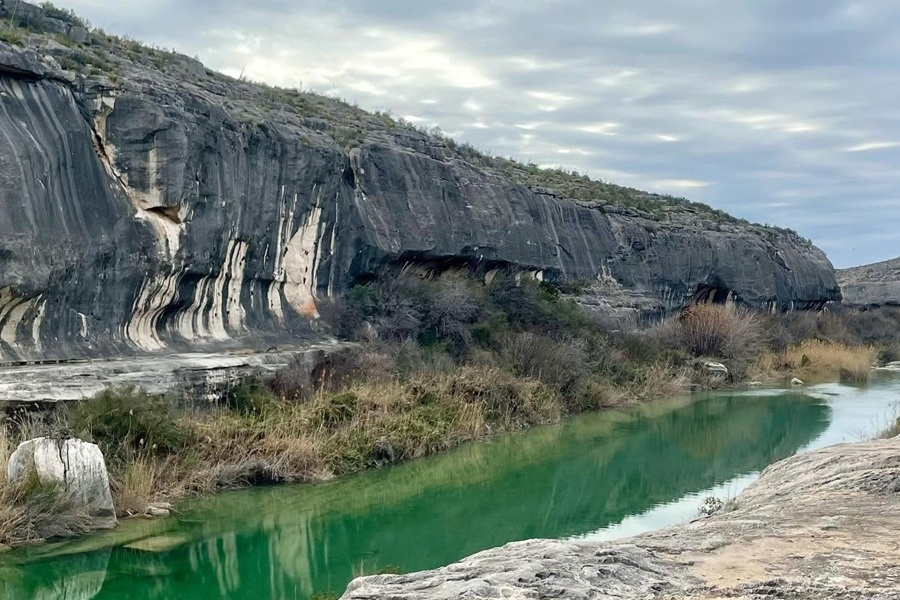
The Pecos River has long supported farming, ranching, and communities across southeastern New Mexico, providing water for irrigation, recreation, and the region’s agricultural economy. Today, however, prolonged drought, declining snowpack, and growing oil and gas activity raise concerns about how long the river can continue to meet competing demands.
The Pecos River in southeastern New Mexico supports agriculture, recreation, and interstate water obligations to Texas under a 2003 settlement agreement. Prolonged drought, declining snowpack, and climate change have caused seven consecutive years of missed delivery requirements, accumulating a 65,200 acre-foot shortfall, with officials projecting further supply declines over the next 50 years.
Oil and gas development in the Permian Basin adds pressure through water use and wastewater disposal, raising concerns among farmers about groundwater depletion and contamination. New Mexico has used irrigation water purchases and deep wells to meet obligations, while officials debate treating oilfield wastewater as a potential future supply, though environmental and safety concerns remain unresolved.
The Pecos River begins in the mountains outside Santa Fe and flows south through New Mexico before crossing into Texas. Along the way, it supplies water to agricultural communities, including the Pecos Valley, where farmers depend on irrigation to grow crops such as alfalfa.
For generations, farmers and ranchers have relied on the river and groundwater to sustain their operations. In the Loving area, near Carlsbad, farmer Johnny Reid has built his livelihood around growing alfalfa, which his family delivers to horse breeders in Texas.
The river also serves as a recreational resource. In Carlsbad, the stretch known as Lake Carlsbad provides easy access to boating, fishing, and swimming, while parks and public beaches draw residents and visitors.
Water management has also shaped New Mexico’s relationship with Texas. Following a dispute over water deliveries under the 1948 Pecos River Compact, the states reached the 2003 Pecos Settlement Agreement, which established a framework to help New Mexico meet its obligations to downstream users in Texas.
Under the agreement, a federally appointed water master determines how much water Texas should receive each year based on conditions across the basin.
Despite its importance, the Pecos River faces mounting pressure from several sources, including prolonged drought, reduced snowpack, and the water demands of oil and gas development in the Permian Basin.
Recent winters have brought poor snowpack conditions in the river’s headwaters. These shortages are part of a decades-long drought, worsened by climate change, making it even more difficult for water managers to predict and maintain reliable supplies.
New Mexico has missed its required water deliveries to Texas for seven consecutive years, accumulating a shortfall of 65,200 acre-feet, according to the source report. This amount is equivalent to more than a year and a half of Albuquerque’s annual water use.
The state has so far relied on water accumulated in earlier years of surplus to help cover the deficit. But officials warn that the long-term outlook is becoming more difficult.
“Evidence suggests that available water supplies in New Mexico will decline by 25%-30% in the next 50 years, and this includes the Pecos River,” said Hannah Riseley-White, director of the New Mexico Interstate Stream Commission. She added that hotter, drier conditions will increase irrigation needs, potentially pushing demand beyond available supplies.
Oil and gas operations add another layer of pressure. The Permian Basin, one of the nation’s most productive oilfields, surrounds farms and communities near the river. Drilling operations use water, including supplies that could otherwise support agriculture, while wastewater from oil production presents challenges for reuse and disposal.
Reid said he is concerned about the volume of water used in drilling that is subsequently removed from circulation and disposed of rather than returned to other uses.
Haley Jones, an organizer with Citizens Caring for the Future, said water sold to oil and gas companies can mean less water available to replenish groundwater supplies. She noted that some farmers and ranchers sell groundwater to the industry because it can provide more income than agricultural production.
Concerns also extend to water quality. Reid said his household can no longer use its well water for drinking or bathing because of its high salt content. He suspects nearby oilfield wastewater disposal may be responsible, but said he has not been able to afford the scientific investigation needed to establish the cause.
Meanwhile, oil and gas activity has transformed the landscape around his farm. Reid described constant noise from compressors and well equipment, while flaring operations release smoke and pollutants near the river. Although these activities do not all directly explain the river’s reduced flow, they add to concerns about the environmental pressures facing the Pecos Valley.
New Mexico has taken several steps to avoid falling further behind on its water deliveries to Texas.
In years when supplies are insufficient, the state has purchased water rights from the Carlsbad Irrigation District, which includes farms such as Reid’s. That allows the state to divert irrigation water into the Pecos River to help meet its obligations. New Mexico also has access to two deep water wells farther north.
The state used irrigation water to supplement the river in 2010, 2013, 2014, and 2015 to avoid approaching a cumulative shortfall. Previous years of excess water have also helped cushion more recent deficits.
Farmers face significant challenges due to these measures, which highlight the tough trade-offs involved in managing a limited resource. Water allocated to meet interstate obligations is critical, but it detracts from the essential irrigation of crops and the support of local agricultural production.
State officials are also exploring whether treated oilfield wastewater could become an additional source of supply. Gov. Michelle Lujan Grisham has proposed treating the wastewater for potential uses ranging from energy production to agricultural irrigation.
The idea remains controversial. Environmental groups argue that uncertainties about treatment methods and the chemicals used in oil and gas production make it difficult to guarantee the water is safe for crops, livestock, and communities. Industry advocates, meanwhile, contend that treatment and reuse could help address future shortages.
The state Water Quality Control Commission is awaiting an initial hearing on a petition seeking changes to rules governing the use of treated oilfield wastewater. Previous attempts to change the rules have not resulted in approval.
In Carlsbad, officials also manage the river through reservoirs and diversions. The city can temporarily lower water levels to remove trash and allow maintenance work on boat docks. Water released from Avalon Dam travels beneath a dry riverbed before resurfacing downstream, sustaining the river through town.
These measures help manage the remaining water, but they do not resolve the larger challenges posed by drought, climate change, and competing demands.
For farmers like Reid, the Pecos has continually provided enough water in recent years to sustain productive harvests. He credits the region’s water management system with helping farms remain viable while New Mexico meets its obligations to Texas.
Still, the future is uncertain. As water supplies decline and demand grows, the state faces increasingly difficult decisions about how to divide a resource that supports agriculture, communities, industry, and ecosystems across the region.
The Pecos continues to flow, but keeping it that way will depend on how effectively New Mexico manages its dwindling water supplies in the years ahead.