

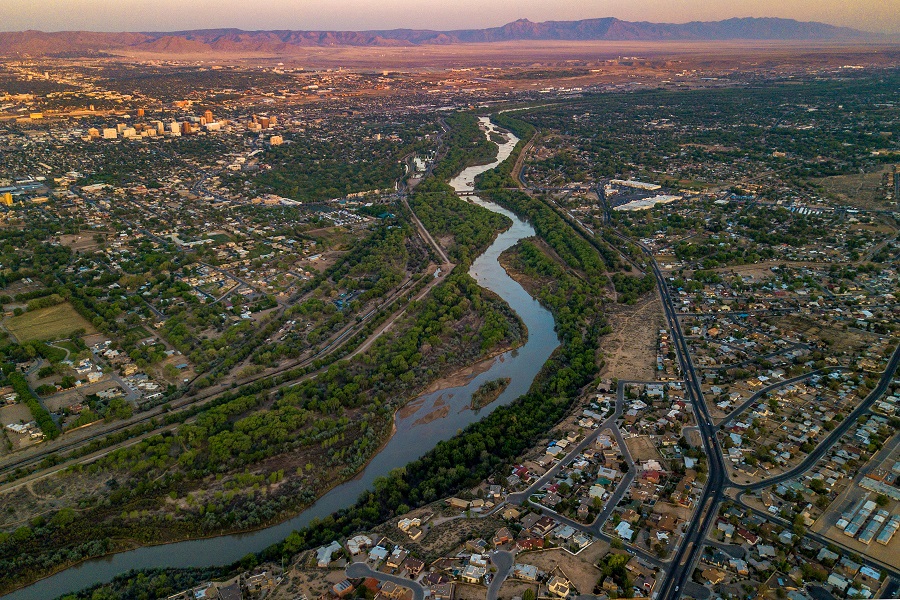
After 13 years of legal disputes, Texas and New Mexico have settled their fight over the Rio Grande’s water in the U.S. Supreme Court. Although the lawsuit is over, the settlement begins a long, complicated process of managing the West’s shrinking water supply.
Here’s what the agreement means, how much it could cost, and the challenges that lie ahead.
What was the dispute about?
In 2013, Texas sued New Mexico, claiming that New Mexico farmers were pumping too much groundwater, reducing the Rio Grande’s flow before it reached Texas. Texas said this violated the 1938 Rio Grande Compact, the agreement that sets the rules for sharing water among Colorado, New Mexico, and Texas.
What does the settlement require?
The settlement will change how water is managed in the Lower Rio Grande basin in New Mexico.
Key terms include:
- Pumping Reductions: Over the next 10 years, New Mexico must cut groundwater pumping by about 18,200 acre-feet annually between the Caballo Reservoir and the Texas border.
- State Line Measurements: For the first time, water flow at the Texas-New Mexico border will be officially measured with a new method to check deliveries.
- Deadlines and Penalties: New Mexico has until May 2036 to fully comply. If it misses the targets, the state could face fines or more federal lawsuits.
How much will compliance cost?
State officials in New Mexico estimate that starting the program will cost at least $150 million. The state has set aside this money, but officials admit that ongoing management and changes to the program could make costs go up.
The state’s first plan is a voluntary buyback program. New Mexico will buy groundwater rights from farmers who agree to sell, then shut down those wells and take the farmland out of use to leave more water in the river.
Since over 80 percent of the basin’s groundwater is used for farming, retiring water rights leaves fields empty, causing serious economic concerns. Famous for its chile crop, local producers worry that widespread fallowing will devastate the secondary businesses and agricultural economies built around farming generations.
In Mesilla Valley, the area is full of pecan orchards, and growers face a tough problem. Unlike seasonal crops, mature pecan trees need a lot of water every year and cannot go without it, even in dry years.
What role does climate change play?
A shrinking water supply makes the agreement harder to manage. Higher temperatures have reduced the mountain snowpack that feeds the Rio Grande, caused reservoirs to lose water faster, and made a 24-year drought even worse.
New Mexico state projections show the regional water supply could decrease by 25 percent over the next 50 years. If the state’s voluntary buyback program fails to meet compliance targets amid worsening drought conditions, water managers may have to implement mandatory water-use reductions.
What are the broader implications?
Experts say this settlement highlights a broader issue for water users in the American West: legal deals can divide up water rights, but they cannot create more water.
Local governments, including Las Cruces, along with irrigation districts and industry leaders, have already begun making contingency plans for a future with less water.

