Home Blog Page 14

New Mexico Students Tackle Climate Disasters in Governor’s STEM Challenge

LAS VEGAS, New Mexico — More than 300 high school students from across New Mexico will gather on February 7 for the seventh annual New Mexico Governor’s STEM Challenge. The event is a statewide competition of young innovators to develop science- and technology-driven solutions to the growing threat of climate-related disasters.

The annual event brings together students from 33 schools to address real-world problems affecting their own localities. It will be held at the Sub Ballroom of New Mexico Highlands University (NMHU).

The competition, organized by the STEM Innovation Network in partnership with the LANL Foundation, challenges students to apply science, technology, engineering, and mathematics (STEM) to issues facing the state.

“This is a great opportunity for New Mexico Highlands to highlight its commitment to STEM education, training, and research,” said NMHU Provost Dr. Dann Brown.

Climate and disaster response at the core

This year’s challenge focuses on climate resilience and disaster preparedness.

Student teams are going to respond to the question: “As natural disasters continue to affect New Mexico — such as wildfires, floods, drought, heat waves, and dust or windstorms — how can innovations in STEM help your community predict disasters, mitigate harm, respond effectively, and recover in the long term?”

Projects may range from disaster prediction tools and mitigation strategies to emergency response systems and recovery-focused technologies.

Beyond competition

Governor’s STEM Challenge goes beyond winning prizes, event organizers said. The program places strong emphasis on equity and access, particularly for students from underrepresented communities. It will also help students build pathways into high-demand STEM careers.

Fifty-seven teacher mentors and 23 industry partners support this year’s participants. Eighty judges from industry will evaluate the projects.

Industry-backed innovation

Event industry partners include major corporations, research institutions, and universities, such as Los Alamos National Laboratory, Sandia National Laboratories, Intel, Boeing, Meta, Virgin Galactic, and the University of New Mexico, among others.

The Governor’s STEM Challenge continues to serve as a major platform for experiential learning, workforce development, and community-centered problem solving.


Clear Horizons Act Advances in New Mexico Amid Jobs Versus Climate Clash

0

SANTA FE, New Mexico — A controversial climate bill that seeks to embed greenhouse gas reduction targets into state law narrowly cleared its first legislative hurdle this week. Lawmakers debated with competing visions of economic stability and environmental protection.

Senate Bill 18, also known as the Clear Horizons Act, moved forward on a 5-4 vote in the Senate Conservation Committee. It took at least four hours for the legislators to debate on Tuesday.

Once approved, the bill would codify pollution reduction goals set by Gov. Michelle Lujan Grisham’s 2019 executive order into statute. The goals include cutting emissions by 45 percent below 2005 levels by 2030, by 75 percent by 2040, and achieving net-zero emissions by 2050.

Lawmakers push climate urgency

Proponents said the bill is an important step toward protecting public health and sustaining the state’s long-term prosperity.

“These goals aren’t just aspirational — they’re an investment in our future,” said Senate Pro Tempore Mimi Stewart (D-Albuquerque), the bill’s sponsor.

He argued that the legislation provides New Mexico with tools for planned, responsible emissions reduction without sacrificing jobs.

Supporters of the measure also stressed the rising costs associated with climate-driven disasters and pollution. They argued that early action can prevent far greater economic losses in the future. Statistics on the impact of climate change over the next 20 years, they said, could cost New Mexico nearly $294 billion in infrastructure losses, health impacts, and disaster response costs.

Critics warn of economic harm

But critics — including the three Senate Republicans on the committee — slammed the proposal. They argued that the bill threatens the state’s economy, particularly in the oil, gas, agriculture, and construction sectors.

“Passing this legislation will kill New Mexico’s economic future,” said Sen. Larry Scott (R-Hobbs).

He said that strict statewide mandates could reduce fossil fuel production, diminish government revenue, and put jobs at risk.

Opponents also chided the bill for what they described as unrealistic targets. These targets, they said, fail to account for “real-world consequences” for consumers and industry, echoing broader concerns among business groups about regulatory burdens.

The bill threatens to devastate New Mexico’s economy if approved, according to the New Mexico Oil and Gas Association. The group warned that the bill could reduce state revenue from oil and gas by more than $740 million. And it will put families at risk and eliminate nearly one-third of the education budget.

Lands, health, and economics at the center stage

The hearing drew significant public interest. Resource persons came from a broad range of voices — from former oil workers-turned-health advocates urging cleaner air to industry representatives. They warned of higher utility rates and economic disruption.

Sen. Angel Charley (D-Acoma) invoked environmental and cultural urgency. The Democrat lawmaker said New Mexicans must now “take care of the land” that has long sustained their

The bill is now heading to further consideration in the Senate. Supporters of the measure have expressed confidence that the bill could eventually reach Gov. Lujan Grisham’s desk for signature.

The climate bill is part of New Mexico’s broader effort to establish its own emissions and clean energy standards.

New Mexico was the fourth state to enact the Clean Transportation Fuel Standards and the Advanced Clean Car and Truck Ruleswhich sought to reduce pollution while driving new investment and creating job opportunities.

CreativeCon Series Launches to Boost New Mexico’s Creative Economy

This spring, New Mexico is launching a statewide event series to support its creative economy. The events will offer business education, networking, and resources for artists and creative professionals. The New Mexico Economic Development Department (EDD) announced the initiative to help creative workers turn ideas into income, grow small businesses, and connect communities with state support.

NM CreativeCon will bring together creative entrepreneurs, policymakers, community leaders, and industry partners through regional events culminating in a statewide gathering in Albuquerque in June. Organizers say the events will feature workshops, panels, and hands-on learning, all designed around local strengths and resources.

The Creative Industries Division of the EDD is leading this effort to create more economic opportunities for New Mexicans through creative businesses. Its mission is to build a strong creative sector that supports business growth, workforce training, and community success. Grants, technical assistance, and networking are central to this mission.

“The creative economy is one of New Mexico’s most powerful economic assets, and CreativeCon is about helping people find the tools to turn artistic passion into professional opportunities,” said Shani Harvie, director of the Creative Industries Division.

This event series comes as New Mexico focuses on growing its creative sector as a key part of the economy. Creative industries such as visual and performing arts, digital media, and design contribute billions annually to the state’s economy and support many small businesses and entrepreneurs.

Many creative professionals need business education and networking to succeed. Unlike established industries, creative work often relies on income from freelancing, contracts, grants, and small businesses. Programs like CreativeCon offer resources that help artists and creative entrepreneurs learn business basics, secure funding or support, and connect with peers in their field.

Local economic development in New Mexico now views the creative economy as a key area for growth. Recently, a state investment program awarded over $460,000 in grants to support the growth of the creative ecosystem, workforce training, and business incubation across the state.

Organizers say events like CreativeCon show how creative assets support community revitalization, workforce development, and tourism. The agenda includes visits to historic theaters and cultural venues in remote and rural areas, bringing economic activity and resources to local creatives who might not otherwise have access.

For entrepreneurs building creative businesses, the series offers practical guidance and networking opportunities. The statewide event in Albuquerque will feature panels for hobbyists looking to become professionals, business owners seeking to grow, and civic leaders interested in incorporating creative industries into local development plans.

Registration for regional CreativeCon events is now open, and more details about the statewide Albuquerque event will be shared soon. Organizers encourage everyone in the creative community to join, saying the series highlights New Mexico’s commitment to building a stronger, more diverse, and inclusive economy.

Key Details About NM CreativeCon

  • Statewide reach: NM CreativeCon will take place in five regions across New Mexico: Carlsbad, Raton, Gallup, Silver City, and Pueblo of Pojoaque. The series will wrap up with a statewide event in Albuquerque in June.
  • Designed for creative business growth, the program will cover topics including entrepreneurship, artistic development, business planning, and collaboration.
  • Partnerships and support: Regional and state partners include the New Mexico Marketing Center of Excellence, New Mexico Arts, Meta, New Mexico Tourism, and the Department of Workforce Solutions, among others.

Local Music Television Show ‘Bands of Enchantment’ Red Carpet Premiere at Albuquerque’s Historic Kimo Theatre

0

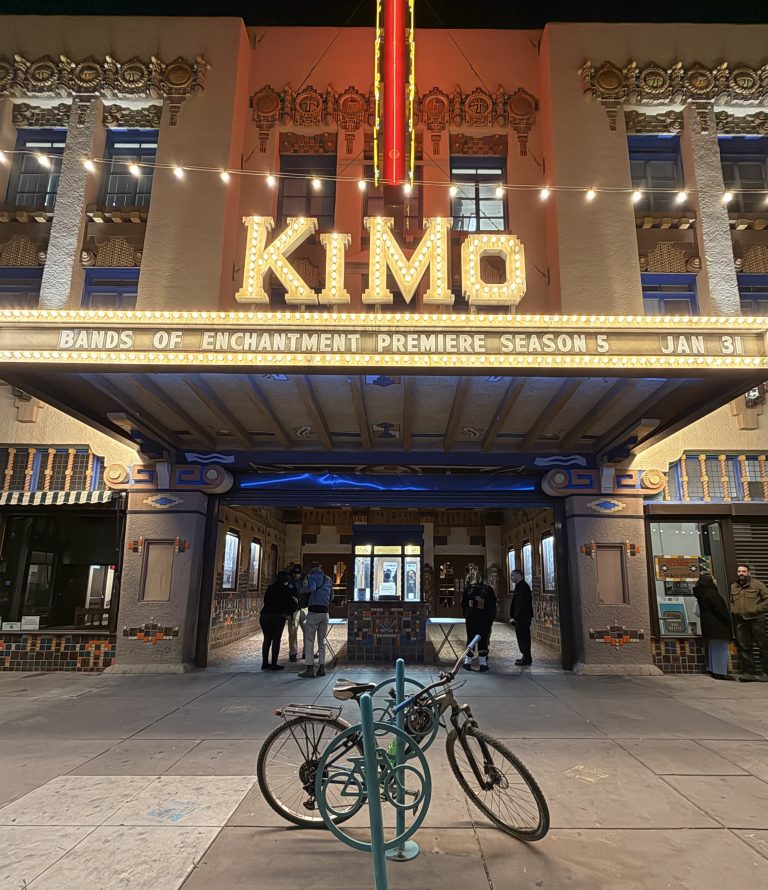
ALBUQUERQUE, NEW MEXICO – On Saturday, January 31, downtown Albuquerque’s historic Kimo Theatre hosted a red-carpet premiere for season 5 of the Emmy-award-winning show, Bands of Enchantment.

Bands of Enchantment is a locally produced music television show, created by Ken C. Peterson and directed by Vincente T. Chavez. Filmed in downtown Albuquerque, the show highlights both local and visiting bands. Saturday premiered acoustic sessions, interviews, and concert videos from season 5. During the showing, guests cheered and applauded between the recorded performances, as if the event were a live concert.

The season 5 highlights included the 2-time Latin Grammy-winning band, La Vida Bohem from Caracas, Venezuela, and Albuquerque’s JD Nash and the Rash of Cash, Violet Rising, and Crime Lab.

Tickets were completely free to reserve. Upon walking into the Kimo lobby, guests were greeted with a merchandise table, a bar, and a real-life Emmy award to take photos with on the red carpet.

Inside the theatre, guests gathered before the premiere began.

Before the showing, Tania Armenta (CEO of Visit Albuquerque), Dr. Shelle Sanchez (CEO of Albuquerque Arts and Culture), and creators and directors Ken Peterson and Vince Chavez gave opening remarks.

Armenta and Dr. Sanchez thanked other partners, including Visit Albuquerque and Albuquerque Arts and Culture: “We have been in this partnership from the very beginning,” said Sanchez. They thanked Albuquerque Mayor Tim Keller for his support of the entire project and recognized key guests in the audience.

Significant guests on Saturday included Martin Heinrich, among other New Mexico Senators.

“Tonight, the Bands of Enchantment just want to say thank you to everyone who has supported this,” Armenta said to a cheering audience. “This is such a postcard for our city, and the millions of impressions that it gets on PBS, on streaming services, on social media, we are showcasing our local artists, our local music, we are bringing artists from around the world, [and] Albuquerque showcased in so many amazing places.”

“We couldn’t be more proud to share season 5,” remarked creator and director Ken Peterson. Peterson also took a moment on stage to recognize their 90% New Mexico-based crew and all those who made the show possible.

Bands of Enchantment, now with 5 seasons, is available to stream on platforms like Amazon Prime, Roku TV, Tubi, and PBS.

50 Years of Celebration: UNM Honors Black History Month

0

This February, the University of New Mexico (UNM) marks the 100th anniversary of Black History Month with milestone celebrations and longstanding campus traditions. 

UNM has been celebrating Black History Month for 50 years. Since 1976, UNM has honored the achievements and contributions of Black, African, and African American communities on campus. The university hosts events, research talks, discussions that share lived experiences, and other initiatives that highlight the African American experience.

The UNM Department of Anthropology features these celebrations on a dedicated webpage. Black scholars, such as Carter Woodson, Zora Neale Hurston, and Harris D. Smith, are also recognized for their significant contributions.

UNM Department of Africana Studies

The Africana Studies Program at UNM provides students of all races, ethnicities, genders, and backgrounds with a comprehensive understanding of the global linkages between peoples of Africa and other African-descended peoples in the Southwest, the contiguous United States, and throughout the Black Diaspora in Mexico, Latin America, and the Caribbean. 

Africana Studies offers an excellent university experience that examines the histories, aspirations, and possibilities of African-descended peoples from their own perspectives.

UNM President Garnett Stokes said the initiative, previously called the Afro Studies Program, is UNM’s first ethnic studies research program. Created in 1970 by students, faculty, and staff, it remains one of the nation’s oldest Black studies programs. 

UNM African American Student Services

African American Student Services (AASS) aims to recruit, retain, and uplift Black students at UNM. This is achieved by providing educational discourse, leadership development, holistic wellness, and community engagement. AASS helps students reach their full potential through advocacy, allyship, and exploring the many facets of Blackness. 

AASS supports the university’s commitment to diversity by creating space for Black student scholars to thrive. Its vision is to inspire excellence in culture, research, and innovation for Black student scholars at UNM.

Brandi Stone has been the director of AASS since 2020. A UNM alumnus, Stone received both her BS in Political Science and her MA in Public Administration. In seven years at AASS, she progressed from a work-study position to various professional roles.

As interim director, she led the development, expansion, and implementation of undergraduate and graduate programs. She spearheaded retention-based programming, including the Black Minds Matter course and the Black Cultural Conference, which attracted regional Black scholars and practitioners.

Black History Project Pays Tribute to Dr. Barbara Brown Simmons

AASS and the UNM Communications and Marketing Department’s Web team collaborated on a historic project to document and showcase the Black experience at UNM. The Black History at UNM touchscreen website is accessible at the African American Student Services office in Mesa Vista Hall.

“This project came from a need to archive the Black experience at UNM in a way that students can engage with it in real time,” said program director Brandi Stone. “We wanted to expose students to the legacy of our Black community on our campus. We want students to understand the history and lived experiences of those who came before them.”

Barbara Brown Simmons was an early founder of the Black studies program at UNM. She passed away in July 2022. 

Who Founded Black History Month?

Woodson, a Harvard-educated historian, founded Black History Month. He chose February for the celebration to honor the past and to recognize those who helped shape the future of African Americans in America, according to the Association for the Study of African American Life and History (ASALH). By choosing this month and recognizing the discourse of the time, he encouraged the public to extend its learning of Black history.

Woodson’s 100-year legacy continues to grow and impact communities worldwide, including Canada and the United Kingdom. 

“Those who have no record of what their forebears have accomplished lose the inspiration which comes from the teaching of biography and history,” said Woodson.

Roth IRAs: What “tax-free” really means and when it makes sense to switch

Roth IRAs work differently from most retirement accounts. You don’t get a tax break right away, but you could take out money tax-free later. In a recent Albuquerque Journal column, financial planner Donna Skeels Cygan explains that Roth accounts can be especially valuable for some people because of their long tax-free growth and flexibility for retirement and estate planning.

It’s important to think about what happens when required minimum distributions (RMDs) begin for traditional accounts. Cygan points out that a large pre-tax balance can lead to bigger RMDs later, which may push retirees into higher tax brackets and increase Medicare premiums through IRMAA (income-related monthly adjustment amounts). (Cygan’s discussion of RMDs and IRMAA)

The column uses the “Rule of 72” to show a simple example. If a 50-year-old has $1 million in a traditional 401(k), stops adding money, and earns an average return of 7.2% per year, the balance would double about every 10 years. (Rule of 72, n.d.) By age 75, when RMDs start, the account could grow to about $6 million. Under current tax laws, the first RMD would be about $240,000 (roughly 4%), and these withdrawals could keep taxable income high for years.

The downside is that converting to a Roth means you have to pay taxes immediately. Cygan calls this “basically pre-paying the taxes” you would otherwise pay later when withdrawing from a traditional IRA.

The article offers practical advice about timing. “Roth conversions are not ‘all or nothing.’” Rather than converting a large amount in one year, it’s better to spread conversions over several years. Doing this in a year when your income is lower can be a smart choice. The column also notes that paying taxes from other funds rather than the IRA lets you keep more money growing in the Roth.

Estate planning is another important topic. The column explains that the SECURE Act of 2019 usually requires most non-spouse heirs to withdraw inherited IRAs within 10 years. Withdrawals from traditional inherited IRAs are taxed, but inherited Roth IRA withdrawals are usually tax-free, even though the 10-year rule still applies. The article also notes that, for a grandchild, the 10-year period might not begin until they turn 18, giving more time for tax-free growth.

Even with these benefits, your decision often depends on timing and your tax bracket. If you convert too much in one year, your income could move into a higher tax bracket, which reduces the benefit of tax-free withdrawals later. The column suggests that Roth planning works best when you manage your income: convert gradually during years when you earn less, keep an eye on future RMDs, and consider extra costs like IRMAA, instead of converting everything at once.

NM Health Officials Warn Versus Raw Dairy After Newborn Dies of Listeria

0

SANTA FE, NEW MEXICO — Health officials have warned residents to avoid raw dairy products after a newborn died from a Listeria infection. They believed the death was most likely linked to unpasteurized milk consumed during pregnancy.

Officials of the New Mexico Department of Health (NMDOH) said the infant’s mother drank raw milk while pregnant.

Raw milk and Listeria

Investigators have not yet confirmed the source of the infection. But the case underscores the significant risks posed by raw dairy products to pregnant women, infants, and older adults. It also poses a risk to people with weakened immune systems.

“Individuals who are pregnant should only consume pasteurized milk products to help prevent illnesses and deaths in newborns,” said Dr. Chad Smelser, deputy state epidemiologist at NMDOH.

Listeria is a bacterium commonly associated with unpasteurized dairy and certain ready-to-eat foods. It can cause miscarriage, stillbirth, premature birth, or fatal infections in newborns—even if the pregnant person experiences only mild symptoms.

It is the third leading cause of death due to foodborne diseases in the United States. Each year, there are 1,250 people infected with listeria, and around 172 die from the infection, according to the Centers for Disease Control and Prevention.

The bacteria can also invade the bloodstream of people with weakened immune systems, which might lead to serious illness or death.

Why pasteurization matters

Pasteurization is the process of heating milk briefly to a temperature high enough to kill harmful germs. Unpasteurized raw milk may contain pathogens that can cause diseases.

Health officials have also warned that consuming raw milk products can expose people to avian influenza, Brucella, tuberculosis, Salmonella, Campylobacter, Cryptosporidium, and E. coli. Children under five and adults over 65 are vulnerable to some of these infections.

New Mexico Secretary of Agriculture Jeff M. Witte said pasteurization is necessary to make dairy products safe for consumption.

“New Mexico’s dairy producers work hard to provide safe, wholesome products, and pasteurization is a vital part of that process,” Witte said.

“Consumers, particularly those at higher risk, are encouraged to choose pasteurized dairy products to reduce the risk of serious foodborne illness,” he added.

Health officials urged the public to seek immediate medical care if they experience symptoms of Listeria infection.

New Mexico Public Warned Over Toll-Fee Scams Amid Fraud Cases Rise

0

SANTA FE, New Mexico — Authorities have sounded the alarm over a wave of fraudulent toll-fee scams targeting residents with bogus messages about unpaid tolls — even though the state has no toll roads whatsoever.

The New Mexico Department of Transportation (NMDOT) on Monday reiterated in a statement that any communication claiming recipients owe toll payments in the state is a “100% fraudulent” scheme to steal personal and financial information. The messages include threats of “enforcement action” after Feb. 4, 2026. It also uses text messages, emails, phone calls, and fake websites to try to panic people into paying.

Scammers employ urgency and official mimicry

According to the NMDOT alert, scammers are sending text messages or emails demanding immediate payment of tolls.

They will also make phone calls claiming toll violations and threaten penalties, and create fake websites that mimic official government pages.

Officials urged residents to ignore unexpected messages about tolls. To be safe, the officials said, avoid clicking suspicious links, and never scan QR codes from spam messages.

State authorities warned New Mexicans about the same scam last year, which also threatened license suspensions and used similar tactics. Officials received a “surge in calls from concerned citizens” who have received fraudulent texts.

Scams on the rise

The toll scam comes amid broader concerns over fraud in New Mexico.

Consumers filed 20,966 fraud and other consumer complaints, according to 2024 data from the Federal Trade Commission’s (FTC) Consumer Sentinel Network. The reported total fraud losses were roughly $56.6 million, with a large share involving imposter scams, identity theft, online shopping fraud, and other schemes.

Imposter scams — a category that includes fraudulent messages posing as government agencies — are the most frequently reported complaint types in New Mexico.

In 2023, a separate FBI Internet Crime Complaint Center (IC3) report found that residents aged 60 and older lost more than $17 million to online fraud and scams. Hundreds of seniors, the report said, were victimized by confidence, fraudulent investment, and tech support scams.

The FTC reported that government imposter scams alone accounted for $789 million in losses in 2024, a big jump from $171 million a year earlier. The scammers exploited urgent-sounding threats and official branding to deceive victims, the report said.

Officials urge awareness and reporting

Law enforcement and consumer protection officials said prevention and awareness are critical defenses against evolving scam tactics.

“Scammers’ tactics are constantly evolving,” FTC officials said. They underscored the trends in fraud reporting nationwide.

Authorities urged New Mexicans to report suspected scams to their phone service providers, local police, or the FTC.

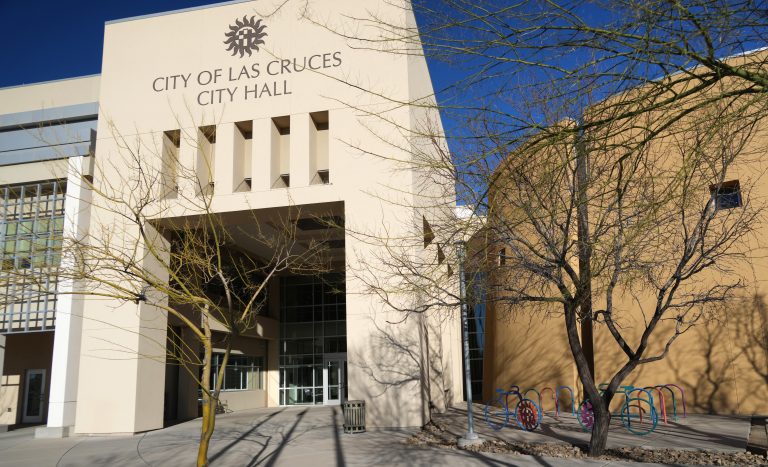
Las Cruces Ends Movie Studio Partnership, Seeks $1.3M Refund

The Las Cruces City Council has ended its economic development partnership with 828 Productions and is seeking to recover about $1.3 million in taxpayer money. The film studio failed to meet its investment and job-creation promises made three years ago. This decision highlights increased attention on how public incentive deals are managed and how local governments hold companies accountable.

The council voted 6 to 1 on Monday to end a 2022 agreement that had been seen as a major step toward making southern New Mexico a film and television production center. 828 Productions had promised to spend $75 million to build a large studio and facilities in Las Cruces and to create at least 100 local jobs.

City officials said the company failed to meet its goals and could not substantiate many of its reported expenses. While 828 Productions brought some production work to the area and highlighted local spending, city leaders said there were only a few permanent hires and little progress on the planned facilities. Properties purchased for renovation have deteriorated, not improved.

The end of the partnership affects almost $900,000 in Las Cruces capital outlay funds and $2.8 million in city-approved economic development contributions. It does not affect the separate $3 million in state economic development funds for the project the city manages.

Councilors said this experience showed that the city needs to improve its monitoring of performance and spending under economic incentive agreements. City staff are now implementing stricter oversight procedures to better track future projects that use public funds or tax breaks.

828 Productions said it was “disappointed” with the decision and did not agree with the council’s view. The company called the vote “rushed” and said it still helps drive the local film industry. It also said it has had difficulty adjusting its business model following changes in the broader film sector.

The original agreement was part of New Mexico’s broader push to attract film-industry investment through tax incentives, rebates, and local funding. This effort has helped build a statewide production network with major partners such as Netflix and NBCUniversal. The Las Cruces case highlights the risks cities face when they use public funds for private development projects.

Councilors raised concerns about billing records and the use of city funds for expenses that did not clearly align with project goals. Economic development officials said some invoices were unclear or did not comply with the agreement, particularly for properties the city helped fund that the company no longer owns.

The lone dissenting vote came from a council member who expressed caution about the potential long-term impact on local business relations. Supporters of the termination argued it was necessary to protect taxpayer resources and uphold fiscal accountability.

Las Cruces has seen continued investment in film production infrastructure outside the 828 project, including New Mexico State University’s recent ground-breaking on a $15 million movie studio and the city’s broader incentives aimed at attracting film production work.

As the city moves on, economic development officials say they will use lessons from the 828 partnership to strengthen future contracts and ensure public funds are matched with verifiable performance.

Quantum Investment in Downtown Albuquerque Could Strengthen New Mexico’s Tech Economy

A quantum computing company from Massachusetts will be the main tenant of a new quantum lab in downtown Albuquerque, according to officials and business leaders. This move is an important part of New Mexico’s plan to create a quantum technology hub.

QuEra Computing, which develops neutral-atom quantum systems, is teaming up with Roadrunner Venture Studios for this project. Supported by state funding and a group of research institutions and tech startups, the partnership aims to accelerate the adoption of quantum technology and attract talent, investment, and new companies.

This project is part of a larger trend where states use public funding to boost advanced technology industries and create high-paying jobs. In New Mexico, which already has major research centers like Sandia and Los Alamos, the new quantum lab aims to turn scientific knowledge into businesses and jobs.

The New Mexico Economic Development Department gave Roadrunner Venture Studios $25 million to set up and run the quantum lab and venture studio in downtown Albuquerque’s Innovation District. This is part of a long-term plan with large state and private investments to build infrastructure and help new quantum companies get started. QuEra will create open-access quantum testbeds at the lab so innovators and startups can test new technologies on-site. Unlike many other quantum systems, QuEra’s technology works at room temperature and uses less power.

State officials and Roadrunner leaders say QuEra’s role is important for bringing more industry partners and talent to Albuquerque. The larger project also involves national labs, universities, venture capital firms, and other quantum startups, making New Mexico a strong contender for future computing technologies.

Experts see projects like this as a way for states to turn strong research into bigger economic benefits. Public investment in innovation can make it easier for startups to get started and attract private funding to new industries.

In Albuquerque, the quantum lab is part of a series of efforts to grow advanced technology, like the launch of ABQ-Net, the state’s first quantum network. ABQ-Net uses entanglement-based networking and is part of New Mexico’s broader plan to build a quantum economy that includes both research and business.

There are still questions about when jobs and private investment will come. Experts say that while public funding can help launch new projects, long-term success depends on local companies attracting talent, finding more funding, and competing across the country. Workforce training, affordable housing, and quality of life also affect whether new industries can grow.

Officials working on the Albuquerque project say the state’s strong research background gives it an advantage. With national labs, university programs, and more deep tech startups, they believe Albuquerque has both the science and the early support needed for quantum innovation to grow.

As the lab grows and the quantum industry evolves, people will seek results such as new jobs, new companies, and increased investment. For now, QuEra’s key role shows confidence in Albuquerque’s chances of becoming a center for advanced technologies that could transform computing, communications, and national competitiveness.