Home Blog Page 13

Nearly 38,000 Independent Voters Just Flexed Their Muscles in New Mexico’s First Semi-Open Primary: Is This the Future of American Elections?

0

Nearly 38,000 independent voters participated in the state’s June 2 primary, marking the first time this fast-growing group could participate without switching their registration. The Secretary of State’s office said the number was a modest but symbolically important share of the total 345,469 ballots cast across the state — a 24.53 percent turnout among roughly 1.41 million eligible voters.

New Mexico’s shift to a semi-open primary allowed the state’s more than 380,000 independent voters — or nearly 3 in 10 of the electorate — to request either a Democratic or Republican ballot on Election Day or during early voting. “For the first time in state history, New Mexico’s independent voters had the opportunity to cast a meaningful vote,” Executive Director Nick Troiano of an advocacy group, Unite America, pointed out in a statement following the election. “For too long, hundreds of thousands of New Mexicans were excluded from primary elections they pay for simply because they chose not to join a political party. The new law ends that inequity and gives every voter a voice,” he said.

Secretary of State Maggie Toulouse Oliver described the election as a huge success, noting higher overall primary turnout than in 2024. She also highlighted the smooth integration of independent participation. Data suggested unaffiliated voters split their choices, with almost half of those tracked midday on Election Day choosing Democratic ballots.

In 2024, the state legislature approved Senate Bill 16, allowing independents, also known as “decline to state” voters, to choose which party’s primary ballot they want to vote on on Election Day. The measure does not require them to change their permanent party registration. “We had a successful first Semi-open Primary Election thanks to the members of my team, county clerks, and the poll workers who have worked tirelessly to ensure a smooth voting process for all those who participated,” said Toulouse Oliver.

Independent Voters: A Growing Bloc That Finds Its Footing

Independent voters have been one of the fastest-growing segments of New Mexico’s voters. Their ranks surged in recent years, partly fueled by automatic voter registration at motor vehicle offices. But expectations for a swell in independent turnout were tempered. Observers had predicted relatively low turnout in this debut cycle as voters grew accustomed to the option. Before the election, political analyst Brian Sanderoff said, “most of them don’t know they can,” referring to the new rules.

Still, the nearly 38,000 independent ballots exceeded some forecasts, contributing to turnout that exceeded the previous comparable primary in several counties. The state’s most populous Bernalillo County reported higher numbers than in recent election cycles. Officials attributed it in part to the growing electorate.

The participation of independent voters signals that New Mexico’s experiment with greater primary access is already changing the electoral landscape, even if the impact will unfold over multiple election cycles.

Ever Tried Fishing? – This Is The Perfect Time To Try It!

0

New Mexicans can now try fishing for free this weekend. This is because fishing license requirements has been lifted statewide this Saturday and Sunday, June 6-7.

This suspension is due to the observation of National Boating and Fishing week, where anyone can fish for free in public fishing waters throughout the state on both days. However, everyone must still observe all rules and regulations, including bag limits.

“This is a wonderful opportunity for New Mexicans to learn how to fish and get outdoors. We’re encouraging everyone to attend a nearby event or visit their local lake to enjoy the excitement of fishing in our state’s great outdoors.” New Mexico Department of Wildlife Director Mike Sloane said.

The department will also host and participate in several events across the state this Saturday.

Events This Saturday

The Sixth Annual Outdoor Adventure Day will run from 7:30 A.M. to 1:30 P.M. at Liam Kind Pond at Corrales. The event will offer prizes for young fishers, as well as archery and pellet gun ranges. The organizer of this event is Corrales Park and Recreation.

Meanwhile, Route 66 Children’s Fishing Derby will be on 7 A.M. to 12 P.M. at Monastery Lake at Pecos. This event is sponsored by The Village of Pecos, the New Mexico Outdoor Recreation Division, and the New Mexico Tourism Department.

Another one on the list is Outdoor Adventure Day from 9 A.M. to 2 P.M. at Sugarite Canyon State Park, Lake Maloya. The adventure day will include skill stations such as casting, archery, and wildlife identification. Free got dogs will be available until supplies last.

Lastly, the Third Annual Kids Fish with a Cop from 8 A.M. to 12 P.M. at Young Park Pond, Las Cruces. This is in partnership of New Mexico Desert Dogs and wildlife department and several law enforcement agencies to put on the derby. The event will have food, prizes, DJs, and free fishing rod-and-reel combos for kids until supplies last.

More information on additional places to fish and what to use with the Department’s Weekly Fishing and Stocking Report and the Fishing Conditions and Trip Planner. The Department’s website also contains maps of public fishing water, lists on family-friendly fishing, and tips on how to fish.

Fishing is ultimately the perfect thing to do with family and friends. So make sure to go to these events and try this hobby!

The Global Language of Headwear: Exploring Identity and Tradition

0

This exhibition explores the role that hats and headdresses play as cultural elements, as well as their utilitarian purpose. It does so by showcasing works of art from across the world (Asia, Africa, Europe, the Middle East, and the Americas).

It illustrates the connection between the art and culture of different peoples. In doing so, it celebrates diversity and provides a bridge between diverse communities through the use of art and traditions associated with headwear.

This event showcases headgear’s ability to serve as a universal symbol of creativity and meaning across societies worldwide. It includes artifacts from diverse areas and traditions. These artifacts illustrate how hats and headdresses reflect people’s identity, commemorate significant moments in their lives, and demonstrate their spiritual beliefs.

Museum announcements and press coverage highlight the exhibition examples. Writers connect headwear to global traditions and human experiences worldwide. Reports on museums show that the pieces exhibit cultural identity, spirituality, and rites of passage. Additionally, they promote cross-cultural understanding and appreciation through exhibitions.

The examples highlighted in coverage demonstrate several clear benefits of the said exhibition. Displaying various types of head coverings from different cultures helps promote cross-cultural awareness. It enables audiences to gain insight into traditions different from their own.

Connecting local audiences to international art establishes a foundation for greater community involvement with museums. It also defines museums as cultural centers and as educational opportunities. This is achieved by creating a visual connection between the expression of identity, the expression of spirituality, and the expression of life events through material culture.

Headgear is a way for people across different cultures and countries to connect through their shared heritage. This is how we see the role of headwear: as a representation of individuality, spirituality, and creativity. It also shows your ability to share experiences with others.

The exhibit closes with an understanding of how headgear is both creative and culturally meaningful. The audience leaves with a greater understanding of the relationship between identity and tradition. In addition, it highlights the role that objects, such as headwear, play in connecting us as a global community today.

Albuquerque Hot Air Balloon Rides with Rainbow Ryders

0

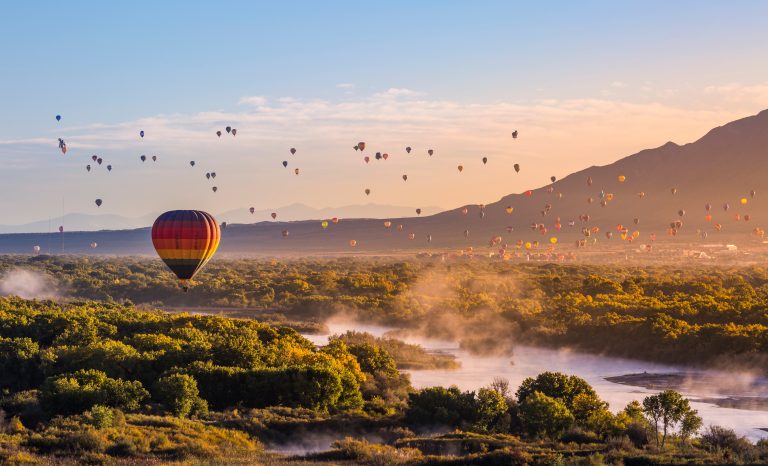
Rainbow Ryders showcases Albuquerque’s beautiful scenery from high above. Rainbow Ryders offers both private and public flights. Or experience this once-in-a-lifetime event by attending the annual Albuquerque International Balloon Fiesta. Safety, views, and once-in-a-lifetime experiences reflecting New Mexico’s Land of Enchantment are genuine priorities at Rainbow Ryders.

This is an invitation to customers to embark on a ballooning adventure. It also states that Rainbow Ryders is the main provider of ballooning experiences in Albuquerque. These experiences help define the city as the “Hot Air Balloon Capital of the World.”

Furthermore, it communicates the mission of providing guests with a safe, scenic, and unforgettable flight experience. This makes the Albuquerque skies a unique and memorable experience.

The city of Albuquerque has gained global attention through the International Balloon Fiesta. Rainbow Ryders serves as the exclusive operator of balloon rides. AP News and other media organizations across the country feature mass balloon ascensions and cultural anniversaries (e.g., Route 66’s 100‑year balloon). It is an expression of Albuquerque’s identity, economy, and international recognition.

Balloon‑to‑balloon rides offer clear advantages, drawing visitors to Albuquerque and strengthening its cultural identity. They connect scenic flights to internationally recognized events and heritage celebrations, showcasing not only the thrill of ballooning but also the allure of community traditions. The industry contributes directly to local pride and economic health, making ballooning more than just entertainment.

Tourism growth, cultural connections, and brand authority demonstrate that ballooning communicates importance beyond recreation. It shows what this experience offers to Albuquerque—an enduring link between adventure and community.

Hot air ballooning carries a deeper meaning than simply providing excitement. It reflects Albuquerque’s history, shaped by natural landmarks and celebrated worldwide. Balloon rides serve as both invitations to enjoy the skies and icons of local pride. Ultimately, they represent one of the foundation threads in the city’s story, weaving together heritage, economy, and identity.

New Mexico’s Largest Healthcare Provider is Facing a Half-Billion-Dollar Crisis—and 30,000 Seniors are Paying the Price

0

One of New Mexico’s largest healthcare providers, Presbyterian Healthcare Services, announced Tuesday that it will halt its Medicare Advantage coverage to roughly 30,000 seniors in 2027 and has laid off about 150 employees immediately. The abrupt retrenchment of personnel underscores the growing financial debacles facing nonprofit health systems across the country.

The announcement comes after a staggering $568.2 million loss last year, the latest in a string of losses that have forced the Albuquerque-based health care provider to rethink its business model and downsize services. In an internal memo to the organization and a video message to all employees, Dr. Rishi Sikka, the health system’s president and chief executive, said the changes were necessary measures to preserve Presbyterian’s solid financial base and allow the organization to continue serving hundreds of thousands of other New Mexicans.

Approximately half of Presbyterian’s Medicare Advantage membership will be affected by the decision. According to the health system’s annual report, roughly 60,000 of its more than 540,000 insured members are signed up in Medicare Advantage plans. Members who will lose coverage need to choose a new insurer for 2027, but their existing benefits will remain unchanged through 2026.

A Significant Blow to New Mexico Seniors

The move ripples far beyond Presbyterian’s balance sheet. Nearly 240,000 New Mexico seniors and disabled residents were signed up in Medicare Advantage plans as of January 2026, according to federal data. Presbyterian’s decision means that about 1 in 8 of the state’s enrollees will have to seek new coverage.

But changing health plans can mean more than administrative paperwork, a burden especially for many elderly patients. It may require finding new doctors, engaging with unfamiliar healthcare providers, evaluating prescription drug lists, and assessing whether their preferred hospitals remain covered. Such transitions, according to a JAMA Health Forum study, can disrupt care for vulnerable populations.

The decision also highlights concerns about competition in New Mexico’s Medicare Advantage market. Presbyterian has been one of the state’s most recognizable health insurers for many years, connecting coverage to hospital and clinic networks that stretch across the state.

Healthcare Years of Financial Turbulence

Presbyterian’s exit marks the latest chapter in a period of financial instability for the organization. The health system reported a $377 million loss in 2022, even after opening a major new patient tower in Albuquerque. By the following year, Presbyterian announced plans for an $11 billion merger with an Iowa-based health organization before suddenly withdrawing from the arrangement.

Leadership changes happened. Its longtime chief executive, Dale Maxwell, retired in 2024. Dr. Sikka took the helm of the organization and sought to reverse its financial decline. Instead, losses have deepened.

Credit rating agency Fitch Ratings recently downgraded Presbyterian’s credit rating from “AA” to “AA-” on February 24, 2026. Fitch cited growing operating losses despite additional support from New Mexico’s State Directed Payment Program. It warned that management’s turnaround efforts could still leave the organization bleeding financially in 2026.

Why Medicare Advantage Became a Target

Medicare Advantage plans have become increasingly widely adopted across the country due to supplementary benefits beyond traditional Medicare, including dental, vision, and wellness services. But insurers across the country have faced escalating healthcare expenses, higher demand from older patients, and tighter federal reimbursement policies. Many companies responded by reducing benefits, withdrawing from markets, or downsizing participation in Medicare Advantage altogether.

Presbyterian executives seem to have concluded that continuing to serve the tens of thousands of Medicare Advantage members is no longer financially sustainable. The staff downsizing announced Tuesday is another indication of the severity of Presbyterian’s situation. Although 150 jobs are only a small fraction of its workforce, the layoffs signal a broader effort to reduce expenses after years of financial losses.

What Happens Next

The operation of its seven hospitals and extensive clinic network throughout New Mexico will continue, as the existing Medicare Advantage members will remain covered through 2026. The timeframe will give members time to evaluate alternative plans during future sign up periods.

Still, the announcement has left tens of thousands of seniors facing uncertainty. It also raises concerns about the financial health of nonprofit medical systems amid escalating healthcare expenses and increasing patient demand.

Another Dead After Police Shooting in NE Albuquerque

Albuquerque police shot and killed a man Friday evening after he charged at officers with a knife in Northeast Albuquerque.

According to APD Chief Cecily Barker, officers responded to reports of a person trespassing near Central Avenue and San Mateo in the International District. The man ran when officers contacted him and one officer chased him on foot.

“The individual remained behind a pillar at the Walgreens behind me, where he began yelling at the officers,” Baker said.

“They saw that he had a large knife in his hand, and they advised him numerous times to put the knife down.” she added.

According to Baker, authorities have charged the shooter with felony charges, including domestic violence and aggravated assault with a deadly weapon.

This is the third shooting in less than a week by APD.

Barker addressed the recent shootings, saying she recognizes and listens to the concerns, but she prioritizes the safety of her officers.

Deb Haaland Won the Gubernatorial Primary. Does Her Win Point to a State Ready for Its Next Chapter?

Deb Haaland, on a warm Tuesday evening after all the vote totals trickled in from polling precincts across New Mexico, stood on the cusp of making history in a state where her ancestors have lived for centuries. The former congresswoman and U.S. Secretary of the Interior had defeated Bernalillo County District Attorney Sam Bregman in the gubernatorial primary.

The victory all but ensures that Haaland, a member of the Laguna Pueblo, will become the Democratic nominee in a state that has not elected a Republican governor in more than two decades. If she prevails in November, she would be the first Native American woman elected governor in the United States.

The primary win was never much in doubt. Her poll before the primary and a commanding performance at the state Democratic convention in March had already indicated a clear preference among party voters. But the scale of her victory had a deeper meaning in a state long shaped by layers of history, hardship, and hope.

New Mexico is a place where centuries-old Pueblo communities coexist with federal lands, where oil and gas fields underpin the economy as solar farms lie across the desert. The state has persistent challenges, including low educational attainment, high poverty rates, and inequitable access to health care. Haaland’s campaign largely depends on her record of addressing those complexities. She banked mainly on her personal experience as a single mother who waited tables while earning a law degree, as the first Native American woman chosen to lead a state Democratic Party, as a lawmaker, and as the first Native American Cabinet secretary.

In victory speeches and pre-primary campaign engagements, Haaland described the race as the one around kitchen-table issues. “This election will decide if New Mexicans can pay their bills each month, see a doctor when they’re sick, have a quality public education, and feel safe in their community,” she said in the lead-up to the primary.

Bregman, her opponent, positioned himself as a prosecutor focused on public safety and accountability. But he had a difficult time overcoming Haaland’s name recognition and a coalition that included urban progressives in Albuquerque and Santa Fe, working-class Hispanic voters, and tribal communities.

Roots That Run Deep

Haaland claimed she is a “35th-generation New Mexican.” Most often, she invoked the long history of her family’s presence in the Rio Grande Valley. In an interview with Vogue, Haaland claimed her ancestors came to the Rio Grande Valley in the late 1200s. That lineage resonates more than rhetoric in a state where Indigenous, Hispanic and Anglo cultures have intersected — sometimes uneasily — for hundreds of years.

She served as Interior Secretary under the Biden administration. That portfolio gave her a national platform on public lands, energy development, and tribal sovereignty. Her supporters credited her with advancing protections for places like Chaco Canyon while managing the demands of extraction industries that employ thousands of New Mexicans. Critics, however, questioned the pace of reform on fossil fuels under her watch.

This time, the focus is on her home state. New Mexico lags near the bottom nationally on education, even as it benefits from federal support and a growing clean-energy sector. Crime and economic issues remain long-time concerns in Albuquerque and rural counties across the state.

A Blue State With Persistent Shades of Gray

On the other side of the aisle, the primary featured a competitive Republican nomination contest, with former Rio Rancho Mayor Gregg Hull, cannabis entrepreneur and former cabinet secretary Duke Rodriguez, and businessman Doug Turner trying to outdo each other for the Republican nomination for governor. At the end, Hull clinched the primary win and the chance to face Haaland.

The state has voted Democratic in every presidential election since 2008. But Republicans have found some elbow room in recent cycles on issues like crime and energy policy, especially in the oil-rich southeastern part of New Mexico.

Although Haaland enters the general election as a heavy favorite, governing a state as diverse as New Mexico is completely another story. New Mexico tests even the strongest mandates. Historically, coalitions that deliver primaries did not always translate it into solutions for underfunded schools or burdened health systems.

“Deb is a fierce champion for New Mexico who has secured millions of dollars in investment and thousands of good-paying jobs, while strengthening the state’s economy and preserving natural resources for generations to come,” said Democratic Governors Association Chair and Kentucky Gov. Andy Beshear.

The path forward for Haaland, however, requires beyond rhetorical flourish. It will require translating symbolic firsts into concrete outcomes. She has daunting tasks in addressing child poverty and water rights that sustain both ancient pueblos and modern agriculture. Her biggest test is the economy, which must balance traditional industries with the demands of a changing climate.

Pristine Waters or Nuclear Fuel? Canadian Firm’s Uranium Drill Plan Ignites Firestorm in New Mexico’s Sacred Chama Watershed

A Vancouver-based company’s uranium drill plan in the Chama Basin has unleashed a fierce debate over energy security, environmental legacy, and the future of the basin, where the headwaters of the Rio Chama nourish one of the Southwest’s most vital river systems.

Gamma Resources Ltd. has filed a notice of intent with the U.S. Forest Service to conduct exploratory uranium drilling on about 900 to 4,500 acres of claims within the Carson National Forest. The area is approximately two miles south of the small Rio Arriba County community and about 20 miles north of Ghost Ranch, the home of Georgia O’Keeffe.

The Mesa Arc Project plans as many as 12 boreholes, each up to 500 feet deep, along a four-mile stretch. According to investors, the site has as much as three million pounds of uranium. If viable, the project would mark the first new uranium operation in decades on Carson National Forest land.

Swift, broad opposition against uranium drill plan

The proposal comes amid a resurgence worldwide in uranium demand. This resurgence is partly fueled by interest in nuclear power as a carbon-free energy source. But in northern New Mexico — a state already strained by the environmental and health heritage of past uranium mining, particularly on Navajo Nation lands — the plan has provoked swift and massive opposition.

“We will not allow this proposal to move forward without a full environmental review,” U.S. Sen. Ben Ray Luján, a Democrat, said in a statement. Luján, along with Sens. Martin Heinrich and Rep. Teresa Leger Fernández, urged the Forest Service to require a sweeping Environmental Impact Statement rather than a quick review. They are also drafting legislation to permanently withdraw the Chama Watershed from new mineral development.

Local leaders have joined the skirmish. Rio Arriba County commissioners unanimously passed a resolution opposing the planned project. The Upper Chama Soil and Water Conservation District and groups like New Mexico Wild have sprung into action. They cite risks to water, wildlife and traditional acequia irrigation systems.

Ghost Ranch officials have voiced alarm over possible risks to the landscape’s pristine air, land and cultural heritage. “We share the concerns of Northern New Mexico communities regarding uranium drilling here, and strongly oppose any activity that would jeopardize the pristine air, land, water, and wildlife that make this area so special,” said David Evans, Ghost Ranch’s chief executive officer.

What’s at stake

The Rio Chama is a major tributary of the Rio Grande. It supplies water to communities, serves as a lifeline to farms, and provides recreation and biodiversity. Opponents said that even exploratory drilling — building new roads and pads that could disturb radioactive materials — may introduce contaminants into surface and water sources.

New Mexico has a historical burden from uranium extraction. It is home to more than 1,000 traditional mining and milling sites, many of which have been abandoned, with ongoing Site rehabilitation issues and community impacts. Cleaning up these abandoned uranium sites requires a significant investment over the next decades, according to the New Mexico Uranium Reclamation 2024 Strategic Plan.

Gamma Resources describes the project as responsible exploration, which could help the U.S. achieve energy independence. The energy company has emphasized its focus on the Mountain West and has conducted preparatory archaeological surveys.

The Forest Service is still conducting a review of the completeness of the company’s notice as of late spring this year. No drilling has started. But the level of the required environmental analysis remains a flashpoint.

Deeper tensions

Rep. Leger Fernández visited the site in May along with local leaders. The lawmaker feared the Forest Service would only conduct a typical exploratory permit review that requires no cultural, economic, or environmental analyses. “So the company is not forced to explain to the community what the impact would be if they move forward with the whole project,” she said. “Those few wells are not the problem. The problem would be the larger mining operation itself.”

The planned uranium drill has ignited controversy, reflecting deeper tensions over how to balance the nation’s demand for critical minerals and clean energy with the need to safeguard the environment and Indigenous communities. These stakes are immediate — and personal for residents near Canjilon and downstream along the Chama.

Toast a Ghost Haunted Pub Tour Brings Ghost Stories and Spirits to Old Town Albuquerque

0

Old Town’s “Toast a Ghost’’ Haunt Pub Tour is a 3-hour storytelling tour of pubs and saloons in Old Town Albuquerque. It features ghost stories and local history with local spirits.

Why this headline is important: The “Toast a Ghost” Tour is unique because it allows you to experience Albuquerque’s haunted past. At the same time, you can explore the vibrant pub atmosphere on an adult-oriented tour. Guests enjoy history through drink and entertainment.

Participants visit up to four pubs or saloons, spending about an hour to each. 1 hour in each pub/saloon. While in the hours, you hear chilling ghost stories, read funny legends, and receive included drink coupons. The last stop includes a hot hors d’oeuvres. The atmosphere is fun and social, and a little spooky.

Among other advantages for participants are culturally enriching experiences through Old Town’s storytelling. This history dates back hundreds of years. There are also places for entertainment (like ghost stories) and opportunities to socialize with strangers (fellow crawlers). The tour bundles drinks, food, taxes, and tips into the ticket price, saving you money from the start.

The name of this event, “Toast A Ghost,” reflects not only a pub crawl but also a complete experience. The tour highlights Albuquerque’s haunted history while offering today’s entertainment options.

Ultimately, the Haunted Pub Tour is an enjoyable way for adults to experience a combination of history, ghost stories, and nightlife when visiting Old Town Albuquerque.

Indigenous Freeways Exhibition Showcases Arrowsoul Art Collective’s Fusion of Graffiti and Indigenous Traditions

0

Arrowsoul Art Collective presents Indigenous Freeways: Southwest Wildstyle within a mural installation featuring both Indigenous pictographic art styles & graffiti/mural styles. The exhibition is on until June 28th, 2026.

This headline is part of a larger story because it communicates how ‘Future Old School’ and ‘Indigenous Freeways’ are being defined differently. These projects reconnect communities along the Rio Grande via creative participation and cultural expression.

One example is that each piece uses character formations, illustrative forms, and textures to represent the places people come from. These murals reformulate the entire Southwest through Indigenous ways of knowing while also representing new definitions of self and place.

Indigenous art forms have provided many benefits, including the preservation of culture and a means for collaboration. Moreover, they create community engagement through collaborative mural projects and other artistic traditions. These forms offer educational enrichment by exposing new audiences to evolving ways of creating art. They also provide inspiration to future generations of artists.

The headline suggests that Indigenous Freeways is not just an art installation but a form of cultural dialogue. It connects the past, present, and future. Through visual storytelling, it strengthens the identity of Indigenous peoples.

In summary, this exhibition by Arrowsoul Art Collective offers a transformative experience for audiences. It unites traditional and innovative forms of expression. Furthermore, it reinforces the importance of art in community-building and cultural continuity.