Home Blog Page 15

As Education Landscape Shifts, WNMU Launches “Smart Campus” Initiative

0

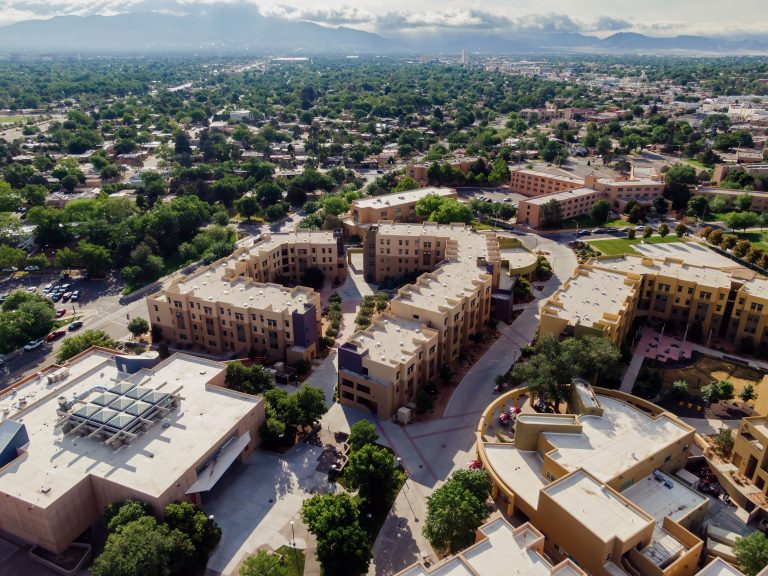
Western New Mexico University (WNMU) introduces its “Smart Campus” initiative, a comprehensive digital modernization designed to meet the demands of 21st-century higher education.

According to WNMU, the program ensures the university continues to strengthen traditional campus teaching while expanding its growing online offerings. It prioritizes digital equity for students and faculty in New Mexico’s most remote regions. 

In an evolving educational landscape, WNMU expands learning beyond the physical campus. 

Through investments in high-speed infrastructure and hybrid learning tools, WNMU ensures access to a world-class education statewide. 

The “Smart Campus” initiative recognizes the university as a vital hub for high-speed internet and modern learning resources for rural students.

“Our mission has always been to serve the people of New Mexico, especially here in southwestern New Mexico, but the definition of ‘service’ has changed,” said WNMU Interim President Chris Maples, Ph.D. 

Maples said modernization is no longer a luxury but a necessity to advance equity and meet every WNMU student’s needs. “We are building a campus that exists as much in the cloud as it does in Silver City, ensuring that our students and faculty, especially our rural students and remote faculty, have the same opportunities for success as those in major metropolitan areas.”

WNMU’s Areas of Focus for the “Smart Campus” Initiative

In line with the project, the university has identified three critical areas of investment for the upcoming legislative session.

The first investment area focuses on digitizing university records. The university seeks funding to convert all institutional records to a secure digital format in response with 2026 state priorities. This direction optimizes workflows, speeds up student services, and preserves WNMU’s historical records in a searchable digital archive. By minimizing paper use, this initiative lowers the university’s carbon footprint and advances progress toward carbon neutrality by 2030.

The next area of investment focuses on enhancing data privacy. The university is upgrading its digital infrastructure to better protect the privacy of students and staff. These investments move WNMU to an advanced security model that monitors for risks and strengthens the privacy of institutional research. WNMU ensures a secure and accessible digital campus by modernizing its systems.

The third area of investment focuses on enhancing hybrid learning to support remote success. Addressing travel challenges, WNMU is upgrading its hybrid learning technology, including science laboratories, for students in New Mexico and beyond.

The university’s plan specifically highlights the role of remote faculty. By equipping remote faculty with high-end digital tools, WNMU fosters a borderless academic community.

WNMU’s Board of Regents and executive leadership work with state lawmakers in 2026 to secure funding for these initiatives. The “Smart Campus” project is designed as an institutional upgrade and as an economic engine for the region. It aims to provide the digital infrastructure necessary to train the next generation of New Mexico’s workforce.

New Mexico House Approves $1.5B Transport Bonding Package

0

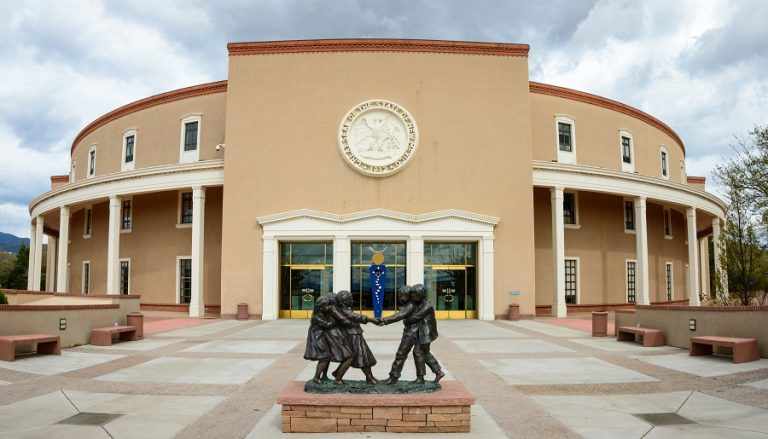
SANTA FE, New Mexico – New Mexico lawmakers have approved Senate Bill 2 on Friday for the $1.5 billion transportation bonding package. The passage paved the way for the state to address a massive backlog of road and bridge projects without raising fuel taxes.

The approved bill is now in the office of Governor Michelle Lujan Grisham, who is set to sign it into law.

Under the bill, the State Transportation Commission can issue up to $1.5 billion in bonds to fund projects under the State Transportation Improvement Program, New Mexico’s official list of regionally significant road and infrastructure projects. Once implemented, the measure is expected to generate at least $70 million in new, recurring transportation revenue annually.

‘Long overdue on transport funding.’

“This major investment in New Mexico’s transportation infrastructure is long overdue,” Lujan Grisham said. She thanked lawmakers for moving the measure midway through the 30-day legislative session.

Supporters of SB 2 say it is a long-overdue measure to address New Mexico’s transportation funding crisis. Officials estimated a roughly $7.5 billion gap between existing funds and the amount needed to maintain and improve the state’s roads and bridges. Under the bill, the state would authorize bonding and other revenue mechanisms to address this shortfall.

More than half of New Mexico’s roads are rated in poor or mediocre condition.

Motorists lose billions to poor road conditions

New Mexico drivers, according to A National Transportation Research Nonprofit, lost some $3.3 billion annually due to deteriorating roads and bridges. Urban motorists have borne as much as $3,061 annually due to higher vehicle operating costs from poor road conditions, the financial costs of road crashes, and traffic delays.

The report, New Mexico Transportation by the Numbers: Meeting the state’s need for safe, smooth, and efficient mobility, details road and bridge conditions, highway safety data, and cost breakdowns for Albuquerque, Las Cruces, Santa Fe, and the state.

Key sponsors

The bill was a priority measure for the session, according to Senate Majority Leader Peter Wirth. House Speaker Javier Martinez, on his part, sustained the momentum in the House that helped secure its swift passage.

Key sponsors of the bill include Senators Roberto J. Gonzales, George K. Muñoz, Pete Campos, and Benny Shendo Jr. Representative Art De La Cruz, chair of the House Transportation, Public Works, and Capital Improvements Committee, also sponsored the bill. House Majority Whip Day Hochman-Vigil and Representative Patty Lundstrom co-sponsored the measure.

Gonzales said the bill is necessary to invest in “our highways through responsible bonding. It will help create jobs, improve safety, and meet the needs of our communities.”

On his part, De La Cruz said the measure was a move in the right direction.

It would enable long-delayed measures to improve roads, bridges, and other transportation infrastructure, rather than relying on one-time appropriations, he said.

Once signed, the package is expected to reshape New Mexico’s transportation funding.

BeKind at UNM Starts on Feb. 11

0

The University of New Mexico (UNM) spreads kindness across campus again.

Now in its 17th year, the BeKind UNM celebration returns with fun celebrations during National Random Acts of Kindness Week this February. The initiative helps promote kindness and civility in the UNM community. 

This year, the BeKind UNM Committee invites the Lobo community to enjoy the Kindness Carnival and other events spreading positivity.

The free Kindness Carnival on Feb. 11, from 11:00 a.m. to 1:00 p.m., in the SUB Atrium opens the celebration. It includes games, a photo booth, music, therapy dog cuddles, and a donation drive for the Lobo Food Pantry. Individuals who make a donation can win a grand prize. The reward includes a $25 Dion’s gift card, a $25 UNM Bookstore card, and a Sparkie stuffed bear from The Jennifer Riordan Foundation.

The first Teddy Bear Toss occurs at 7:00 p.m. during the women’s Lobo basketball game against San Jose State at The Pit. The second toss takes place at 7:00 p.m. on Feb. 17 during the men’s game against Air Force.

During each Teddy Bear Toss, fans can toss brand-new stuffed animals at halftime, creating a heartwarming Lobo tradition. They can attach a label with their name and contact information for a chance to win one of several grand-prize baskets. Each basket is packed with items from local partners such as the Albuquerque Isotopes, Dion’s, New Mexico Look/Zia Graphics, UNM Bookstore, Popejoy Hall, and UNM departments.

Every stuffed animal collected is donated to children throughout New Mexico through the Albuquerque Police, the Albuquerque Fire Rescue, and other youth-support organizations that assist youth in crisis.

Share Kindness with the Lobo Food Pantry

BeKind UNM invites donations to help support the Lobo Food Pantry. Supported by the LoboRESPECT office, it provides free, nonperishable food items for all UNM students.

Students may fill a basket with groceries of their choice and must weigh it for final checkout. They must sign a semester-long waiver and provide general identifying information (name, email, UNM ID) when visiting the pantry. This helps track the number of visits each month. The daily limit is either a full basket or 10.0 lbs., whichever the student meets first.

The pantry delivers more than meals. It also provides essential hygiene items, including laundry and dish detergents, deodorant, toothpaste, shampoo, conditioner, and feminine hygiene products.

In addition to food and hygiene items, the pantry welcomes monetary donations. These funds allow the pantry to purchase fresh groceries and essential items to support students in need. 

NMDOH Highlights the Importance of Children’s Dental Health

0

The New Mexico Department of Health’s (NMDOH) Office of Oral Health is raising awareness about the importance of healthy dental habits among children. 

February marks Children’s Dental Health Month each year. 

Accordingly, NMDOH will share proper oral hygiene tips and highlight the benefits of limiting sugar and junk food. The department also stresses the important role of parents and caregivers in promoting healthy smiles for the youth.

Tooth decay is the most common chronic childhood disease in the United States, affecting more children than asthma or obesity. About 1 in 5 children ages 6-8 have at least one untreated cavity, resulting in pain, infection, eating difficulties and missed school days if left unaddressed.

“Healthy teeth are essential to a child’s overall well-being and success in life,” said Maya Mascarenaz, director of the Office of Oral Health. 

In a news release, Mascarenaz said that according to research, children with poor oral health are nearly three times more likely to miss school due to dental pain. This can impact learning and long-term achievement.

A study shows that preventing and treating dental problems and improving dental health may benefit child academic achievement and cognitive and psychosocial development.

Dental Habits to Practice at an Early Age

NMDOH issued reminders to address dental health concerns. Among these are brushing of teeth twice a day and starting to floss when adult teeth appear. Practice limiting sugar in food and drinks to reduce risk of cavities. 

NMDOH encourage children to drink water and eat fruits and vegetables. Additionally, they should see a dentist every six months from age one to prevent anxiety and long-term dental problems. 

NMDOH advises to ask dental providers about sealants on six- and twelve-year molars to help prevent cavities for many years.

The public is encouraged to visit the NMDOH social media channels for more tips. They may also call the NMDOH Helpline at 1-833-SWNURSE (1-833-796-8773)  for help finding dental care in New Mexico.

Valentine’s Day Workshop Supports Early Childhood Development in Alamogordo

0

ALAMOGORDO, New Mexico — A free Valentine’s-Day workshop on early childhood development is set for Saturday, February 14, 2026.

100% Otero aims to equip parents, caregivers, child care providers, and early childhood educators in Alamogordo and surrounding communities with tools and insights to support healthy childhood development.

The event will run from 9:00 a.m. to 3:00 p.m. at the CHRISTUS Conference Center in Alamogordo. Attendees can participate at no cost with lunch provided. Professional child care providers can earn continuing education units (CEUs/PDUs).

The interactive workshop will cover foundational topics on infant mental health and early development.

Speakers for the workshop, including experts from pediatric medicine, early childhood education, and family support services, are scheduled to speak.

The following presenters have confirmed their presence to the event: Dr. Ashley Tauriac, a pediatrician with international mission experience; Rosario Dick, Early Childhood Director and Pre-K Administrator/Montessori teacher for the Mescalero Apache Tribe; Liz Martinez, LMSW, IMH-E, executive director of the New Mexico Association for Infant Mental Health; Janelle Garcia Cole, associate director with the UNM Family Development Program; and Tamarra Garcia, early childhood training and development consultant.

The workshop aims to strengthen caregiver-child relationships and promote healthy growth and development in early childhood. It reflects the organizer’s mission to improve access to vital services and support for families.

Interested individuals have until February 2, 2026, to confirm their attendance at the workshop.

100% Otero is a coalition of community initiatives focused on eliminating childhood trauma across Otero County.

Wet Weather Fire Scorches 25 Acres in Magdalena Mountains

0

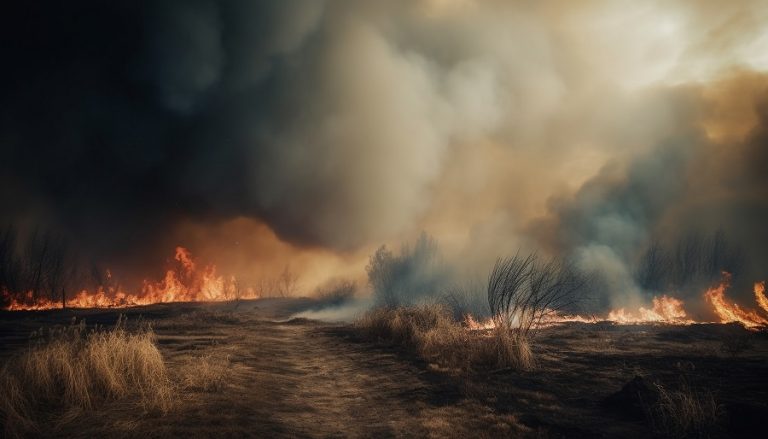
SOCORRO, New Mexico — A wildfire in the Water Canyon Mesa area of the Magdalena Mountains on Sunday has burned about 25 acres. Firefighters have yet to contain the fire, the U.S. Forest Service reported on its website.

The Wet Weather Fire blaze was reported at around 11:40 a.m. on February 1 within the Magdalena Ranger District of the Cibola National Forest and National Grasslands. Authorities are still investigating the cause of the fire.

Smoke from the fire may be visible west of New Mexico Highway 60, and from Interstate 25 west of Socorro, officials said. Federal and state crews from the U.S. Forest Service and New Mexico Forestry Division are on scene responding to the incident.

Meteorologist Grant Tosterud posted on social media about the blaze, saying, “No buildings or property are at risk.”

The wet weather conditions have helped slow the spread in some areas, but its behavior has been described as moderate. As of the latest update, the fire has remained uncontained.

The wildfire, officials said, is not currently threatening communities or values at risk. They urged the public to avoid the active fire area.

The Wet Weather Fire is the latest in a series of wildfires in the Magdalena Ranger District and the nearby Cibola National Forest region. A separate Water Canyon Wildfire burned about 71 acres after a lightning strike in nearly the same vicinity in July 2023.

The nearby Whiskey Hill Fire burned roughly 940 acres before containment efforts secured the area.

Another blaze in 2022, the Bear Trap Fire, burned several thousand acres in the San Mateo Mountains portion of the district. The incident prompted multi-agency firefighting efforts. It did not, however, threaten populated areas.

Previous blaze incidents, such as the North Fire in 2016, underscored the region’s vulnerability to wildfire during dry seasons.

Officials noted that many past fires posed minor threats to communities. But the incidents highlighted the importance of preparedness and forest management in the region.

UNM Professor Jonathan Davis-Secord Wins William Riley Parker Prize from MLA

0

University of New Mexico (UNM) associate professor Jonathan Davis-Secord earns recognition for an outstanding scholarly article. 

Davis-Secord won the William Riley Parker Prize from the Modern Language Association (MLA) for his PMLA article “Trans Saints in Old English.” PMLA serves as the association’s flagship journal.

The MLA recently announced the honor, recognizing Davis-Secord’s article, which appeared in the March 2025 issue of PMLA. Each year, the association awards the prize to the author of the journal’s most distinguished article, UNM News reported.

The selection committee cited the article’s originality and scholarly rigor. In his award-winning work, Davis-Secord analyzes medieval hagiography, offering insights into gender identity and sanctity in early English religious texts. It contributes to ongoing conversations in medieval studies, literary scholarship, and the history of gender and sexuality.

“My work helps demonstrate the legitimacy of thinking about trans lives in the premodern past,” Davis-Secord told UNM News. “It contributes more evidence that trans people have long existed well before people began using the word ‘trans,’ and shows that people in early medieval England were open to these possibilities.”

The William Riley Parker Prize elevates UNM’s national profile and highlights the university’s contributions to humanities and liberal arts research.

“It was overwhelming to learn that my article received the William Riley Parker Prize,” Davis-Secord said. “The article’s argument is very important to me, and it is very meaningful to have its value recognized by the prize committee.”

Samuel Diener, a stipendiary lecturer in English at the University of Oxford’s Exeter College, won an honorable mention for his article. “Narration in the Key of We: The Voyage and the Grammar of Identity” appeared in the January 2025 issue of PMLA.

Founded in 1883, MLA is among the largest scholarly organizations in the humanities. PMLA ranks among the most prestigious journals in literary and language studies, publishing peer-reviewed research across periods, languages, and methodologies.

The William Riley Parker Prize honors articles that demonstrate exceptional scholarship and make a significant contribution to the field. It is now in its 62nd year.

“Publication in PMLA is a recognition of the quality and importance of my work,” Davis-Secord said. “Given the importance of the article’s topic, I am very glad for it to find as many readers as possible.”

Ancient Stories Are Reshaping How Scientists See India’s Grasslands: Study

0

Ancient stories, poems, and songs are more than cultural artifacts, a new research suggests. It may contain crucial evidence challenging the long-held assumption that India’s savannas and grasslands are not degraded forests but ancient ecosystems that have existed for centuries.

Savannas and grasslands cover nearly one in every 10 of India and more than a third of the Earth’s land surface. For decades, however, policymakers and conservation planners labeled them “wastelands”, where large-scale tree planting to fight climate change is often conducted.

That assumption is now being challenged by a study published in the British Ecological Society journal People and Nature.

In the study, researchers analyzed plant references in historical literature from western India. Some of these references date back to the 13th century. The researchers suggest that tropical grasslands are not the result of deforestation or human degradation. They are, but long-standing unique ecosystems.

“The take-home for me is how little things have changed,” said Ashish Nerlekar of Michigan State University, a co-author of the study.

This body of literary work, written hundreds of years ago, closely describes what exists today, the study’s co-author said.

Rethinking climate and conservation policy

These findings matter because planting trees in natural grasslands can do more harm than good. Reforestation is often thought of as a climate solution. However, converting savannas to forests can destroy native biodiversity, disrupt livelihoods dependent on grazing, and even reduce overall carbon storage.

Forty-four 44 wild plant species are mentioned in ancient texts written in Marathi, nearly two-thirds of which are typical of savanna ecosystems. The researchers noted that this historical literature contains repeated references to the thorny acacia (Vachellia leucophloea). Multiple ancient text described it, suggesting its long-standing presence in the landscape.

Other accounts—from epic poetry to folk songs—describe open, grassy, and thorny terrain that matches today’s savannas rather than areas deforested in recent history.

Stories as scientific evidence

The idea emerged from collaboration across disciplines.

Digvijay Patil, a PhD student in archaeology at IISER Pune, while studying Sanskrit and Marathi texts linked to sacred sites, has observed repeated mentions of specific plants. Nerlekar, a plant scientist, identified those plants as species that still grow in present-day grasslands.

Many of the sources studied are not digitized or stored in modern databases. They constitute a large, largely untapped archive of ecological knowledge—especially in regions where historical maps and scientific records are scarce.

A landscape older than colonial deforestation

What does this historical evidence suggest?

It simply points to one often ignored fact: India’s savannas have existed for at least 750 years. These savannas even predate the massive deforestation under British colonial rule. Fossil pollen and remains of grass-grazing animals further support an even deeper history of a savanna-dominated landscape thousands of years ago.

What’s at stake

India’s grasslands are home to over 200 plant species found nowhere else on Earth. Mostly, these species, increasing threatened by farming and development, have been identified only recently. Many of them are also culturally sacred, making these ecosystems socially and spiritually valuable in addition to their ecological importance.

Globally, about a fifth of the world’s population depends on savannas and grasslands for livelihoods. They are areas for grazing and small-scale agriculture.

The study, supported by grants from Michigan State University and IISER Pune, warns that climate action risks repeating old mistakes when it ignores ecological history.

“These centuries-old stories give us a rare glimpse into the past,” Nerlekar said. “And that past was a savanna past—not a forested past.”

WNMU’s Ongoing Search For President: Top Two Candidates Set To Be Named In March

0

The Western New Mexico University (WNMU) Board of Regents is expected to determine the top two presidential candidates by March 10. 

Regent Treasurer/Secretary J. Dean Reed released a detailed timeline for the selection of the university’s new president. The WNMU Board held a hybrid meeting on January 29, 2026 at the New Mexico State Capitol. University leaders and state legislators gathered to discuss important developments at the institution, including the search for a permanent president. 

According to WNMU’s news release, the 15-member search committee has narrowed the initial candidate pool down to 10 after an intensive review.

Reed detailed the next phases of the presidential search. On February 5-6, the committee will select five finalists from the candidate pool. In late February or early March, all five finalists will conduct on-campus visits to meet with faculty, staff, and students. On March 10, the Board expects to identify the top two candidates and begin contract negotiations. 

Dr. Christopher Maples currently serves as the university’s interim president

In September 2025, WNMU launched a comprehensive nationwide search for its next president

The president serves as the university’s chief executive officer and reports directly to the WNMU Board of Regents. The new president will lead the university through a pivotal period of renewal and growth, ensuring its sustainability and mission in a rapidly evolving higher education landscape.

Reed and  Regent Vice Chairman John Wertheim co-chaired the search committee. Its members also include representatives of the WNMU faculty, staff and students, including Vice President of Business Affairs Kelley Riddle, Associate Vice President for Academic Affairs Patricia West, WNMU Faculty Senate President Gregory Robinson-Guerra, Staff Senate President Bartholomew Brown, Associated Students of WNMU President Carlos Carranza, Assistant Vice President of Student Life April Burt, and Randy Gomez from WNMU Facilities, among others. The members of the public are Grant County Commissioner Chris Ponce, Town of Silver City Mayor Ken Ladner, Silver Consolidated Schools Superintendent William Hawkins, Bart Roselli representing the Silver City Chamber of Commerce, Former State Rep. Candie G. Sweetser, WNMU Alumni Board member Evangeline Zamora and Javier Marrufo from LULAC.

Other Matters Discussed at WNMU Board Meeting

Board Chair Steven Neville led the meeting, where visiting state officials highlighted WNMU’s period of transition and efforts in “building back credibility.”

State Senator Jay C. Block, who praised Maples for their leadership, visited the meeting. “You are building back a lot of credibility, and I’m excited to see where it goes,” he said. “On behalf of all the legislators, hold your head up at Western. You have the respect of every senator and House member.”

Lt. Governor Howie Morales also attended the proceedings, thanking the Regents for their service and acknowledging Maples’ interim leadership. Morales emphasized the solid support for the university’s funding requests currently moving through the legislature. He also strongly supported the acquisition of the 6th Street School.

Meanwhile, Maples discussed the university’s strategic growth, specifically the acquisition of the 6th Street School. The facility is located one block from the main campus in Silver City. He credited the Dean of Education for spearheading the effort to benefit the College of Education and the broader community.

Maples celebrated the Mustang community’s achievements, highlighting the WNMU Men’s Basketball team and its stellar season performance. He recognized Professor Chris Taylor, whose new book garnered international attention in the field of medieval studies. Maples concluded by noting the university’s modernization and digitization of record-keeping, ensuring secure and efficient operations in the digital age.

Riddle reported several key items, including the FY26 Quarter 2 Financial Actions Report, which showed no significant budgetary concerns. He addressed the financial impact of a prior cyber-incident, estimating it caused approximately $3 million in losses over two semesters.

The Board approved the Capital Project Transmittal for the Deming Student Center. The project will acquire a building at the John Arthur Smith Learning Center, giving WNMU students in Deming permanent campus space.

Additionally, the Regents approved the Infrastructure Capital Improvement Plan presented by Riddle, and revisions to the Staff Handbook presented by Brown. 

Further, the Board unanimously granted Staff Emeritus status to former University Registrar Susan Russell, honoring her long-term dedication after retiring in 2025. Vice President of Student Affairs Betsy Miller presented the recommendation, citing Russell’s decades of service to the university.

Second Arrest Made in Albuquerque’s First Homicide of 2026

0

ALBUQUERQUE, New Mexico — The arrest of a second suspect in the first homicide case of 2026 signals continued progress in the investigation of the New Year’s Day killing.

Police identified the suspect as Dominic Martinez, 22. He is accused of assisting Peyton Reagan, 18, in a plan that led to the fatal shooting of Alexander Wilson in downtown Albuquerque shortly before 3 a.m. on January 1.

Kill 3 in exchange for handguns

Albuquerque Police Department (APD) said Martinez helped Reagan arrange transportation to the downtown area. He allegedly exchanged text messages discussing plans to kill three people and get two handguns in exchange for the firearm used in the shooting.

The police arrested Reagan shortly after the incident near Gold Avenue and Eighth Street after fleeing the scene. He remains in police custody.

Responding officers found Wilson with multiple gunshot wounds and pronounced him dead at the scene. Reagan’s girlfriend and another woman were not injured.

Investigators said they continued to build the case following Reagan’s arrest. They later identified Martinez as a second suspect in the New Year’s shooting.

Police records showed the case is the first homicide recorded in Albuquerque in 2026. But homicide trends in the city and state have fluctuated in recent years.

Homicide cases in the city

Historically, Albuquerque grappled with high homicide numbers compared to many U.S. cities.

Homicides peaked in 2022 with 121 cases and declined in subsequent years with APD reporting around 93–98 killings in 2023 and approximately 63–65 in 2025.

The numbers align with broader statewide patterns. According to John Hopkins Bloomberg School of Public Health, New Mexico often ranks among U.S. states with high rates of gun-related deaths. The state recorded over 200 firearm homicides in recent annual data.

Law enforcement officials said continued investigations and arrests are key to maintaining public safety and deterring future violence.

The investigation, APD said, remains ongoing. It did not immediately release details on additional charges.