Home Blog Page 14

Toast a Ghost Haunted Pub Tour Brings Ghost Stories and Spirits to Old Town Albuquerque

0

Old Town’s “Toast a Ghost’’ Haunt Pub Tour is a 3-hour storytelling tour of pubs and saloons in Old Town Albuquerque. It features ghost stories and local history with local spirits.

Why this headline is important: The “Toast a Ghost” Tour is unique because it allows you to experience Albuquerque’s haunted past. At the same time, you can explore the vibrant pub atmosphere on an adult-oriented tour. Guests enjoy history through drink and entertainment.

Participants visit up to four pubs or saloons, spending about an hour to each. 1 hour in each pub/saloon. While in the hours, you hear chilling ghost stories, read funny legends, and receive included drink coupons. The last stop includes a hot hors d’oeuvres. The atmosphere is fun and social, and a little spooky.

Among other advantages for participants are culturally enriching experiences through Old Town’s storytelling. This history dates back hundreds of years. There are also places for entertainment (like ghost stories) and opportunities to socialize with strangers (fellow crawlers). The tour bundles drinks, food, taxes, and tips into the ticket price, saving you money from the start.

The name of this event, “Toast A Ghost,” reflects not only a pub crawl but also a complete experience. The tour highlights Albuquerque’s haunted history while offering today’s entertainment options.

Ultimately, the Haunted Pub Tour is an enjoyable way for adults to experience a combination of history, ghost stories, and nightlife when visiting Old Town Albuquerque.

Indigenous Freeways Exhibition Showcases Arrowsoul Art Collective’s Fusion of Graffiti and Indigenous Traditions

0

Arrowsoul Art Collective presents Indigenous Freeways: Southwest Wildstyle within a mural installation featuring both Indigenous pictographic art styles & graffiti/mural styles. The exhibition is on until June 28th, 2026.

This headline is part of a larger story because it communicates how ‘Future Old School’ and ‘Indigenous Freeways’ are being defined differently. These projects reconnect communities along the Rio Grande via creative participation and cultural expression.

One example is that each piece uses character formations, illustrative forms, and textures to represent the places people come from. These murals reformulate the entire Southwest through Indigenous ways of knowing while also representing new definitions of self and place.

Indigenous art forms have provided many benefits, including the preservation of culture and a means for collaboration. Moreover, they create community engagement through collaborative mural projects and other artistic traditions. These forms offer educational enrichment by exposing new audiences to evolving ways of creating art. They also provide inspiration to future generations of artists.

The headline suggests that Indigenous Freeways is not just an art installation but a form of cultural dialogue. It connects the past, present, and future. Through visual storytelling, it strengthens the identity of Indigenous peoples.

In summary, this exhibition by Arrowsoul Art Collective offers a transformative experience for audiences. It unites traditional and innovative forms of expression. Furthermore, it reinforces the importance of art in community-building and cultural continuity.

Community-School Partnership Highlights Student Success

0

Communities play a vital role in shaping every child’s future. They influence the choices children make, especially in their academic journey. Albuquerque Public Schools partners with communities to implement initiatives that help students explore future opportunities.  

Just recently, students at Comanche Elementary School ended the school year with a hands-on Career Exploration Day. The event introduced them to a wide variety of future career paths.

Community partners across Albuquerque connected students with professionals representing both public- and private-sector careers for hands-on learning. Learners built engineering models with a civil engineer and climbed into the cab of the New Mexico Department of Transportation’s giant snow plow, “Alice Scooper.” These interactive activities allowed students to explore careers in engaging ways.

Participating organizations included Albuquerque Ambulance Service, Bernalillo County Sheriff’s Office, City of Albuquerque Sanitation Department, and civil engineer Jaan Yang. Additional participants included Duke City Redi Mix, PNM, New Mexico Department of Transportation, and Albuquerque Police Department.

School leaders said the event connected classroom learning to real-world opportunities and inspired students to explore future careers with curiosity. 

Comanche Elementary thanked community partners for volunteering their time and supporting the event. The school recognized their efforts during the busy end-of-year and holiday season. 

A Celebration of Community

Meanwhile, Inez Science and Technology Magnet School welcomed students, families, staff and community partners this spring for its annual Community School Talent Show and Family Picnic. The event stands as one of the school’s most anticipated gatherings of the year.

Students spent weeks preparing and auditioning for performances as individuals, small groups and entire classes. They took the stage to showcase their talents for the school community.

This year’s event carried special meaning as the Inez community celebrated longtime PE teacher Michael Anderson’s dedication and impact. Former Inez Rockets and families returned to campus, shared memories, and celebrated his years of service to students and community.

Additionally, the event highlighted strong partnerships that support Inez as both a Community School and STEM Magnet school. Community organizations attended the event, including Central New Mexico Community College, Girl Scouts of the USA, Sunward Credit Union, the Transgender Resource Center and The Health Plan Place. They shared resources, activities, and crafts with families.

Earlier, Inez fourth graders joined walking field trips and learned basic glass cutting and mosaic art techniques. During the family picnic, students and families added pieces to a large community mosaic that will be displayed at school.

School leaders described the evening as festive, meaningful, and a celebration of strong belonging and community at Inez Elementary.

Albuquerque is Raising the Minimum Wage to $15 by 2030 — Here’s How it Could Reshape Paychecks, Families, and Local Businesses

The Albuquerque City Council approved a gradual increase in the city’s minimum wage, a decision arrived at after a bitter debate marked by public outbursts, accusations of political maneuvering, and the removal of two members of the audience.

The measure raises Albuquerque’s minimum wage to $15 an hour by 2030, but not all at once. Instead of a one-time wage hike, the council approved an amendment that phases in the increase through annual $1-per-hour raises over the next three years. Afterward, daily wages would rise automatically with inflation through annual cost-of-living adjustments.

A larger national question overshadowed the debate: How quickly should wages increase to keep pace with the climb of prices for housing, food, and transportation?

What the Minimum Wage Raise Means for Workers

The additional dollar per hour is equivalent to approximately $2,080 in extra earnings per year before taxes for a full-time employee working 40 hours a week. Under the approved plan:

  • A worker who received a $1 hike would gain about $173 more per month before taxes.
  • A $2 increase would amount to about $347 more per month.
  • A $3 increase would generate roughly $520 more per month, or over $6,000 annually.

That difference could help many city households cover rising rent, utility bills, groceries or gasoline costs. These expenses have outpaced wage growth in recent years.

Several studies have shown that minimum-wage workers spend most of their income immediately on necessities. That could mean higher wages tend to flow directly back into local businesses and neighborhoods.

Why Business Owners Wanted a Slower Timeline

Restaurant owners and other small-business operators pointed out that an immediate increase would squeeze already slim margins. Carol Wight of the New Mexico Restaurant Association said businesses are still adjusting to chronic inflation, rising labor costs, and higher operating costs. A gradual increase, she argued, provides business owners time to adjust pricing, improve productivity, and absorb additional manpower costs without reducing personnel or their working hours.

The concern is true throughout the country. Business groups frequently caution that rapid wage increases can force employers to raise prices, reduce staff size, or postpone expansion plans. “People (need) to understand that it’s not just people making minimum wage that can’t afford things; it’s also people who give jobs that can’t afford to keep raising their prices,” Wight said.

The Politics Behind the Vote

The meeting itself became nearly as remarkable as the policy the council approved. Council President Klarissa Peña had forced her to order the removal of two individuals from the chamber after repeated violations of council rules during public comment. Peña ordered the removal of one speaker after comments that she characterized as ridiculing others. Another was escorted out after directly addressing a council member rather than speaking through the council chair.

The disputes escalated further after labor advocate Thomas Abeyta alleged an email indicating Councilor Dan Lewis had been working with apartment associations to oppose the wage hike. Lewis offered no public comment on the allegation at the meeting.

The exchange highlighted the conflicting interests surrounding the ordinance. Pro-labor supporters of the measure argue wages have failed to keep up with Albuquerque’s cost of living. On the other hand, several business and property groups worry about the economic effects of higher labor costs that the wage could bring.

The Bigger Question: Will It Be Enough?

Even supporters admit that a minimum wage reaching $15 an hour by 2030 may not fully address affordability issues. Housing costs in Albuquerque have risen significantly over the past decade. Many workers earning near the minimum wage spend a big share of their income on rent alone.

The final increase three years from now could provide meaningful relief for a household with one full-time minimum-wage worker. Advocates insist, however, that rising costs would exceed wage growth. Many families may still suffer despite the higher pay base.

The council’s vote therefore is both a victory and a compromise. It promises a minimum wage hike for workers while delaying the full monetary impact on business owners. But for city residents who live paycheck to paycheck, the debate is not only about an hourly wage. It was about how much is left in a family budget after paying for food, housing, and transportation.

What to Know About Sister Blandina Segale, the Nun Who Tamed the Wild West

Sister Blandina Segale’s story has occupied a unique place in the folklore of the American Southwest for over a hundred years. It was part religious history, part Wild West legend.

Now, the Italian-born nun known as the “Fastest Nun in the West” has moved a step closer to becoming the first woman from New Mexico to be a saint after the Catholic Church formally advanced her cause for sainthood. Vatican theologians recently unanimously approved advancing Sister Blandina’s cause, according to the lead petitioner for the cause, Allen Sánchez.

The decision, Sanchez said, brought her closer to being declared “Venerable,” a designation reserved for Catholics who lived lives of heroic virtue. Cardinals and Bishops will next review the recommendation before presenting it to Pope Leo XIV.

Many Catholics in New Mexico and beyond viewed the development as a renewed interest in the life of Sister Blandina, a woman whose life often seemed more suited to a Western adventure novel than a convent chronicle.

A Nun on the Frontier

She was born Rosa Maria Segale in Italy in 1850. Sister Blandina immigrated to the United States as a child and joined the Sisters of Charity of Cincinnati. At the age of 22 in 1872, the Sisters of Charity assigned her to the rugged frontier territories of the American Southwest.

Sister Blandina encountered a region marked by poverty, violence, and rapid change. But she never retreated from danger. Instead, Sister Blandina immersed herself in it by establishing schools and hospitals. She lived among them by ministering to immigrants and Native communities, and journeyed across remote settlements at a time when law enforcement was weak and violence commonplace.

Quickly, her name and reputation for courage spread throughout New Mexico and Colorado.

The Legend of the “Fastest Nun in the West”

One of the stories that has cemented her place in Western history is her storied intervention to prevent lynchings and acts of vigilante violence. Church records have preserved accounts where Sister Blandina confronted armed mobs and persuaded them to abandon plans for extrajudicial executions. One popular account has Sister Blandina reportedly convincing a crowd to spare a man accused of murder. She insisted that justice should be left to the courts.

These documented acts cemented Sister Blandina’s reputation for fearlessness and compassion in a region where justice by mob rule often prevailed.

Her Unlikely Friendship With Billy the Kid

Perhaps no episode has captured the public imagination more than Sister Blandina’s friendship with Billy the Kid, the notorious outlaw of the Southwest. According to her own account, she met the legendary gunfighter and maintained a cordial relationship with him. Billy the Kid remains one of the most infamous names of the American West; Sister Blandina viewed him as a troubled young man who needed redemption.

The encounters became part of the mythology surrounding her life. It highlighted her lifelong belief that no person was beyond mercy and redemption.

A Written Record of the Old West

Her memoir, At the End of the Santa Fe Trail, recorded much of what is known about Sister Blandina’s backcountry experiences. The book offers a lesser-known account of life in the Southwest during the late nineteenth century. It documented encounters with settlers, outlaws, Indigenous communities, and ordinary people struggling to survive in a rapidly changing region.

Historians today regard her book as an important document of the social and cultural history of the American frontier.

What Happens Next?

It needs Pope Leo XIV’s approval of the recommendation for Sister Blandina to receive the title of “Venerable.” The title is an acknowledgment that she lived a life of heroic virtue. But the path to sainthood would still require additional steps.

The Church must verify a miracle attributed to her intercession for her beatification and declare her “Blessed”. Another verified miracle occurring after beatification is a requirement for her canonization, the final step in declaring her a saint.

Another New Mexican on the Path

Sister Blandina has joined another New Mexican whose cause the Catholic Church has advanced to sainthood. Commonly known as the “Bishop of the Barrio,” Alphonse Gallegos is also under consideration for sainthood. Born in Barelas, New Mexico, he got his early sacraments in the state before moving to California. There, he spent much of his ministry serving communities at the margins.

The church under Pope Francis declared him venerable on July 8, 2016, a decade after his beatification process began.

But the attention, at the moment, is focused on the storied life of a frontier nun whose life bridged faith and legend. Remembered as a fearless nun who confronted violence with compassion and met danger with conviction, Sister Blandina’s story continues to reverberate far beyond the dusty trails of the Old West she once traveled.

Ojo Santa Fe Spa Resort Offers Healing Waters and Farm‑Fresh Dining in New Mexico’s High Desert

At Ojo Santa Fe Spa Resort, guests can take advantage of the lovely food fresh from the farm and the therapeutic spring water pools. They can also enjoy a full array of spa treatments on the 77-acre site. This site is located in a high desert oasis.

It is significantly important that Ojo Santa Fe is a continuation of a tradition of healing waters spanning thousands of years. It provides a getaway for today’s traveler. In particular, the resort combines hydrotherapy, wellness, and immersion in nature.

Activities available include soaking in a hot spring-fed pool, massage, and other natural treatment options at the spa. Farm fresh dining options come from the Ojo Farm. Additionally, activities such as yoga, hiking, biking, and daily “playtime” for the numerous puppies at the Resort are offered! Accommodations include garden-view rooms or casitas!

Hydrotherapy provides physical revitalization. Meanwhile, spa treatments and yoga provide mental calmness. Farm-to-table food provides a fantastic meal experience through community connections made at group retreats and events. There are also special packages available. For example, the Digital Detox Wellness Getaway and the Romance Package enhance the experience.

This reflects that Ojo Santa Fe is a holistic retreat that uses the waters of our natural landscape. Additionally, it offers wellness opportunities such as spa treatments and yoga. The taste and experience of farm-to-table food prepared onsite enhance your visit. All of this creates a transformative experience for each guest.

Ojo Santa Fe is an internationally recognized mecca for relaxation/healing. Here, guests can unplug from the distractions of modern living and reconnect with nature, wellness, and themselves.

Urban Air Adventure Park Brings Year‑Round Indoor Adventures to Albuquerque Families

0

Albuquerque’s Urban Air Adventure Park offers indoor adventure attractions year‑round, such as wall climbing, coasters, and trampolining. In addition, the park offers birthday party packages.

This headline thus presents Urban Air as an overall indoor amusement facility—not just a trampoline park—that engages kids in physical play. Moreover, it provides a safe place for entertainment. The park is also the primary location for birthday celebrations or family entertainment.

Attractions at Urban Air include an indoor coaster (Sky Rider), a climbing challenge (Leap of Faith), an obstacle course (Warrior Course), a battle beam, jumps into airbags (DropZone), and trampoline areas (ProZone). Birthday girls and boys can schedule birthday celebrations seamlessly, with food/activities included. Alternatively, parents can purchase memberships for unlimited park use.

Benefits: Year-round activities for visitors, no matter the weather; active play contributes to health and fitness; family-friendly events create community engagement; and it helps you save money on memberships and passes for the summer.

The wording reflects how Urban Air Adventure Park has been marketed and promoted as the premier indoor adventure destination in Albuquerque, combining fun, fitness, and family in one place.

Finally, Urban Air Adventure Park provides families in Albuquerque with safe, fun, and affordable activities that create an atmosphere of entertainment, making it a place for future birthday parties, a facility for membership, and a great summer entertainment destination.

APS Secures Grant to Expand Access to Outdoor Learning 

0

Children deserve more than access to classrooms, they also need access to nature. Outdoor spaces allow them to learn, explore, and engage with inspiring lessons beyond the traditional classroom environment.  According to studies, outdoor learning has many benefits. These include reduced stress, improved mood, better concentration, and stronger student engagement in school.

A new funding aims to support hands-on environmental education and experiences for students of Albuquerque Public Schools (APS). The New Mexico Outdoor Recreation Division Outdoor Equity Fund awarded the district a $40,000 grant. The funding will expand outdoor learning opportunities for students.

The state allocated $1.9 million for outdoor education and recreation programs. The investment seeks to connect more than 22,000 young people across New Mexico with these experiences. 

APS will utilize the funding to support about 5,000 sixth-grade students SHIFT (Systems, Humans, and Interconnected Futures Together). The program will engage students in place-based learning that builds environmental literacy through classroom lessons and outdoor field experiences.

Inside SHIFT

Students participating in SHIFT will explore ecosystems firsthand and strengthen their connection to the natural world. The program includes visits to Valles Caldera National Preserve.

“Through this work, students engage in environmental stewardship, systems thinking, and real-world learning outside the classroom,” said Los Padillas Wildlife Sanctuary Resource Teacher Charlie Ciernia.

Additionally, the program promotes wellness and engagement while helping students build stronger connections to the land and their communities. SHIFT will launch as a pilot program next school year. The program aims to expand access to outdoor learning for more APS students in the future. 

“We’re excited about the continued growth of outdoor learning across APS and the opportunity to expand access for more students, especially through experiences that support wellness, engagement and connection to place,” Ciernia added.

This investment demonstrates a growing commitment to experiential education that fosters curiosity and prepares students for the future.

Landowner Arrested Over Pecos River Dispute. Why the Battle for River Access Continues to Escalate.

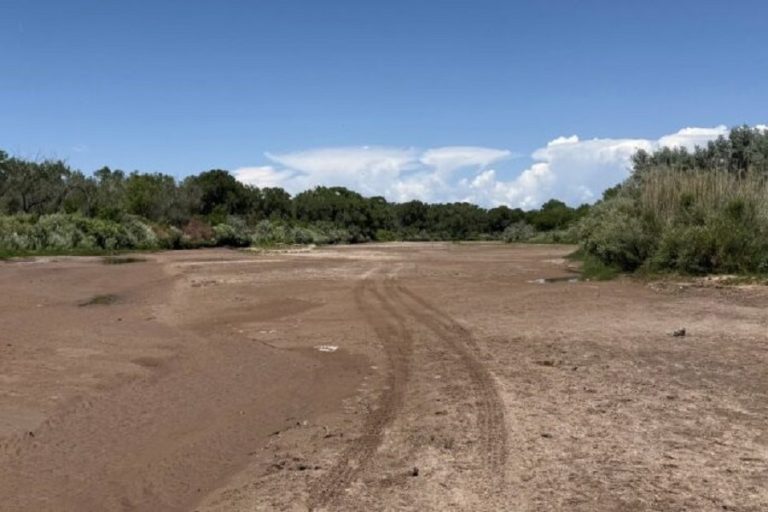
The struggle over who has the right to fish and recreate along the Pecos River has unraveled in courtrooms as a test of the balance between private property rights and public access to natural resources. That dispute took a dramatic turn this week when state authorities arrested a private landowner for allegedly threatening fishermen with a firearm.

New Mexico Attorney General Raúl Torrez announced the arrest of Erik Michael Briones, a landowner along the Pecos River. Torrez filed five counts of aggravated assault in San Miguel Magistrate Court against Briones. Prosecutors allege that the landowner threatened several fishermen during separate encounters along a stretch of the Pecos River bordering his property between April 2023 and March 2026.

State investigators said Briones brandished a firearm and warned fishermen that he would begin ‘target practicing’ nearby, making them fear he was about to shoot. “These allegations involve dangerous and unlawful intimidation directed at New Mexicans who were exercising their legal right to access and recreate in public waters,” Torrez said.

Private landowner and the law

The dispute involves a legal question of whether members of the public can use rivers that flow through private property. It has divided landowners, anglers, and outdoor recreation advocates for years.

The law protects the public’s right to use streams and streambeds through private property as long as they do not trespass on private property in reaching them. This right applies even to waters passing through privately owned land. In a previous court filing, the New Mexico Department of Justice secured court rulings affirming that right along portions of the Pecos River.

In its April 21 ruling, the U.S. Court of Appeals for the Tenth Circuit sided with the New Mexico Department of Justice, affirming the public’s right to use navigable public waters, including the Pecos River. The ruling has strengthened the state’s position in a case closely watched by property-rights advocates and outdoor recreation groups across the West.

Briones has long opposed the state’s interpretation of public access laws. At the height of the dispute in 2023, he maintained that he and his family were victims of harassment and trespassing by anglers entering his property. “One trespasser threatened to come back when we were gone and burn our cabin down,” Briones told a television investigation at the time. “One trespasser that I got the Game and Fish to remove with me told me, ‘I’m from Texas, you don’t know who my daddy is, he’s going to come after you.’”

Simmering tensions

The river access dispute continued to escalate in the courts. A federal court granted the state’s motion last month to hold Briones in contempt in the related civil litigation. The court found continued violations connected to public-access protections and court orders governing use of the river corridor.

His arrest now brings the bitter legal and political battle into the criminal justice system. It raised the stakes in a dispute that has become a symbol of simmering tensions across the American West over access to rivers and streams flowing through private land.

The criminal charges against Briones are allegations for the court to decide. It is likely to renew debate over how states balance private property rights with public access to rivers and streams, which have been viewed as shared natural resources.

How Rail Yards Market and SNAP Helps Families In Need During Summer Break

0

Have you ever wondered if there are any programs that help families during summer? Sun Bucks located at Rail Yards Market helps them!

At Rail Yards Market, families can use Sun Bucks (also known as Summer EBT) to get $3 for produce for every $1 in SNAP benefits this summer.

Rail Yards Market vendors said the programs help connect families with fresh local food while children stay home from school for the summer.

Market leaders like Casey O’Keefe said the limited time incentives uses unused grant money from New Mexico Farmers Market Association and helps families get more fresh food for their money.

“Yeah, everything is just a lot more expensive right now. I am really grateful that we do have these incentives to help people in time of need, too,” said Casey O’Keefe.

Victoria Montoya, fourth-generation orchard grower said the benefits help farmers and the families they serve.

“The Triple Up program is really beneficial to farmers because it gets the customers in here… but it’s also great for their families because it gives them access to local, healthy, nutritious foods,” said Montoya.

“So many children are food insecure, and so that helps them to be able to come and get food that they wouldn’t usually get,” she added.

The Triple SNAP program runs through August 31 or until funding runs out.

This initiative is very beneficial for families who are living paycheck-to-paycheck. It also symbolizes the solidarity with each New Mexicans.

What Is This Initiative All About?

The New Mexico Farmers’ Marketing Association is helping Supplemental Nutrition Assistance Program (SNAP) customers stretch their money when buying locally grown fruits and vegetables at farmers markets.

SNAP purchased are matched for dollar-to-dollar in every participating farmers markets and farm stands. According to Denise Miller, executive director of the New Mexico Farmers’ Marketing Association, the program effectively gives SNAP shoppers 50% off fresh fruits and vegetables.

Though, SNAP benefits are usually doubled year-round; starting August 31, benefits will be tripled.

“If they’re taking $10 off their SNAP EBT card, they will get $30 worth of tokens to spend at the market,” Miller said.

There are existing 51 outlets across New Mexico offering this service.

In Bernalillo County, there are six outlets participating including Rail Yards Market, Downtown Growers’ Market, Cedar Crest Farmers’ Market, Big Jim Farms, Polk’s Folly Farm Butcher Shop & Farm Stand, and Rosales Produce.

Miller urges everyone to give this initiative a try to see if this benefits you.

“So just give it a try, and you’ll probably fall in love,” he said.

What Are The Qualifications?

This initiative coincides with New Mexico’s rollout of changes to its SNAP benefits, including new verification requirements for household expenses.

Effective May 1, the state will require documentation for housing, utility and dependent care expenses when families apply for SNAP or report changes.

State officials say these verifications ensure they calculate benefits accurately. If applicants do not verify expenses, officials may not count them, which could result in families receiving less assistance than what they qualify for.

To verify the housing costs, families can provide a lease, mortgage statements, housing agreements, or a letter from their landlord. Utility bills and records such as daycare provider letters, are also required.

Current SNAP recipient will likely review these changes during renewal period, particularly if their information has changed.

Precautionary measures of this kind ensure that someone in every family has access to services and won’t fall short.

At the same time, thousands of New Mexicans receiving SNAP assistance can now access personalized support to fulfill their work requirements, which is 39 hours per month. Case managers pair enrolled participants with career exploration and job search assistance.

Families who are part of this initiative will be able to have food on their table and ease their burden on their food budget.

For more information, SNAP recipients can contact their local Income Support Division officers or visit yes.nm.gov.