Home Blog Page 18

New Mexico Tech Outlines FY27 Legislative Priorities

0

As New Mexico Tech (NMT) brings its FY2027 legislative agenda to the 2026 New Mexico Legislative Session on Thursday, January 29, the institution will present Special Appropriation Requests to strengthen statewide research capacity and workforce development. NMT will also seek support for critical infrastructure to advance its top STEM-focused initiatives. 

The top priorities include upgrades to enterprise IT systems; strategic planning for campus and research facilities; student success and leadership development initiatives; and investments in critical minerals and advanced wireless technologies. 

According to NMT, these requests support New Mexico’s economic growth, public safety, and innovation ecosystem by modernizing infrastructure and advancing research. Moreover, they prepare a skilled workforce aligned with state and national priorities.

In its state legislative request, NMT outlined a comprehensive list of special appropriation requests. The list is led by a $22 million proposal to support aquifer characterization and monitoring activities under the Governor’s 50-year Water Action Plan.

Additional requests include $7 million to build and equip a wireless technology innovation hub at Playas. NMT also requested $3.6 million to upgrade its Enterprise Resource Planning (ERP) system to replace outdated infrastructure, streamline core business functions, and strengthen data security.

Furthermore, the institution asked for $3M to establish a center for critical minerals at NMT to enhance collaboration within and beyond the institution. There is also a $2.52 million request to establish and equip the NM Autonomous Drones Center, among other priorities. 

NMT, nationally recognized for excellence in STEM (science, technology, engineering, and mathematics) education and research, will highlight the contributions of its students, faculty, staff, and programs during New Mexico Tech Day at the Legislature at the State Capitol Building. The event will also showcase NMT’s role in advancing science, engineering, and innovation. 

“As we participate in this year’s legislative session, we are eager to tell our story so that the impact we have on New Mexico higher education is highlighted and celebrated,” said New Mexico Tech Interim President Dr. Michael Jackson. 

“Our initiatives, and the priorities they represent, are designed to have a direct, tangible impact on our state. By focusing on high-quality STEM degrees, we will strengthen the New Mexico STEM workforce. Through our research and the innovations that result, we aim to improve the lives of all New Mexicans, fostering a cleaner, healthier, and more prosperous future,” he said.

The institution’s Capital Priorities for FY27 reflect strategic investments in student success, workforce development, and long-term campus infrastructure. These priorities are continued development of the Student & Community Wellness Center and modernization of academic and research facilities, specifically the Mineral Science and Engineering Complex (MSEC) and the New Mexico Bureau of Geology and Mineral Resources (NMBGMR). Additionally, NMT plans to expand high-quality childcare services and implement targeted upgrades to public safety systems and equipment. 

NMT stated that these projects enhance educational outcomes, support employee and student retention, and strengthen community partnerships. They also ensure a safe, efficient, and sustainable campus environment that serves New Mexico Tech and the broader Socorro community. 

Meanwhile, the institution’s Research and Public Service Projects (RPSP) requests support to expand and sustain critical research, education, and workforce programs across the state. These investments strengthen STEM education and advance high-impact research. Additionally, they support economic development while sustaining programs that serve industry, government, and NM communities, according to NMT.

You can access the full report on the specific projects, including the minor capital outlays, here.

Through collaborative programs that offer hands-on experience for the next generation of STEM innovators and leaders, NMT is creating a tangible impact beyond the classroom. These programs reach communities across the state, including rural communities in Hidalgo and Eddy counties. 

Supported by a robust network of more than 10 nationally recognized research centers and institutes, the institution is leading discovery and innovation. This work advances NM’s vision of building a strong, technology-driven future.


New Mexico Tax Bill Could Accelerate Affordable Housing Development — Here’s Why It Matters

New Mexico lawmakers are considering a bill to boost affordable housing construction by creating a gross receipts tax deduction for materials and labor used on qualifying multifamily projects. Senate Bill 92 was pre-filed by state Sens. Michael Padilla of Albuquerque and Cindy Nava of Bernalillo ahead of the 30-day regular legislative session beginning later this month.

Under current law, developers must pay the state’s gross receipts tax, a broad levy on business revenue akin to a sales tax on construction inputs, including materials and labor. Gross receipts tax rates vary by location and apply to most business transactions in the state, making it a significant component of project costs.

SB 92 would amend the Gross Receipts and Compensating Tax Act to allow a deduction for receipts from the sale of construction materials and labor used to build affordable multifamily housing. The deduction would apply through June 30, 2033, if the housing units are designated for households with incomes at or below 80 percent of the area median, and the materials and services are sold to an eligible grantee under the Affordable Housing Act.

Key facts lawmakers and developers are focusing on

  • Potential cost savings: Developers say exempting eligible projects from the gross receipts tax could save millions in construction costs, improving financial feasibility. For one 312-unit project in Santa Fe, sponsors estimate savings of about $7 million.
  • Housing shortage context: Albuquerque and other New Mexico cities face a long-standing shortage of affordable housing units. Estimates suggest a shortfall of 13,000 to 28,000 affordable rental homes in the Albuquerque area alone.
  • Rent and budget impact: Increasing the number of affordable units could expand options for households earning up to 80 percent of the local median income, reducing upward pressure on rents and easing household budget strain.
  • Policy and revenue balance: Supporters argue that reducing the gross receipts tax on these projects would have minimal impact on municipal tax revenue and could spur broader investment in housing development.

Affordable housing has been a persistent challenge in New Mexico. Rapid price growth in cities such as Santa Fe has left many families struggling to find housing that costs no more than 30 percent of their income. Policymakers have introduced a range of initiatives in recent years — from tax credits and loan programs to housing trust funds — to address supply-and-demand gaps.

State officials and industry observers say gross receipts tax exemptions could change the calculus for developers who often rely on a patchwork of federal, state, and local incentives to make affordable projects financially viable. Without relief, construction costs can escalate, forcing higher rents or deterring investment altogether.

Bill sponsors have said the exemption would make New Mexico more competitive in attracting affordable housing development. Developers from national firms involved in the Santa Fe project say the tax savings alone could fund the equivalent of dozens of additional units if allocated elsewhere in the project budget.

Critics of tax exemptions caution that policymakers must balance incentives for development with the need to preserve revenue for public services. As gross receipts tax revenues help fund state and local government operations, any new deduction must be weighed against potential impacts on education, infrastructure, and other budget priorities.

Supporters counter that targeted incentives can spur long-term economic benefits by reducing housing insecurity, lowering service costs associated with homelessness, and expanding the workforce — particularly in areas where housing costs have outpaced wage growth.

As the New Mexico Legislature convenes, SB 92 will be considered alongside other housing and tax measures. If approved, the gross receipts tax deduction would take effect July 1, 2026, and remain in place through 2033. Whether lawmakers prioritize it could shape the pace and scale of affordable housing development in the state’s most expensive markets this year.

Pipe Manufacturer Endurance Technologies to Open First U.S. Facility in New Mexico

Canadian pipe manufacturer Endurance Technologies, Inc. will open its first U.S. facility in New Mexico, selecting Las Cruces as the site for its expansion.

The Calgary-based pipe manufacturer said the project will create 43 jobs over the next five years. It expects to invest more than $13 million in its first three years of operations, with total capital expenditures reaching $18.6 million. State officials estimate the project will generate $54.5 million in economic impact for New Mexico over the next decade.

Expanded presence in the U.S.

Endurance Technologies said the new facility will expand its presence in the U.S., increase production capacity, and allow it to better serve American customers. The company has supplied products to the oil and gas industry for more than 30 years.

The announcement comes as New Mexico continues a broader push to attract manufacturing and industrial investments, particularly in southern and border-region communities. State and local governments have been offering incentive packages and workforce training support to compete with neighboring states for new facilities, as officials seek to diversify the economy beyond energy extraction and federal spending while creating higher-paying jobs.

“From the moment we began spending time in New Mexico, it was clear this was the right place for our next chapter,” said Endurance Technologies president and CEO Jeff Pitura, citing the local workforce, infrastructure, and community support as factors in the decision.

New Mexico Economic Development Department Cabinet Secretary Rob Black said the investment supports the state’s efforts to attract manufacturing jobs. “Endurance Technologies is bringing jobs and investment to Las Cruces, and we’re excited to see them get started and grow here,” he said.

The pipe manufacturer will locate its operations at the City of Las Cruces’ Innovation & Industrial site, where it has purchased an existing 45,050-square-foot building on a 15-acre property. The facility will be renovated before operations begin.

Pipe manufacturer will revitalize the industry, create jobs

Las Cruces Mayor Eric Enriquez said the project would revitalize an industrial site and create jobs for local residents.

The project was developed through coordination among the State of New Mexico, the City of Las Cruces, the Mesilla Valley Economic Development Alliance, and the New Mexico Partnership.

“This announcement reflects years of work to position our region for projects like this,” said Davin Lopez, president and CEO of the Mesilla Valley Economic Development Alliance.

Endurance Technologies received local and state incentives, including support under the Local Economic Development Act (LEDA), an Industrial Revenue Bond (IRB), the NMBorderplex Closing Incentive, and Job Training Incentive Program (JTIP) funds. The company said it expects to open the Las Cruces facility before the end of 2026.

Sunspot Solar Observatory Closed After Mercury Spill, Reviving Memories of 2018 Shutdown

0

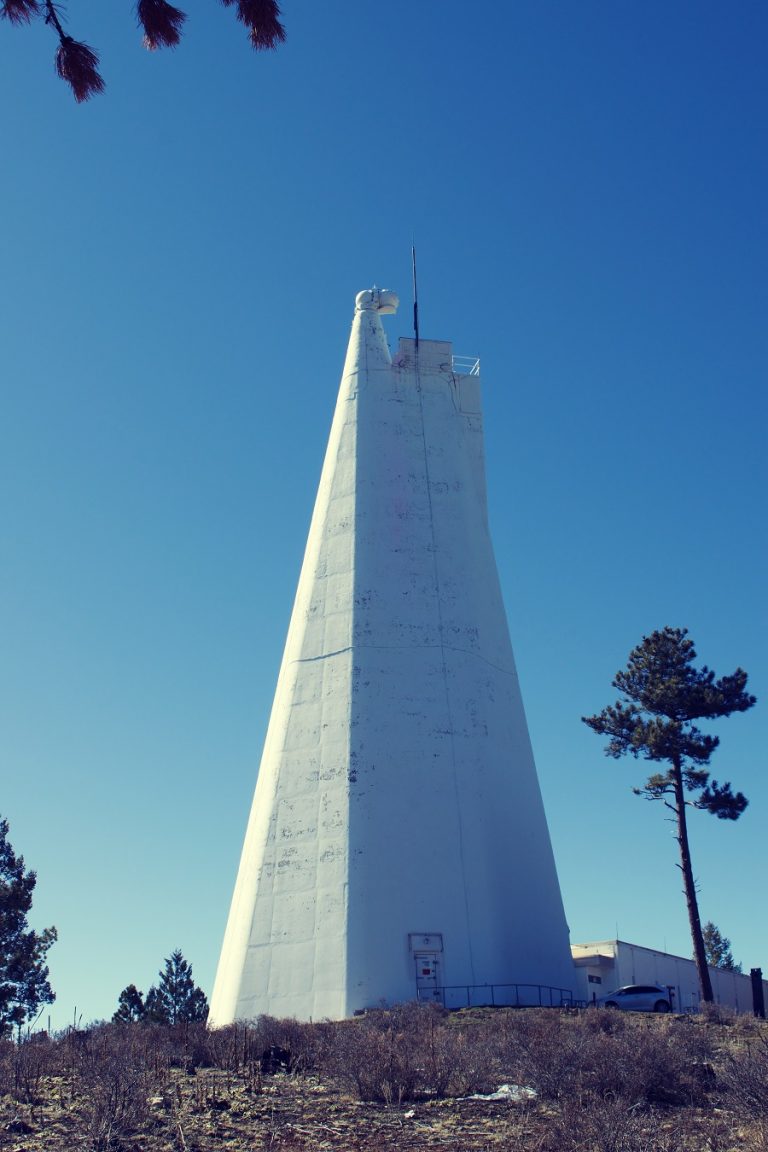
The Sunspot Solar Observatory in Otero County, New Mexico, remains closed more than 20 days after liquid mercury was discovered on the platform of its main telescope, forcing the shutdown of the facility, its visitor center, and nearby hiking and picnic areas.

Officials have released few details about the size of the spill, its cause, or the scope of the cleanup, saying only that the incident poses no risk to the public.

Mercury contamination

According to a public notice, two researchers from New Mexico State University discovered an unspecified amount of liquid mercury on January 5 while working inside the tower that houses the Richard B. Dunn Solar Telescope. Mercury is a highly toxic neurotoxin, and exposure—particularly through inhalation of mercury vapor—can pose serious health risks.

Safety protocols were immediately implemented to protect personnel and begin remediation. The observatory, visitor center, and surrounding grounds will remain closed until further notice, with no reopening timeline provided.

Mercury contamination requires strict cleanup procedures to prevent vaporization and the spread of toxic particles.

Officials, however, have not disclosed how extensive the cleanup is or what specific measures are being used.

A spokesperson for the Association of Universities for Research in Astronomy (AURA), which manages the facility, said the mercury leak was contained within the building.

But the spokesperson declined to provide further details on cleanup protocols or whether a cause has been identified.

Mercury is used in the telescope’s design because of its unique physical properties. According to the observatory’s website, the Richard B. Dunn Solar Telescope’s 250-ton platform floats on 120 gallons of liquid mercury, which acts as a low-friction bearing. This allows the massive optical system to rotate smoothly and precisely, keeping the telescope aligned with the sun as it moves across the sky. The mercury-bearing system also supports the observing room floor.

Built by the U.S. Air Force in 1969, the telescope has since undergone multiple upgrades and remains a key facility for solar research.

Solar Observatory 2018 shutdown

The prolonged closure has revived public attention partly because the observatory was also abruptly shut down in 2018, an incident that triggered widespread online speculation. At the time, the National Solar Observatory was closed for 11 days after armed federal agents arrived at the site, reportedly using Blackhawk helicopters.

Federal authorities later said the 2018 shutdown was linked to an investigation into a janitor accused of soliciting child sexual abuse material using the observatory’s internet connection. The FBI said the closure was ordered to prevent evidence from being compromised.

Officials stressed that the investigation had no connection to the observatory’s scientific work.

Despite those explanations, speculation resurfaced online following the current mercury-related closure. Some netizens have questioned whether the 2018 shutdown was connected to the observatory’s location on Sacramento Peak, which overlooks Holloman Air Force Base and lies within sight of the White Sands Missile Range.

There is no evidence to support claims that the observatory’s operations or closure are related to military surveillance or restricted defense activities. Officials have consistently attributed both the 2018 and the current shutdowns to safety and law-enforcement matters unrelated to the facility’s research mission.

The Sunspot Solar Observatory sits at an elevation of about 9,200 feet in the Lincoln National Forest near Cloudcroft, overlooking the Tularosa Basin. It is owned by the National Solar Observatory, which is under the U.S. National Science Foundation, and supports New Mexico State University’s operation of the telescope.

The extended closure and limited public disclosure have again raised questions about transparency, safety oversight, and public accountability at a federally supported research facility located on public land and frequented by visitors.

From Classroom to Career: IET Helps Change Lives in New Mexico

0

“IET is about equity.” 

This is how Integrated Education and Training (IET) instructor Nina Bar Giron of the University of New Mexico-Taos described the structured program that helps adult learners improve their academic skills while earning an industry-recognized credential aligned with a specific career or job goal.

For Giron, IET is about supporting her learners not just in their educational goals but also in their career aspirations.

“It’s about supporting all of our learners in their educational and career goals. The most rewarding moments for me as an adult educator in the IET classroom are when I see students gain confidence in their abilities,” she said. “Sometimes our students are the first in their families to earn any kind of academic credential, and it’s so moving to see their entire family show up to the end-of-semester celebration.”

Meanwhile, IET student Nicole Marcus said she was inspired by the IET instructors’ passion for the health care profession.

“I was grateful for their rallying to make sure we all understood the material and made it through the semester,” said Marcus. “It felt like family in the classroom, the lab and during clinicals. I admire my instructor’s diversified approach to teaching us how to grasp different learning concepts, retain material and build life skills in general. She helped me personally explore several styles of not taking, which supported me throughout the semester.” 

IET, offered by 19 adult education agencies across New Mexico, serves as a vital resource for adults seeking to launch or change their careers. Its programs combine strong academic skills development with workforce preparation and training in key sectors, such as infrastructure, clean energy, and child care. IETs also help adults improve their English language proficiency in the context of career training. 

The program consists of 40 active offerings this year and a total of 77 approved IET programs, covering a range of high-demand fields. These include workforce training and career pathway programs in healthcare, skilled trades, construction, energy, transportation, public safety, culinary arts, entrepreneurship, and workplace literacy designed to prepare individuals for in-demand jobs. 

Data from the New Mexico Higher Education Department’s Adult Education Division show that statewide enrollment in the IET system grew by nearly 50 percent in Fiscal Year 2025 compared to the prior year, with a total of 787 enrollees. Those students earned 487 industry-recognized certificates in high-demand fields, representing a 44 percent year-over-year increase.

“The state’s investment in IET is paying big dividends,” said Dr. Amber Gallup, director of the Adult Education Division of the Higher Education Department. 

Gallup said more and more New Mexicans are taking advantage of the opportunity to make a new start for themselves and their families.

“IET coursework is a catalyst to a new career, a new educational journey. Providing New Mexicans with broader opportunities to support their families and communities will continue to be our north star at the Adult Education Division.”

Gov. Michelle Lujan Grisham has made expanding IET programs statewide one of her priorities. In 2024, dozens of new workforce training programs were approved primarily at community colleges, funded by a recurring legislative appropriation of $2 million each year over the next three fiscal years.

New Mexicans who want to learn more about a nearby IET program are encouraged to visit the New Mexico Higher Education Department’s webpage. They may also contact the Adult Education Division at 1 (833) 675-1437.

New Study Explains How Emotions Spread Among Football Fans and Teams

0

A new international study proposes a mathematical model to understand how emotions and attitudes spread through football communities, opening new avenues for sport psychology and fan engagement strategies.

The research, titled “Propagation of Emotions and Attitudes in Football,” was published in the Journal of Applied Mathematics and Physics on January 27, 2026. The paper, authored by Mamadou Moustapha Diop and Aliou Sonko, introduces a hybrid analytical framework to examine how feelings — from joy and loyalty to frustration and dissent — move through networks of players, fans, and wider communities.

Why This Matters

Football isn’t just a game — it’s a global emotional ecosystem. Fans can experience collective joy after a win, or collective disappointment after a loss, and these moods often ripple through stadiums, social gatherings, and digital platforms.

Recent social science research shows that emotions within fan bases have real effects on behavior, including attendance, engagement, and even economic outcomes for clubs.

What sets this latest research apart is its attempt to mathematically model these emotional flows, treating emotions and attitudes like information waves in complex networks.

Modelling Emotions Like Data

The study builds on concepts from emotional contagion — the idea that feelings can spread from one person to another, consciously or unconsciously — and applies it to football contexts. In psychology, emotional contagion refers to how individuals mimic and adopt others’ expressions and moods, consciously and unconsciously.

By merging this concept with mathematical propagation models, the researchers aim to track how emotional signals move through a crowd or fan base in different matchday scenarios.

The full paper is technical. But the key goal is to reveal patterns, such as how enthusiasm builds and spreads among supporters; how negative feelings, like frustration or anger, might escalate after unfavorable refereeing decisions; and how attitudes — positive or negative — consolidate into broader fan sentiment.

Impact in the Digital Age

This work arrives at a time when football fandom isn’t limited to stadiums. Social media and online platforms have turned every match into a global emotional broadcast, where reactions spread in real time across continents. Studies in digital discourse show that emotional tone can shape online fan engagement, sometimes amplifying negative reactions or buoying positive support long after the final whistle.

Understanding the mechanics of this emotional spread can help leagues, clubs, and fan organizations craft better communication strategies, improve fan experience, and respond to crises — from controversial calls to disappointing results — more effectively.

Next Steps for Research

The authors situate their work amid a growing field that treats sports not merely as physical competition but as a social phenomenon shaped by psychology, digital behavior, and community dynamics.

Future work could connect these mathematical models with empirical data from social media or live spectator behavior, offering even deeper insight into football’s emotional currents.

New Mexico Supreme Court Ended ‘Home Wrecker’ Lawsuits

The New Mexico Supreme Court has abolished so-called “home wrecker” lawsuits, formally known as alienation of affection cases, ruling that they no longer make sense under modern divorce law.

What triggered the ruling?

The case that prompted the decision involved a divorced man from Colorado who sued a Taos, New Mexico resident. The plaintiff argued that the defendant was responsible for the collapse of his marriage and should be held legally liable.

The Supreme Court used the case to reexamine whether such claims still have a place in New Mexico law.

Why did the court strike them down?

In a unanimous ruling, the court said alienation of affection lawsuits are incompatible with New Mexico’s no-fault divorce system.

Under no-fault divorce, couples are not required to prove wrongdoing—such as infidelity or abandonment—to legally end a marriage. The court reasoned that allowing lawsuits that assign blame to a third party contradicts this framework.

The justices also noted that marriages can fail for many complex reasons, making it unreasonable and outdated to legally blame one individual outside the marriage.

Former US Senator sued

Former US senator Kyrsten Sinema is facing a civil lawsuit under a little-used legal doctrine commonly called a “homewrecker law,” or an alienation of affection claim.

The case, filed in North Carolina, alleges that Sinema played a role in the breakdown of a 14-year marriage, reviving public attention on a type of lawsuit that has largely disappeared across the United States.

What are ‘home wrecker’ lawsuits?

Alienation of affection lawsuits allow a spouse to sue a third party—often a romantic partner—for allegedly causing the breakdown of a marriage. Plaintiffs typically claim emotional harm, loss of companionship, or damage to family life.

Once common in the United States, these lawsuits have largely disappeared. Before the ruling, New Mexico was one of only about six states that still allowed them.

Alienation of affection lawsuits remain legally viable in five other states: Mississippi, Hawaii, North Carolina, South Dakota, and Utah, according to a Duke Law Journal article.

What does this mean going forward?

With the ruling, alienation of affection claims are no longer allowed in New Mexico. People who believe their marriages were harmed by infidelity can no longer seek damages from a third party in court.

The decision brings New Mexico in line with most of the country, where such lawsuits have already been abolished or struck down by courts.

Proposed Federal Actions Raise New Risks for Nonprofits’ Funding and Operations

The Nonprofit Champion newsletter from the National Council of Nonprofits reported that several federal developments as of late January 2026 could have material impacts on nonprofit finances and program delivery. Among the most pressing are threats to federal funding, the risk of a partial government shutdown, and ongoing legislative proposals that may affect nonprofit tax and regulatory landscapes.

Nonprofits rely heavily on federal grants and contracts to support services such as mental health care, housing assistance, and community programs. A White House proposal to suspend federal funding to so-called “sanctuary jurisdictions” raised concerns among nonprofit leaders, who argue that an abrupt withdrawal of support could disrupt services and force staffing or programming cuts.

At the same time, congressional negotiations over spending bills are nearing deadlines. With parts of the federal government at risk of a partial shutdown if bipartisan agreements are not reached, nonprofit grant streams, contract reimbursements, and essential public services could face interruptions.

In addition to funding uncertainties, the newsletter highlights several policy items under discussion that could influence the sector’s operating environment. These include proposed tax and oversight changes from the House Ways and Means Committee, anti-fraud legislation with potential implications for federal programs, and state efforts to adjust nonprofit regulatory regimes.

Key policy developments nonprofits are tracking

  • Federal funding risks: Executive branch memos and proposed suspension actions may affect grants and contracts in sanctuary jurisdictions.
  • Government shutdown threat: Congress faces a late-January deadline to fund key federal agencies, with partial shutdowns risking the implementation of nonprofit grants.
  • Legislative oversight and tax proposals: New IRS oversight letters and tax reconciliation frameworks could alter nonprofit compliance and tax treatment.
  • State regulatory changes: Various states are introducing legislation affecting nonprofit governance, charitable status definitions, and tax conformity.

The report also noted leadership shifts within the National Council of Nonprofits’ board, with three new leaders bringing experience from state associations and community consulting groups. Sector advocates emphasized the importance of proactive planning and advocacy, urging nonprofits to communicate with policymakers and reinforce narratives about their community impact.

Policy watchers say the combination of federal funding uncertainty, potential shutdowns, and legislative overhauls underscores continued volatility in the nonprofit policy environment. For organizations dependent on public resources, the timing and substance of federal decisions could influence operational budgets well into the 2026 fiscal year.

New Mexico Supreme Court Lets Santa Fe ‘Mansion Tax’ Stay in Effect

The New Mexico Supreme Court has declined to reconsider a lower court’s decision allowing Santa Fe’s “mansion tax” on high-end home sales to remain in effect, ending a key legal challenge and clearing the way for the city to continue collecting the levy. The ruling on Thursday upheld a prior appellate decision that the tax can be applied as approved by voters, though opponents may still pursue additional appeals.

The ruling brings a long-running legal battle to a pivotal moment for Santa Fe’s housing policy. The tax is designed to generate revenue for affordable housing programs at a time when rising home prices and limited supply have strained living costs in the city. Supporters say the levy will fund housing assistance, while critics argue it could dampen the luxury real estate market.

Santa Fe voters approved the excise tax in a 2023 ballot measure, backing a 3 percent charge on the portion of a home sale that exceeds $1 million within city limits. The additional revenue is earmarked for the city’s Affordable Housing Trust Fund, which supports rental aid, down-payment assistance, and other housing initiatives. The amount collected can vary with market conditions, but has been projected to be several million dollars a year.

Key facts about the ‘mansion tax’ and the court decision

  • Tax structure: A 3 percent excise tax on the portion of residential property sales above $1 million within Santa Fe city limits.
  • Intended funding: Proceeds go to Santa Fe’s Affordable Housing Trust Fund to support housing affordability programs.
  • Voter approval: The tax was approved by a wide margin in the November 2023 municipal election.
  • Legal path: A district judge previously struck down the ordinance, but the New Mexico Court of Appeals reversed that decision and allowed the tax to proceed. The Supreme Court’s refusal to reconsider means the appellate ruling stands.
  • Ongoing challenge: Opponents, including the Santa Fe Association of Realtors and individual property owners, have indicated they may continue to appeal the matter.

Supporters of the tax argue it reflects voters’ will and provides a dedicated revenue stream to address one of Santa Fe’s most pressing challenges: housing affordability amid rising real estate values. Sales of higher-priced homes have increased in recent years, widening the gap between housing supply and demand, particularly for middle-income residents and workforce households.

Critics, primarily in the real estate industry, contend that imposing additional costs on luxury home transactions could suppress activity at the top end of the market or complicate negotiations between buyers and sellers. They also argue that the city lacks the legal authority to impose such a tax and that alternative strategies may better support housing goals.

The Supreme Court’s decision to let the appellate ruling stand effectively affirms that the city can continue collecting the levy unless a future legal challenge overturns the law on other grounds. For Santa Fe officials and affordable housing advocates, that outcome allows ongoing planning for how tax revenues will be deployed. For sellers and buyers in the luxury segment, it introduces a new cost consideration for transactions above the $1 million threshold.

As the city implements the tax, analysts and market participants will be watching how it affects sales patterns, pricing behavior, and housing affordability in one of New Mexico’s most expensive residential markets.

Advances Revive Debate On Terraforming Mars, Researchers Say

0

Rapid advances in space technology, synthetic biology, and climate modeling have reignited scientific debate over terraforming Mars, shifting the idea from science fiction toward a long-term research question with profound ethical implications.

Terraforming is the theoretical process of altering a planet’s environment—its atmosphere, temperature, and climate—so it can support human life and Earth-like ecosystems. Among all planets in the solar system, Mars has emerged as the most frequently discussed candidate, due to its relative proximity and evidence of water ice beneath its surface.

For decades, scientists largely dismissed the idea as technologically impossible. But an international group of researchers led by Dr. Erika DeBenedictis of Pioneer Labs is reconsidering that assessment.

In a workshop summary prepared for the upcoming 2025 Green Mars Workshop, DeBenedictis argued that terraforming should be studied as a legitimate scientific research program—not as an immediate goal, but as a framework for understanding what might be possible in the distant future.

“Thirty years ago, terraforming Mars was not just difficult—it was effectively impossible,” DeBenedictis wrote. “Today, advances across multiple fields have fundamentally changed the conversation,” he added.

Lower launch costs, new biology

The researchers point to several developments that have reshaped the debate. These include potential reductions in launch costs through next-generation spacecraft such as SpaceX’s Starship, major advances in synthetic biology, and improved climate modeling capabilities.

Researchers shifted their discussions from whether terraforming violates the laws of physics toward more complex questions. How could it be done? Over what timescale? And should it be done at all?

Rather than proposing a single solution, the team outlined a phased pathway toward a more habitable Mars.

A staged vision for Mars

The first phase would focus on warming the planet. Scientists suggest that Mars’ average temperature could be increased by several tens of degrees Celsius within decades by releasing specially engineered greenhouse gases or aerosols.

Studies indicate that Mars contains enough frozen water to form an ocean covering nearly four million square kilometers, with an average depth of about 300 meters. A global temperature increase of around 30 degrees Celsius could allow this ice to melt, enabling liquid water to persist on the surface.

The second phase would introduce life at the microscopic level. Using synthetic biology, researchers envision designing extremophiles—microorganisms engineered to survive intense radiation, extreme cold, and low atmospheric pressure. Once deployed, these microbes could spread across the planet within decades, gradually altering the atmosphere through photosynthesis.

The final phase would unfold over centuries or even millennia. The goal would be to build an oxygen-rich atmosphere capable of supporting complex life. This process could begin inside massive domed habitats, some up to 100 meters tall, where oxygen would be generated through photosynthesis or water electrolysis. Over time, plant life could expand beyond these structures, slowly contributing oxygen to the wider Martian atmosphere.

Scientific gaps and ethical concerns

The researchers also highlighted major unanswered questions. What lies beneath Mars’ extensive ice sheets? How would dust storms behave in a warmer, wetter environment? Are the materials necessary for large-scale oxygen production abundant on Mars?

Beyond technical challenges, ethical concerns loom large. Terraforming would permanently alter Mars, potentially destroying a pristine geological record critical to understanding planetary history. If indigenous Martian life exists, even in microbial form, human intervention could erase it before it is discovered.

Still, the team argues that studying terraforming could yield immediate benefits for Earth. Technologies developed for sustaining life on Mars. These technologies include closed-loop ecosystems, drought-resistant crops, and highly efficient energy systems, which could be adapted to address climate and sustainability challenges on the home planet.

“Learning how to make Mars habitable,” the researchers said, “may also help us learn how to better protect the only habitable world we currently have.”