Home Blog Page 23

Greenville Ransomware Attack Underscores Urgent Need for Stronger Cybersecurity in US Cities

0

A recent ransomware attack on Greenville’s computer network has caused the city to lose access to police databases, utility billing systems, and other city services. City officials said the breach began on August 5 and confirmed that many of the systems remain out of service nearly a month later as recovery work continues.

According to city records, emergency dispatch and 911 services remain intact, but the attack has forced widespread workarounds in the city. However, the Greenville Electric Utility System, or GEUS, has paused late fees and disconnections since customers cannot reach their billing accounts online.

Residents are being asked to make payments in person. According to city officials, any amount paid above what is owed will be rolled into the next bill, while shortfalls will be carried forward.

Residents have also reported intermittent phone outages, according to statements released by the city. Greenville has filed a catastrophe notice with the Texas Attorney General’s Office, delaying the release of public records until systems can be restored.

Officials said about 20 outstanding records requests remain unfulfilled and may not be processed for several weeks, though some could become available as early as next Tuesday.

The attack has prompted Greenville to bring in outside help from cybersecurity experts and law enforcement agencies to assist in recovery. As of today, no ransom demands or stolen sensitive resident data have been disclosed. The city’s focus is on rebuilding access to essential records and restoring daily operations.

The recent attack on Greenville underscores the growing vulnerability of local governments nationwide as cybercriminals escalate their targeting of municipal systems. According to the security firm Emsisoft, more than 117 government entities were hit by ransomware attacks in 2024, with the actual number likely much higher because many incidents go unreported.

Analysts say municipalities are particularly at risk because they often depend on aging technology while operating with small cybersecurity teams. A report earlier this summer found that more than 80 percent of local governments employ fewer than five dedicated cybersecurity staff.

Human error, most often through phishing emails, remains one of the main points of entry. However, training programs have proven to reduce this risk dramatically, lowering susceptibility rates from one-third of employees to fewer than 5% after sustained exercises.

The growing cyber attacks on municipal systems have reached Washington and reignited debates over how to help cities defend themselves. Lawmakers are considering a requirement for ransomware incidents to be reported within 72 hours, a rule that advocates say could enable federal agencies to provide quicker aid and coordination. Some are also pushing for increased federal funding, pointing to the strain cities face as they attempt to maintain critical services with limited resources.

While Greenville’s predicament highlights the costs of falling behind, some experts argue that cities can no longer rely solely on reacting after a breach. This situation is prompting organizations to execute proactive measures like simulated cyberattacks on their own networks or “red team” exercises to expose weak spots before adversaries exploit them.

Cybersecurity specialists say municipalities, in particular, would benefit from such approaches because the stakes involve public safety, financial stability, and residents’ trust in government institutions.

The Greenville ransomware attack is a part of a broader story that carries implications far beyond one Texas community. The apparent truth is, cities of all sizes are increasingly being targeted, and the federal government is under mounting pressure to help local governments prepare before the next wave of attacks arrives.


Jaguar Land Rover Shuts Down UK Production After Cyberattack Disrupts Systems

0

Jaguar Land Rover was forced to shut down production and retail systems this week after a cyberattack disrupted operations at key UK sites, including the Halewood plant in Merseyside, the company said on Tuesday. JLR described the disruption as “severe” and confirmed it had taken systems offline as a precaution while it works to restore operations in a controlled manner. The carmaker said there was no evidence that customer data had been stolen.

The incident began as Britain’s “75-plate” registrations hit showrooms, among the busiest weeks of the year for dealers. Workers at Halewood were told early on Monday not to report for duty as the company enacted a protective shutdown across applications that support manufacturing and sales. Dealers reported they could not register new cars on Monday, compounding the timing problem during plate-change week.

A group of English-speaking hackers with links to the attack on Marks & Spencer this year claimed responsibility on Wednesday via a Telegram channel that combines the names of Scattered Spider, Lapsus$, and ShinyHunters. The channel posted a screenshot that appeared to show access to internal JLR systems. Britain’s National Crime Agency said it was aware of the incident and was working with partners to understand its impact.

Operational fallout has extended beyond JLR’s plants. Industry sources told The Guardian that suppliers, which make just-in-time deliveries to JLR factories, could lose tens of millions of pounds in sales if stoppages persist. The dealer network’s registration issues on Monday added pressure during a crucial sales window.

The company’s parent, Tata Motors, told investors JLR was “working at pace” to resolve global IT problems affecting the business. Tata Motors shares fell about 0.9 percent in Mumbai on Monday after the disclosure.

The attack lands as JLR is managing a challenging year. Underlying pre-tax profit fell 49 percent to £351 million in the quarter to June. The company delayed the launches of its electric Range Rover and next-generation Jaguar models until 2026 and announced up to 500 management job cuts in July.

PB Balaji, currently Tata Motors’ chief financial officer, is due to become JLR’s chief executive in November, succeeding Adrian Mardell, who is retiring. Earlier this year, JLR paused exports to the United States amid tariff uncertainty; a subsequent UK–US deal reduced those car export tariffs, but only after the quarter in which profits fell.

This incident is not JLR’s first run-in with cybercriminals this year alone. In March, hackers affiliated with the HELLCAT group claimed to have leaked internal material, including source code and employee details, which researchers later reported a second data dump by a separate actor. While those earlier breaches focused on data, the current episode underscores the operational stakes when attackers reach systems tied to production and retail.

JLR has invested heavily in its digital backbone. In September 2023, it expanded a five-year partnership with Tata Consultancy Services valued at more than £800 million to simplify and manage its IT estate and accelerate digital transformation. That outlay is now being tested by the demands of recovery and the need to harden the boundary between administrative networks and factory-floor systems.

The company said it is restoring applications in phases and declined to provide a timeline for full resumption of normal operations. As of Tuesday, it maintained that no evidence had emerged of stolen customer data, even as manufacturing and retail remained severely disrupted.

Hackers Turn Personal, Targeting Google’s Defenders

0

On September 2, a hacker group calling itself the Scattered LapSus Hunters threatened Google with a data leak unless two of its top security experts, namely Austin Larsen and Charles Carmakal, were fired.

The demand, made through the messaging app Telegram, is unusual. Hackers typically threaten companies, not individuals. By naming names, the group has shifted the battle from a corporate fight to a personal one.

Google has not confirmed whether its systems were breached, but the threat alone points to a troubling change in how cybercrime is carried out.

Mr. Larsen and Mr. Carmakal are well-known inside Google’s security ranks. Both work in the Threat Analysis Group, a team that investigates major hacking operations.

Mr. Carmakal, once the chief technology officer at the cybersecurity firm Mandiant before Google bought it, has helped companies respond to some of the most significant data breaches of the last decade.

On the other hand, Mr. Larsen is recognized for his work tracking groups like Scattered Spider, a collective blamed for attacks on airlines, video game makers, and technology firms.

For the hackers, targeting these two men is about more than removing obstacles. It is about making the fight personal, and in doing so, undermining the confidence of the very people responsible for exposing their methods.

The coalition behind the threat appears to be a mix of three groups: Scattered Spider, Lapsu$, and ShinyHunters. Each has a history of bold attacks.

Scattered Spider is known for tricking employees into giving up login details, sometimes by hijacking phone numbers through a technique called SIM swapping. Lapsu$, which gained attention in 2022, broke into companies including Microsoft, Nvidia, and Okta, and often bragged about its successes online. ShinyHunters was behind a 2023 breach of the cloud company Snowflake, which exposed data from hundreds of corporate clients.

In early August, members of these groups began posting under the joint name Scattered LapSus Hunters. On Telegram, they shared stolen information, issued taunts, and made demands.

The channel was later banned, but not before showing how hackers now combine technical skills with intimidation tactics meant to pressure companies into compliance.

The personal targeting of Larsen and Carmakal illustrates how the fight has shifted. Cyberattacks are no longer only about stealing information or disrupting services.

They are now about weakening the people who protect against them, raising the risk of harassment, reputational damage, and personal stress for those on the front lines.

Experts say this new phase of cybercrime means companies must do more than secure their networks. They must also protect their staff.

That could mean limiting how much personal information about employees is publicly available, using stronger authentication for logins, monitoring for leaked data, and offering legal and emotional support when threats arise.

For Google, the demand tests its willingness to stand by its security team. For the wider industry, it marks a turning point. Hackers are no longer only attacking companies. They are naming individuals, bringing a corporate struggle into the personal lives of the people sworn to defend it.

A Decade-Old Bug Still Haunts America’s Smallest Agencies

0

When the FBI issued a public warning in August about Russian hackers abusing a long-known flaw in Cisco devices, the message wasn’t aimed at Wall Street or big tech. It was meant for the kinds of organizations most people rarely notice—local utilities and regional authorities that keep everyday services running and often operate with thin budgets and aging gear. On the same day, Cisco’s threat-intelligence team published technical details that underscored the risk.

The campaign is attributed to a Russian state-sponsored group that security researchers call Static Tundra, which they link to the F.S.B.’s Center 16 unit and to the broader cluster known as Energetic/Berserk Bear. According to US officials and Cisco researchers, the group has spent more than a decade compromising network devices as a beachhead for long-term espionage.

At the center is CVE-2018-0171, a vulnerability in Cisco’s Smart Install feature. Left unpatched, it exposes devices listening on TCP port 4786 and can allow attackers to crash equipment, seize control, or plant code that persists across reboots. Many victims, investigators say, are running end-of-life hardware that never received updates.

The FBI says the actors have recently collected configuration files from thousands of US networking devices tied to critical infrastructure, in some cases modifying settings to enable unauthorized access and reconnaissance. Cisco reports similar activity worldwide, with particular focus on Ukraine and allied countries since the war began.

While the current wave is aimed at data collection and access, the tradecraft echoes earlier router compromises. Investigators have tied the group to historic use of “SYNful Knock,” a stealthy firmware implant first documented in 2015 that gives attackers durable control over Cisco routers.

US agencies and Cisco urge organizations to take basic but often under-resourced steps: apply patches or disable Smart Install, implement phishing-resistant multifactor authentication, segment networks so a single failure doesn’t cascade, and audit internet-facing devices for unexpected changes. For small public agencies with limited staff, those measures can be difficult to sustain—yet they remain the strongest defense.

Vendor Weak Link: Allianz Life Breach Puts Third-Party Security Under the Microscope

0

In mid-July 2025, hackers gained unauthorized access to a cloud-based customer-management system used by Allianz Life Insurance Company of North America. The company disclosed the breach later that month.

The incident ranks as a significant breach at a major US life insurer in recent years, affecting a broad cross-section of the company’s policyholders, financial advisers, and employees.

Company officials said the attackers infiltrated the third-party platform on July 16 and retrieved a large set of personal records. The files contained routine identifiers—names, home and email addresses, phone numbers, and dates of birth—and, in some cases, more sensitive details such as Social Security numbers and tax identification numbers. Security experts note that once such identifiers are exposed, they can be exploited indefinitely for identity theft and fraud.

After identifying the intrusion, Allianz Life reported the breach to the Federal Bureau of Investigation. The company says there is no evidence that its internal corporate systems, including policy administration platforms and network infrastructure, were accessed. Early findings indicate the exposure was confined to a third-party system, though the scale of the incident has drawn scrutiny from regulators and consumer advocates.

By early August, Allianz Life had begun notifying affected individuals and offering 24 months of credit monitoring and identity-protection services at no cost. Consumer advocates caution that the risks can extend well beyond any monitoring period, because Social Security numbers and similar identifiers cannot be replaced or revoked.

Independent researchers, including the breach-reporting service Have I Been Pwned, as reported by SecurityWeek, have verified the scale of the leak and revealed that 72% of exposed email addresses had already appeared in prior breaches. This overlap enables criminals to combine older data with newly exposed details, building fuller profiles of victims that make phishing more persuasive and fraudulent account openings harder to detect.

The Allianz Life case also underscores the growing risk posed by outside vendors in financial services. According to Verizon’s 2025 Data Breach Investigations Report, about 30% of breaches involved third parties. That pattern points to a structural weakness: firms can invest heavily in their own defenses yet remain exposed through partners and contractors on which they rely.

Thus, the attack has renewed calls for stronger oversight of supply-chain partners and wider adoption of Zero Trust security models, which assume that no user or system should be trusted by default. Analysts say these approaches can be costly but remain among the most effective ways to limit the impact of intrusions of this kind.

Allianz Life has filed breach notices with several state attorneys general, including Maine and Washington, and reviews are underway. The case is likely to give added momentum to state privacy measures and to renew calls for a single, nationwide data-security standard.

For Allianz Life, the breach represents not only a technical incident but also a reputational test. Trust sits at the center of life insurance and retirement planning, and a public loss of confidence can carry lasting consequences.

With IronCircle’s Move, Maryland Pushes to Build the Nation’s Cyber Talent Hub

0

On an August morning in Columbia’s Merriweather District, Governor Wes Moore joined IronCircle executives to cut the ribbon on the company’s new global headquarters. The move from Florida to Howard County is expected to bring more than 200 jobs, and for Maryland officials, it represents another step in shaping the state into a hub for cybersecurity.

The decision to relocate was partly driven by geography because Columbia sits within a short drive of Fort Meade, home to the National Security Agency and U.S. Cyber Command. That proximity, combined with a dense network of contractors and technology firms, has made central Maryland one of the busiest cyber corridors in the country.

With such a concentration of federal agencies and private firms, Maryland has seen a surge in demand for skilled workers. State figures show that more than 24% of information technology job postings in Maryland now require cybersecurity skills.

However, even with starting salaries exceeding $100,000, employers continue to struggle with hiring. Across the United States, workforce trackers estimate that more than half a million cyber jobs were listed over the past year, leaving gaps that affect not just corporations but also schools, hospitals, and even local governments.

IronCircle has built its business model around this shortage through its training platform. It utilizes artificial intelligence to simulate cyberattacks and adjusts the difficulty level based on the learner’s skills. IronCircle claims to bridge the gap between classroom instruction and the speed of real-world threats. From its new Maryland base, the firm plans to expand its workforce and increase opportunities for contractors, instructors, and institutions that already utilize its platform.

For Moore, the relocation aligns with a broader strategy. His administration has directed millions of dollars to community colleges to expand cyber courses, including funding for new training labs. It has also steered money to programs such as Cyber Maryland, which aims to connect schools, businesses, and government agencies in developing the workforce.

State leaders argue that investments like these are already paying off. Maryland has nearly 19,000 information technology businesses, generating about $80 billion in annual output and employing more than 124,000 people. Howard County alone is home to almost 300 cybersecurity firms, a cluster that provides students and professionals with a direct path from training to employment.

James C. Foster, IronCircle’s chief executive, has warned that the gap remains even as training programs multiply and salaries climb. Forster argued that the shortage of cyber talent is “growing by the year,” and with advances in technology continually raising the bar, new demands continue to emerge that even schools and companies struggle to meet.

Artificial Intelligence, for example, illustrates that tension. Although the tool is being used to train workers and strengthen defenses, it is also available to attackers. Britain’s National Cyber Security Centre has cautioned that AI is lowering the barrier for would-be criminals and is likely to drive a rise in ransomware within the next two years.

That dynamic has made workforce development both an economic and a security concern for the state of Maryland. A vacancy can leave a small business, a hospital, or a school system more vulnerable. Filling that role not only brings a paycheck but also adds to the state’s resilience at a time when nearly every part of the economy depends on secure networks.

IronCircle’s new headquarters is one piece of that puzzle. Its presence in Columbia reflects the state’s bet that building the workforce will bring jobs and also strengthen its role in defending against the next wave of digital threats.

Cybersecurity Turns Proactive as Companies Attack Themselves Before Hackers Do

0

Security leaders are rethinking the way they defend their networks. What used to be a system that was built solely on the defensive has evolved into a more proactive approach, with companies choosing to attack themselves first to expose weaknesses.

This “new idea” of securing networks was recently highlighted in a TechRadar Pro analysis that detailed a significant shift in how organizations think about cybersecurity. For decades, cybersecurity networks were built on a defensive approach: create walls, patch systems, and respond when intruders broke through.

Today, as attacks become faster and more sophisticated, many security teams are turning to controlled intrusions through staging their own red team exercises, automating penetration tests, and simulating exploits to determine weaknesses before criminals do.

And this approach is being driven by a new reality—AI.

Cyberattacks have not only grown in number in recent years but also in sophistication, with artificial intelligence powering everything from malware that adapts in real time to phishing emails that look indistinguishable from genuine communication.

While exact figures vary, the damage is rising. For example, average ransomware payments passed the million-dollar mark, more than twice the level of the previous quarter, according to ITPro. Investigators say the surge is less about one-off cases and more about a shift in tactics.

Criminal groups are leaning on AI tools to automate tasks that once slowed them down—writing convincing phishing messages, tailoring malware on the fly, and scaling campaigns that previously required large crews.

The speed and scale made possible by artificial intelligence are what alarm researchers most. They point out that the very tools helping criminals accelerate their operations could just as easily be placed in the hands of defenders. And that tension has led many in the field to call AI a double-edged sword. The same algorithms that allow attackers to scan entire networks for misconfigurations or generate new exploits in minutes can also be used by security teams to probe their own systems with equal intensity.

Academic studies have shown that AI can accelerate the discovery of weaknesses, but most experts caution against overstating precision metrics. What is clear, however, is that AI has collapsed timelines on both sides of the battle.

One instance is that the Cybersecurity and Infrastructure Security Agency has repeatedly encouraged critical infrastructure operators to adopt proactive security practices. In recent advisories, the agency pointed to red team assessments and the testing of AI models under stress as examples of methods that can strengthen resilience.

The Department of Homeland Security even went further in 2024 by publishing AI safety and security guidelines that urged operators to move beyond static defenses and treat cyber readiness as a continuous process.

For many security officers, the shift is not about abandoning traditional safeguards but about changing the timeline. Firewalls, detection systems, and antivirus software remain essential, but they are no longer seen as enough on their own.

The priority is to discover vulnerabilities during a drill, not in the middle of a crisis. The strategy, however, is not without complications. Misconfigured test environments can cause outages, and some organizations worry about blurring the line between a controlled simulation and a real-world breach.

Despite the risks, momentum is building. Analysts and industry experts believe that offensive testing, powered in part by AI, will move steadily into the mainstream. Within a few years, many expect it to be a standard part of security programs across both business and government.

What is emerging is a new kind of playbook. Security teams are no longer content to defend passively. Instead, they are trying to think like their adversaries, act first, and build systems that can withstand the next wave of attacks before it arrives.

New Mexico Colleges Take a $102 Million Blow as Federal Research Stalls, With Tribal Schools Bracing for Deeper Cuts

State officials in New Mexico say public colleges face about $102 million in losses from canceled federal research grants, stop-work orders, and delayed projects. The state Higher Education Department says the disruption is already affecting public colleges, special schools, and the University of New Mexico Health Sciences Center, with the heaviest losses at research-reliant campuses.

The New Mexico Institute of Mining and Technology faces the largest gap at $32 million, followed by New Mexico State University at $19 million and New Mexico Highlands University at $18 million. Stephanie Rodriguez, New Mexico’s higher education secretary, said her agency is tracking the impact on campuses and sharing the information with the governor’s office and the Department of Finance and Administration to inform decisions in the 2026 session.

The budget strain comes as the department conducts its annual capital outlay assessments through visiting campuses to review infrastructure needs ahead of funding decisions. This year, higher education institutions requested nearly $500 million for construction and repairs. Still, the department estimates only about $300 million will be available, which means many projects will be delayed even without the federal funding disruption.

Tribal colleges and universities in New Mexico and across the country are facing an even more acute threat. The administration’s fiscal year 2026 budget proposal would reduce operations funding for Bureau of Indian Education post-secondary programs from about $183.3 million to $22.1 million, an 88% cut that would take effect on October 1, 2025, if Congress enacts it. Those programs include career and technical schools, community colleges, and four-year institutions that serve Native students.

According to the American Indian Higher Education Consortium, tribal colleges depend on federal funding for about three-quarters of their operating budgets. Leaders have warned that if the proposal is enacted, some campuses could close, eliminating jobs and displacing students. At the Institute of American Indian Arts in Santa Fe, where roughly 80% of students are Native and 92 federally recognized tribes are represented, administrators have been working with New Mexico’s congressional delegation to preserve funding.

The funding debate comes against a backdrop of longstanding underinvestment in tribal higher education. A 2024 investigation by ProPublica and The Hechinger Report found that Congress underfunds the nation’s 37 tribal colleges by about $250 million each year compared with what federal law authorizes. The 1978 Tribally Controlled Colleges and Universities Assistance Act sets base funding at $8,000 per Native student, adjusted for inflation, but appropriations have rarely met that level. Advocates argue the shortfall undermines commitments tied to the federal trust responsibility to Native nations.

State and federal officials have not yet said how they will address the looming gaps. In Washington, a House panel advanced an Interior–Environment spending bill that provides overall funding for the Bureau of Indian Education but does not spell out post-secondary program levels. In Santa Fe, HED is feeding impact data to state budget officials as they prepare recommendations for the 2026 session, while college leaders say the outcome in Congress could determine whether some campuses can continue operating.

Cyberattack on Federal Courts Exposes Vulnerabilities in Judiciary’s Aging Systems

0

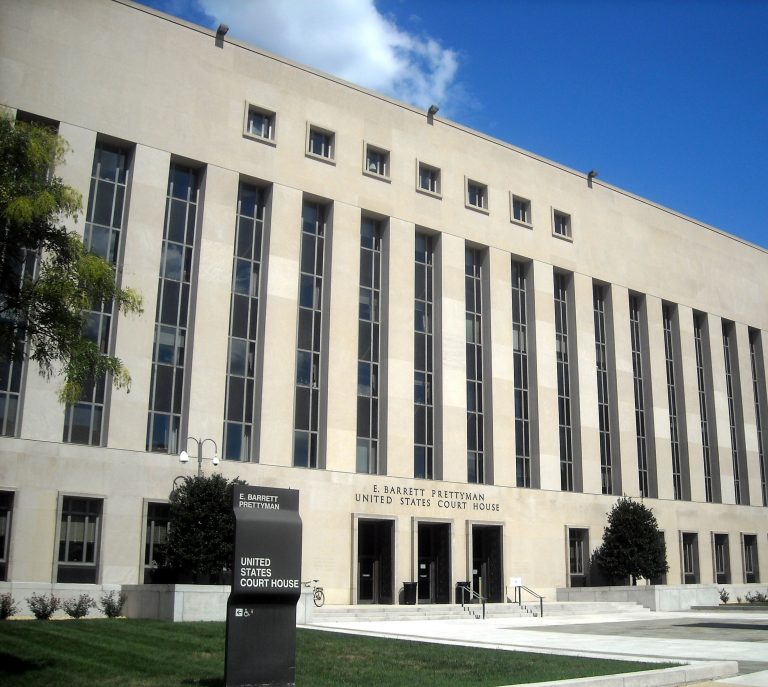
A major cyber intrusion has compromised critical systems used by the US federal courts, disrupting operations in multiple districts and raising fears of potential exposure of sensitive case records. The breach, which was publicly confirmed by the Administrative Office of the US Courts (AO) on Aug. 7, affected the judiciary’s two primary digital platforms: the Case Management/Electronic Case Files (CM/ECF) system and PACER—two essential portals responsible for providing public access to court filings.

According to officials familiar with the matter, the attack was detected in early July and is now under investigation by the Department of Justice, the Department of Homeland Security, and other federal partners. While the AO did not describe the incident as a complete shutdown, several courts have taken portions of their filing systems offline as a precaution. Some sensitive filings are being handled outside of the electronic system entirely.

The AO called the incident a “serious compromise” of judicial infrastructure, one that prompted immediate steps to limit access and strengthen security protocols. The move follows years of warnings from the Government Accountability Office and judiciary officials that the courts’ digital systems (which were built decades ago) are increasingly vulnerable to sophisticated cyber threats.

Federal agencies have not yet confirmed who was responsible. A recent update, however, revealed that investigators are examining whether the breach is linked to Russian-affiliated hacking groups due to similarities with previous espionage campaigns. But officials stress that attribution remains preliminary, and it could take months before they know the full scope of the attack or whether any sealed or classified materials were taken.

What is clear, however, is that any leak of confidential case records could have far-reaching consequences. This might include exposure of sealed filings that could jeopardize active law enforcement operations, reveal the identities of confidential informants, or be used to intimidate witnesses.

In Washington, the incident has triggered calls for accountability and reform. Members of Congress, already briefed on the breach in late July, have requested classified follow-ups and are pressing for public hearings. Lawmakers from both parties say the episode underscores the judiciary’s chronic underinvestment in cybersecurity.

CISA, the Cybersecurity and Infrastructure Security Agency within DHS, is sharing threat information and technical guidance with the judiciary as the investigation unfolds. Forensic teams are combing through compromised networks to determine how the attackers gained access and whether they altered or removed records.

However, restoring secure, nationwide digital access will not be quick. Officials say the process will unfold in phases, beginning with hardening existing systems and expanding protections for high-risk cases.

For the judiciary, which has long operated with far less cybersecurity attention than executive branch agencies, the breach marks a sobering shift. The courts, once considered a lower-priority target for foreign adversaries, are now firmly in the crosshairs.

And for a democracy built on the rule of law, the warning is plain: safeguarding the integrity of judicial records is no less critical than protecting the ballot box.

New Mexico Overhauls Graduation Rules for the Class of 2029

For the first time in more than a decade, New Mexico is changing what it takes to graduate from high school. In an overhaul that state leaders believe will make “learning more relevant to students’ lives,” a new personalized requirement has come to light.

Starting with the Class of 2029, Algebra II, long a flashpoint in education debates, will no longer be required for everyone. Although districts are still required to offer the course, students can now choose other math classes that better match their career plans or personal interests.

The standard requirement of 24 credits, which includes 4 years of English and Math to earn a diploma, remains the same.

This change was signed into law in 2024 under House Bill 171. The law gives each district and charter school the power to set two elective credits of their own, tailored to local needs. Supporters say it marks a shift away from a one-size-fits-all checklist toward a more flexible system.

“It’s really connecting students to like why they go to school, and really finding what their own passions and interests are, and not making every student’s career path in high school look the same,” said Gabriella Durán Blakey, superintendent of Albuquerque Public Schools.

One thing that the public needs to know about this overhaul is that the state’s core requirements remain largely intact: three years of science and four years of social science. The social studies sequence must now include U.S. history and geography (with New Mexico history woven in), world history and geography, and a government and economics course that incorporates personal financial literacy.

Albuquerque, the state’s largest district, will go further. Starting in 2025–26, it will require a half-credit in Personal Financial Literacy and add 1.5 extra elective credits.

Amanda DeBell, a deputy secretary at the Public Education Department, said that flexibility will allow districts to shape courses around their communities. “For example, we see districts offering more agricultural-type electives… or we see additional language courses being added as a requirement,” she said.

New Mexico’s graduation rules had not been updated since 2009. In earlier reform attempts, Algebra II was the sticking point — viewed by some as essential preparation for college math, and by others as an unnecessary hurdle for students headed into other fields.

The decision to drop it as a blanket requirement follows a national trend. For example, Oregon now uses a “2+1” model, where the third math credit can be filled with classes like data science or quantitative reasoning. Florida requires Algebra 1 and Geometry, but allows other rigorous math courses in place of Algebra II.

Financial literacy mandates are also spreading. According to the nonprofit Next Gen Personal Finance, 27 states now require a stand-alone course in personal finance for graduation. Advocates say these classes teach vital skills for adulthood, while critics warn that quality depends on how well they are taught.

Districts have little time to act. This fall’s first-year students will be the first to graduate under the new rules, and schools must decide within weeks which locally designed electives they will offer.