Home Blog Page 25

New Mexico Commits $10 Million to Modernize HVAC and Electrical Systems in Public Schools

New Mexico has embarked on a significant initiative to modernize the heating, ventilation, and air conditioning (HVAC) and electrical infrastructure in its public schools.

As Senate Bill 125 was signed into law earlier this year, the law allocates $10 million annually beginning in the 2025–2026 fiscal year to fund critical upgrades in school buildings across the state.

The program is aimed primarily at replacing outdated systems—some more than 40 years old—that continue to serve classrooms throughout New Mexico, particularly in underserved and rural districts.

The newly created Building System Innovation Project, an amendment to the Public School Capital Outlay Act, provides a dedicated funding stream outside the existing severance tax bond-backed capital outlay process. The revision empowers the Public School Capital Outlay Council to direct money from the state’s general fund into projects that focus specifically on improving HVAC systems, electrical wiring, and ventilation infrastructure.

Districts seeking funds must submit detailed assessments of their current systems, demonstrate a commitment to energy efficiency, and outline plans to reduce energy consumption.

Projects that are ineligible for existing federal or state grants—such as those not covered by the Public School Capital Outlay Council’s existing framework—will receive priority consideration.

A key goal of the program is to support schools serving high-poverty populations and those with limited access to existing capital improvement funding.

Many schools targeted for upgrades have long faced temperature control issues, poor ventilation, and aging electrical panels that compromise not only student comfort but also learning outcomes.

These concerns are not theoretical: studies have linked extreme classroom temperatures and poor air quality to lower academic performance and increased absenteeism.

While federal pandemic relief efforts provided temporary ventilation support in some districts, New Mexico’s state-level response is intended to deliver long-term improvements that go beyond emergency stopgaps.

However, the new law is not without controversy.

Analysts from the Legislative Education Study Committee have flagged concerns about the potential duplication of efforts already underway through the systems-based grant program administered by the Public School Facilities Authority and funded by the Public School Capital Outlay Council. And that program awarded approximately $27 million in fiscal year 2024, with $5.4 million budget for HVAC projects alone.

Critics warn that creating a parallel funding stream could undermine the state’s existing prioritization framework based on the weighted New Mexico Condition Index (wNMCI), a metric born out of a landmark legal case to ensure equitable school funding and facility standards.

Despite such concerns, however, the new funding mechanism offers significant flexibility by allowing unspent funds to carry forward, unlike other programs where unallocated money reverts to the general fund.

This initiative could benefit districts that need longer lead times to complete assessments, apply for grants, or plan complex retrofits.

Applications will open in July 2025, with the Public Education Department and the Public School Facilities Authority jointly overseeing implementation.

Districts will undergo site evaluations and facility planning reviews, and selected projects will receive not only upgrade funding but also support for maintenance training and energy audits.

Albuquerque Public Schools Unveils Comprehensive Plan to Elevate Native American Student Success

In response to long‑standing educational disparities, Albuquerque Public Schools (APS) has released a strategic initiative aimed at improving outcomes for its Native American student population.

Representing roughly 6,800 students or about 10 percent of its enrollment in the 2023–24 school year, these youth have historically faced higher absenteeism and lower academic performance across reading, math, and science than their peers. APS officials say the new plan represents a shift toward culturally grounded, student‑centered learning.

Developed in collaboration with Native‑led organizations such as the One Generation Fund, the district’s “Being a Good Relative” initiative builds on a spring report that emerged from summits and tribal consultations. These gatherings included Pueblo presidents, as well as Navajo and Apache community leaders.

For its recommendations in the next school year, APS is focusing on four core priorities:

Culturally Responsive Curriculum: Integrating lessons that reflect Native history, values, and worldviews into the standard curriculum.

College and Career Readiness: Partnering with programs like Jobs for America’s Graduates (JAG) to equip students with practical skills—such as public speaking and project planning—linked to improved attendance and engagement.

Student Club Support: Nurturing spaces where Native youth can build community and identity through cultural and peer-led clubs.

Experiential Learning: Expanding hands‑on and land‑based learning opportunities that align with Indigenous knowledge systems and learning traditions.

This focus builds off the work of APS’s Indian Education Department, established in 1974 to serve students who register using tribal enrollment forms or certificates. The department currently supports roughly 7,000 Indigenous students—drawing from more than 115 tribal nations—and provides Navajo (Diné) and Zuni (A:shiwi) language classes, tutoring, cultural events, and teacher training.

The plan aligns with APS’s broader 2030 strategic goals, which emphasize stronger family engagement, equitable opportunities, and inclusive learning environments. District leadership says Native community voices guided each step of this effort, reflecting a shift toward shared leadership and mutual accountability.

This effort also responds to the state’s mandate following the Yazzie‑Martinez court ruling, which determined New Mexico had failed to provide constitutionally adequate schooling to Native and other at‑risk students. A recent legal order now requires a comprehensive statewide remedial plan, which may take up to five years to implement. APS sees its work as part of that broader legal and ethical imperative.

District leaders stress that this initiative is not static. They plan to track progress continuously and adapt as Native students and families offer feedback. The aim, they say, is to create learning environments where Indigenous students attend more regularly, achieve academic success, and—crucially—feel proud and valued in school.

New Mexico’s $170 Million Faculty Expansion Plan Falls Short, Legislative Review Finds

A landmark $170 million state investment aimed at reversing critical workforce shortages in nursing, teaching, and social work across New Mexico’s public colleges has fallen short of its goals, state budget officials reported this month.

The plan was first launched in 2022 and was intended to expand teaching capacity at 13 of the state’s public colleges and universities, with a focus on nursing, education, and social work. State officials projected to hire 87 new faculty members and accommodate nearly 7,000 additional students. But according to a recent analysis by the Legislative Finance Committee, progress has fallen short. As of mid-2025, only 52 of the intended hires had been made.

The funding came from a windfall in oil and gas revenues and was backed by Governor Michelle Lujan Grisham. Of the total $170 million investment, $110.5 million was designated for permanent faculty endowments, with the rest spread across a three-year effort to expand teaching and training programs in high-need fields.

Universities that received large allocations include the University of New Mexico, which was awarded $28.5 million; New Mexico Highlands University, with $20.5 million; and New Mexico State University, which received more than $27 million in combined grants.

Despite those commitments, several institutions failed to meet core targets or misdirected funds. Western New Mexico University, which received over $22 million since 2023, has not used any of it for faculty salaries. At New Mexico State, officials instead diverted returns from the endowment toward foundation-related expenses, rather than direct academic support.

The LFC report cited a lack of coordination and transparency as key obstacles, with some universities being slow to invest the funds or unclear about how returns should be spent. In one case, the University of New Mexico reported more than $2 million in endowment returns sitting idle as of May 2025 due to administrative turnover and hiring delays at its Gallup branch.

The state is projected to need 3,700 new teachers, 4,300 nurses, and nearly 600 social workers by 2032. Yet current hiring and graduation trends suggest higher education institutions may fall far short of those targets.

Senator George Muñoz, chair of the Senate Finance Committee, called the failures damaging to the state’s broader workforce strategy and warned that future funding may require stricter conditions.

Although challenges remain, there are isolated signs of success. Eastern New Mexico University used its share to launch a social work program, with its first class of 15 students expected to graduate this spring. Other institutions have pledged to accelerate hiring in the coming year, citing improved clarity on how to apply the funds.

In recent years, New Mexico has seen a surge in education funding driven by oil and gas windfalls. Still, many public colleges continue to struggle with administrative turnover, low enrollment in rural areas, and sluggish hiring pipelines.

Graduation rates also remain below national averages, with the state producing roughly 1,000 fewer degrees annually than expected, despite increased enrollment and legislative support.

Marc Saavedra, director of the New Mexico Council of University Presidents, said future endowment planning must involve more precise coordination between lawmakers and college administrators. Without shared expectations and accountability, he warned, the returns on these large-scale public investments will remain limited.

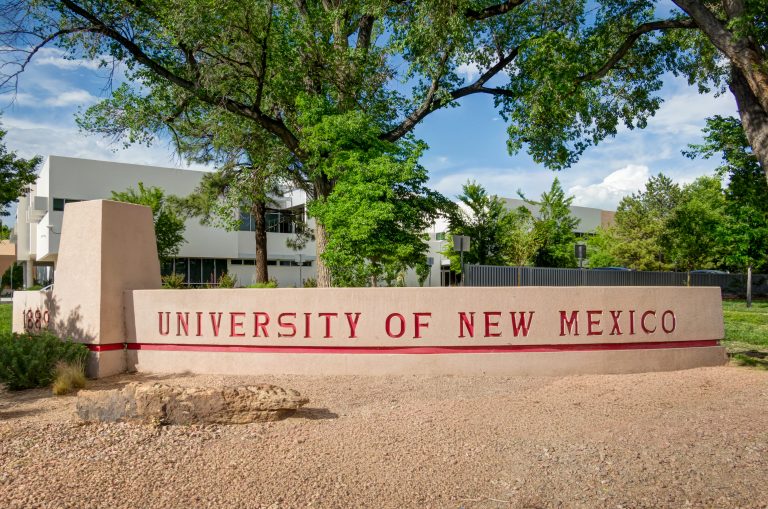
UNM Unveils $600 Million Medical School Expansion to Tackle Statewide Doctor Shortage

The University of New Mexico revealed plans this week to significantly expand its medical education programs in response to the state’s worsening shortage of physicians and other healthcare professionals.

At a meeting of the Legislative Finance Committee in Albuquerque on Tuesday, UNM officials laid out an ambitious strategy to nearly double enrollment in its School of Medicine and allied health programs over the next decade. The expansion is expected to add roughly 54 new medical professionals to New Mexico’s workforce each year, including doctors, physician assistants, and therapists.

Central to the strategy is the construction of a new School of Medicine facility to replace the aging Reginald Heber Fitz Hall, initially built in 1967. Lawmakers allocated $30 million this session to support planning and design. Additional funds will come from state capital, private philanthropy, and university reserves. The project is estimated to cost approximately $600 million in total.

University officials anticipate starting construction in 2027, with the building scheduled to open to students by 2030 and the first students graduating from the expanded program by 2034. According to a university planning document, total enrollment across medical and health professions programs is expected to grow from approximately 1,108 students in fiscal year 2026 to 2,191 by fiscal year 2035.

UNM is the only institution in the state that grants medical degrees. Despite traditionally drawing most of its students from New Mexico, many go elsewhere to practice after completing their training. The Legislative Finance Committee report cited by university officials notes that fewer than 50 percent of UNM medical graduates remain in-state, despite the fact that those who complete their residency at UNM are twice as likely to stay.

The doctor shortage in New Mexico is severe: 32 of 33 counties are federally designated as health-professional shortage areas, and the state ranks 32nd nationally in physician supply. Between 2017 and 2021, the number of primary care physicians dropped by about 30 percent, and nearly half of practicing family doctors are expected to retire by 2030.

Dr. Michael Richards, Executive Vice President of Health Sciences at UNM, emphasized to lawmakers that expanding medical education alone will not solve the crisis. He said the university will need a “layered” strategy that includes growth in residency slots, more substantial financial incentives, and system-wide reforms if graduates are to remain in New Mexico.

Beyond the new School of Medicine building, UNM is already advancing a suite of campus expansions, including a new Hospital Critical Care Tower scheduled to open in 2025 and a recently completed College of Nursing and Public Health building. These facilities are designed to provide essential clinical training capacity to support expanded enrollment.

UNM officials view the capital investment as critical to meeting the state’s healthcare needs and improving access for rural and underserved communities. Observers caution, however, that without corresponding improvements in residency training opportunities, statewide recruitment and retention programs, and compensation, even the new facility may fall short of ensuring that graduates serve in New Mexico, particularly in its most remote regions.

New Mexico Sets Ground Rules for AI Use in Schools Amid Rising Concerns

It’s an emerging reality in classrooms nationwide: Artificial Intelligence (AI) is taking over education, bringing both opportunities and new challenges. As students and teachers find themselves at the intersection of excitement and uncertainty over AI-driven technologies, New Mexico’s Public Education Department (PED) has established guidelines to acknowledge this tension and safeguard student privacy while ensuring educational equity.

The recently released recommendation from the state agency emphasizes the importance of privacy protections for students and ensuring adherence to existing data protection laws, regardless of any technological advancements.

PED reminds schools utilizing AI systems to explicitly not input student information. The recommendation also calls for transparency from educators who use AI to automate administrative tasks, create lesson plans, or grade students, to be open about these practices and maintain trust among students, parents, and the school community.

“We understand AI tools have rapidly found their way into schools,” the guidelines state, underscoring the necessity of caution. “This guidance seeks to provide clarity and foster thoughtful integration.”

In the matter of educational equity, the agency states that it must ensure all students, regardless of their socioeconomic background, have access to these AI applications. It has been brought to attention that students without access to home internet connections or lower technological literacy are left behind when it comes to utilizing these AI applications.

Furthermore, the guidelines caution against the over-reliance of some professional educators on AI. PED notes to treat AI as “support” rather than replacing the teacher’s judgment and decision-making.

According to recent reports, more than half of the US states have already issued guidelines similar to those regarding the rapidly evolving national discourse around the use of AI in education. Although some welcome the clarity and see the framework as helpful, many remain wary of yet another educational shift.

Teachers and staff, not just at the state level, but also nationally, had voiced concerns over the possible over-reliance or ethical pitfalls that may arise.

The PED, however, stressed that the guidelines are not fixed, but rather a foundation for ongoing conversation and refinement.

The agency is actively soliciting feedback regarding this matter.

New Mexico’s PED guidelines represent the cautious acknowledgement of AI’s growing influence in education. In terms of its effectiveness in balancing innovation, equity, and privacy for students and teachers, the fact remains to be seen.

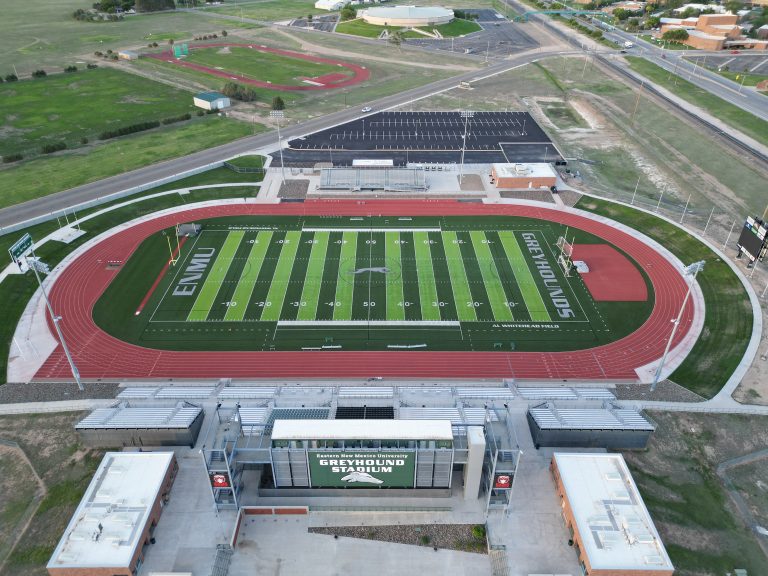
Eastern New Mexico University Secures Nearly $2 Million to Strengthen Rural Behavioral Health Workforce

Eastern New Mexico University’s (ENMU) Social Work Program has received nearly $2 million in federal funding to enhance its mission of supporting behavioral health in rural communities.

The Health Resources and Services Administration (HRSA) awarded ENMU a $1.96 million grant on July 16, 2025, as part of the four-year “Pathways to Excellence” initiative. The project aims to strengthen behavioral health services, particularly for children, teens, and young adults in underserved areas.

Over the course of four years, this funding will directly benefit more than 40 Master of Social Work (MSW) students (or approximately 10 students each year) by providing substantial support, including stipends, licensing assistance, faculty mentorship, and enhanced job placement opportunities after graduation. The program specifically aims to recruit students from rural and vulnerable communities, with an emphasis on Hispanic populations.

“This grant is transformative,” said Melissa Moyer, ENMU’s MSW program director. “Without it, achieving this level of training and community impact seemed almost impossible. Now, we can significantly improve the pipeline of skilled behavioral health professionals in our region.”

The grant will also enable ENMU to collaborate with 12 additional partner agencies to enhance the professional development of agency supervisors further and enrich students’ hands-on experience. Students will gain practical skills through innovative training techniques, including an advanced, AI-powered simulation program designed to simulate real-world scenarios.

Kate Bailey, CEO of Emerald Health Partners, one of ENMU’s collaborators, praised the initiative: “Eastern New Mexico University is leading the charge in addressing the rural behavioral health workforce crisis. We’re proud to partner with them on the Pathways to Excellence project and are deeply committed to its success.”

In addition to the HRSA grant, ENMU recently secured two other significant donations.

On February 15, 2024, the university received $2 million from the Allsup Family Charitable Foundation—the largest private donation in ENMU’s history at that time. This funding supported the Early Childhood Development Program and established the Allsup Family Endowment for initiatives in education, healthcare, agriculture, and business, with awards anticipated to begin in fall 2027.

Surpassing that record, in a historic act of generosity, ENMU received a further $7.5 million from anonymous donors. This funding enabled the creation of the Eastern New Mexico Learning Academy and an Endowed Chair for Literacy and Language Education, fostering year-round reading programs and literacy research.

Chancellor James Johnston expressed profound gratitude for these substantial contributions, stating, “The generous support we’ve received is pivotal. Without such heartfelt investments, our vision—particularly in rural behavioral health—could never fully materialize. These funds ensure not only brighter futures for our students but healthier, stronger communities across Eastern New Mexico.”

New Mexico Joins Nationwide Fight Against Sudden Federal School Funding Freeze

A wave of urgency has swept through New Mexico’s education community as the state joined 22 others in a lawsuit over a sudden federal funding freeze for schools. The move united a broad coalition of attorneys general and governors nationwide in their battle against the unprecedented decision to freeze $6.8 billion in K-12 and adult education grants.

The freeze directly jeopardizes over $45 million for the 2025–2026 school year, which the report suggests would “impact programs that serve the state’s most vulnerable children.” Migrant education, teacher professional development, English learner support, and critical after-school initiatives are all left in limbo as state and district leaders scramble to revise budgets and protect services.

The lawsuit, filed July 14 in federal court, alleges that the administration’s abrupt action violates both federal laws and the US Constitution. The coalition contends these funds were duly appropriated by Congress, and withholding them—especially with almost no notice—is illegal under the Impoundment Control Act.

Attorney General Raúl Torrez at a news conference in Santa Fe described the potential impact of the budget freeze. Torrez highlighted the direct threat not only to critical education programs but also to the broader emotional and economic strain on communities that are already navigating uncertainty in today’s economy.

“Imagine what happens when you have nearly 10,000 kids at 127 centers across the state of New Mexico. Instantly, their parents are thrown into this state of anxiety, and they’re trying to figure out what to do with their families,” said Torrez.

Torrez, along with others, criticized the administration’s decision-making process behind the sudden funding freeze. “That is what happens when someone in D.C. looks at a line item something like this and decides, well, this is a place that we can just make a cut,” Torrez said.

“It is, I think, completely irresponsible to engage in policymaking in that way.”

Since the news broke out on June 30, 2025, several institutions have raised concerns and warned about potential disruptions in key programs.

Raton Public Schools, headed by Superintendent Kristie Medina, stated that with this funding freeze, rural districts “may have to cancel essential programs.”

Bill Rodriguez from the 21st Century Learning Center notified that “fall programming is already behind schedule.” Santa Fe Schools have also raised serious concerns, such as staffing and academic planning.

Education Secretary Mariana Padilla also warned that the “more than $44 million in federal support” is in jeopardy for the 2025-2026 school year. The funding includes over $18 million for teacher development, approximately $10 million for after-school programs, and $16 million for support of English learners.

Supporters view the lawsuit as a fight for fairness and the survival of essential education services. “This is not a partisan issue,” Torrez said.

“This is about kids who will not have access in the matter of weeks to educational support and resources.”

The court proceeding started in mid-July 2025 at the Federal Court in Rhode Island.

APS Launches ‘Being a Good Relative’ to Empower Native Students Across New Mexico

It’s no secret that Native students have faced longstanding attendance gaps and achievement disparities for years in New Mexico. To address this concern, Albuquerque Public Schools (APS) has partnered with Native-led groups, including the One Generation Fund, to introduce the “Being a Good Relative” program.

According to APS, the initiative will focus on four main areas: Culturally Responsive Curriculum, Career and College Readiness, Support for Student Clubs, and Hands-on, Experiential Learning. With 10% of Native students comprising APS enrollment, this program aims to improve their educational outcomes.

Superintendent Gabriella Blakey initially announced the partnership last fall, though the initiative officially began in 2022.

In its quest to better serve Native students and understand their needs, APS held Tribal Leader Meetings in early 2025. Attended by Pueblo presidents, as well as leaders of the Navajo and Apache communities, the gathering facilitated meaningful conversations to take a step forward in involving local indigenous communities in K-12 education.

Tanya Campos, the APS Chief of Equity and Engagement and a member of the Isleta Pueblo, emphasized the importance of honoring Native American identity. She stressed that the initiative isn’t just “symbolic” but a step toward “creating spaces where Native culture can flourish authentically and consistently.

Recently, APS partnered with Jobs for America’s Graduates (JAG) to help Native students acquire practical skills in areas like business planning, public speaking, and project design. Students who participated in JAG revealed better attendance records and improved school participation, and are more likely to graduate from high school.

The district school also introduced language instruction in Navajo (Diné) and Zuni (A:shiwi), as well as other Native-focused courses.

As APS further extends its plans for Native students in New Mexico, the district school hired more culturally competitive Native educators through grants and residency initiatives to encourage Native students to consider careers in education and strengthen the community.

Over 125 tribal communities widely accepted these APS initiatives, with 6,800 Native students enrolled in the academic year 2023 – 2024.

The “Being a Good Relative” initiative is a responsive approach to address the historical neglect experienced by Native students in New Mexico. APS is confident that its goal of building an inclusive educational environment will lead the way for Native students’ success.

Los Alamos Makers is Offering Free 3D Printing Summer School Program for High School Students

Dive into the world of 3D printing and design for free with the Los Alamos Makers. High school students living in Northern New Mexico, or in underserved areas like Española Valley, Pojoaque, and nearby tribal communities are qualified to join this 4-day intensive summer school program.

In collaboration with Los Alamos National Laboratory (LANL) and Triad National Security, the 3D Printing Summer School is designed to open STEM (Science, Technology, Engineering, and Math) doors for Native American youth and other underrepresented students in the region.

The program will take place from July 28 to 31, 2025, at the Los Alamos Makerspace, located at 1789 Central Avenue, inside the Blue Window/Ruby K building.

A Chance to Build, Break, and Learn

The hands-on curriculum introduces participants to the fundamentals of 3D printing and engineering. Students will:

  • Learn Computer-Aided Design (CAD) using Tinkercad
  • Understand how 3D printing works and the technology behind it
  • Explore load-bearing structures and efficient material use
  • Design, print, and test their own structures to failure
  • Study how settings like fill density and orientation affect strength
  • Receive expert feedback and improve their designs

Participants will work alongside experienced mentors from LANL, gaining insights that could spark long-term interest in science, engineering, or design careers.

A Program Rooted in Community

Dr. Prisca Tiasse, founder and director of Los Alamos Makers, emphasized the importance of access and opportunity. “We’re thrilled to offer this program to students who may not otherwise have access to such tools and training. It’s about sparking curiosity and confidence,” she said.

Los Alamos Makers, a nonprofit founded nearly a decade ago by Dr. Tiasse and community volunteers, has long worked to provide affordable, hands-on learning experiences with advanced technology. The organization welcomes learners of all ages and backgrounds.

More Than Just a Class

In addition to being free, the summer program includes lunch each day and a $100 travel stipend for students commuting from outside Los Alamos. Enrollment is limited to just eight students, making the experience focused and personalized.

For students in rural and tribal communities, this isn’t just a summer class—it’s a rare chance to step into the world of high-tech engineering and gain real-world skills in a collaborative and supportive environment.

You can register through this link.

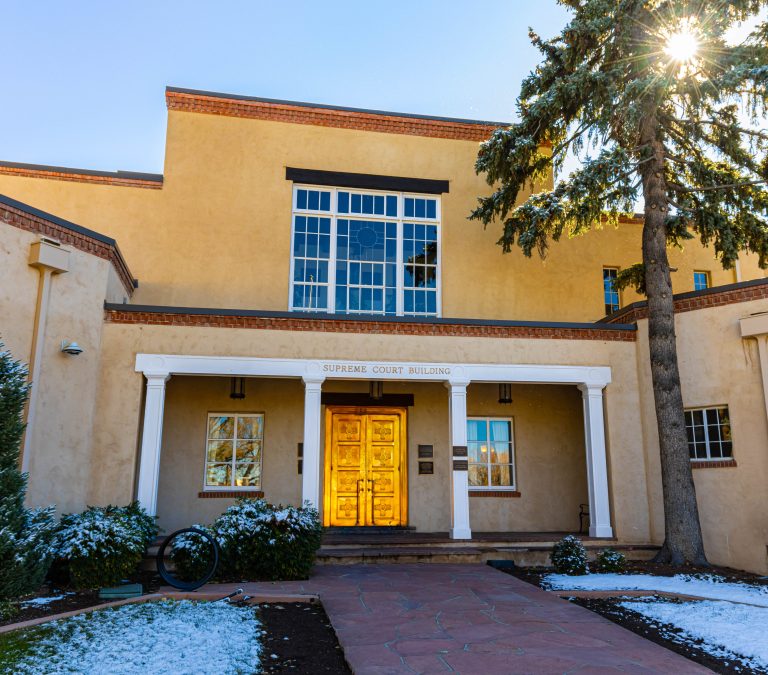
NM Supreme Court Upholds Limits on Sentence Reductions for Prison Education

The New Mexico Supreme Court upheld a state policy that restricts the amount of time inmates can reduce their sentences by earning educational degrees while in prison. The ruling issued last Monday affirmed the existing policy of the New Mexico Corrections Department (NMCD), which offers sentence reductions to inmates who have achieved certain educational milestones.

The recent ruling upheld by the NM Supreme Court came after inmate Steve Swayne challenged the NMCD rule after earning two associate degrees during his incarceration. After receiving a four-month reduction for his first associate degree in liberal arts/university studies, Swayne was denied additional credit when he completed a second associate degree in applied science with a business administration specialization six months later.

Swayne argued that the denial violated the Earned Meritorious Deductions Act (EMDA), a New Mexico state law designed to incentivize inmates by reducing their prison sentences when they complete educational or rehabilitative programs.

However, the Supreme Court disagrees with Swayne’s and the lower court’s argument. Justice Briana H. Zamora stated that the NMCD policy appropriately aligns with the EMDA’s goal of promoting advancement to higher educational levels, rather than merely repeating the same level of education.

Justice Zamora emphasized that without this restriction, inmates could simply pursue multiple associate degrees to continually shorten their sentences, rather than pursuing bachelor’s or graduate degrees.

Justice C. Shannon Bacon, however, offered a dissenting view regarding this matter. She argued that the EMDA broadly supports rewarding all educational achievements at all levels, as each degree enhances inmates’ opportunities for employment post-release. She concluded that the rule is overstepping the statute’s purpose.

The NM Supreme Court’s decision marks the first time it has explicitly applied a standard from the landmark U.S. Supreme Court case Turner v. Safley (1987) that tests whether prison regulations serve legitimate correctional objectives.

Experts and policymakers have highlighted the importance of higher education programs in reducing recidivism. Data shows that inmates who achieved higher educational degrees significantly increase their chances of successful reintegration into society upon release.

New Mexico prisons offer various educational opportunities through partnerships with institutions like Eastern New Mexico University, which is primarily focused on vocational skills and distance learning. Recent legislative developments, such as Senate Bill 375, also support the opportunities inmates could earn credits for good behavior and educational advancement.

The court’s decision aims to encourage inmates to pursue more substantial educational achievements to help prepare them for re-entry into society. This policy aligns with broader efforts in the state to enhance rehabilitative opportunities for prisoners.