New Mexico warns parents who fall behind on child support that they may be denied hunting and fishing licenses, part of efforts to enforce payment obligations.
Governor Michelle Lujan Grisham signs medical malpractice reform and other health care measures during New Mexico’s legislative session, aiming to reduce costs and address physician shortages.
The New Mexico Environment Department reported 226 new environmental enforcement cases and 38 resolutions in February under its Enforcement Watch transparency program.
New Mexico is positioning itself as a national quantum computing hub, banking on research institutions, state incentives, and a growing tech ecosystem to capture a share of a projected $1-trillion industry.
New Mexico is investing heavily in fusion energy and defense startups, hoping a $1-billion research hub near Albuquerque will drive innovation and economic growth.
A mysterious group behind mailers and digital ad supporting the Project Jupiter data center in New Mexico faces scrutiny for undisclosed funding and tactics.
Families are invited for the Kindergarten Roundup, which gives them a glimpse of the programs prepared by APS for the incoming kindergarteners this 2026-2027 school year.
New Mexico warns parents who fall behind on child support that they may be denied hunting and fishing licenses, part of efforts to enforce payment obligations.
Southern New Mexico closed 2025 with solid job growth and improving wages in Las Cruces, even as year-over-year trade values through Santa Teresa fell sharply. Dallas Fed data also point to continued exposure to energy and commodity swings across the broader region.
Los Alamos Visiting Nurse Service, a decades-old home health and hospice provider in Northern New Mexico, is shutting down after citing falling insurance reimbursements and rising operating costs. The closure underscores growing pressure on rural home-based care models that depend on Medicare and Medicaid payment rates that often don’t cover travel time.
Tribal land-return efforts are accelerating across the West, but in northwestern New Mexico the debate is colliding with the energy economy. A federal buffer zone around Chaco Culture National Historical Park is now at the center of legal and political fights that could affect future leasing activity and the royalty checks some local residents depend on.
New Mexico warns parents who fall behind on child support that they may be denied hunting and fishing licenses, part of efforts to enforce payment obligations.
Governor Michelle Lujan Grisham signs medical malpractice reform and other health care measures during New Mexico’s legislative session, aiming to reduce costs and address physician shortages.
The New Mexico Environment Department reported 226 new environmental enforcement cases and 38 resolutions in February under its Enforcement Watch transparency program.
New Mexico is positioning itself as a national quantum computing hub, banking on research institutions, state incentives, and a growing tech ecosystem to capture a share of a projected $1-trillion industry.
New Mexico is investing heavily in fusion energy and defense startups, hoping a $1-billion research hub near Albuquerque will drive innovation and economic growth.
A mysterious group behind mailers and digital ad supporting the Project Jupiter data center in New Mexico faces scrutiny for undisclosed funding and tactics.
Families are invited for the Kindergarten Roundup, which gives them a glimpse of the programs prepared by APS for the incoming kindergarteners this 2026-2027 school year.
New Mexico warns parents who fall behind on child support that they may be denied hunting and fishing licenses, part of efforts to enforce payment obligations.
Southern New Mexico closed 2025 with solid job growth and improving wages in Las Cruces, even as year-over-year trade values through Santa Teresa fell sharply. Dallas Fed data also point to continued exposure to energy and commodity swings across the broader region.
Los Alamos Visiting Nurse Service, a decades-old home health and hospice provider in Northern New Mexico, is shutting down after citing falling insurance reimbursements and rising operating costs. The closure underscores growing pressure on rural home-based care models that depend on Medicare and Medicaid payment rates that often don’t cover travel time.
Tribal land-return efforts are accelerating across the West, but in northwestern New Mexico the debate is colliding with the energy economy. A federal buffer zone around Chaco Culture National Historical Park is now at the center of legal and political fights that could affect future leasing activity and the royalty checks some local residents depend on.
The U.S. Department of Education has ended the federal Ready To Learn (RTL) grant program, cutting off $23 million in funding that supported educational children’s programming on PBS. The decision affects 44 public media stations across 28 states and Washington, D.C., and impacts several shows designed to help young children develop early learning and literacy skills.
The grant, which was set to run through September 2025, funded series like Molly of Denali, Work It Out Wombats!, and Lyla in the Loop. These programs were developed to meet the needs of children ages 2 to 8, especially in low-income and underserved communities.
In a letter to the Corporation for Public Broadcasting (CPB), the Department of Education explained the grant termination was part of a broader shift in funding priorities. The CPB, which helps distribute federal funds to public broadcasting services, said it was not given prior notice and expressed concern over the impact the decision could have on local educational resources.
Patricia Harrison, president of the CPB, emphasized the Ready To Learn program’s longstanding track record. “For more than 30 years, this initiative has helped millions of children prepare for school and life,” she said. “We hope to work with Congress and other stakeholders to keep this program alive.”
PBS has stated that the grant helped create not only television shows but also free digital games, learning apps, and classroom tools used by educators and families nationwide.
The decision to end RTL follows a recent executive order to stop all federal funding to public broadcasting networks, including NPR and PBS. The order is currently being reviewed by legal experts and has prompted concerns from educators and public media advocates about long-term effects on children’s access to high-quality educational media.
Public broadcasting leaders have indicated they will seek alternative funding sources and are considering legal options. For now, the future of several PBS Kids programs remains uncertain as stations prepare for potential programming and staffing changes.
The Ready To Learn grant was originally established in the early 1990s and has been renewed by multiple administrations. Its aim has been to help young children—especially those without access to preschool—learn foundational skills in reading, math, and science.
Roughly 195,000 Americans who have defaulted on their federal student loans are at risk of having their federal benefits—such as Social Security and tax refunds—seized starting in June 2025. The Education Department confirmed the action as part of its plan to resume full-scale collections after a five-year pause triggered by the COVID-19 pandemic.
Borrowers who received notices this spring now have 30 days to resolve their default status or face automatic collections through the Treasury Offset Program (TOP), a tool that allows the federal government to withhold funds to recover unpaid debts.
Garnishment Resumes After Long Hiatus
Collections on defaulted federal student loans were halted in March 2020 as part of the pandemic relief measures. But with the end of the federal student loan payment pause and default protections in late 2023, the Department of Education is gradually reactivating collection tools.
As of May 5, 2025, the department officially resumed debt collection activities. The 195,000 borrowers who received offset notices represent the first wave of individuals being targeted for benefit seizures.
The Treasury Offset Program can divert money from:
Federal and state income tax refunds
Social Security benefits
Federal salaries and retirement payments
Wage garnishments are expected to resume later this summer.
Who’s Affected?
Borrowers in default are defined as those who have gone at least 270 days without making a required payment. According to Education Department estimates, around 5.3 million borrowers are currently in default, and an additional 4 million are severely delinquent.
The 195,000 borrowers receiving notices this month are only a fraction of those potentially subject to offsets.
Borrowers still have time to act. The Department of Education is encouraging those who received notices to contact its Default Resolution Group. Options to avoid garnishment include:
Loan Rehabilitation: Makes nine on-time payments in 10 months to remove a loan from default.
Consolidation: Combines loans into one and brings them into good standing if paired with an income-driven repayment plan.
Borrowers can also apply for hardship exemptions in cases where offsets would create serious financial burdens.
More information and help are available at studentaid.gov and through the department’s Default Resolution Group.
Backdrop
The return of student loan collections comes as the Biden administration’s broad loan forgiveness plan remains blocked by the Supreme Court. Though the White House has implemented targeted relief—such as one-time adjustments and fixes to income-driven repayment plans—millions of borrowers remain ineligible for forgiveness.
The Department of Education has now shifted its focus toward enforcement and repayment compliance. Education Secretary Linda McMahon recently stated that “borrowers must resume their obligations,” citing the end of COVID-era flexibility.
What’s Next?
With collections now underway, more defaulted borrowers are expected to receive offset or garnishment notices throughout the summer. The Department says it will continue outreach to help borrowers avoid punitive measures, but critics argue the window for assistance is shrinking fast.
For those facing potential benefit seizures, acting quickly may be the only way to protect federal income streams.
Dozens of executives from some of the largest tech companies in the U.S. are calling on state and federal leaders to make computer science—and artificial intelligence (AI)—a core part of K–12 education. In a letter sent Monday, 60 CEOs said the country risks falling behind globally if students aren’t better prepared in foundational tech skills.
The letter was organized by Code.org, a nonprofit focused on increasing access to computer science in schools. Signatories include high-profile leaders such as Microsoft CEO Satya Nadella, OpenAI CEO Sam Altman, Alphabet CEO Sundar Pichai, Amazon CEO Andy Jassy, and Meta’s Mark Zuckerberg.
The executives’ message is clear: schools must move faster to integrate computer science and AI into their core curriculum, not treat them as optional electives.
“Computer science is the foundation for many future careers,” the letter states. “It’s critical to expand access to these skills starting in kindergarten and continuing through high school.”
The letter specifically highlights AI as a fast-growing area of innovation and employment. Industry leaders argue that early exposure will help students better understand the technology that is already reshaping industries, economies, and daily life.
The Current State of Tech Education
Only 57% of U.S. high schools currently offer foundational computer science courses, according to Code.org. While that number has increased over the past decade, access remains uneven. Students in rural and low-income communities are far less likely to attend schools with computer science offerings.
And AI education is even more limited. Very few K–12 schools teach AI concepts or ethics, even though students regularly use AI-powered tools like ChatGPT and image generators.
In contrast, many countries are moving aggressively to integrate AI and programming into school systems. China has introduced national guidelines for AI education in middle and high school, and the U.K. revised its computing curriculum to emphasize digital literacy and programming from primary school onward.
CEOs Cite Workforce and Equity Concerns
Tech executives warn that the lack of broad access to computer science and AI education could weaken the U.S. workforce over time. The letter highlights how technology is rapidly reshaping industries and argues that students need foundational skills in computing to remain competitive.
Without nationwide access to computer science, students from low-income and rural communities risk being left behind. They argue that expanding curriculum access can help bridge opportunity gaps tied to race, income, and geography.
The CEOs are calling on lawmakers, governors, and school boards to:
Make computer science a graduation requirement.
Fund teacher training programs in computer science and AI.
Update state standards to include AI concepts and digital ethics.
Support industry partnerships to bring real-world tech exposure into classrooms.
The letter stresses that these changes should happen “urgently and at scale,” not through scattered pilot programs or elective options.
Growing Momentum Behind the Push
The business community’s call comes amid broader debates about the role of AI in society—and how to prepare young people for it. Some states, including Arkansas and New Jersey, have recently passed legislation requiring computer science courses in high school.
The Biden administration has also emphasized STEM education in its workforce development plans. However, federal efforts to directly fund AI-specific K–12 initiatives remain limited.
As AI becomes more deeply embedded in everything from health care to journalism to transportation, tech leaders argue that education must catch up.
A growing number of U.S. student loan borrowers are falling behind on their payments, and it’s not just those with poor credit. According to a recent report by credit bureau TransUnion, even borrowers with prime credit scores—typically considered financially stable—are missing payments at unprecedented rates.
The data shows that 20.5% of student loans are at least 90 days past due as of early 2025. That’s the highest delinquency rate in recent memory and a sign of deepening financial strain across borrower groups.
Credit Score No Longer a Shield
TransUnion’s report, first shared with MarketWatch, highlights a concerning shift: the share of delinquent student loans held by borrowers with prime credit scores jumped from 33% in the fourth quarter of 2023 to 46% in the first quarter of 2025. Prime credit scores typically range between 661 and 780.
This increase suggests that even households traditionally seen as “low risk” are struggling with student loan payments. That’s unusual in lending trends, where delinquency is generally concentrated among those with lower credit scores.
“The narrative that only low-income borrowers are at risk doesn’t hold anymore,” said Michele Raneri, vice president of U.S. research and consulting at TransUnion. “We’re seeing financially healthy borrowers showing signs of stress.”
Context: The End of COVID-Era Relief
One key reason for the spike is the resumption of student loan payments after the pandemic-era pause. Monthly payments restarted in October 2023, and the Department of Education resumed collections on defaulted loans in May 2025.
During the three-year pause, borrowers were not required to make payments, and no interest accrued. That temporary relief allowed millions to stabilize other financial priorities. But the return of required payments has triggered financial pressure, especially with inflation still affecting household budgets.
Lending Industry on Alert
Lenders are watching this trend closely. If delinquency among prime borrowers continues to rise, it could signal broader economic stress or weaknesses in the current student loan system.
“Student loan performance is typically seen as a canary in the coal mine,” said Charlie Wise, TransUnion’s head of global research. “When we see prime borrowers faltering, it tells us that the economic pressures are more widespread than they may appear.”
Limited Access to Repayment Support
Despite federal efforts to promote income-driven repayment (IDR) plans and other safety nets, many borrowers are still unaware of or unable to access these programs. A backlog of more than 1.8 million IDR applications has delayed support for those seeking lower monthly payments, according to the Department of Education.
In some cases, loan servicers have been slow to respond, leading borrowers to fall behind before getting help.
What Borrowers Can Do
Borrowers facing difficulties are encouraged to contact their loan servicer immediately. The Department of Education also recommends visiting StudentAid.gov to review repayment options and explore programs like SAVE (Saving on a Valuable Education), which can lower or pause monthly payments based on income.
For those in default, the Department’s Default Resolution Group offers options like rehabilitation or consolidation to restore loans to good standing and avoid collections.
Despite earlier concerns, the Trump administration’s latest budget proposal maintains funding for the Head Start program, a federal initiative providing early childhood education and services to low-income families. The proposal, released on May 4, 2025, does not include cuts to Head Start, offering temporary relief to educators and families who rely on the program.
Head Start serves over half a million children nationwide, offering not only preschool education but also meals, health screenings, and parental support. In New Mexico alone, thousands of children benefit from these services.
The program had faced potential threats following recommendations from Project 2025, a conservative policy blueprint advocating for its elimination. House Education Committee Chair Tim Walberg previously criticized Head Start for alleged mismanagement. However, a spokesperson clarified that funding cuts are “not on the table.”
Despite the maintained funding, challenges persist. In April, the Department of Health and Human Services closed five of its 12 regional offices that support Head Start, leading to confusion among providers regarding funding and support.
Educators like Jamal Berry, CEO of Educare DC, emphasize the program’s importance. Berry noted that 80% of their funding comes from the federal government and that any cuts could risk closure. He also mentioned a waitlist of over 100 children, highlighting the program’s high demand.
While the House Education Committee has stated that cuts are not currently planned, the Senate Education Committee has yet to comment. The final decision on Head Start’s funding will depend on congressional approval of the budget.
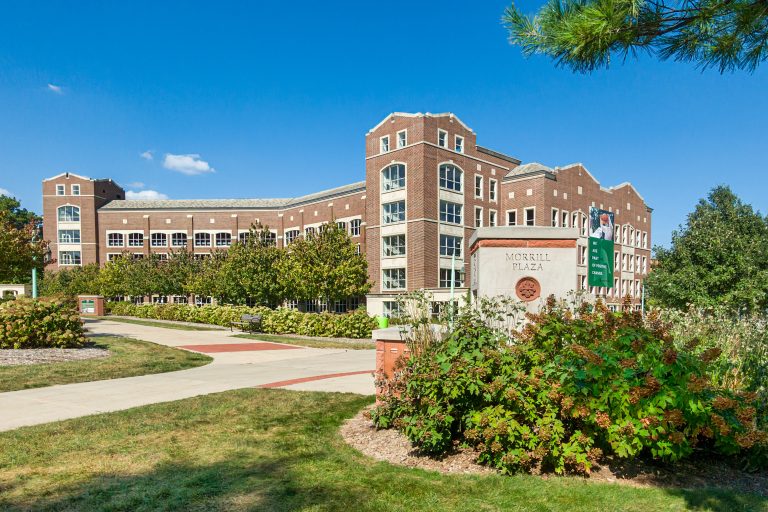
Michigan State University (MSU) is preparing for significant financial adjustments in response to ongoing budgetary challenges and shifts in federal funding.
In a letter to the university community on May 5, 2025, MSU President Kevin Guskiewicz announced that the institution has reached the “difficult conclusion” that it must adjust its financial path. He cited changes in federal policies and rising healthcare costs as key factors contributing to the university’s financial strain.
“Unfortunately, federal changes are compounding our existing financial challenges, including our ongoing efforts to balance the university’s budget,” Guskiewicz wrote. “Over the past few years, we—like other peer universities, companies, and organizations—have faced some difficult financial headwinds, with rising health care costs being of particular concern.”
To address these issues, university leaders are conducting a comprehensive review of MSU’s finances using a “three-horizon time frame.” The first horizon involves examining college and unit budgets, vacant positions, nonpersonnel expenses, and enrollment trends. The second focuses on setting the annual budget in June, while the third considers larger, long-term savings strategies.
While specific changes have not been detailed, Guskiewicz acknowledged that “hard decisions” will be necessary, potentially impacting members of the university community. He emphasized that more information will be provided in a timely manner.
This announcement comes amid broader financial pressures on higher education institutions. MSU’s proposed operating budget for the 2024–25 fiscal year totals $3.65 billion, a 9.8% increase from the previous year, driven mainly by significant increases in contracts and grants activity.
Additionally, the university’s housing and dining rates are set to rise by 2.9% for the 2025–26 academic year, following a 6.89% increase the previous year. These adjustments aim to address rising wage costs, especially increases in minimum wage and significant increases in employee health care costs, alongside ongoing investment within Residential and Hospitality Services (RHS) infrastructure.
Federal changes, including the implementation of the FAFSA Simplification Act, have also impacted financial aid processes. MSU’s Office of Financial Aid began processing 2024–25 FAFSA data in April 2025, later than usual, due to nationwide delays related to the new FAFSA system. These delays may result in revisions to award amounts after packages are generated.
As MSU navigates these financial challenges, university leadership remains committed to transparency and will continue to communicate updates to the community as decisions are made.
The West Virginia Department of Education (WVDE) has retracted a memorandum issued earlier this month that provided guidance on religious and philosophical vaccine exemptions for schoolchildren, following a request from Governor Patrick Morrisey’s office.
On May 2, State Superintendent Michele Blatt released a memo instructing county superintendents to honor vaccine exemptions granted prior to May 1, 2025, but also to inform parents that such exemptions would not be recognized for the upcoming 2025–26 school year due to existing state law.
However, later that same day, Blatt issued a follow-up communication rescinding the earlier memo. She stated that the WVDE is collaborating with the Governor’s office to provide clear guidance on complying with Executive Order 7-25, which allows for religious and philosophical exemptions to school vaccination requirements.
Governor Morrisey signed Executive Order 7-25 in January 2025, citing the state’s Equal Protection for Religion Act to permit such exemptions. Despite this, the West Virginia Legislature has not amended state law to codify these exemptions, leading to legal ambiguity.
Earlier this year, Senate Bill 460, which sought to establish religious and philosophical exemptions to school vaccination mandates, passed the Senate but was defeated in the House of Delegates. The bill’s failure has left the status of vaccine exemptions in a state of uncertainty.
As of now, the West Virginia Department of Health continues to process exemption requests under the Governor’s executive order. However, without legislative action, the long-term enforceability of these exemptions remains unclear.
The WVDE and the Governor’s office have indicated that further guidance will be issued to clarify the implementation of vaccine exemption policies for the upcoming school year.
Parents and guardians are advised to stay informed on this evolving issue and consult with their local school districts for the most current information regarding vaccination requirements and exemptions.
Colorado lawmakers are advancing a bipartisan bill that would require high school students to complete a semester-long personal finance course to graduate.
House Bill 25-1192 aims to equip students with essential financial skills, such as budgeting, understanding credit, and managing loans. If enacted, the requirement would apply to students entering ninth grade on or after September 1, 2026, making Colorado the 27th state to implement such a mandate.
Currently, only about 25% of Colorado’s 178 school districts mandate a personal finance course for graduation.
The bill’s sponsors, including Republican Rep. Anthony Hartsook and Democratic Rep. Jennifer Bacon, emphasize the importance of financial literacy in addressing broader societal issues like debt and poverty. Rep. Hartsook, drawing from his experience in the U.S. Army, noted that many young adults lack basic financial understanding, leading to challenges like bounced checks and unmanageable debt.
The proposed legislation grants local school districts flexibility in designing and implementing the financial literacy curriculum, allowing them to tailor the course to their students’ needs.
Additionally, the bill includes a provision requiring students to complete the Free Application for Federal Student Aid (FAFSA) or the Colorado Application for State Financial Aid (CASFA) as a graduation requirement, with an option to opt out. This measure aims to increase access to financial aid, as Colorado currently ranks 46th in FAFSA completion, leaving an estimated $30 million in aid unclaimed annually.
Advocacy groups like Ednium: The Alumni Collective support the bill, highlighting the transformative impact financial education can have on students and their families. Richard Maez, Ednium’s executive director, emphasized that financial literacy empowers students to make informed decisions and can help break cycles of poverty.
The bill has passed the House and is currently under consideration in the Senate Education Committee. If approved, it will move to the full Senate for a vote.
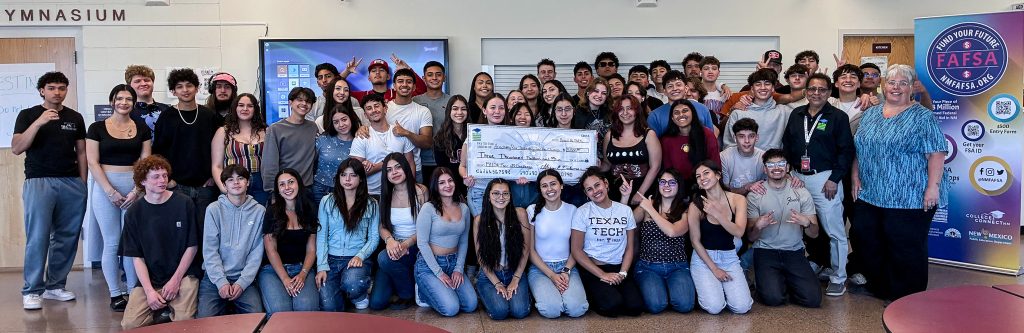
High schools across New Mexico are celebrating big wins after going all in for the FAFSA Face-Off 2025—an annual competition designed to boost the number of students completing the Free Application for Federal Student Aid (FAFSA).
Organized by the New Mexico Educational Assistance Foundation (NMEAF), the contest challenged schools across five classifications, from 1A to 5A, to raise awareness and increase FAFSA completions. And students delivered in a big way.
What’s the FAFSA Face-Off?
The FAFSA Face-Off is more than just a competition—it’s a statewide effort to help students unlock financial aid opportunities for college, training programs, and beyond. Schools that achieved the highest FAFSA completion rates in their classification earned cash prizes. But more importantly, they made real strides in helping their seniors take that first crucial step toward higher education.
This year’s challenge wrapped up in April, with schools proudly announcing completion rates, community efforts, and creative outreach strategies. From social media campaigns to classroom support, students and staff teamed up to make sure their classmates didn’t miss out.
And the Winners Are…
Let’s take a closer look at the schools that topped their divisions and walked away with both bragging rights and prize money:
5A First Place: Albuquerque High School
Albuquerque High claimed the top spot in the 5A category, earning a $5,000 prize after reaching a 60% FAFSA completion rate. Their campaign focused on student-to-student encouragement, persistence, and strong leadership from the senior class.
5A Second Place: La Cueva High School
La Cueva secured second place and a $2,500 prize with a 53.25% completion rate. Their team proved that consistent effort and school-wide collaboration can make a major impact.
4A First Place: St. Pius X High School
With a 59% FAFSA completion rate, St. Pius X earned the $4,000 prize for their division. Their students came together with a shared purpose—supporting each other through the process and leading with school pride.
3A First Place: Academy for Technology & Classics
This school stood out with an 83% completion rate and a $3,000 prize. Their strategy blended academic readiness with strong community involvement, offering a model for other schools to follow.
2A First Place: Albuquerque Talent Development Secondary Charter School
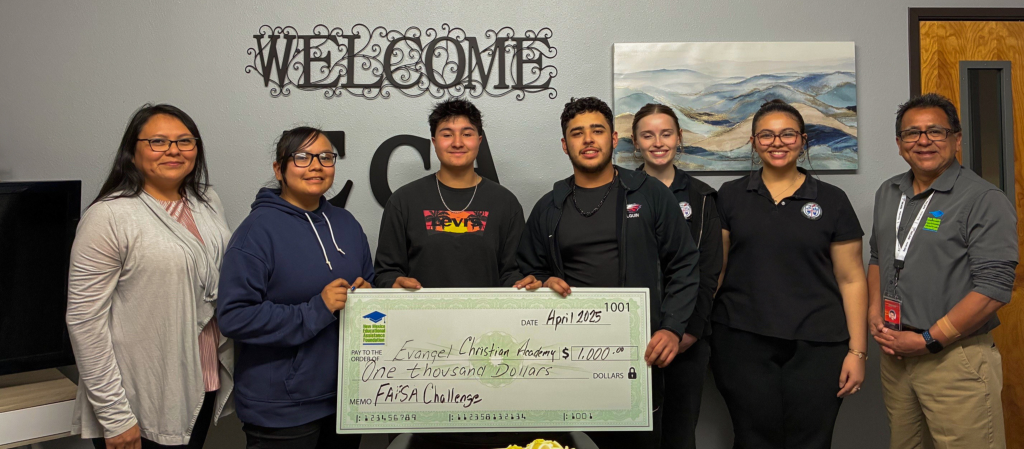
Evangel Christian Academy achieved a perfect 100% FAFSA completion rate. Their small but mighty team earned the $1,000 prize by making sure every senior completed the form. The school’s leadership and community spirit were key to their success.
What Can Schools Do With Their Prize Money?
NMEAF gives winning schools the freedom to decide how they’ll use their funds—with a few basic guidelines. Options include:
Hosting prom or graduation events
Installing commemorative benches or murals
Starting scholarship funds for future seniors
As long as a class sponsor approves the plan and it follows school rules, the prize money belongs to the students—and the possibilities are wide open.
Why This Matters
Completing the FAFSA is one of the strongest predictors of whether a student will attend college. According to the National College Attainment Network, students who complete the FAFSA are 84% more likely to enroll in postsecondary education.
For many families in New Mexico, where affordability remains a major barrier to higher education, the FAFSA can unlock grants, scholarships, and work-study opportunities. By boosting awareness and providing support, the Face-Off helps remove those barriers—one form at a time.
Not Just the Winners—Everyone Made a Difference
Even schools that didn’t place in the top tier played a crucial role. NMEAF recognized the hard work of all participants, noting that many were just a few submissions away from victory. From organizing school-wide events to helping a friend through the application, every effort helped New Mexico move toward its goal of a college- and career-ready future.
FAFSA Support Is Still Available
Though the competition is over, the mission continues. Students and families who still have questions about FAFSA or need help completing the form can join “Money Mondays,” a free virtual support session hosted by real financial aid experts. These sessions are open every Monday from 3 to 6 p.m., offering a judgment-free space for families to get the answers they need.
FAFSA Face-Off 2025 was more than a contest—it was a movement. Across the state, students stepped up, educators rallied behind them, and entire school communities worked toward a common goal: opening doors to education. Whether they took home a check or not, every school that participated helped make a difference. And that’s a win worth celebrating.
For more information or FAFSA help, visit nmeaf.org.
A new nationwide survey from Prodigy Education has revealed that U.S. teachers are experiencing unprecedented levels of stress—surpassing even the peak anxiety reported during the height of the COVID-19 pandemic. The findings paint a sobering picture of the American education system, exposing how mounting behavioral issues, financial strain, and a growing sense of fatigue are pushing educators to the brink.
Nearly half—45%—of surveyed K–12 teachers say the 2024–25 school year has been the most stressful of their careers. This milestone is especially troubling when compared to the trauma-laden pandemic years, which forced educators into remote instruction, public health uncertainty, and widespread student disengagement.
The fact that stress is even higher now—when classrooms have mostly returned to normal operations—raises urgent questions about what’s happening inside U.S. schools.
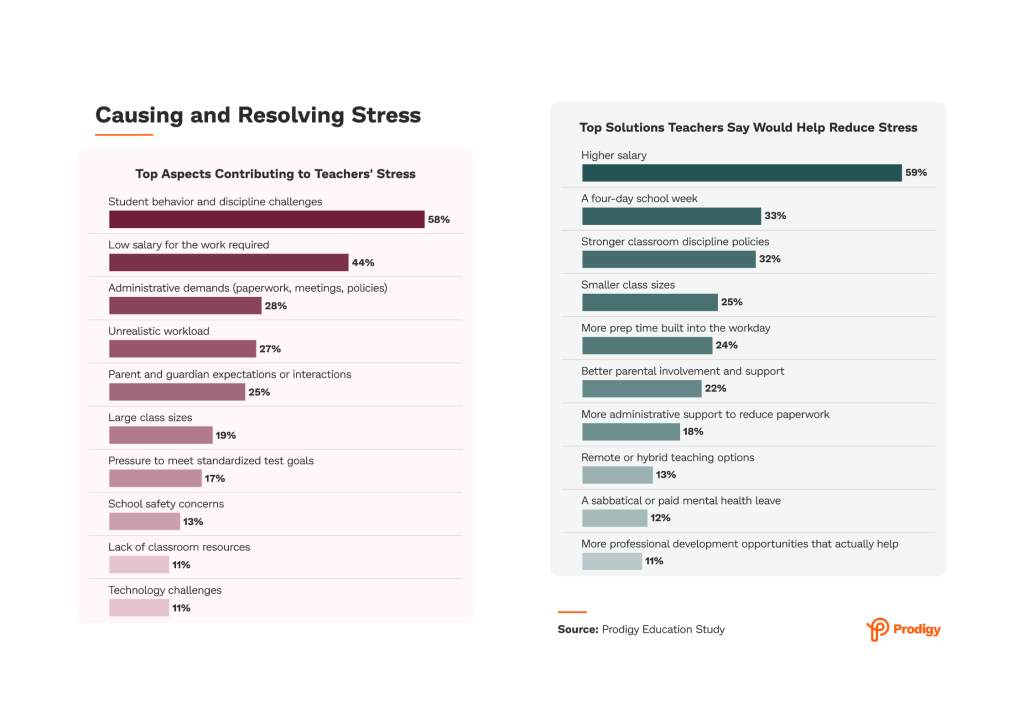
One of the most pressing concerns, cited by 58% of teachers, is a sharp rise in student behavior issues. In 2024, the U.S. Department of Education reported a 21% increase in disciplinary incidents compared to pre-pandemic levels, including fights, chronic absenteeism, and classroom disruptions. As a result, teachers say they are spending more time managing behavior than delivering instruction, creating a vicious cycle of burnout.
Compounding the stress is inadequate compensation. 44% of teachers identified low pay as a top contributor to their anxiety. Despite public attention on staffing shortages, pay in many districts has failed to keep pace with inflation.
The reason behind the rising teachers stress level and what they believe would are the solutions. Data from: prodigygame.com
According to a 2023 report by the Economic Policy Institute, public school teachers in the U.S. earned, on average, 26.4% less than comparable college-educated professionals in other fields—a record-high wage gap known as the “teacher pay penalty.” This gap has widened over the past two decades, intensifying financial pressure on educators.
Administrative burdens also weigh heavily with 28% of teachers reporting stress from increasing bureaucratic demands—including paperwork, student testing, data reporting, and shifting curriculum mandates—that leave little room for creative instruction or teacher autonomy.
Other Key Findings
95% of respondents reported experiencing some level of stress, with 68% describing it as moderate to very high.
9% of teachers say they plan to leave the profession within the next year, and another 23% are seriously considering it. If realized, this attrition could deepen the national teacher shortage and disrupt learning for countless students.
Even self-care, often promoted as a solution, proves difficult. Though 78% of educators say they try to prioritize their well-being, 43% report feeling guilty for taking time for themselves. The same percentage say they’ve skipped self-care altogether due to job demands, reinforcing a culture of self-sacrifice that often goes unnoticed and unaddressed.
Beneath the data lies a profound emotional disconnect: nearly half of all educators surveyed said they feel underappreciated. While Teacher Appreciation Week—observed during the first full week of May—offers temporary recognition, many argue that true respect comes in the form of long-term, institutional support.
When asked what changes would make a real difference, teachers offered clear and consistent answers: higher salaries (59%), a four-day workweek (33%), stronger discipline policies (32%), and smaller class sizes (25%). These aren’t just abstract ideas—they mirror reforms already underway in some districts. Rural school systems in Colorado and Missouri, for example, have adopted four-day school weeks to attract and retain staff.
According to the Education Commission of the States, more than 60% of Colorado school districts and several in Missouri have moved to the four-day model, citing improved teacher recruitment and retention, reduced absenteeism, and budgetary savings. Meanwhile, teacher unions nationwide are pushing for class size caps and enhanced mental health support.
Dr. Josh Prieur, Director of Education Enablement at Prodigy Education, underscored the urgency of the report’s findings. “The fact that stress levels for so many teachers have exceeded those of the pandemic era should be a wake-up call,” he said. “Teachers need tangible, meaningful, and sustained support alongside our appreciation—not just this week, but every week of the year.”
The survey, conducted in spring 2025, includes responses from over 800 educators representing a range of grade levels and school types. Its findings echo warnings from education experts and labor organizations: without immediate action, the mounting stress crisis among teachers could destabilize an already overburdened education system.