
Home Blog Page 93

Freshman Academies Shifts High School Experience, Aims to Make Students Feel Valued

0

Have you heard of a team-based learning model designed to reduce isolation and make education more relevant? Three campuses in Albuquerque Public Schools (APS) are using this approach, and it is showing positive outcomes.

APS officials, educators and students gathered on Wednesday to showcase the district’s Freshman Academies. The initiative shifts ninth graders away from traditional classroom models toward team-based, career-oriented environments. 

The event was held at the Berna Facio Professional Development Complex. It highlighted the early results of the program currently operating at Cibola, Highland and Manzano high schools. District leaders also announced plans to expand the initiative to six additional high schools next year.

Superintendent Gabriella Blakey said the program addresses the need to make high school more relevant. During campus visits last year, she saw traditional classrooms with disengaged students seated in rows like in “The Breakfast Club.”

“We start with our ninth graders and intentionally design a different experience for them from day one,” Blakey said. “One that builds connection, provides support, and helps students see their clear path forward after high school.”

The academies reorganize the freshman year into themed pathways and advisory structures. Students work in interdisciplinary teams supported by dedicated teachers instead of moving through the school day in isolation. It’s part of a larger initiative called the Academies of Albuquerque. The effort strives to reshape high schools to better prepare students for the world they will encounter after graduation. 

How Freshman Academies Impact Students

Brooke Meisner, a student of Manzano High School, said Freshman Academies has made a large public school feel more like a small school. It also maintains the benefits of a comprehensive campus, including sports and clubs.

“The transition to high school is hard,” Meisner said. “Now, I feel like there’s a lot of kids who might not have made it through freshman year… but they’re not gonna drop out because the teachers are like, ‘Hey, we’re here to support you.’”

Faculty collaboration is a key component of the model. Teachers at the showcase reported meeting regularly to track student performance, attendance, and social-emotional well-being.

Ann Paulls-Neal, a teacher at Highland High School, said the structure breaks down professional isolation. 

“It’s the first time we’ve really had that cross-curricular time to meet,” she said. “I’m definitely more in line with what other teachers are teaching.”

Early data from the three trailblazer schools indicates the approach is working. Manzano High School teacher Kelly Dutro reported significant gains in attendance.

“They’re showing up, which is new,” Dutro said. “Because they know that we care… we’re able to also build those relationships because they’re here.”

Early Exposure to Career Pathways

Beyond improving attendance, the program aims to help students identify career interests early. Through themed pathways like arts, innovation, and culinary programs, the initiative encourages students to see real-world coursework applications. 

Cibola High School Principal Kimberly Finke said the goal is to shift student’s mindset. She wants them to move from asking “why do I need to know this?” to seeing how education connects to their future. 

APS is also working with community partners. Officials credited the United Way of North Central New Mexico for supporting the program’s development.

While school leaders acknowledged some “growing pains” in launching the new model, they voiced optimism about its trajectory.

“When students feel seen, supported, and valued, everything changes,” Finke said. “They show up, they engage, they begin to believe in themselves, and in what is possible.”

‘Learning by Doing’ Essential for Students: Sen. Martin Heinrich Reintroduces Measure at Polk

0

Learning goes beyond reading and writing, as students can gain valuable knowledge outside the classroom. This is what U.S. Sen. Martin Heinrich continues to advocate for. 

Heinrich announced the reintroduction of the Revitalizing America’s Schoolyards Act on Thursday at Polk Academy of Agricultural Science. The measure seeks to equip schools nationwide with resources to transform traditional asphalt playgrounds. It aims to turn them into living, learning ecosystems like the one thriving in Albuquerque’s South Valley.

Polk provided the setting for Heinrich’s announcement. The middle school is part of Albuquerque Public Schools’ Sustaining the Future magnet program. 

Sustaining the Future is a K–12 environmental STEM pathway that teaches students to care for land, water and the environment. It also helps them explore real-world solutions and future careers.

Student leaders led the senator through Polk’s Jardin de Los Sueños, or Garden of Dreams. They showcased a STEAM lab with aquaponic and hydroponic systems and an orchard with 40 fruit trees planted last year.

Why Outdoor Learning Matters

Student Alllyson Bojorquez stressed the mental health benefits of outdoor learning spaces.

“Students work hard on the farm, but they also get to walk around, enjoy themselves, talk with friends, and just have time to enjoy the space and help improve our mental health,” she said. 

Heintrich explained why he chose Polk as the venue for the reintroduction of the legislation. He said the school exemplifies what he wants the norm in school campuses nationwide, not the exception. The senator reflected on his education, noting the contrast between his “packed dirt and concrete” youth and Polk’s interactive environment.

Heinrich, who began his career running outdoor education programs, emphasized landscapes support mental health and diverse learning styles. 

“We know that some of the kids who were the most challenged to sit at their desk and focus, in that environment, just absolutely thrive,” he said.

The proposed Act would fund the conversion of school grounds into spaces that clean the air and provide organic food. It would also support  “learning by doing” opportunities.

Why Polk Serves as a Model

At Polk, leaders have already deeply ingrained this philosophy. Principal Ben Bustos describes the campus not as an extension of the classroom, but as the classroom itself.

“Rooted in our community’s farming and ranching traditions, our students learn by doing,” Bustos said. “Whether it’s working in the garden, studying soil health, or understanding water systems through our acequia and community partnerships.”

Teacher Travis McKenzie highlighted the cultural significance of the program. He noted that the Living Schoolyards Act presents an opportunity to scale Polk’s success across the state. 

McKenzie announced a new partnership with the Middle Rio Grande Conservancy District to build acequia infrastructure on campus. The initiative allows students to learn firsthand about water rights and traditional flood irrigation.

“We want to cultivate the next generation of water warriors,” he said.

Also speaking at the event were Gael Torres and Rosita Moreno. Torres highlighted the school’s transformation and its improved reputation driven by the agricultural program.

“Our school environment is very different from other schools,” Torres said. “… We have the opportunity to include outdoor learning into our classes. It’s amazing how we are all able to get together and maintain the garden.”

Closing in Spanish, Moreno emphasized that the work at Polk is about more than green spaces. She said it is about cultivating local, healthy products, and forming the leaders of tomorrow.

Active Shooter Suspect Now in Custody in Bernalillo

Editor’s Note: This is a follow-up article for you. If you would like to find out more about the first article, you can click here.

Police have taken one of the suspects in the Bernalillo active shooter case into custody, following the report on Tuesday, April 14.

Bernalillo Police say officers were dispatched to Highway 550 after a caller reported someone was shooting at their car.

“A foot pursuit ensued. They were trying to locate the subject. He ran north of the Downtown Rail Runner, 550 Rail Runner station. They encountered him just behind the high school in a ditch area. At that time, there was gunfire that was exchanged. The male subject did display a firearm—and they did have shots fired,” Bernalillo Police Chief Chris Stoyell said.

“He did shoot at the officers. We’re going to handle the road rage incident but State Police will handle the officer involved shooting. No officers were injured.” Stoyell added.

The situation escalated when the suspect pointed a gun at officers. Officers then fired their weapons at the suspect.

According to the Bernalillo Police District (BPD), the suspect is in his mid-50s.

New Mexico State Police are now investigating the shooting that involved police officers.

Authorities lifted the shelter-in-place. Bernalillo Public Schools will remain closed on Tuesday, April 14.

The incident occurred when students and staff were not on the grounds.

Police charged the suspect with aggravated assault with a deadly weapon and shooting at or from a motor vehicle.

Governor Fundraising Transparency Report 2026

The New Mexico Governor Fundraising 2026 report outlines the funds raised and spent by candidates before the upcoming June 2 primary elections. The report focuses on transparency and community impact rather than politics.

Deb Haaland has raised $4.1 million in the past six months. Her campaign’s total donations have surpassed $11 million. Such fundraising demonstrates active participation from donors and community members.

Sam Bregman has raised roughly $1.1 million during the same period. Sam Bregman’s total fundraising has reached around $4 million. The disparity in fundraising is indicative of how money can affect outreach efforts across the state.

Collectively, the candidates have spent around $10 million on outreach activities and administrative costs. More fundraising enables candidates to hire additional staff, run advertising, and engage in community activities; however, less fundraising limits candidates’ ability to expand their campaigns.

Republican candidates’ fundraising results were also included in the report. Notably, there has been greater financial activity in the Democratic Party primary race.

The New Mexico Governor Fundraising 2026 report illustrates the importance of financial transparency for better insight into how communities use resources. Prior to the June 2 primary election, such financial investments will determine outreach programs.

Republican candidates’ fundraising efforts are lower. It is noted that Democrats have seen greater fundraising activity.

This difference in resources clearly reflects how money influences outreach efforts. The effect would show in the run-up to the June 2 primary.

BCSO Deputy Removed From Service After Rifle-Killing

Bernalillo County Sheriff Office has fired one of its officers and plans to terminate a second after conducting an internal affairs investigation.

Sheriff John Allen said that the office fired Deputy Jacob Zamora on April 7. Zamora was a probationary deputy who recently graduated from the police academy.

BCSO has initiated an internal affairs investigation into Zamora following a notification from the ATF that a rifle used in a recent homicide had a serial number matching that of a BCSO department rifle.

The administration then immediately placed Zamora on administrative leave.

Someone committed a homicide during the New Year in downtown Albuquerque and the Albuquerque Police Department is investigating it.

BCSO discovered that Zamora’s department-issued AR-15 was stolen from his personal vehicle, but he did not report the theft. Instead, Sheriff Allen stated that Zamora replaced it with a personal rifle.

“You’re always supposed to secure your firearm no matter what, even if it’s in your personal vehicle. My question would be, if he was still here…One, why is it in your personal vehicle? Two, why wasn’t it stowed away like the way you were trained in the BCSO Academy that you graduated in October of 2025? And if it’s left unlocked and unsecure, why?” said Allen.

On April 2025, BCSO hired Zamora and he graduated from police academy October of the same year. The department issued him his firearms in August of 2025.

Zamora’s Plan Against Deputy Bryan Lassley

Sheriff Allen told that Zamora plans to fire Deputy Bryan Lassley after a use-of-force incident near the Youth Detention Center.

A body camera footage dating back from December 3, 2025, shows a possible use of excessive force involving Lassley and a 16-year-old girl.

In the video, Lassley is seen shoving the teen’s face into the backseat of a police car multiple times, all while she is handcuffed.

Deputies called to Youth Detention Center for a disturbance involving the teenage girl who left the center.

According to deputies, she had already injured a few deputies at the scene before Lassley arrived to assist his fellow deputies.

The police placed the teen in the back of the police car and that’s when Lassley begins documenting her injuries.

At first, she appears calm but eventually gets agitated with Lassley.

Body camera video shows Lassley slamming the girl’s head into the floorboard until other deputies intervene to stop him. Lassley claimed the teen kicked him.

After receiving the information, Sheriff Allen initiated an internal investigation into Lassley, placed him on administrative leave, and requested a Multi-Agency task Force investigation.

New Mexico State Police became the lead agency on the investigation and shared their findings with the district attorney’s office.

“Once I saw the video, I will be very upfront with you. I was pretty pissed, and I was appalled,” said Allen.

Due to the possibility of criminal charges, the department put the internal affairs investigation on hold.

“Deputy Lassley, I will be going to terminate. This is not what the public expects, nor are we perfect. But this is not acceptable behavior, and if you cannot control your temper, your emotions, how you control yourself, and even more specifically with juveniles, and from what I saw in the body cam, it is not acceptable,” said Allen.

The district attorney’s office has been investigating for more than two weeks whether it will file any charges against Lassley.

Once criminal investigation is finished, BCSO will reopen its internal investigation into him, and once it’s complete, he will fire Lassley.

Lassley was involved in a deadly crash dating back to August 2024. Investigators say he rear-ended a car and killed the driver.

Child Care & Early Learning Standards

The New Mexico Early Childhood and Care Department (ECECD) released its April 13, 2026, newsletter. It announced new Early Learning Standards (ELS) and highlighted major updates for families, providers, and communities.

The department introduced Early Learning Standards (ELS) for children from birth to age five. These standards replace older guidelines and reflect current child development research.

ECECD also opened applications for FY27 Home Visiting programs. The deadline was April 13, 2026, with priority expansion in Albuquerque and several counties.

A workforce survey is underway, led by UC Berkeley and UNM. Participants can earn gift cards for sharing feedback on pay parity and child care investments.

Governor and legislators passed the Child Care Assistance Program Act (SB241). This law establishes universal child care, waives copayments for families at or below 600% of the poverty level, and ensures fair reimbursement rates.

ECECD recognized nominees for its Nursing Excellence Award from its Family Support and Early Intervention Division.

The Professional Development Information System is now live. It centralizes credentials, training, and wage data for early childhood professionals, with deadlines in May and July.

Environmental Air Quality on Funding, Monitoring & Health Outcomes

The New Mexico Environmental Improvement Board approved the Environment Department’s proposal to raise air quality fees. This marks the first increase since 2009.

The new fees cover Title V annual charges, modeling fees, minor‑source application review fees, and annual minor‑source fees.

The board made its decision on April 13, 2026. The changes will take effect on June 1, 2026.

“Our air quality program now meets the demands of the twenty‑first century,” said James Kenney, Environment Secretary. He emphasized that the increase balances business investment with clean air for future generations.

Since 2009, New Mexico has not raised permit costs. Yet general construction permits tied to oil and gas have surged more than 2,000%. Overall, permitting actions have risen 126% since 2012.

$600 Summer Flight Cost are Expected Due to Rising Oil Prices

0

Rising oil prices could hike summer flight costs from about $400 last year to $500 to $600, adding pressure on family travel budgets.

Families in New Mexico are already facing higher travel costs as summer break gets closer and oil prices makes it even harder to afford.

According to Reilly White, a finance professor at the University of New Mexico, jet fuel makes up about 25 to 35 percent of the cost of flying a plane.

White said when oil prices rise globally, airlines would often pass those cost to travelers through higher ticket prices or extra fees.

“Right now, a lot of airlines have already priced in some of these changes that they’re expecting in fuel prices,” White said.

“And so we’re seeing that. Those trips that might cost $400 last year might be more like $550 or $600 this summer.” he added.

White also emphasized that oil prices can rise quickly but takes time to fall.

Daniel Armbruster, spokesperson for AAA New Mexico said families can still find ways to save if they stay flexible and plan early.

“But as we go into the summer, it’s going to be really important that if you do have a bucket list trip coming up, you plan ahead as early as possible, especially if you don’t have a lot of room for change or you need a certain flight to get everyone on your family on board, that type of situation,” he said.

White said New Mexico is one of the top oil-producing states in the country, but oilk still trades on the global market, which means international conflicts and market shifts can still affect families planning summer trips.

Fuse Energy to Build Radiation Testing Hub in New Mexico, Aims to Cut Deployment Delays

0

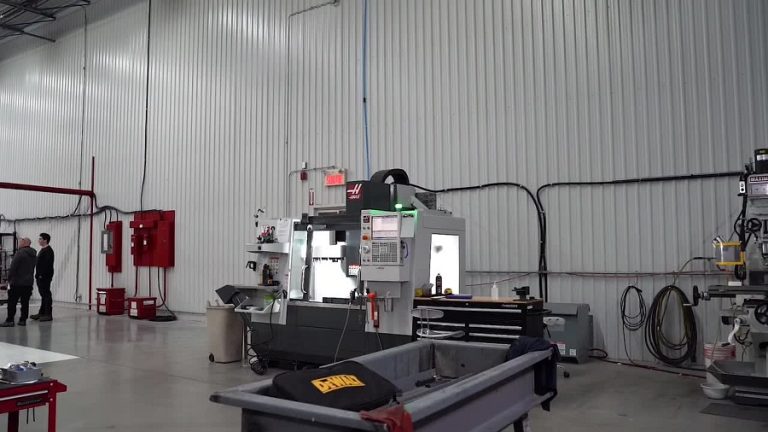
Fuse Energy Technologies is pouring tens of millions of dollars into a new radiation testing facility in Albuquerque. The facility will address a critical chokepoint in the rollout of defense, space, and semiconductor technologies: limited testing capacity.

The planned site will offer “radiation-as-a-service” for public and private users, providing developers with the tool to validate how electronics perform in high-radiation environments without waiting months for access to existing facilities.

Fuse facility to address bottleneck

Industry players have long identified radiation testing as a bottleneck, with just a small number of facilities to handle the growing demand from satellite makers, chip developers, and defense contractors. These constraints can potentially delay deployment timelines for mission-critical systems.

The California-based company said its Albuquerque facility will ease that pressure by expanding access and shortening the queues for testing. Operations may begin by summer 2026.

The facility, located near Sandia National Laboratories and Los Alamos National Laboratory, will support testing for satellites, defense platforms, and advanced semiconductors. Fuse has also signed cooperative research agreements with both Albuquerque laboratories, virtually making its services an established national security research corridor.

“The demand for radiation effects testing is growing rapidly as governments and companies deploy increasingly sophisticated defense platforms, satellites, and semiconductor technologies,” said CEO JC Btaiche. “Expanding access to testing is key to getting these systems into the field faster.”

With this new capacity, the company aims to help developers move from design to deployment more quickly — a critical advantage as governments race to launch next-generation defense systems and resilient space architecture.

Buildup

The Albuquerque project will also create dozens of engineering and technical jobs, cementing New Mexico’s role in advanced energy and defense R&D. Fuse’s project is a welcome addition to a broader buildup of manufacturing and research capacity in the state this year.

In March, AeroVironment announced plans to invest over $30 million to expand its manufacturing operations in Albuquerque, scaling up production of counter-drone and laser systems.

And in January, Castelion announced the launch of Project Ranger, a 1,000-acre hypersonic manufacturing campus in Sandoval County. The project aims to support high-cadence production of hypersonic strike systems. 

New Mexico Wants to Grow Its Own Bioscience Talent — Starting With Internship

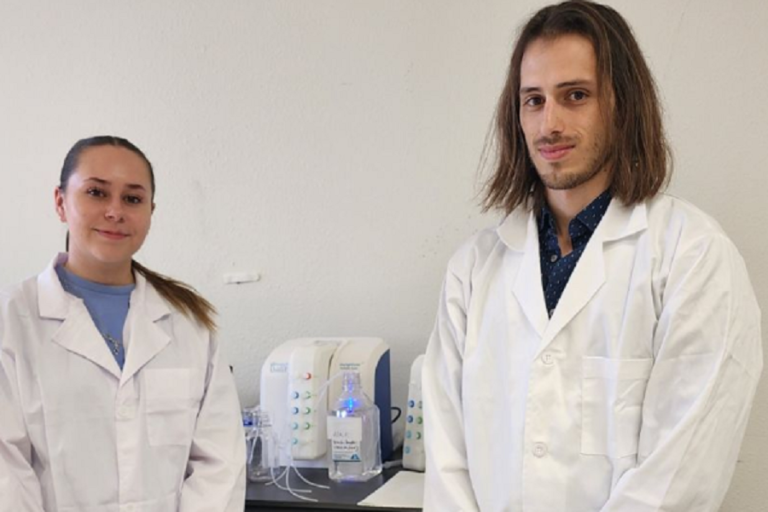
New Mexico Bioscience Authority (NMBA) is getting bullish on investing in the young people to power the future of bioscience, as it announced a new internship program.

The NMBA’s internship program aims to provide college students and recent graduates with hands-on experience in labs, startups, and research institutions across the state. The program, officials say, seeks to strengthen the pipeline of local talent and reduce reliance on out-of-state hires.

Executive Director of the New Mexico Bioscience Authority Stephanie Tofighi said the program aims to “support the growth of New Mexico’s bioscience industry while opening doors to a new sector for our workforce.”

Bioscience is flagged as one of New Mexico’s strategic growth industries, alongside technology and aerospace. A report published by the Albuquerque Regional Economic Alliance (AREA) states that the state’s bioscience industry has grown by 21 percent since 2018. 

The internship connects talents and industry throughout the state. It is facilitating a pipeline from college to career.

For students, the program offers more than just laboratory work. It is a chance to network with employers, gain hard skills, and step into a sector that promises high wages and long-term stability. For companies, on the other hand, it’s a way to nurture talent locally and invest in the state’s future workforce.

The April cohort included 13 interns from four state institutions working at startup companies, while 10 companies have signed on for the summer.

The internships will run for 10 to 12 weeks. Participating companies provide stipends to ensure accessibility for students from diverse backgrounds.

Applications for the summer program are open until May 2026. Placements are expected to begin in the summer.