

New Mexico is betting that a relatively modest infusion of public funds—$10 million spread across five campuses—could help address a far bigger question: who gets higher education, and under what conditions.
The New Mexico Higher Education Department (NMHED) has announced fresh funding to expand child care infrastructure on college and university campuses statewide. It is part of a greater push to make higher education more accessible for student-parents and working families. The money will bankroll construction, renovation, and modernization of child care facilities at five institutions, including state’s flagship universities and regional colleges.
At first glance, the amount is small compared to the enormous need. But in a state where child care shortages are persistent and often severe—particularly in rural areas—the investments serve not only as a solution but also as a strategic foothold. “This is about removing one of the most persistent barriers to education and work,” said Higher Education Secretary Stephanie M. Rodriguez of the New Mexico Higher Education Department. “Access to childcare is essential for student parents, campus employees and families across our communities.”
Built Around Scarcity
The funding comes at a time of overwhelming demand. The department received 25 proposals from 18 institutions requesting nearly $120 million, which is more than ten times the funding available. Those proposals could increase capacity for more than 1,260 children. That gap between request and what is available highlights a tension in New Mexico’s child care: the need is not marginal; it is structural.
Many of the proposed projects come from what state officials describe as “child care deserts.” It is where licensed care is either unavailable or downright unaffordable. In those places, the pathway to higher education often hinges not only on tuition and readiness but equally on child care support.
The program is part of Governor Michelle Lujan Grisham’s plan to move toward a universal child care system, which has become one of the pillars of her administration. Her administration’s investment strategy reflects a belief that child care is not only a question of family service. It is also an economic and educational infrastructure issue.
“All parents who need child care can now get it,” said Lujan Grisham. “When parents are guaranteed no-cost child care, they can improve their family’s quality of life, fully engage in the workforce, and contribute to our state’s economy. Families shouldn’t have to choose between paying rent or paying for child care, and as of today, they no longer will.”
Campuses as Child Care Networks
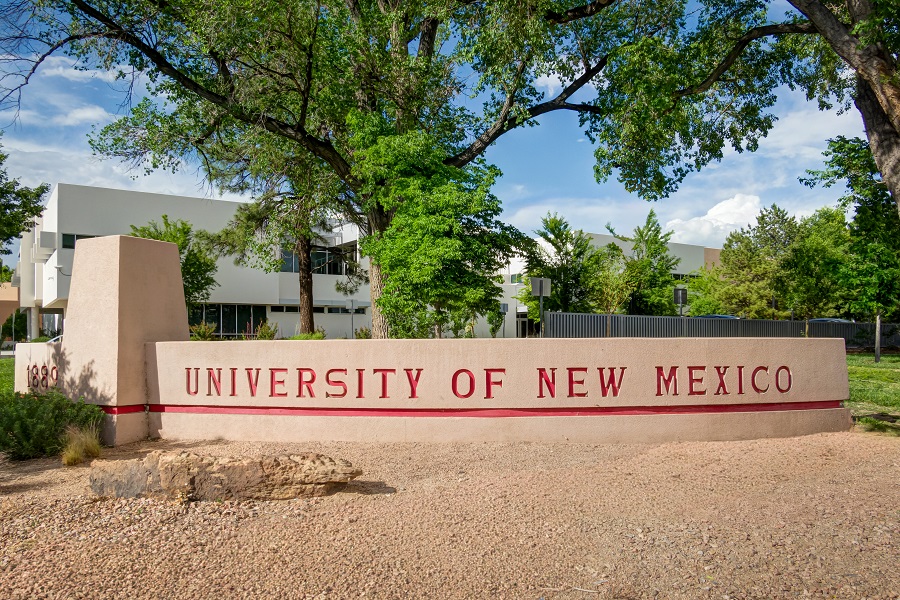
The five awarded institutions comprise the state’s higher education system: University of New Mexico ($4.71 million for Children’s Campus Cluster 1 expansion); San Juan College ($2.54 million for renovation and equipment upgrades); New Mexico State University ($1.5 million for modernization of Myrna’s Children’s Village); Santa Fe Community College ($1 million for Kids Campus expansion); and Eastern New Mexico University–Roswell ($250,000 for center renovation).
Each project includes support for construction, renovation, furnishings, and equipment. The funding aims to expand on-campus child care capacity. The logic is both practical and social. Officials hope to roll back one of the most immediate obstacles facing student-parents, such as time, transportation, and the cost of off-site care.
Advertisement
That burden is decisive for most students. Enrollment becomes unstable, attendance falters, and degree completion slips further out of reach in the absence of reliable child care.
The Hidden Economics of Staying in School
The policy mirrors a growing consensus within higher education policy discussions that child care is not peripheral to student success—it is decisive. “Universal Child Care becomes real when a parent can leave their child in a safe, quality program steps away from where they learn and work,” said Elizabeth Groginsky of the New Mexico Early Childhood Education and Care Department.
That proximity matters in economic terms. Student-parents tend to be older, face financial constraints, and juggle both employment and coursework. Even small disruptions in child care could mean missed classes, delayed graduation, or withdrawal from school.
By building child care centers on campuses, New Mexico treats time as infrastructure. It is something the state can build, bankroll, and expand.
Why $10 Million Still Matters
The amount is not transformative on its own. But it serves as a catalyst. In a fiscal cycle, the funding does not solve the disparity between supply and demand. Instead, it indicates where the state intends to build next: not only roads and buildings, but the system of care that determines who is going to use them.
New Mexico policymakers are redefining priorities, treating education, labor, and family policy as integrated rather than isolated spheres. In that sense, the $10 million fund is an acknowledgment that the design of higher education does not have these thousands of families in mind.