

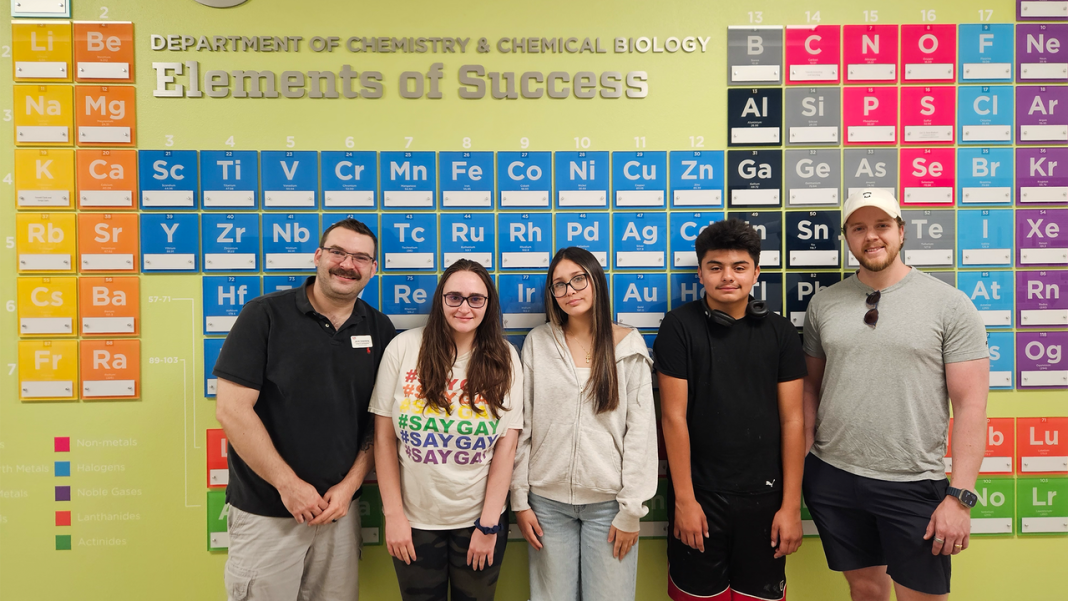
Universities are continuing to provide learning opportunities during the summer, with programs that give students hands-on research experience while classes are out of session.
At the University of New Mexico, a partnership with New Mexico’s Division of Vocational Rehabilitation and United Way is providing paid research positions for high school students. The participants help monitor mosquitoes and other insects that can spread diseases affecting people and agriculture.
The students are mentored by Jake Greenberg, a lecturer III and principal investigator in UNM’s Department of Chemistry and Chemical Biology and University College. He teaches the fundamentals of scientific research as students collect insect samples across central New Mexico, identify mosquito species, process specimens in the laboratory, maintain scientific records and prepare samples for future disease screening.
According to UNM, the project supports ongoing surveillance of mosquitoes that can transmit diseases such as West Nile virus. It also tracks other insects of public health and agricultural importance, including invasive species such as the New World screwworm fly.
What Students Gain From the Experience
Many of the students are working in a university research laboratory for the first time.
“Research can seem intimidating until students actually experience it,” Greenberg said. “These students quickly realize that science is something they can do as a career. They’re making meaningful contributions to a real research project while developing skills that will serve them in college and beyond,” he said.
Students learn laboratory techniques along with scientific communication, teamwork, data collection, laboratory safety, and problem-solving. These skills prepare them for a wide range of career paths.
The internship allows students to explore careers in chemistry, biology, environmental science, public health, and medicine. It also builds their confidence through authentic research experiences.
The Power of Collaboration
The partnership expands opportunities for students by bringing universities and community organizations together. The program combines workforce development with research and public service. It helps students envision themselves as future scientists while addressing issues that directly affect communities across the state.
Mosquito-borne diseases and invasive insect species continue to pose challenges throughout the Southwest. The students contribute valuable surveillance data while inspiring the next generation of STEM professionals.
The project goes beyond scientific research at UNM. It creates pathways into higher education, fosters community partnerships, and prepares students to tackle real-world challenges through science.

