


If you’re wondering whether your child has access to nutritious meals at school, a recent report offers some insights. New Mexico posted strong numbers for its school meal efforts. The 2026 State of School Lunch Report from ProCare Therapy ranked the state second in the nation.
All eligible New Mexico schools participate in the Community Eligibility Provision (CEP). That’s the highest CEP adoption rate in the country.
CEP lets eligible schools serve free breakfast and lunch to every student. Families don’t have to fill out meal applications. This way, your child doesn’t have to worry about different payment or eligibility categories in the cafeteria. New Mexico also offers free school meals statewide through its Healthy School Meals for All policy.
The school meal system also focuses on local food. The report found that 75.8% of schools represented by responding school food authorities serve locally sourced foods.
New Mexico has about 68.8 breakfast participants for every 100 lunch participants, giving it the third-highest ratio nationally. About 62.3 participate in school lunch for every 100 school-age residents.
For APS, those numbers highlight its ongoing efforts to improve school meals.
Meals Made From Scratch
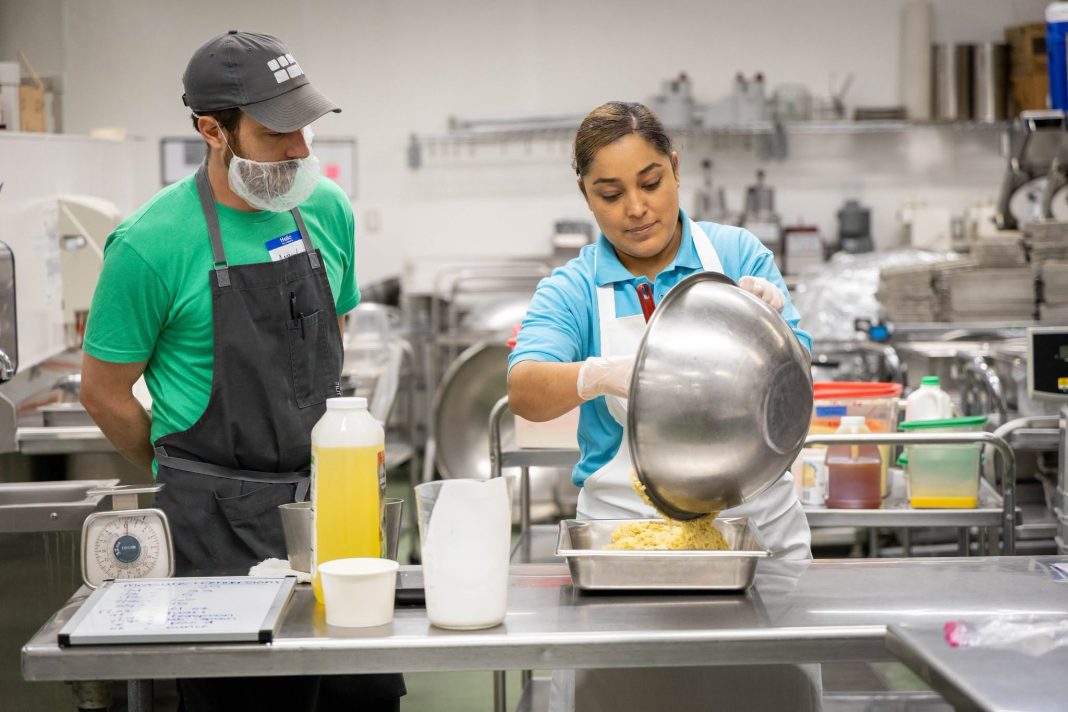
If your child is studying under APS, you may already have an idea about the scratch-cooking initiative of the Food and Nutrition Services. The team is preparing more meals from basic ingredients instead of relying mainly on highly processed, pre-prepared products.
The district said the approach brings more fresh ingredients into school meals. It also creates room for foods that represent Albuquerque’s diverse cultures and traditions.
APS already prepares about half of its meal components from scratch. The district is also expanding efforts to bring more locally sourced foods into cafeterias.
APS said this strategy connects the work in the kitchen with what students experience in classrooms and communities.
Food Cafeteria Scraps to Community Gardens
Meanwhile, APS recently launched an initiative to keep food scraps out of landfills and put them to use in the community. Three weeks into the program, the district has diverted nearly 1,700 pounds of organic waste from its Central Kitchen.
Here’s how the process comes full circle:
- APS collects food prep scraps from its Central Kitchen each week.
- Soilutions processes the waste at its South Valley facility and turns it into nutrient-rich compost.
- Students use the compost returns in local school and community gardens. It gives them hands-on opportunities to learn, grow food, and connect with nature.
According to APS, the initiative gives your child a practical way to see environmental stewardship in action. Plus, diverting organic waste keeps more material out of landfills and helps build healthier soil.
For the district, New Mexico’s 100% CEP adoption and 75.8% local-food rate highlight what schools can achieve when they make access to meals a priority. They also show how connecting schools with local food can support students beyond the cafeteria.

