

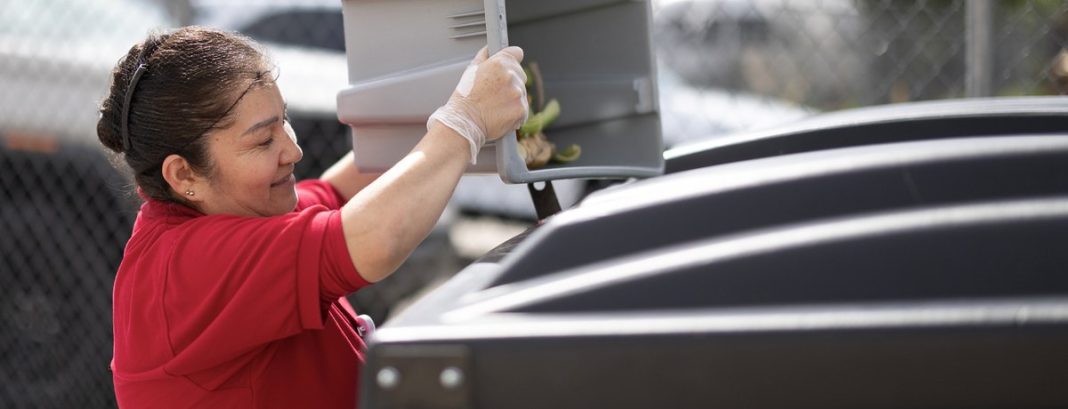
How do you dispose of your food waste?
Albuquerque Public Schools’ Central Kitchen prepares 46,000 meals for students in over 140 schools every day. Now, a new pilot initiative is giving the kitchen’s food waste another purpose. It will turn that scraps into nutrients for local soil instead of sending it to landfills.
In just three weeks, the initiative has already kept roughly 1,680 pounds of food waste out of the landfill.
“This is exactly the kind of innovation we want Healthy Universal School Meals to inspire,” said Elizabeth Anichini, program manager for the state Public Education Department’s Healthy Universal School Meals initiative. “Schools are reducing food waste by giving students time to eat, using share tables, and donating surplus food. APS is going further by partnering with the community to keep remaining food waste out of landfills and put it to productive use.”
APS collaborated with the Ciudad Soil & Water Conservation District, local composting company Soilutions, and national recycling partner Denali to turn the vision into reality.
The Ciudad Soil & Water Conservation District funds the food waste diversion program. It helps APS cut down on cafeteria waste and encourages students and staff to build more sustainable habits.
From Food Scraps to Compost
Under the program, Denali collects organic scraps from the APS Central Kitchen once a week. The company then transports them to Soilutions’ composting facility in the South Valley.
Denali uses advanced depackaging technology to separate food scraps from their packaging on a large scale. This prepares the waste to be turned into nutrient-rich compost.
“We’re not just managing waste, we’re teaching our students about the power of soil health, growing their own food and environmental stewardship,” said Marie Johnson, executive director of Food and Nutrition Services at APS.
APS said Soilutions’ philanthropic branch, Generation Grow, already provides 200 cubic yards of compost, soil, and mulch yearly to local school and community gardens. “By recycling cafeteria scraps into compost, the project gives students a hands-on look at environmental stewardship.”
The move supports soil science and gardening education while keeping organic matter out of landfills. It also helps reduce methane emissions, a potent greenhouse gas. Organizers said they hope to expand the pilot across the district and create a model that other schools can follow statewide and nationwide.

