

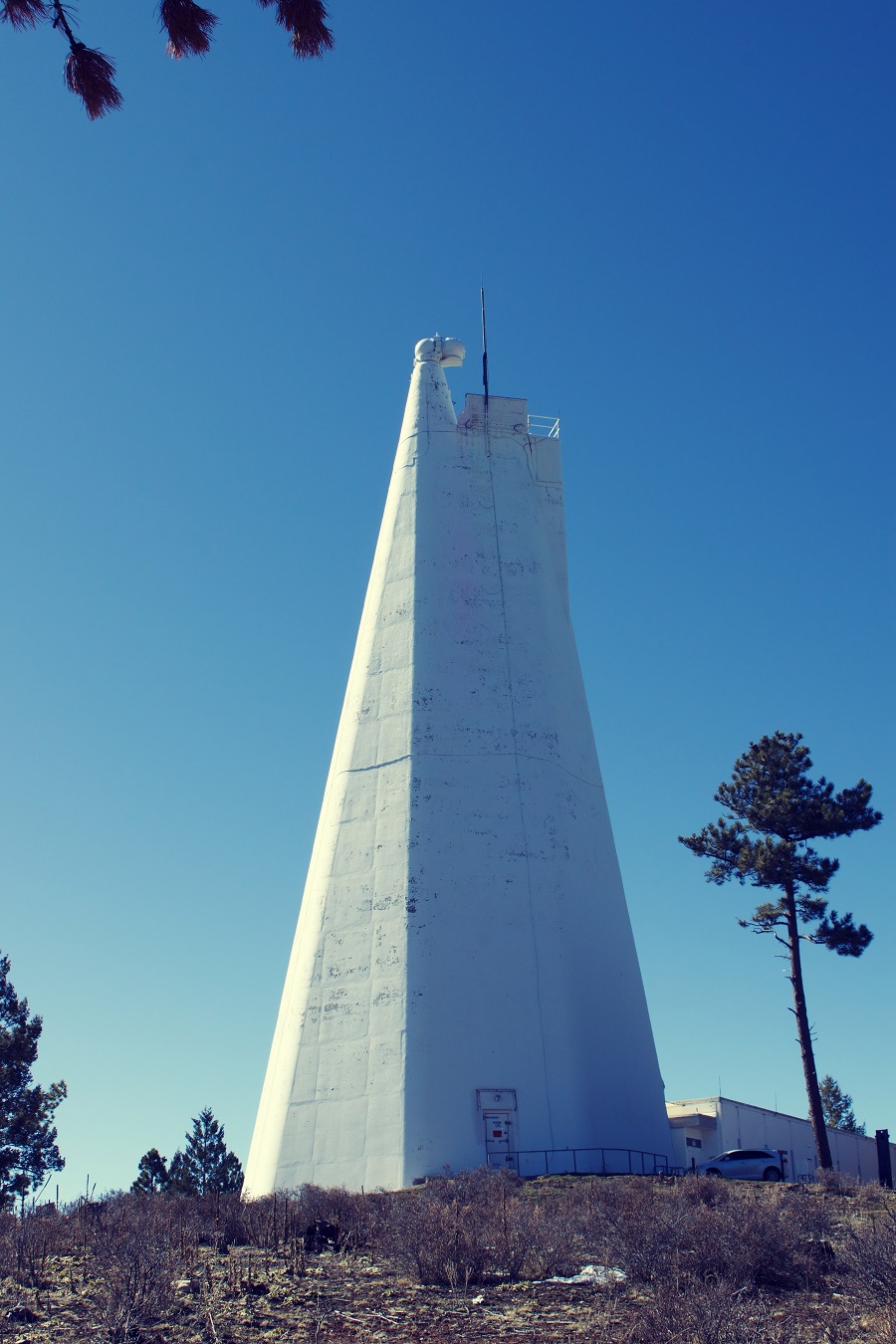
The Sunspot Solar Observatory in Otero County, New Mexico, remains closed more than 20 days after liquid mercury was discovered on the platform of its main telescope, forcing the shutdown of the facility, its visitor center, and nearby hiking and picnic areas.
Officials have released few details about the size of the spill, its cause, or the scope of the cleanup, saying only that the incident poses no risk to the public.
Mercury contamination
According to a public notice, two researchers from New Mexico State University discovered an unspecified amount of liquid mercury on January 5 while working inside the tower that houses the Richard B. Dunn Solar Telescope. Mercury is a highly toxic neurotoxin, and exposure—particularly through inhalation of mercury vapor—can pose serious health risks.
Safety protocols were immediately implemented to protect personnel and begin remediation. The observatory, visitor center, and surrounding grounds will remain closed until further notice, with no reopening timeline provided.
Mercury contamination requires strict cleanup procedures to prevent vaporization and the spread of toxic particles.
Officials, however, have not disclosed how extensive the cleanup is or what specific measures are being used.
A spokesperson for the Association of Universities for Research in Astronomy (AURA), which manages the facility, said the mercury leak was contained within the building.
But the spokesperson declined to provide further details on cleanup protocols or whether a cause has been identified.
Mercury is used in the telescope’s design because of its unique physical properties. According to the observatory’s website, the Richard B. Dunn Solar Telescope’s 250-ton platform floats on 120 gallons of liquid mercury, which acts as a low-friction bearing. This allows the massive optical system to rotate smoothly and precisely, keeping the telescope aligned with the sun as it moves across the sky. The mercury-bearing system also supports the observing room floor.
Built by the U.S. Air Force in 1969, the telescope has since undergone multiple upgrades and remains a key facility for solar research.
Solar Observatory 2018 shutdown
The prolonged closure has revived public attention partly because the observatory was also abruptly shut down in 2018, an incident that triggered widespread online speculation. At the time, the National Solar Observatory was closed for 11 days after armed federal agents arrived at the site, reportedly using Blackhawk helicopters.
In 2018, an Albuquerque Sunspot Observatory was shut down by armed Federal Agents who arrived in Blackhawk helicopters. The National Solar Observatory remained closed for 11 days. The FBI claimed a janitor was soliciting child porno from the observatory. What's the real truth?… pic.twitter.com/eLGG6VHhLc
— Conspiratorial Report (@CnsprtrlRprt) January 5, 2025
Federal authorities later said the 2018 shutdown was linked to an investigation into a janitor accused of soliciting child sexual abuse material using the observatory’s internet connection. The FBI said the closure was ordered to prevent evidence from being compromised.
Officials stressed that the investigation had no connection to the observatory’s scientific work.
Despite those explanations, speculation resurfaced online following the current mercury-related closure. Some netizens have questioned whether the 2018 shutdown was connected to the observatory’s location on Sacramento Peak, which overlooks Holloman Air Force Base and lies within sight of the White Sands Missile Range.
What really happened at the Sunspot Solar Observatory in New Mexico?
— Steph Kent (@covertress) September 26, 2023
Was the shutdown of the observatory on Sacramento Peak related to its view of Holloman Air Force Base, where an observer could potentially see onto the U.S. Army's White Sands Missile Test range?… pic.twitter.com/MwoChv8eAN
There is no evidence to support claims that the observatory’s operations or closure are related to military surveillance or restricted defense activities. Officials have consistently attributed both the 2018 and the current shutdowns to safety and law-enforcement matters unrelated to the facility’s research mission.
The Sunspot Solar Observatory sits at an elevation of about 9,200 feet in the Lincoln National Forest near Cloudcroft, overlooking the Tularosa Basin. It is owned by the National Solar Observatory, which is under the U.S. National Science Foundation, and supports New Mexico State University’s operation of the telescope.
The extended closure and limited public disclosure have again raised questions about transparency, safety oversight, and public accountability at a federally supported research facility located on public land and frequented by visitors.