

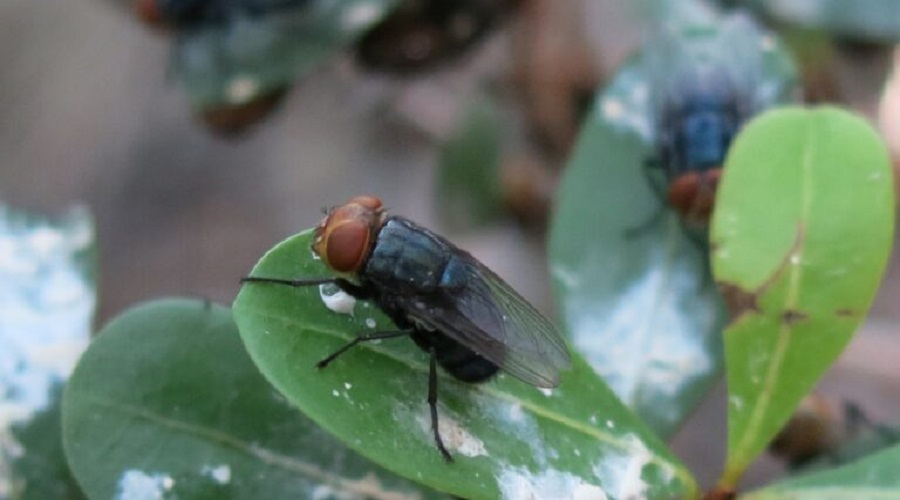
Federal officials confirmed the first case of New World screwworm in New Mexico, raising concerns among pet owners, ranchers, and wildlife managers about the flesh-eating parasite that is capable of wreaking havoc on animals. The U.S. Department of Agriculture (USDA) announced Tuesday that a case first reported in Texas has been determined by investigators to have been in Lea County, New Mexico.
The veterinarian who diagnosed the infestation lived in Andrews County, Texas. But the dog’s home was across the state border in southeastern New Mexico, making it the state’s first confirmed case of the deadly parasite in decades.
Authorities say it appears the infestation is an isolated case. The dog’s recent travel history and possible exposures, however, remain unknown, prompting a sweeping investigation involving federal and state animal health officials. “This situation is evolving, and we expect new information to emerge as our investigation continues,” Dudley Hoskins, USDA’s Under Secretary for Marketing and Regulatory Programs, said in a statement. “USDA is committed to sharing what we learn quickly, accurately, and transparently so animal owners and local communities have the information they need to stay vigilant.”
The New World screwworm is not a worm at all. According to the Centers for Disease Control and Prevention (CDC), the parasite is a fly whose eggs hatch into maggots that burrow into and feed on the living tissue of warm‑blooded animals and people. Infestations cause painful, foul‑smelling wounds that could get worse over time. It can be fatal if untreated.
The parasite poses a threat to cattle, sheep, goats, horses, pets, and wildlife. Its discovery comes at a time when livestock producers are wary of the parasite that once devastated the American cattle industry before the USDA eradicated it in 1966 and in Florida Keys deer in 2016. Officials are now preparing to deploy that same strategy if necessary.
USDA and New Mexico veterinarians have activated the steps outlined in the agency’s New World Screwworm Response Playbook. Investigators are monitoring the infected dog’s movements and examining other animals in the household. They also set fly traps in the surrounding area and are preparing for possible deployment of sterile flies to interrupt the parasite’s reproductive cycle.
Meanwhile, officials confirmed a separate case of infestation in a goat in Gillespie County, Texas. State and federal agencies have widened surveillance and testing efforts there as well.
What Pet and Livestock Owners Should Watch For
Animal health officials urged the public to inspect their animals every day, especially those with recent wounds. They say warning signs of New World screwworm infestation include wounds that appear to worsen; maggots or clusters of fly eggs in the wounds; animals displaying unusual discomfort, agitation, or irritability; and the presence of lesions around natural body openings, such as ears, nose, genital area, and the umbilical region of young animals.
Officials explain that the larvae feed rapidly on living tissue, and early detection can spell the difference between successful treatment and severe complications.
Anyone who suspects a New World screwworm infestation should contact a veterinarian immediately. State animal health officials or USDA authorities may also receive reports. Officials stress that awareness—not panic—is the most effective defense against the parasite.

