

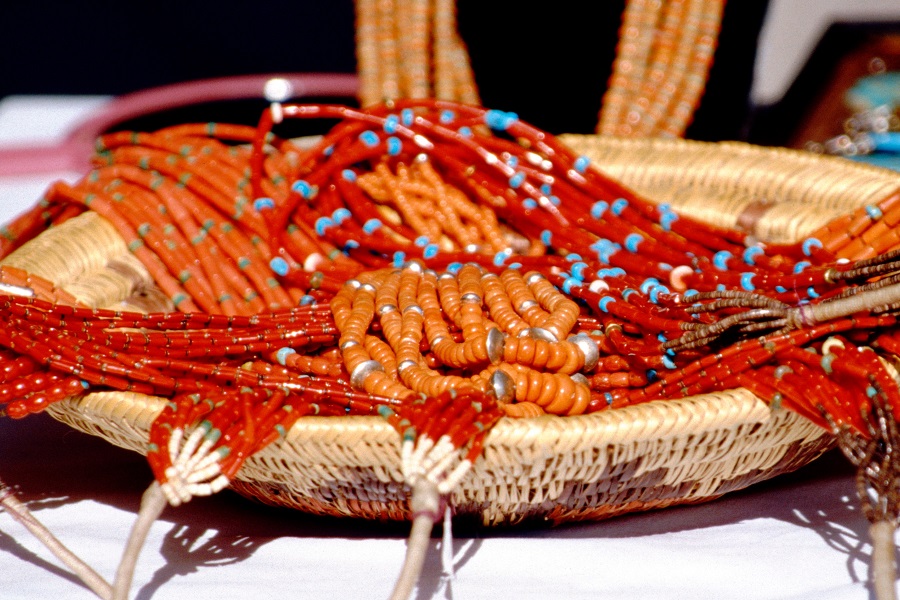
Only weeks after its debut, the New Mexico Indian Market—launched with promises of affordable space and cultural visibility for Indigenous artists and entrepreneurs—has gone dark. The vision of a vibrant hub for Native creativity unraveled quickly. Too few vendors registered to sustain the costs of keeping the doors open, forcing organizers to close down the market almost as swiftly as it began.
Located on 98th Street near Central Avenue, a stone’s throw away from a busy commercial corridor and adjacent to other markets like El Mesquite, the market represents an ambitious attempt to create a permanent weekend destination for Native vendors in Albuquerque. Kevin Wilson, owner of Native Boba Tea Co., and Aizeen Pallares co-founded the market. It was launched in early May 2026 with more than two dozen vendors selling jewelry, clothing, food, and other goods.
Wilson had spent over a year looking for locations. He described the market as an effort to build “a home on the weekends” for Indigenous entrepreneurs, distinct from sporadic events like Pueblo feast days or pop-up setups in places like Gallup. “It’s not common for us to have a space to call our own,” he said.
By late June, however, the number of vendors had dwindled after an initially promising start. Organizers pointed to mounting fixed costs — including insurance, portable restrooms, and facility fees — that became a hurdle to sustaining the effort without a critical mass of participants. The market operated its final day on Sunday, June 28, before it shut down for good.
A Long-Sought “Solid” Space
The closure comes as a let-down to vendors who saw the market as a unique, reliable outlet in a city where opportunities for stable sales are fleeting. Colleen Persson, owner of Sno Den, expressed emotion over the shutdown. “They kind of made it safe for us, where we’re secure,” she said. Persson noted the challenges small businesses are navigating when events are unpredictable or spaces become unavailable.
Pallares highlighted the market’s goal during the opening. The market aims to provide stability so vendors wouldn’t have to scramble for the next pop-up. “You don’t have to be struggling,” she said. “When is the next event? Do they have space? How much is going to be the fee?” The model offers affordability and consistency, operating Saturdays and Sundays from 7 a.m. to 4 p.m.
This initiative stood apart from New Mexico’s established and prestigious Indigenous art scenes, particularly the Southwestern Association for Indian Arts (SWAIA) Santa Fe Indian Market. That event is now in its second century, drawing over 1,000 artists from hundreds of tribal nations to the historic Santa Fe Plaza each August. It generates significant tourism income and serves as a career-making platform for many participants.
Smaller or newer markets want to replicate that draw, particularly in Albuquerque, where competition from rival markets, the pull of online sales, and seasonal events often splinter vendor participation.
Broader Picture for Native Artists and Entrepreneurs
The dilemma the New Mexico Indian Market faces reflects historical economic conditions for many Indigenous artists and small business owners. Major events like Santa Fe’s provide high visibility, but whole-year or consistent local opportunities remain scarce. Past disruptions, such as widespread cancellations during the COVID-19 pandemic, highlighted the vulnerability of artists who depend heavily on in-person markets or, in some cases, the bulk of their revenues.
Factors probably contributing to the vendor shortfall in Albuquerque could include the timing, spring into early summer, competition from other rival markets, the burden of operating a small business amid inflation or high supply costs, and the challenge of building sustained foot traffic in a new location. Wilson said strong initial customer support did not translate into regular vendor commitment.
The market location in an area with existing commercial activity was a deliberate decision. Organizers initially hoped to foster a sense of community and kinship alongside commerce. But drawing enough sellers to cover overhead proved difficult.
What Lies Ahead for Ventures Similar to the Indian Market
In the market’s final weekend, Wilson and others expressed sadness. They remain open, however, to the possibility of future efforts. The closure highlights the small margins and logistical bottlenecks involved in sustaining dedicated spaces for Native vendors outside major tourist hubs or traditional festivals.
Vendors like Persson framed the closure as a loss of a dependable income stream and a sense of security. The questions remain about how best to support Indigenous entrepreneurship in New Mexico.
The brief run of the New Mexico Indian Market serves as a model of both aspiration and precariousness. Creating sustainable markets for makers in a state rich with Native artistic traditions, from Pueblo pottery and Navajo weaving to modern jewelry and food business ventures, is both an economic and cultural challenge.

