

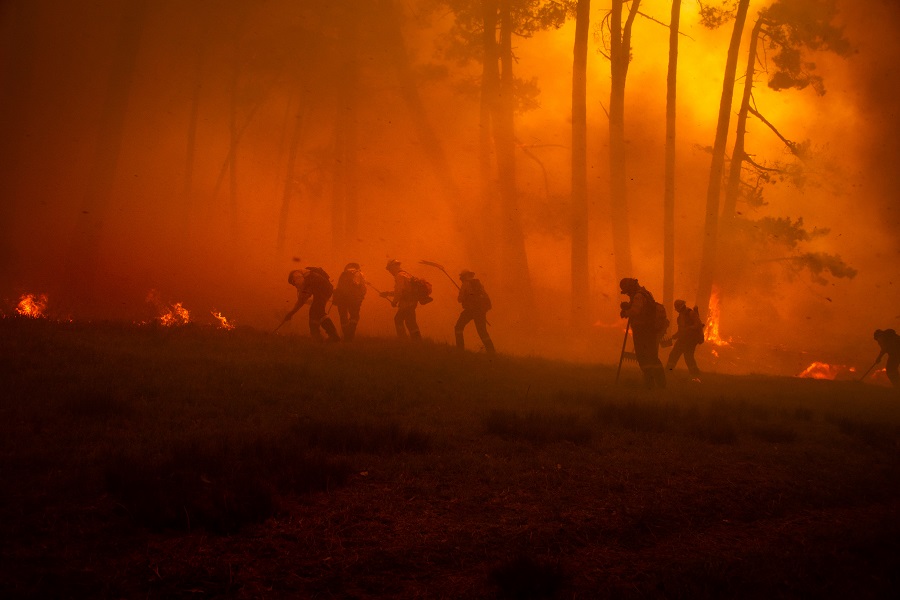
Smoke columns rise from lightning-sparked blazes and stray sparks that have found ready fuel across New Mexico’s parched land. Record temperatures, scant snowpack, and low humidity have primed the region for what forecasters warn could be one of the most active fire seasons in years. Flames burn with an intensity from the Jemez Mountains to the Gila Wilderness and eastward into the grasslands that shows stark climatic shifts gripping much of the American West.
The McCauley Springs Fire, east of Battleship Rock in the Santa Fe National Forest’s Jemez Ranger District, erupted on June 24. It has grown to approximately 716 acres with only 25 percent containment as of Sunday. Crews numbering by the hundreds, including highly-trained firefighters and aircraft, are using a mix of direct and indirect tactics amid difficult terrain and fuels consisting of timber, grass, understory, and wood litter. A temporary forest closure is in effect, and officials ordered evacuations for nearby communities, such as Sierra de los Pinos.
In the south, the Sacaton Fire in the Gila Wilderness, ignited by lightning on June 21, has shown increased activity. Smoke is visible along U.S. Route 180. Though mapped at around 69 acres and contained in some reports, it burns in rugged, snag-filled terrain from a previous burn scar, complicating efforts to suppress the fire.
Latest fires, including the Beehive Fire, which burned over 1,800 acres before containment efforts, the Ox Fire, Foster Fire, Trough Fire, and Sawmill Fire, spanned central and northern New Mexico. Many of these blazes were traced to scattered thunderstorms, but little moisture. Red Flag Warnings have been more frequent, ushering the dangerous alignment of wind, heat, and aridity.
A Season Shaped by Drought and “Snow Drought”
These events come against a backdrop of persistent drought and one of the warmest winters on record across the West. Much of the state started the year with a severe snow drought, leaving mountain snowpacks below normal levels despite late-season storms. Scientists from NOAA and the Desert Research Institute have highlighted how this decreases spring runoff, dries soils and vegetation much earlier, and intensifies wildfire risk—especially in eastern New Mexico’s grasslands, where sparks can spread quickly under hot, dry, windy conditions.
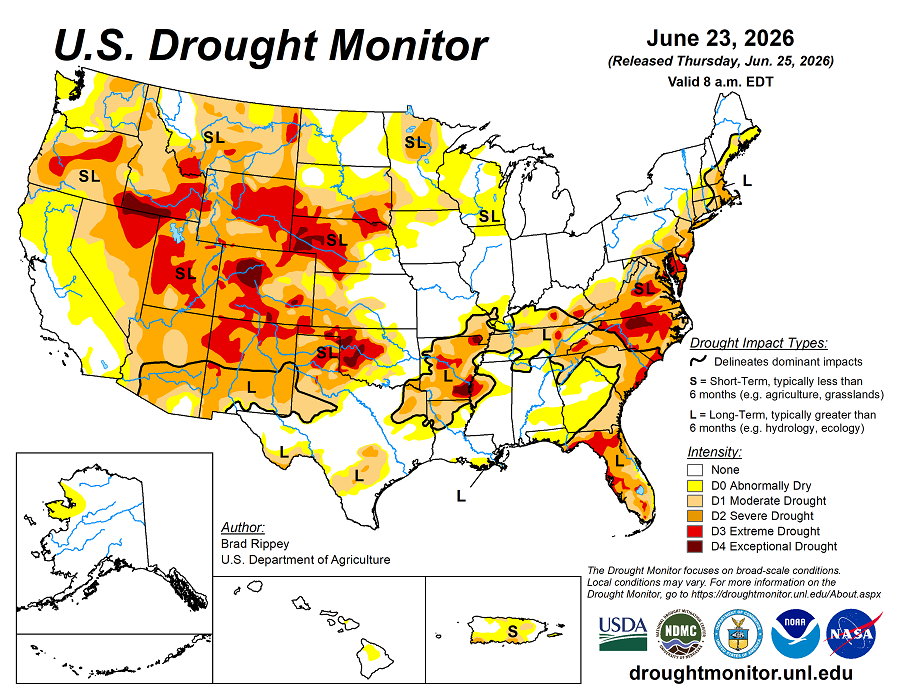
With data through June 23, the U.S. Drought Monitor shows raging drought across much of the West, with pockets of extreme (D3) to exceptional (D4) conditions in parts of the Four Corners region and beyond. Hot, dry weather has increased irrigation demands and wildfire threats. Amid this condition, poor to very poor assessments of rangeland and pastures in states like Arizona, Colorado, and Wyoming.
National Interagency Fire Center outlooks for June through July expect above-normal fire potential across much of the Southwest, including New Mexico. The forecast said warmer- and drier-than-average conditions, fuels, and the potential for dry thunderstorms before the monsoon fully arrives are the underlying factors. Probabilities favor high temperatures coupled with strong evaporative demand are stressing vegetation, even if some monsoon rains materialize.
Earlier, the Seven Cabins Fire in Lincoln County burned nearly 32,000 acres before full containment in mid-June. It was one of the larger events that underscored the high ignition rate. Data through early June from State Forestry already showed an unusually high number of lightning-sparked fires compared to recent years. The total acres burned, however, remained relatively modest up to that point due to aggressive initial attack.
Broader Western Context: Heat, Fuels and a Changing Climate
The challenges go far beyond New Mexico’s borders. In Utah, the Iron Fire near Eureka easily burned over 37,000 acres of grass and chaparral after igniting on June 19. Multiple large fires have charred tens of thousands of acres across the region, under hot, dry weather. Less snowpack from a historically warm winter has complicated risks, with earlier melt and reduced moisture carrying into summer.
Experts link these events to climate change.
A study published in Environmental Research Letters found that in years when snowpack melted earlier in the West, wildfires generally burned more areas. But during years with low snowpack, fires tended to be more acute and caused greater damage to the natural landscape.
Daniel Swain, a climate scientist at the California Institute for Water Resources, said, “The main impact [of low snowpack] this year might be with respect to fire conditions, particularly in the mountain areas.”
Human and Ecological Toll
Wildfires in the West are not abstractions. These events threaten homes, cultural sites, including those of the ancestral lands of Pueblo communities near the McCauley Springs Fire, watersheds, and wildlife habitat. Post-fire conditions heighten risks of flash flooding when monsoon rains eventually arrive, a recurring event in New Mexico burn scars.
State and federal officials have enforced fire restrictions across New Mexico since early April. The restrictions include banning campfires, fireworks, and open burning on non-federal lands to descalate human-caused ignitions, which account for a large portion of problematic starts.
Outlook and Adaptation
Meteorologists suggest warm anomalies and high evaporative demand will continue, keeping risks high in other parts of the West. Though the coming monsoon could bring ease by increasing humidity and precipitation—potentially moderating fire activity in New Mexico by late July or August.
In the long term, officials stress the need for forest thinning, prescribed burns, community preparedness, and addressing the drivers of a hotter, drier West. The immediate focus, at the moment, is containment, public safety and monitoring the volatile mix of fuels, weather, and ignition sources that shape this fire year.
Forecasters observed, amid the snow drought briefing early on, that when conditions align with hot, dry winds, even one spark in combustible fuels can lead to rapid growth. This year, that alignment has already tested firefighting crews and residents across New Mexico and the West.

