

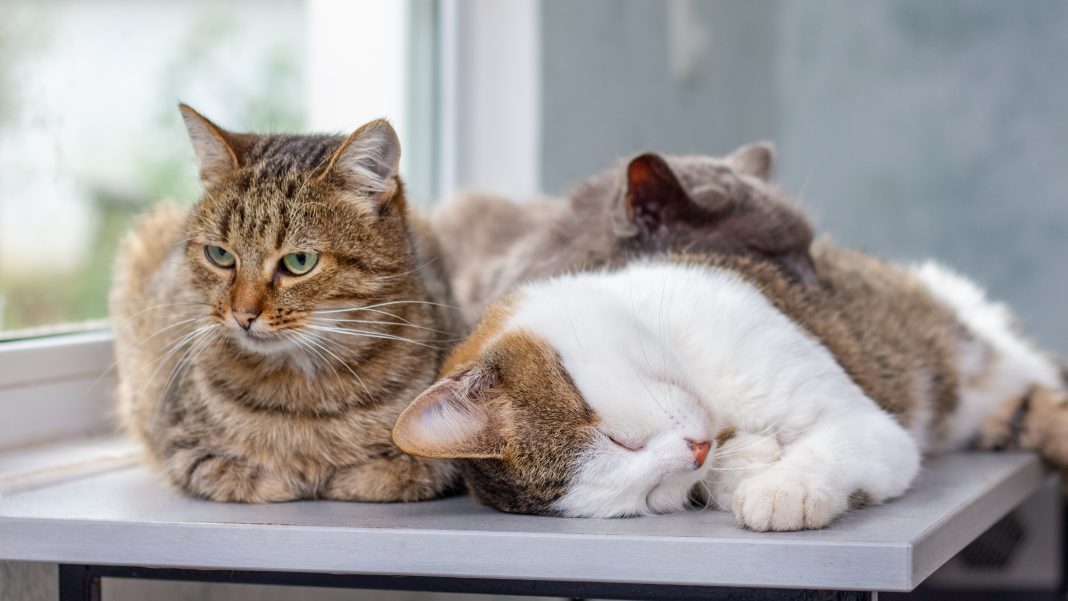
Have you heard of animals making a school their home? At Adobe Acres Elementary, three cats lived on the Albuquerque Public Schools (APS) campus for more than three years.
APS staff member Shannon Porch said she cared for the cats during that time. After APS moved them to an Isleta farm, developments left animal welfare advocates questioning what happened to the three.
“I guess I felt devastated because on one hand, first I was asked, what can we do about them? They need to be moved,” Porch told KOB 4.
Porch said she discovered the cats outside her office and reached out to Street Cat Hub. The nonprofit provides free spay and neuter services for community cats.
Street Cat Hub spayed or neutered and vaccinated the animals, then returned them to the school. Porch said students even knew the cats and interacted with them from a distance.
“So they saw them and enjoyed them from a distance, but they grew to love them. And honestly, I always had little water bowls outside my office and so they would ask, can I refill their water bowls? Absolutely. So personally, I took it also as not only my love for these little cats, but also as an amazing teaching moment for these kids to teach compassion and care,” she said.
Health and Safety Concerns Surface
As APS geared up for the new school year, administrators spotted five or six cats on campus. A district representative said the animals raised health and safety concerns.
APS said stray and feral cats could carry diseases, leave dead prey on school grounds, and scratch or bite curious children. The district said an outside contractor trapped three animals.
“And what was more, I guess, sad and devastating was that a pest control company was used to trap these cats,” Porch said.
APS said the contractor first contacted the county but received no response. The district said workers then transported all three cats to an open farm in Isleta. There, the farm uses cats to control rodents.
Questions Emerge Over the Release of Cats
Street Cat Hub questioned how the cats were released and whether they went through a proper acclimation process.
Chelsea Winter said cats relocated without proper acclimation may try to return their original territory. This puts them at risk of being hit by cars or attacked by predators.
“With a proper acclimation process, that means you’re putting them somewhere where there is access to resources. So not only is there that acclimation process, but there’s food, there’s water, there’s shelter,” Winter said.
Winter said someone told her the cats had not undergone the acclimation process.
She said all they want to know is where the cats are and whether they are alive, fed, and doing well on the farm.
“They should be able to tell us where they are and we can just double check, make sure they’re okay,” Winter said.
Street Cat Hub said it wants to work with APS on trap, neuter, and return (TNR) efforts.
“I think it’s just about TNR being the most effective way and like us wanting to, there’s no blame. It’s like we want to work with APS, we want to work with pest control companies, we want to educate,” Winter said.
After some of the cats were removed, Porch transferred to another school, where she now works as a counselor.
Street Cat Hub said it has worked with staff at other APS campuses to promote a safe cat community. The organization hopes to expand its TNR efforts with the district.

