

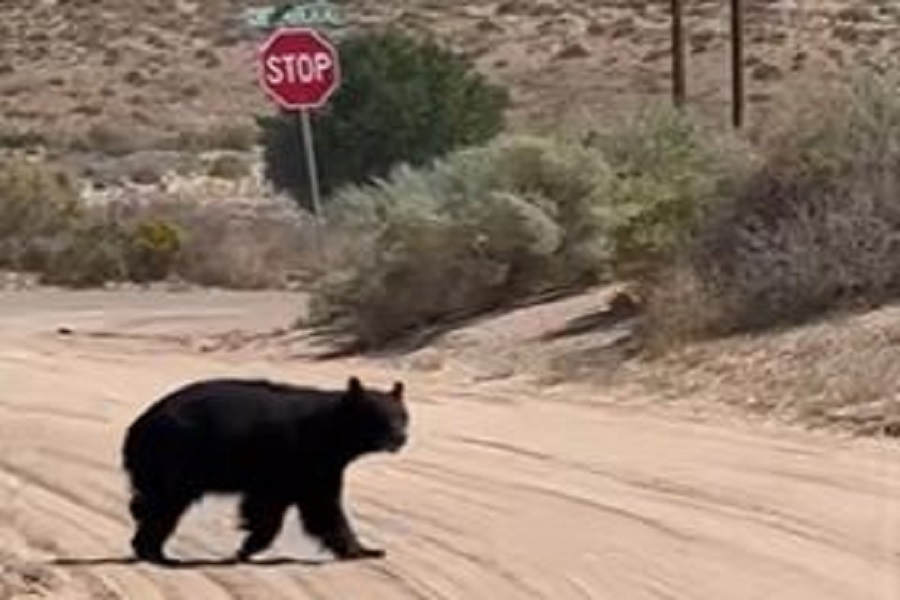
Interstate 25 near Bernalillo has become a deadly crossing for black bears. In just two weeks, four bears have been struck and killed by vehicles, prompting authorities to call on drivers to watch out for bears as they traverse one of the state’s busiest highways.
Wildlife officials confirmed that in just two weeks, four black bears have been killed by vehicles. They fear that hunger may have driven bears closer to roads and communities amid intensifying drought, heat, and food scarcity.
Wildlife officials urged drivers to keep their eyes glued to the road in anticipation of bears crossing the road at any time of the day.
These deaths occur as bears enter hyperphagia, the time before winter, when bears increase their food intake and scramble to build enough fat reserves to survive the winter.
This year, however, the search for food among bears has intensified as low snowpack, drought, and extreme heat have stripped parts of the mountains of berries, nuts, and other animal foods that bears rely on, sending more animals into human territory — and, increasingly, across major highways.
The I-25 bear deaths were not the first this year. In late July, two adults and two cubs were found dead between La Bajada and La Cienega, south of Santa Fe.
One of the adult bears was found on an overpass above a creek. It is possible that these bears were drawn to one of the few available water sources. Officials believe a single vehicle strike may have killed all four animals.
The deaths come as more bears are being drawn to neighborhoods where unsecured rubbish, pet food left outdoors, and fallen fruit have turned suburban areas into tempting feeding grounds.
Officials of the New Mexico Department of Transportation also warned motorists that highways traverse wildlife corridors. Drivers are advised to slow down, particularly at dawn and dusk, watch the road shoulders, and always anticipate an animal suddenly crossing.
Officials say drivers should brake firmly and stay in their lane when a bear or other animal appears in the roadway.
While black bears are still roaming the Sandias, the Manzanos, and the state’s high country, some of them may be forced to take increasingly risky journeys across roads and into populated areas.
Officials urged anyone who encounters an injured bear to keep a safe distance. They should instead contact wildlife authorities immediately.

