
Home Blog Page 102

Early Heat Wave Puts Children, Elderly, Workers Most at Risk — Health Officials Warn

0

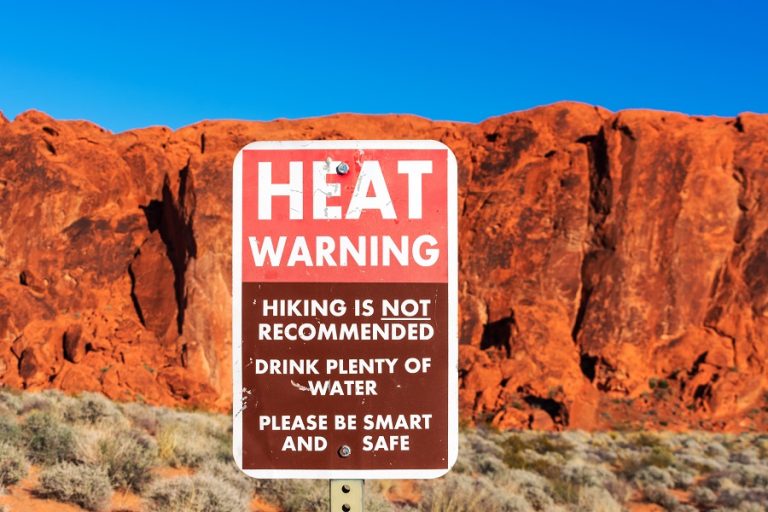
Health officials have zeroed in on a familiar but often overlooked reality: the most vulnerable suffer the most from extreme heat. The warning comes as an early heat wave is expected to push past 90°F across much of New Mexico.

The New Mexico Department of Health (NMDOH) has identified children, older adults, outdoor workers, and people with chronic illnesses as the most vulnerable as temperatures are forecast to exceed 90°F starting Thursday. They issued the warning as a heat surge spreads across at least 14 western U.S. states, including Arizona, Colorado, Texas, and Utah. State forecasters are pointing to possible record-breaking conditions for March.

Most vulnerable to heat

Chelsea Eastman Langer, Chief of the New Mexico Department of Health’s (NMDOH) Environmental Health Epidemiology Bureau, said the concern is not just the heat itself. It is also about who it hits hardest.

“These groups are less able to regulate body temperature or avoid prolonged exposure,” Langer said in a statement. She cited physiological and socioeconomic factors that heighten risk.

Older adults and individuals with chronic conditions may have reduced heat tolerance. Children, on the other hand, are more likely to suffer rapid dehydration. Outdoor workers, meanwhile, face prolonged exposure with few options for relief.

Data reveals recurring pattern

State figures show that heat is a real threat. Last summer, the state recorded 834 heat-related emergency department visits.

Public health analysts noted that such cases often cluster among the same high-risk groups now being identified by NMDOH. They point to systemic gaps in protection, ranging from housing conditions to occupational safety standards.

Fast-moving danger

Health officials warn that heat-related illness can escalate quickly, particularly among vulnerable populations. Symptoms may begin with warm, flushed skin, a rapid pulse, nausea, or muscle cramps, but can progress to dizziness, fainting, or confusion — signs of potentially life-threatening heat stroke.

The agency urges immediate medical attention when symptoms worsen, especially in high-risk individuals.

Prevention

Experts at Healthy Climate New Mexico advised the public to stay indoors during peak temperatures, drink plenty of water, wear light clothing, and reschedule outdoor activities to cooler hours.

Authorities also reiterated a crucial warning amid rising temperatures. Never leave children or pets in parked vehicles, where temperatures can rise to deadly levels within minutes, they said.
Wildlife-Driven Rabies Persists: First 2026 Case Surfaces in Bobcat Attack

0

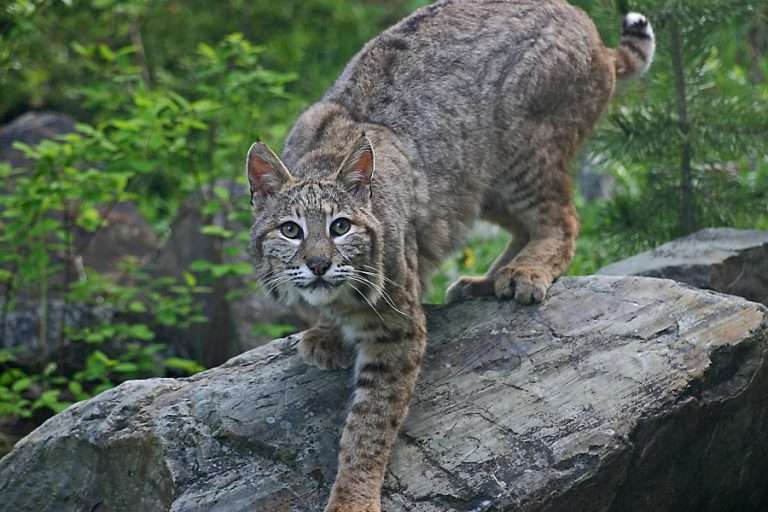
Rabies transmission in New Mexico remains mostly wildlife-driven, a pattern that public health officials say continues to pose risks to both humans and animals, particularly in rural communities. This comes into focus after the New Mexico Department of Health (NMDOH) recorded the first rabies case for 2026: a bobcat in Sierra County, which tested positive after attacking some domestic dogs.

Health authorities euthanized the bobcat following the incident. The dogs — all reportedly vaccinated — received booster shots. The health department placed these dogs under a 45-day observation period. Two individuals suspected of having been exposed to the virus have begun post-exposure prophylaxis, an intervention to prevent the disease from progressing.

“Rabies is deadly but preventable. State law requires all dogs and cats to be vaccinated against rabies,” Dr. Erin Phipps, in a statement, said. Phipps noted that unvaccinated pets face euthanasia or extended isolation if exposed.

A persistent wildlife reservoir

Data from state health records revealed that rabies infections in New Mexico are mostly found in wild animals, particularly skunks, bats, and foxes. Bats accounted for the highest number of confirmed cases annually, and spilled over into other mammals — including bobcats.

In 2025, the state recorded 13 rabid animals, including one bobcat. The year prior had 12 cases, four involving bobcats. These figures are relatively stable, but highlight the challenge of eliminating rabies across the state.

According to the Institute for Environmental Research and Education (IERE), infected animals may not always display observable signs. Some may become aggressive. Others may appear docile or unafraid of humans, which can increase the risk of unnoticed exposure.

Rural rabies exposure risks and response

The Sierra County case shows the vulnerability of the people living in areas where human settlements intersect with wildlife habitats. In such a setting, humans face higher exposure risks due to increased contact with vectors.

Response protocols, such as vaccination boosters, quarantine, and human post-exposure treatment, are well established. But their effectiveness depends largely on timely reporting and access to veterinary and medical services.

NMDOH maintains that prevention pathways involve vaccinating pets, avoiding contact with wild animals, and acting immediately after potential exposure. The department advised the public to seek medical attention after any bite or saliva exposure and to wash wounds thoroughly with soap and water. Vaccination against rabies is also recommended for individuals who may have had direct contact with bats, especially in enclosed spaces or involving unattended children.

Health officials urged the public to report any exposure or bite to their local animal control and call the NMDOH Helpline at 1-833-SWNURSE (833 796-8773). The public can also text questions to 66364 (NMDOH). 

Historic Heat Wave Exposes New Mexico’s Climate Vulnerabilities

0

New Mexico is experiencing a March heat wave that feels more like late May, with forecasts showing temperatures climbing up to the 90s across parts of the state this week. But the real crisis is beneath the surface: the state’s snowpack, a critical water reservoir, has dropped to record lows—weeks before its climatological peak.

Heat Arrives Too Early

Meteorologists at the National Weather Service in Albuquerque described the phenomenon as “historic.” By mid-March, New Mexico should be hitting the seasonal snowpack peak, which typically occurs around March 22. The opposite, however, is happening: the state is facing record-low averages as of March 10, and zero precipitation in sight.

This early-season heat wave accelerates the melt, leaving rivers, reservoirs, and aquifers with less water to draw from in the months ahead.

Snowpack Collapse

Snowpack acts as a natural water reservoir. It slowly releases water during the spring melt. But this year tells a different story – snowpack across the state is sitting at less than half of normal levels.

Some basins record depths as low as 1 inch. The deepest snowpack is barely 56 percent of average. Rio Grande headwaters show snow water at just 17 to 60 percent of median values.

The implications of these data are stark. Rio Grande’s streamflow and other waterways had reduced, diminishing irrigation supplies for farmers and heightening stress on groundwater systems.

Climate trend

Overall, however, this is not an isolated anomaly. According to the New Mexico State Climate Summary, the state has warmed by more than 2°F since the early 20th century.

Climate models indicate a continued decline in snowpack and more frequent droughts, the National Weather Service’s Albuquerque office said during its Monday briefing. Phenomena such as the March heat waves are becoming the new normal, reshaping the Southwest’s climate baseline.

Families, Share Your Thoughts: Take the APS Survey

0

Got any concerns or suggestions for Albuquerque Public School (APS)? This is your chance to speak up.

APS has launched the Quality of Education and Family Engagement Survey for School Year 2025-2026. Parents or guardians have until April 3 to answer the survey.

The survey asks the following topics to determine school performance: 

  • Respectful treatment of your child at school;
  • APS keeping you informed about unsafe situations; 
  • School cleanliness and good repair; and
  • Teachers and staff meeting your child’s individual learning needs. 

APS keeps the annual survey anonymous to encourage families to share their true thoughts and opinions. Schools and the district apply survey results to make meaningful improvements.

As parent or guardian, your child’s school should have emailed you an invitation to complete the survey. Take it once for each child enrolled in an APS school. If you have two children, you will complete the survey twice–once for each child, even if they attend the same school.

The survey is available in English, Spanish, Arabic, Farsi, Swahili, and Vietnamese. You can find the survey here. 

APS will post survey results on the dashboard in a box labeled Family Engagement by the end of the school year.

Updated: How a Tax Hike Means for Your Wallet: Albuquerque’s Proposed Increase Shows Why Gross Receipts Taxes Hit Consumers and Small Businesses

0

A tax hike plan of the Albuquerque City Council is not only a political debate. It is also a lesson on how local taxes can shape the finances of households and small businesses.

City councilors are considering a 0.4875 percent increase in Albuquerque’s gross receipts tax. If approved, the tax increase is projected to generate about $130 million annually for infrastructure projects, facility repairs, and municipal operations.

Brook Bassan introduced the tax proposal, raising the city’s tax rate from 7.625 percent to 8.113 percent. The change may look small on paper, but even small tax increases can ripple through the economy.

Understanding how a gross receipts tax works

For many consumers, taxes on purchases are associated with sales tax.

But gross receipts tax is different: the gross receipts tax applies broadly to goods and services across the entire supply chain, unlike traditional sales taxes that apply mainly to retail transactions. That means businesses often pass the cost forward to consumers, who will ultimately pay.

Why do small businesses feel the tax hike more

Big corporations can absorb tax increases through scale, cost-cutting, or pricing strategies. But it is different for small businesses that operate on thin profit margins. A tax increase may force small businesses to either raise prices or absorb the cost.

This is why analysts at the Tax Policy Center said gross receipts taxes can disproportionately affect smaller enterprises. A tax hike directly affects local entrepreneurs, such as restaurants, repair shops, and service providers, their ability to remain competitive.

What the city says the money will fund

Proponents of the tax hike argue that it is necessary to address long-delayed infrastructure projects and rising construction costs. The funds are expected to support projects, namely: Paseo and Unser Buildout and North Domingo Baca Aquatic Center.

“This is the idea that I believe is going to really help project us forward,” Bassan said. Rising material and labor costs have delayed several city projects, he added. The proposal also includes a resolution to raise the wages of the city’s lowest-paid workers.

What it could mean for households

The effect of a tax increase like this may appear small in any single purchase for individual consumers. Over time, however, the cumulative impact can add up.

Small businesses will raise prices to offset taxes. As a result, consumers may pay more for restaurant meals, home repairs, professional services, and construction and housing costs. Economists at the Congressional Budget Office explain that businesses shift part of their tax burdens to consumers, workers, or shareholders.

Update: The City Council rejected the proposal on Monday night. In a vote held shortly after 10 p.m., councilors turned down the proposal with an overwhelming vote of 8-1.

Black-Clad Attacker Haunts Albuquerque’s Bosque Trails, Investigators Probe Possible Serial Assaults

Authorities are probing into a series of assaults along the Bosque trail system near the Rio Grande that are possibly connected. The string of assaults raised alarm among residents who frequent the popular recreational area.

The Bernalillo County Sheriff’s Office said detectives are investigating at least three incidents reported over the past five weeks on the west side of the river, north of Alameda Boulevard. Probers say the suspect descriptions across the attacks bear striking similarities. Witnesses said the suspect is a man dressed mostly in black and armed with a blade or what appeared to be a firearm.

Officials have not yet confirmed whether the same person is responsible for all three incidents. But detectives said the assault pattern warrants public vigilance.

Pattern of assaults

The first encounter, according to the Bernalillo County Sheriff’s Office, occurred on February 2 along the Bosque Trail Network. Investigators said the suspect pointed what the victim believed was a firearm, then forced the victim to the ground, and cut the victim’s pants in the groin area. The victim did not report any physical injury due to the assault.

The victim described the suspect as wearing all black clothing, including a black face mask, gloves, and goggles.

Almost a month later, on March 1, another assault was reported in the same area. A male victim told investigators he was attacked with a box cutter. He sustained minor injuries. He also described the suspect again as wearing an entirely black outfit.

A third encounter occurred on March 8. The incident involved a woman riding a horse along the trail. Authorities say a man approached her while holding a knife and threatened to stab the horse. The woman and the animal were not harmed.

In the third case, the suspect was described as wearing a black hoodie and blue pants. The victim believed the suspect is around 30 years old.

Public urged to stay alert

The incidents have alarmed trail users who frequent the Bosque area for walking, biking, and horseback riding. Some individuals suggest the need for regular patrols in the area. Other netizens, commenting on the Sheriff’s Office’s social media post, said, “Some routine police security would help.”

Law enforcement authorities say the series of assaults appears to be concentrated along the west side of the river corridor north of Alameda.

The sheriff’s office is urging anyone who may have witnessed suspicious activity in the area or who may have information about a person matching the suspect’s description, to contact the Axon Community Request portal.

Authorities advised the public using the Bosque trails to remain aware of their surroundings and report suspicious behavior. Investigators are asking the public to share any photos, videos, or tips that could help identify the suspect.

New Mexico Hits 50% Clean Energy—Six Years Early, Leading America’s Clean Energy Boom

0

Clean energy continues to expand rapidly in New Mexico, where state policies and market demand are pushing the clean-energy transition despite federal policy shifts. The state has become one of the fastest-growing renewable energy hubs in the country after a landmark 2019 mandate requiring utilities to phase out fossil-fuel electricity generation by 2045.

Progress has moved faster than expected. Renewable sources already supplied half of New Mexico’s electricity generation in 2024, reaching the milestone six years ahead of schedule, according to the U.S. Energy Information Administration.

The biggest driver of that growth is solar power. Companies are building large-scale solar farms paired with battery storage systems, displacing the aging coal-fired plants across the state.

Wind power is also accelerating. By 2025, New Mexico had overtaken Wyoming for the largest amount of land-based wind capacity under construction. About 3.7 gigawatts of wind energy projects are currently in the pipeline.

State leaders say the momentum reflects both policy direction and market forces.

“We’re going to get to a clean grid,” said Martin Heinrich, a senior United States senator who hails from New Mexico. The senator recently toured battery storage companies in Albuquerque. “But the federal government is slowing down projects that would actually help keep electricity prices lower for consumers.”

Developers, however, continue to invest in renewable projects across the state, even as federal incentives shift and tax credit timelines tighten. They are betting that New Mexico’s abundant sun, strong winds, and supportive policies will keep the clean-energy boom moving forward.

Clean energy boom hits roadblocks

State officials have tried to counter federal uncertainty with a suite of state incentives. Gov. Michelle Lujan Grisham signed the Advanced Energy Equipment Tax Credit in March 2024. The law provides a 20 percent corporate income tax credit, up to $25 million per project, for manufacturing equipment used in renewable energy technologies. The program runs through 2032.

One of the major projects linked to the program was a proposed $1.9-billion solar manufacturing facility by Maxeon Solar Technologies in Albuquerque’s Mesa Del Sol district. The Singapore-based company asked for a $1.2 billion federal loan guarantee from the Department of Energy. But the Singapore-based firm ran into financial troubles, tariffs, and geopolitical complications after a Chinese company acquired a majority stake.

Trump’s legislation had tightened restrictions on companies receiving tax credits if they work with “prohibited foreign entities.” Company executives say the policy landscape changed sharply after Congress approved Trump’s One Big Beautiful Bill in July. The law has rolled back major incentives from the Biden administration’s Inflation Reduction Act.

Maxeon withdrew from the project earlier this year. The company cited a strategic restructuring. The firm was expected to create around 1,200 jobs.

Betting on new battery technology

Not all projects rely on subsidies, however. Desert Mountain Energy Corp., a Canadian energy company, seeks to build a sodium-nickel-chloride battery manufacturing facility in Roswell despite a federal policy pullback.

The plant plans to produce water from regional oil and gas wells for use in cooling and battery processing. The facility may also support a future artificial intelligence data center in the state.

CEO Robert Rohlfing said the technology offers a safer alternative to lithium-ion batteries. The project could cost $115 million to $120 million and could create up to 180 jobs. The plant construction may begin later this year.

Rohlfing said the Canadian company does not rely heavily on public subsidies. “We feel this is cost-effective even without a lot of government input,” he said. “This is something that’s needed. It can be done the good old-fashioned way.”

New Mexico Schools Score Big: Defibrillators Now Required at All Sports Events Under Lifesaving Law

A new law has required schools to install automated external defibrillators (AEDs) and prepare for cardiac emergencies during athletic events. Health advocates hailed the measure as crucial in preventing sudden deaths among student-athletes.

Governor Michelle Lujan Grisham signed House Bill 256 into law on March 10. The law requires that AEDs be available during all school athletic events. It also requires schools to integrate cardiac emergency protocols into their safety plans.

Schools to install, maintain AED

The American Heart Association lauded the measure, saying the move addresses a longstanding gap in school preparedness for sudden cardiac arrest. Under the new law, the New Mexico Public Education Department must come up with guidelines to ensure that school employees are trained to operate an AED based on AHA standards.

Schools are also required to install, maintain, and clearly mark AED units on campus and develop evidence-based cardiac emergency response plans. Implementation will roll out in phases across different types of schools during the 2026–2027 and 2027–2028 school years.

For lawmakers who back the measure, the law is as much about prevention as it is about readiness. “This legislation empowers schools to take proactive steps, equipping staff with the training and resources needed to save lives in critical situations,” said state Rep. Pamelya Herndon, one of the bill’s primary sponsors.

A silent but deadly risk

Cardiac arrest is one of the leading causes of death in the United States. Around 350,000 out-of-hospital cardiac arrest (OHCA) events occur each year, and nearly 9 out of 10 of them prove fatal. Medical research shows that immediate access to an AED can double or even triple a victim’s chances of survival.

Among children, there are over 23,000 children in the country who experience cardiac arrest each year. Nearly 4 out of 10 of those incidents are due to sports activities. Survival rates decline with every passing minute without rapid defibrillation.

Many schools across the country still lack comprehensive cardiac emergency response systems, according to health advocates. The new law aims to address this gap.

Mahesh Sita, government relations director for the American Heart Association in New Mexico, said the law reflects the recognition that schools must be ready for medical emergencies.

“New Mexico’s leaders have taken the bold, lifesaving action our children deserve,” Sita said. “This new law ensures that every school is better equipped to respond when seconds matter most.”

Advocates say the goal is simple: when a cardiac emergency arises on a school field or gymnasium, help is available within seconds — not minutes.

New Mexico Teams Up with Local Dairies to Fight Toxic PFAS Pollution from Cannon Air Force Base

0

The New Mexico Environment Department has inked four agreements with Curry County dairies as part of efforts to investigate and clean up groundwater contaminated by toxic chemicals traced to firefighting foam used at Cannon Air Force Base. Officials said the agreements are part of the way forward to address a four-mile PFAS plume that spread into nearby communities.

NMED took the lead and will initially fund the effort while seeking reimbursement from the United States Air Force. “We have stood in solidarity with our dairy industry since the toxic PFAS contamination was discovered in their water, land, herds, workers, and family members,” Environment Secretary James Kenney said in a statement released on March 12.

PFAS, short for Per- and Polyfluoroalkyl Substances, are man-made chemicals that do not break down in the environment. They are called “forever chemicals” because they remain in the human body forever.

NMED offered to lead cleanup work outside the base during a public meeting in January 2026. The department asked the Air Force to fund the initiative. It reiterated the proposal in a letter sent to federal officials on January 28.

The Air Force still has to respond. It cited its ongoing lawsuit against the state, signaling that federal authorities do not intend to partner with either the NMED or landowners in the near future.

The contamination has had adverse impacts on local agriculture. Highland Dairy, a family-run operation in Curry County, had to euthanize over 3,600 dairy cows after PFAS poisoning.

The department launched the New Mexico PFAS Blood Testing Program in Fall 2024. It offered free blood testing to adults who either lived or worked near the base. NMED’s final report indicated that 99.7 percent of the 628 participants had PFOS in their blood. PFOS is a form of PFAS commonly used in military and airport firefighting foam.

In October last year, the New Mexico Legislature approved a $12-million appropriation to replace PFAS-tainted water. It allowed those who relied on private wells within the PFAS plume area to access safe water.

NMED also began installing free water filters for private well owners in the contaminated zone in December 2025. As of March 6, the department said 47 filtration systems had been installed.

Several lawsuits are now ongoing seeking to hold the United States Department of Defense responsible for the contamination. New Mexico has already spent more than $12 million in technical and legal costs related to the cases.

More than $10,000 LEGOs Stolen in Albuquerque

Albuquerque Police Department says three men went into stealing spree at a local Target store, acquiring more than $10,000 worth of Lego.

Three suspects were identified as Alfonso Yribe, Matthew Marquez and Martin Gonzales. Yribe and Marquez were both arrested by the police while Gonzales still remain at large.

According to police, Yribe and Marquez are accused stealing them and reselling them to local businesses. Court documents shows that some Lego sets had GPS trackers that helped officials in tracking them.

Yribe appeared in court Thursday, while Marquez has been moved due to another case. The prosecutors put them jail while in trial.