Home Blog Page 12

ViscoTec Expands in North America With Acquisition of Mexican Partner

0

German dosing firm ViscoTec has consolidated its North and Central American footprint after acquiring its longtime Mexican sales partner, MEI Representaciones, a move that formally launched ViscoTec Mexico.

The dosing firm completed the acquisition of MEI on January 23, 2026, bringing the Querétaro-based partner into ViscoTec’s global operations. The deal is part of the company’s overall strategy to deepen its presence in key manufacturing markets and enhance its supply chain amid growing demand from the tech industry.

Mexico is an emerging key manufacturing and supply-chain hub playing a crucial role in supplying the US market, according to the International Centre for Trade Transparency & Monitoring. It ranked among the world’s Top 10 exporting nations with strong exports to the US.

ViscoTec said the new branch will enable the company to better serve its clients across sectors, including electronics, e-mobility, automotive, food processing, cosmetics, and aerospace.

“With the acquisition of MEI, we are creating a direct basis for sustainable growth in one of the most important production locations in North and Central America,” said Franz Kamhuber, managing director of ViscoTec Pumpen- u. Dosiertechnik GmbH.

The company appointed Héctor Bravo Ontiveros as managing director of ViscoTec Mexico. Bravo, a mechatronics engineer with a long history with the company, worked in Germany before joining MEI. He rose from sales engineer to the management team.

“For more than a decade, my team and I have helped establish and grow ViscoTec’s presence in Mexico,” Bravo said.

He said, “Becoming part of ViscoTec is a natural next step.”

ViscoTec will absorb MEI’s workforce of nine employees. Founded in 1985 as Montajes Electromecánicos e Ingeniería S.A. de C.V., MEI has built a strong track record as a reliable industrial partner in the region. It’s more than a 10-year collaboration with ViscoTec America that eventually paved the way for the acquisition.

ViscoTec expects the new branch to improve response time. The tech company is optimistic it can strengthen its operational control and enhance customer service through direct sales support and localized logistics.

NM Lawmakers Push Epstein ‘Truth Commission,’ Critics Warn of Limits

0

The proposal to create a “truth commission” to conduct a broad review of what the government knew or did in relation to possible crimes tied to Jeffrey Epstein’s Santa Fe County ranch is moving forward in the New Mexico Legislature.

Some lawmakers, however, raised concerns about its effectiveness and possible political implications.

Commission, a bipartisan body

House Joint Resolution 1 advanced to the House floor after the House Judiciary Committee gave its go signal to the proposal on Saturday. The House Government, Elections, and Indian Affairs Committee had earlier cleared the measure.

The resolution seeks to establish a bipartisan fact-finding body to review what state officials knew—or failed to act on—about the activities at Epstein’s Zorro Ranch near Stanley.

Lawmakers who support the proposal say the goal is not to litigate individual criminal allegations but to establish an accurate public record.

“This is about getting the story straight,” said Rep. Andrea Romero, D-Sta. Fe, one of the sponsors of the measure.

Not into criminal investigation

Romero said the proposed commission is not a criminal investigation body looking into allegations of sex trafficking or abuse. It will function instead as a broad review of what the government had done or failed to do regarding Epstein’s presence in New Mexico.

Epstein was a wealthy financier with close ties to powerful political figures and had extensive social connections. He died by suicide in a New York jail in 2019, before a federal trial on sex trafficking charges began.

Several court filings and media reports mentioned his ranch in Sta. Fe, New Mexico as a place where allegations of sexual abuse happened.

The proponents of the measure argue that a truth commission could help clarify to the public what the law enforcement, regulatory agencies, and other public institutions had done or failed to do.

The fact-finding process may lead to policy recommendations that prevent similar failures, if any, in the future.

Critics raise concerns

Critics, however, have raised concerns that the truth commission may fail to fulfill its mandate without sufficient subpoena power or a clear mandate.

Rep. Stefani Lord, R-Sandia Park, expressed concern that the commission could become a political tool. She sought clarification on whether the fact-finding body would also be willing to act against Democrats who might be implicated. 

Once the House approves the resolution, it will move to the Senate for consideration.

UNM Grads Present Oscars Proposal to Chicago Bar Association

0

Four University of New Mexico (UNM) pre-law alumni delivered a proposal before the Chicago Bar Association (CBA), seeking the creation of an official task force to study Oscar desegregation.  

The proposal was initially a final project in Professor Lawrence Jones’ Constitutional Law course in the Fall of 2023. It then evolved into a 99-page formal presentation and proposal. “UNM 10” submitted to the President and Board of Governors of the Academy of Motion Picture Arts and Sciences for review on October 8, 2024.

Peyton Bowes, Isabella Storms, Almarina Sosa, and Abigail McCoy presented a panel before CBA. They discussed the potential social and legal flaws in dividing categories, such as best actor and best actress, by gender. 

The four are part of the “UNM 10.” Then, the students found the issues and initiative relevant and continued developing their work on the subject with Jones after the semester’s end. 

UNM Grads Reflect on Presenting to the CBA

For Bowes, it was a huge honor to present before the CBA. “When the concept was first proposed to me, the idea of it made me nervous because, while I had done several interviews, I had never presented on a panel before, and I wasn’t sure how it would be different or how many people would be watching.” 

“The unknown aspect was a bit nerve-wracking, as it always is, but I couldn’t pass up the opportunity presented to share our work on the Oscars project. I think it is generally more of a benefit than a detriment to step outside one’s comfort zone, anyway.”

The CBA is among the oldest and most active metropolitan bar associations in the country. It has attracted a nationwide membership in part due to its educational offerings. 

“I was truly honored that such a prestigious organization was interested in hearing our perspective, especially given that we are not lawyers,” Storms told UNM News. “Despite that distinction, they treated our presentation with the same seriousness and respect afforded to those delivered by legal professionals. It was clear to me that they were fully committed to ensuring our presentation met the same high standards as the others that day. That commitment spoke volumes about the organization’s integrity and its genuine interest in diverse, well-considered viewpoints.”

Storms said she hopes that if they continue to participate in discussions, they will be able to enact change. 

“Gender segregation within the Oscar awards may not seem like such a big deal to everyday individuals who are not involved in filmmaking. But I believe that there is a [trickle-down] effect. If gender inequality at the most predominant awards in the [film-making] industry can not only be allowed but broadcast and celebrated, how can sexism not be internalized systemically?” 

Professor Jones’ Perspective on His Former Students’ Initiative

Jones, who created the pre-law students’ Oscars project for his class, expressed pride in his students’ hard work. 

“I am very proud of the hard work that UNM’s pre-law students put into the presentation, both to the Academy and to the Chicago Bar Association. As future attorneys who have not yet even started law school, their efforts and professionalism are remarkable and set a great example for other students who are ready to share their thoughts and ideas not only within UNM’s Constitutional Law classroom, but with the world,” he said.

“In this particular case, hopefully the Academy President and Board of Governors of the Actors’ Branch, as well as other Academy members interested in the subject, are willing to listen with open minds and will respond positively to the students’ hard work, efforts, and detailed analysis of the legal and social issues that are the focus of the presentation and proposal. These issues merit  discussion both within the Academy itself and by the Academy leadership with the public in an open, constructive, and healthy way.”

The Academy leadership has not responded to the group’s presentation, according to UNM News. No changes have been made to the organization’s Oscar structure, nor has a task force been formed to evaluate changes. The 2026 Oscars will be held on Sunday, March 15, on ABC

New Mexico’s Bandera Ice Cave That Stayed Frozen for Over 3,400: A Frozen Wonder in the Desert

0

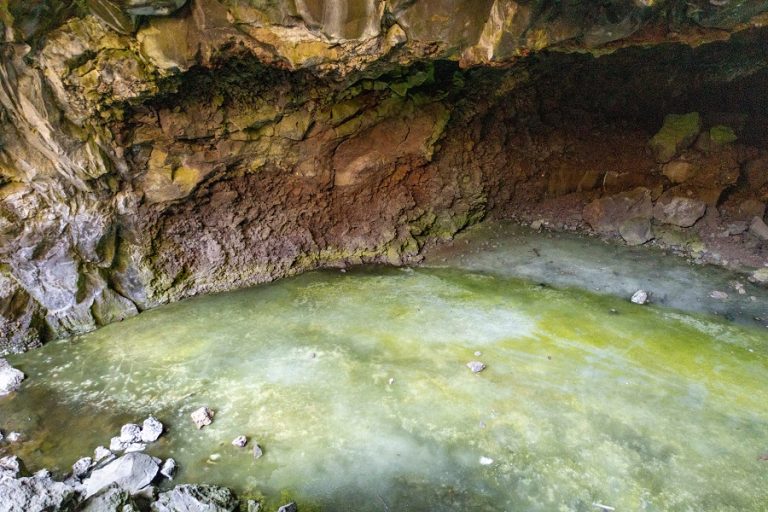
NEW MEXICO, USA – An ice cave formed by ancient lava flows is gaining attention for staying what it is amid sorching heat and dry landscapes.

The Bandera Volcano Ice Cave sits west of Albuquerque. It has a constant temperature of about 31°F (-0.6°C) even during summer.

The cave, researchers said, has stayed below freezing point for at least 3,400 years. Its ice layers can reach up to 20 feet thick. Ice Caves website cited it as one of the oldest intact ice caves in the United States.

The cave is part of a vast area of the Bandera Volcano lava field formed by volcanic eruptions thousands of years ago.

According to New Mexico Bureau of Geology and Mineral Resources, the cave is a lava tube. It was formed when molten lava flowed below the surface. Then it cooled on top, and later washed away leaving a hollow tube. The tunnel, a natural cold trap, held dense, cold air inside the tunnel limiting the entry of warm air from the desert.

Snowmelt and rainfall seeped into the cave where it froze upon contact with the icy floor, building layers of ice little by little over hundreds of years. This process explains why the cave has remained cold against the outside climate shifts.

Signs of life were found in the extreme environment. Algae grow on the ice seen as blue-green patches across the frozen floor. Environmental educator Paul Mauermann described the algae’s survival in an uploaded video at YouTube as extraordinary. He noted that the algae thrives in conditions usually associated with polar regions.

The ice cave is located near the dormant Bandera Volcano with a crater of about 800 feet deep. Its surrounding lava fields stretch for about 23 miles.

The cave has become a popular destination for visitors because of the stark contrast: sunbaked trails and icy chamber, an environment that is more of the Arctic than the American Southwest.

New Mexico is considering expanding its R&D tax credit to attract more tech investment and create better-paying jobs.

Lawmakers in New Mexico are deciding whether to expand a state tax incentive that encourages private-sector research and development. The move comes as the state competes with others for advanced manufacturing, energy, aerospace, and computing projects.

The debate is starting early in the 2026 session with House Bill 27, called “TECHNOLOGY JOBS R&D TAX CREDIT EXPANSION,” now moving through House committees. Business and economic development advocates say New Mexico could lose projects and long-term jobs to nearby states that offer stronger R&D incentives.

In a recent Albuquerque Journal opinion column, Davin Lopez, president of New Mexico IDEA, described the policy as a way to leverage the state’s research strengths to attract more private investment and spur business growth. Lopez wrote, “The research and development tax credit is not a giveaway,” and called it a tool to “attract private investment” and support job creation linked to innovation.

Background: New Mexico already has an R&D tax credit, which has clear costs and mixed results.

New Mexico’s Technology Jobs and Research & Development Tax Credit was created in 2000 and has been updated since, according to a July 2025 report from the Legislative Finance Committee (LFC). The LFC says the basic credit is “equal to 5 percent of qualified expenditures,” and it increases to “10 percent” for rural facilities.

There are also extra features tied to payroll growth and partial refundability under certain conditions.

The LFC report estimates that in fiscal year 2024, businesses received $11.2 million in state support through the credit. The program created an average of 165 jobs per year, but the report notes that, based on their models, it does not fully “pay for itself” in direct state revenue.

Supporters of expanding the credit say that as interest grows in quantum, fusion, advanced energy, and other high-cost technologies, incentives can influence where companies set up labs, run pilot projects, and begin early manufacturing. This is especially true when other states are competing for the same investments.

Lopez highlights New Mexico’s national labs, universities, and defense and aerospace presence, saying the state needs more competitive policies to encourage companies to take R&D risks here.

Skeptics usually focus on the trade-offs of tax credits, such as whether they simply shift activity that would have happened anyway, how benefits are spread across regions and industries, and whether the costs limit other economic development efforts. The LFC’s assessment identifies design issues, such as the absence of a spending cap or an end date, but still concludes that the credit likely achieves its main goal.

Here’s what you need to know:

  • What’s happening? Lawmakers have introduced HB 27, the “Technology Jobs R&D Tax Credit Expansion,” for the 2026 session.
  • What’s the current deal? Right now, New Mexico offers a 5% tax credit on eligible research spending (or 10% if you’re in a rural area). There are also additional rules if you’re hiring more people or seeking a partial refund.
  • How much does it cost? In 2024, businesses claimed $11.2 million in tax credits, with 390 claims filed.
  • Why does it matter? Supporters say that without stronger incentives, companies might take their research and commercialization elsewhere, leading to fewer jobs and slower growth in New Mexico.

What’s next

The fate of HB 27 is in the hands of legislative committees and will likely be shaped by the usual back-and-forth over budgets and taxes that comes with short sessions.

If the bill passes, businesses and investors will be watching closely: How much bigger will the tax break get? Who will be eligible? Will the credits be refundable? And how will the state keep track of whether these incentives are really helping to create jobs and turn research into real-world products and businesses?

SB 177: What New Mexico’s tech-focused economic development bill would fund and why it matters

A new proposal in the New Mexico Senate puts a price tag on an idea state leaders have discussed for years: using public money to accelerate economic growth beyond traditional sources.

Senate Bill 177, put forward in 2026 by Senators George K. Muñoz and Meredith A. Dixon, is about giving New Mexico’s economy a boost by moving state money into new areas of growth. The bill aims to support projects in cutting-edge fields such as artificial intelligence, quantum technology, advanced energy, aerospace and defense, bioscience, and public safety.

In short, it’s designed to help the state build on its strengths, attract investment, and create more jobs in future industries.

The measure has received public support from Dale Dekker, a founding principal and brand ambassador at Dekker, who described Senate Bill 177 as a strategic investment plan to position New Mexico for growth in sectors such as artificial intelligence, quantum computing, advanced energy, aerospace and defense, and bioscience, where federal research funding and private investment are more concentrated.

Quick summary:

  • Who’s behind it? Senators George K. Muñoz and Meredith A. Dixon.
  • How would it work? The bill would move funds from the state’s general fund and commit funding for a variety of programs from 2027 to 2029.
  • What areas does it target? Artificial intelligence, quantum technology, advanced energy, aerospace and defense, bioscience, plus workforce and business development.
  • What would the money pay for? Key examples include $111 million for research and development, $60 million for innovation hubs, and $118 million tied to the federal Genesis Mission.

What’s in the bill?

SB 177 starts with transfers from the general fund to specific funds, including a $111 million transfer to the “research, development, and deployment fund,” as well as other transfers for site readiness and training.

From there, it outlines appropriations that blend three themes:

1) Commercialization and startup formation

The bill provides funding for an advanced energy innovation hub and a venture studio, as well as another hub or studio focused on defense technology, bioscience, and aerospace. These are designed to help create, launch, and grow start-ups, with some funding going through the Economic Development Department for support.

Dekker’s commentary centers on this commercialization push, stating: “Research alone does not create jobs. Commercialization does.”

2) Workforce and talent retention

In addition to hub funding, SB 177 sets aside money for workforce training, recruiting and keeping talent, and incentives for entrepreneurs and trade groups in advanced energy and quantum.

Supporters say this is meant to keep more skilled workers in the state by creating more local opportunities, which Dekker mentioned as part of a larger plan to retain talent.

3) Matching federal initiatives in AI and quantum

One key part of the bill is its alignment with federal programs. SB 177 proposes $118 million to take advantage of opportunities linked to the U.S. Department of Energy’s Genesis Mission, which the bill defines by referring to a U.S. executive order from November 24, 2025.

The bill also includes money to match federal funding for the Defense Advanced Research Projects Agency’s Quantum Benchmarking Initiative. DARPA describes this as an effort to see if certain methods can achieve utility-scale quantum computing. (New Mexico at the Quantum Frontier: state and DARPA forge bold partnership, 2025)

Why it matters to investors and employers

For businesses considering New Mexico, the key question is whether SB 177 will help build a stronger supply of talent, facilities, and early-stage funding, particularly in areas where federal funding is important.

The bill links state spending to federal opportunities through matching funds and specific program references. It also strengthens local resources through hubs, equipment purchases, and university partnerships.

Dekker describes this as a competitive step, saying the bill is designed to connect national labs, universities, and private companies. The goal is to close the gap between research results and companies that can grow. Key issues include size, governance, and measurable outcomes.

Criticism, including from fiscal hawks and some policy analysts, often lands in three places for bills of this type:

  • Scale and prioritization: The sheer size and multi-year nature of the funding raise questions about whether the programs are truly focused and well-organized. With so many categories and institutions included, it can be hard to see how priorities are set.
  • Execution risk: There’s a chance that innovation hubs and venture studios could either spark real progress or end up as expensive real estate and consulting projects—it really depends on how they’re run and the kinds of deals that come together. While the bill lays out the big picture, many important decisions will be made later by agencies and contractors.
  • Accountability: The bill requires any unspent funds to be returned to the general fund by the end of 2029, a prudent safeguard. Still, it doesn’t provide a comprehensive way to track how well things are working.

What comes next

SB 177 is still moving through the legislative process and, like other major funding bills, will likely be debated over its scope, timing, and oversight. The outcome will affect not just the state budget but also whether New Mexico can turn its national labs and universities into a stronger private-sector presence in AI, quantum, advanced energy, and bioscience.


Is New Mexico Really Last in Education? New Data Challenge Rankings

SANTA FE, New Mexico — A ranking that placed New Mexico near the bottom among states in US education is facing renewed scrutiny with recent state data showing improvement in student performance.

The state ranks 50th in K–12 education in national assessments, such as the Annie E. Casey Foundation’s Kids Count Data Book. The rankings are centered on indicators such as reading and math proficiency, school engagement, and graduation rates. For years, it has sustained the narrative that New Mexico is “last in education.”

Those rankings remain unchanged over the years. But education officials and some analysts argue these rankings fail to capture recent improvements, especially in early literacy.

Reading proficiency among students in grades 3 to 8, according to the New Mexico Public Education Department (PED), rose by about 10 percentage points over the past three years. About 44 percent or four in every 10 students are now reading at grade level, an improvement from one-third in the previous assessment.

Education officials have noted improvement across major student groups, including Hispanic, Native American, and English learner students. These populations historically posted the lowest proficiency rates.

“These results confirm that the state’s investments in early literacy and the science of reading are working,” said Public Education Secretary Mariana D. Padilla.

New Mexico literacy gains are encouraging. Education advocates, however, cautioned that they are not yet large or sustained enough to alter the state’s standing in national comparisons.

The state presents a more mixed picture beyond K-12 education.

For instance, New Mexico performs comparatively well in higher education. It ranks 20th in national assessments based on measures including college affordability, access, and graduate return on investment.

That contrast highlights a broader debate about how educational performance is measured. Questions persist whether widely cited national rankings offer a complete picture of a state’s education system.

New Mexico Voices for Children, an advocacy group, said the data in the report do not reflect the positive outcomes from policy changes in recent years. These include enhanced child care assistance and pre-k funding.

However, the group argued for further action.

“These efforts matter, and in time, they will move the needle,” wrote Gabrielle Uballez, executive director of NM Voices for Children.

UNM Anderson Receives Donation from Thorntons for Healthcare Leadership Scholarship

0

The University of New Mexico (UNM) Anderson School of Management recently received a donation to support graduate students. The gift is expected to support the continued growth in the healthcare field.

Maribeth and Chris Thornton made a significant contribution to establish the Thornton Family Scholarship for Healthcare Leadership. The scholarship will help Anderson graduate students in good standing pursue leadership roles in the healthcare industry.

UNM News reported that the Thorntons created the scholarship to invest in people and expand access to educational opportunities.

“We find it fulfilling to watch our colleagues grow and master their craft,” the Thorntons said. “We have been blessed with strong mentors throughout our careers, and we feel an obligation to do the same.”

The scholarship also highlights Maribeth’s 40-year nursing career, during which she held various leadership roles. She is currently the chief nursing officer at UNM Hospital.

“While healthcare makes up a sizable fraction of the economy, other sectors can offer greater monetary rewards,” the Thorntons said. “A person leaving graduate school with less debt is more likely to consider a career in healthcare. To be efficient and effective, the healthcare system needs leaders versed in both the financials and the delivery of services.”

How the Thorntons’ Journey Inspires Their Education Advocacy

Both Chris and Maribeth advocate for the power of education. 

Chris earned a Bachelor of Science in aerospace engineering from Georgia Tech and a Master of Science from Stanford University. Maribeth earned her MBA from the Anderson School of Management and her Ph.D. from the UNM College of Nursing.

Maribeth shared that during each of her degree programs, she had to work full-time to support herself or her family. “Having a scholarship would have allowed me to focus more time on my studies without worrying about financial constraints.”

She added employer support during her MBA and Ph.D. relieved financial stress and allowed her to finish without student loans. This helped inspire the creation of the Thornton Family Scholarship for Healthcare Leadership to ease that burden for future students.

Maribeth was recently selected as the alumni speaker at the fall 2025 Anderson Convocation. During her speech, she explained stepping into leadership roles as a nurse motivated her to pursue an MBA. 

Through those roles, she recognized the importance of business and management skills for effective leadership. Her MBA helped her develop skills like critical data analysis, financial and strategic decision making, and organizational and professional development. These skills continue to play a vital role in her career.

The Thorntons’ estate gift will expand the healthcare leadership scholarship and continue supporting their existing UNM College of Nursing scholarship. It will also support other needs at the UNM Children’s Hospital.

“The lack of student debt allows students to spend more money in the community and invest in their own families,” the Thorntons said. “The skills they bring to the community benefit us all in the long run.”

New Mexico $47M Transport Funding for Safety, Climate, and Communities: Why it Matters

0

The decision by New Mexico Department of Transportation (NMDOT) to award nearly $47 million to 27 transport projects may sound like a routine government announcement. But it is not.

The projects reveal how transportation policy could shape public safety, climate action, and everyday life. It matters especially in rural and underserved communities.

These projects can mean the difference between a safe commute and a dangerous one. This is especially true in a state where many communities lack basic pedestrian infrastructure.

Strengthens public transport in a car-dependent state

A large bulk of the funding goes to transit operations and upgrades such as the $9.7 million for the New Mexico Rail Runner Express, micro-transit pilots, and vanpool programs.

Public transit is not a convenience for individuals living in rural areas, essential workers, people who has no access to private vehicles. It’s a lifeline to jobs, schools, and healthcare. To keep these systems running helps prevent isolation and supports local economies.

Climate and air-quality goals

The projects are funded through programs such as the Carbon Reduction Program (CRP) and the Congestion Mitigation and Air Quality (CMAQ). This signals a push to reduce emissions by shifting trips away from cars.

Trails, transit, and non-motorized transport investments help cut pollution while improving public health. These investments are important initiatives as communities face hotter temperatures and worsening air quality due to climate change.

Leveling the playing field for rural and Tribal communities

NMDOT officials stressed that these federal programs allow Tribal and local agencies to move projects forward that might have been stalled due to limited budgets. Smaller and rural communities struggle to compete for funding and at the same time face some of the biggest infrastructure gaps.

The grants covering from planning to construction help ensure that improvements are not limited to large cities alone.

Transportation is about quality of life

The funded projects include multiuse trails, rail-trail restorations, and ADA improvements. These are spaces that support recreation, tourism, and community connection.

The transport funding affect how people move, meet, and live in their communities. Therefore, transportation funding becomes a statement about whose safety, mobility, and well-being matter.

NMDOT’s $47-million funding package is not just about infrastructure. It’s also about safer streets, cleaner air, accessible mobility, and more equitable development.

The $47 million transport funding comes from federal grant programs. It is not part of the Senate Bill 2 signed by Governor Lujan Grisham this week.

SB 2 is a statewide transportation bonding measure amounting to $1.5 billion authorizing the State Transportation Commission to issue bonds for big ticket road, bridge, and infrastructure projects across the state.

Los Alamos National Laboratory’s FY2025 New Mexico spend nears $3 billion, report shows

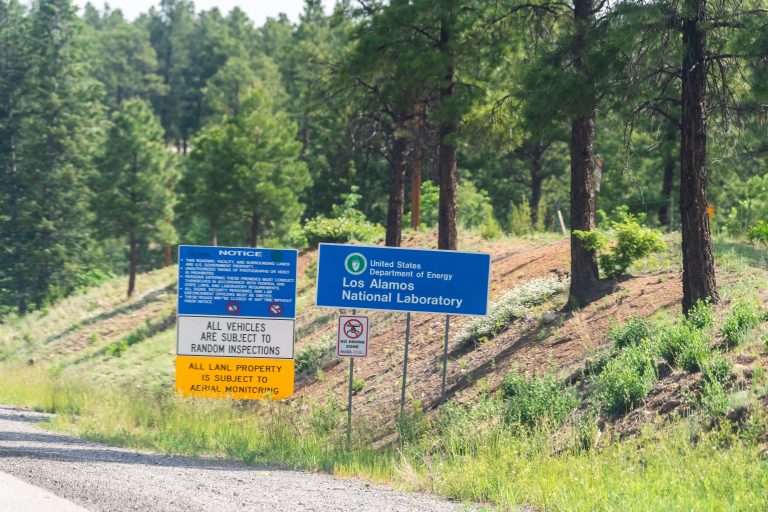
Los Alamos National Laboratory (LANL) directed about $2.9 billion into New Mexico during fiscal year 2025, highlighting the lab’s major role in the state’s northern economy as federal funding for national security work stays high.

The figure comes from LANL’s new FY2025 economic impact report, which the lab and the Albuquerque Journal say tracks salaries, procurement, and gross receipts tax (GRT) tied to the lab’s operations. LANL’s total budget for the year was $5.28 billion, so most funding still goes outside the state through national supply chains and other spending, even as New Mexico remains a major beneficiary.

The report also shows where jobs are concentrated. Of the 16,487 employees (excluding contractors), the largest numbers were in Los Alamos County (5,402) and Santa Fe County (4,089), followed by Rio Arriba County (2,496) and Taos County (314).

LANL leadership attributed recent budget growth to the external security environment and continued political support for the lab’s mission. Director Thom Mason told the Journal that ongoing geopolitical tensions and “pretty strong bipartisan support for our national security missions” have supported funding levels.

Although hiring and spending remain high, Mason said things have slowed compared to previous years. Growth has tempered some expectations since 2023, when LANL hired about 2,400 people. The budget increased from $5.24 billion in FY2024 to $5.28 billion in FY2025. Mason said the lab is working with “roughly $5.3 billion” this year, and the federal FY2027 budget will be released next month.

In addition to payroll and contracts, the Journal report notes LANL’s efforts to support local suppliers and build the workforce. The lab’s Small Business Assistance program links New Mexico companies with technical experts at Los Alamos and Sandia National Laboratories. Other programs include partnerships with local colleges and career exploration opportunities for more than 1,000 K–12 students.

The article also notes that LANL remains under scrutiny for safety and environmental issues, as well as its economic impact. It cites recent reports of worker exposure incidents and contamination concerns raised by state and federal agencies.