

Federal authorities say they broke apart New Mexico’s most notorious prison gang after more than a decade of prosecutions. The U.S. Attorney’s Office for the District of New Mexico announced the outcome of its prosecution of the Syndicato de Nuevo Mexico, or SNM.
Officials characterized the group as a violent criminal enterprise, operating both inside prisons and in communities across the state. The drive against the group led to state and federal charges against 178 members and associates. Prosecutors described it as one of the largest gang cases in New Mexico history.
SNM emerged following New Mexico’s prison riot in 1980. Over time, officials said, it became a criminal network built on fear and violence. Its code was simple: “blood in, blood out.” Recruits had to commit violence to enter. Members imposed their dominance through killings, kidnappings, drug trafficking, and witness intimidation.
Prosecutors used the Racketeer Influenced and Corrupt Organizations Act (RICO) and the Violent Crimes in Aid of Racketeering laws to prosecute the group under a single-enterprise framework. That strategy proved crucial to nail the group.
The prosecution filed charges against 156 people, covering 325 overt acts and spanning from 1980 to 2024. Authorities secured convictions linked to 13 murders. Some were cold cases. Other inmates were killed because gang leaders suspected them of cooperating with investigators.
Twelve SNM members were sentenced to life in prison, namely: Anthony Ray Baca, Jody Rufino Martinez, Robert Padilla, Angel DeLeon, Joe Gallegos, Edward Troup, Carlos Hererra, Anthony Cordova, Arturo Arnulfo Garcia, Billy Garcia, Daniel Sanchez, and Sam Silva.
The case also illustrated how deeply prison gangs can reach beyond prison walls. Investigators said SNM trafficked prohibited substances such as fentanyl and methamphetamine inside correctional facilities and in communities across New Mexico. SNM, they said, used violence to keep control.
One of the findings that alarmed officials was a 2015 plot to assassinate New Mexico’s corrections secretary and senior state police officials. Authorities said the plan was in retaliation for a gang-related murder conviction.
A sweeping probe ensued. Federal agents conducted over 110 covert buys of drugs and firearms. They used confidential informants and court-authorized wiretaps to pursue the case.
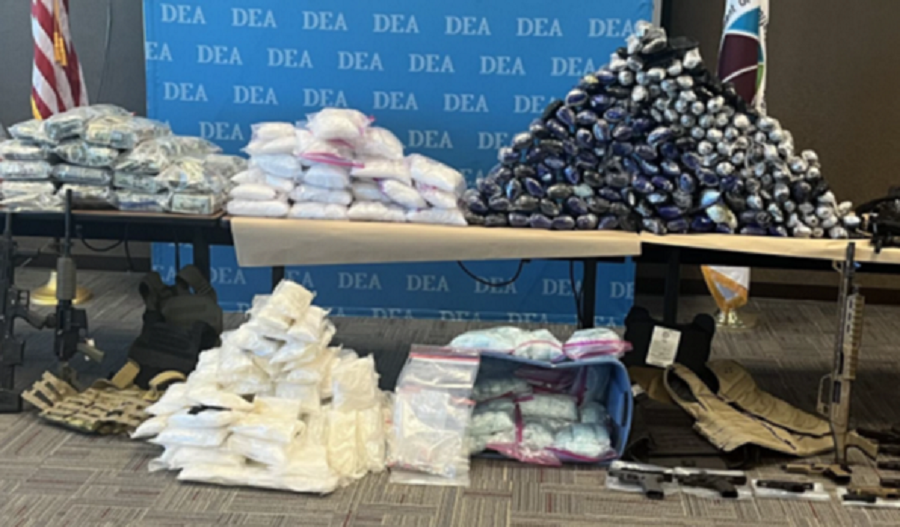
During raids in September 2022, authorities seized $1.8 million in cash, 1.1 million fentanyl pills, and 160 pounds of methamphetamine. Six jury trials resulted in nine convictions.
A defining moment came in 2022 when the U.S. Court of Appeals for the Tenth Circuit confirmed the convictions of top SNM leaders. The decision affirmed the government’s use of federal racketeering laws against prison-based criminal organizations.
Federal officials called the case a test of whether the justice system could dismantle an entrenched system of violence inside prison walls. “This case required years of patience, discipline, and persistence from prosecutors, agents, and staff who stayed with it to the end,” said First Assistant U.S. Attorney Ryan Ellison.
Justin A. Garris, special agent in charge of the FBI’s Albuquerque Division, said the investigation showed a commitment to breaking violent criminal networks.
“Every case we work on, every operation we plan, is rooted in our commitment to serve the people of New Mexico,” said Garris, Special Agent in Charge of the FBI Albuquerque Division. “This case shows what happens when we work together: Local officers, federal agents, and prosecutors; each bringing their strengths to protect you.”
A broad coalition of agencies supported the prosecution, namely: the FBI, the Drug Enforcement Administration, the U.S. Marshals Service, the New Mexico Department of Corrections, and state and local police agencies.
The case brought to a close a major chapter in New Mexico’s fight against organized prison crime. Authorities framed it as more than a prosecution. It was a bid to break a violent system that survived for years. And, officials say, they did. “It was difficult work, but it was necessary work, and this office saw it through,” Ellison said.

