

The murder of Agnes Tybo remained as one of Albuquerque’s unresolved tragedies — a chilling case marked by a ransacked motel room, a discarded purse and a composite sketch that led to no arrest. Now, advances in DNA technology have done what generations of detectives could not.
Prosecutors have charged Charlie Brown Jr., a 73-year-old Illinois man, with first-degree murder in the 1983 killing of Tybo, a 71-year-old woman who had traveled to New Mexico to reunite with family and attend the Indian National Finals Rodeo.
Authorities announced the arrest warrant this week. The issuance of the warrant signaled the end of a painstaking investigation that spanned 43 years. It underscored the growing power of modern DNA technology to solve the puzzle tucked in decades-old evidence.
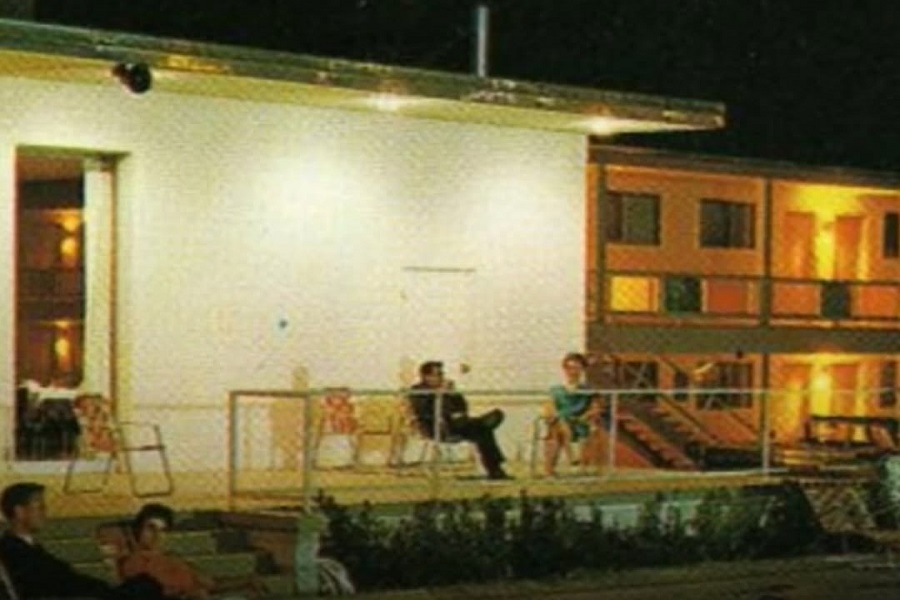
On Nov. 11, 1983, a staff member at Albuquerque’s Sundowner Motel, a defunct hotel that once stood along Central Avenue Northeast, found Tybo dead inside a room. Investigators of the case described the scene as being in “complete disarray.” The Office of the Medical Investigator said that Tybo had been strangled, ruling her death a homicide.
Tybo came to Albuquerque with her sister “eager to experience the energy, heritage, and celebration of the Indian National Finals Rodeo.” Instead, inside Room 252, a weekend of celebration ended in tragedy. Agnes’s life was stolen—leaving an empty chair, a grieving family, and a room heavy with unanswered questions.
Detectives investigating her death recovered Tybo’s missing purse from the bed of a dump truck parked in the motel lot. A white cotton towel was found along with her belongings; the investigators preserved it as evidence.
Witnesses also told investigators they saw a man attempting to enter motel rooms almost at the same time as the killing. Police produced a composite sketch of a suspect and sent it out to the public and tribal agencies. Despite the efforts, the investigation yielded no results. The case eventually went cold.
The case remained inactive until October 2021, when a civilian investigator with the Albuquerque Police Department reopened the probe and ordered advanced DNA testing on evidence collected at the scene of the crime decades earlier.
Then, the breakthrough came in July 2022. The National DNA Index System informed investigators of a possible match linking the evidence to Brown, who was living in Champaign, Illinois. Detectives traveled to Illinois and obtained a warrant that authorized them to collect a direct DNA sample from Brown.
Subsequent forensic analysis, according to court filings, conclusively put Brown at the crime scene. Investigators also tied the suspect’s DNA to the white towel found with the victim’s purse. The findings led prosecutors to file murder charges on Monday, seeking Brown’s extradition to New Mexico.
“This case highlights our department’s unyielding commitment to victims and their families, no matter how many years pass,” Albuquerque Police Chief Cecily Barker said in a statement. “Generations of detectives protected this evidence so that modern science could eventually bring the truth to light. We hope this arrest provides long-overdue closure to the Tybo family and the Indigenous community.”
The announcement offers something that seemed impossible 43 years ago. According to the Albuquerque Police Department’s statement posted on social media, “To the Tybo family, we know that time does not erase the deep pain of a stolen life. But we hope this arrest finally brings the long-overdue answers you have waited a lifetime to hear. To every family still searching for answers in the dark: APD does not forget. We do not stop looking, and we will never stop fighting for your loved ones.”
The charges against Brown remain as allegations. He remains innocent until the courts prove him guilty. But the Tybo case is a reminder that even as memories fail and witnesses disappear, carefully preserved evidence can still speak — even decades after the suspect committed a crime.

